

Iron (Fe, Z = 26): The Metallic Pillar of Our Civilization
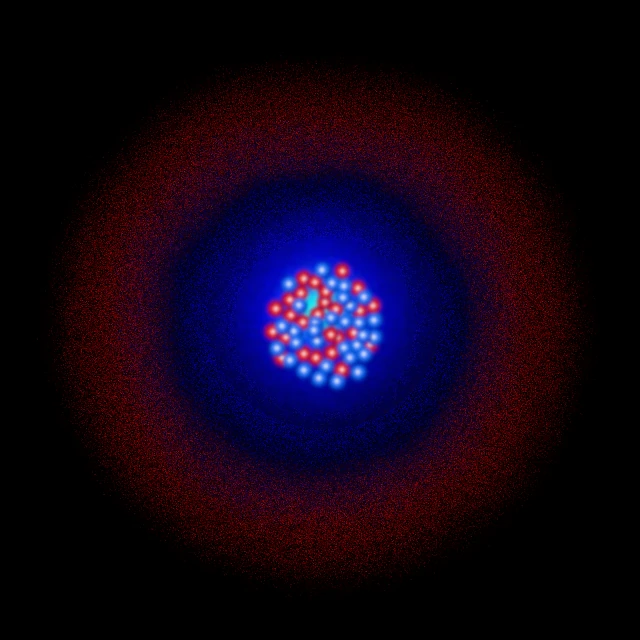
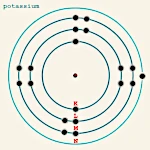
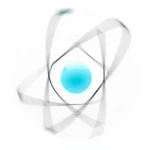
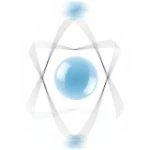
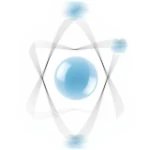
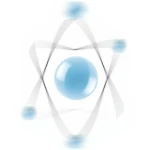
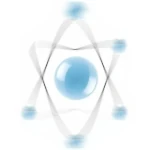
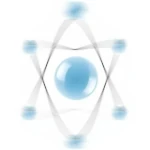
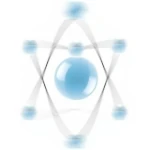
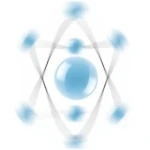
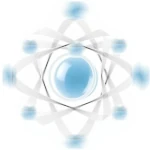
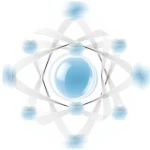
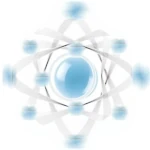
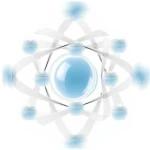
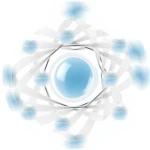
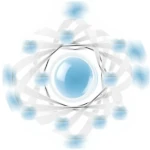
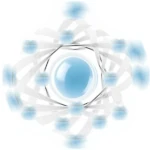
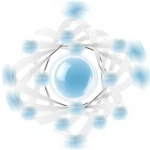
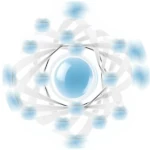
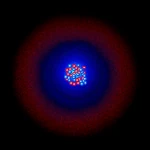
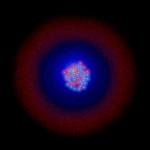
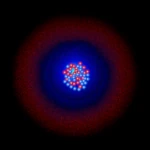
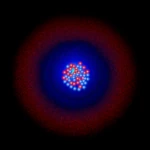
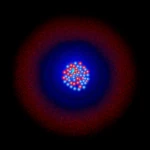
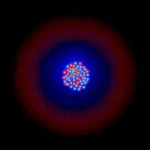
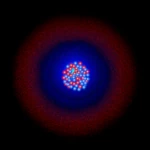
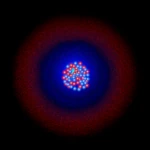
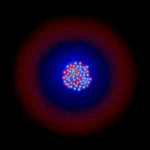
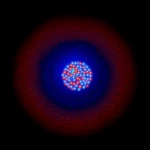
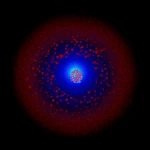
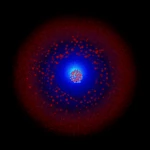
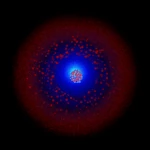
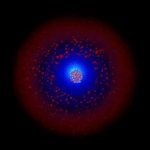
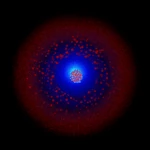
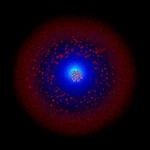
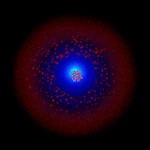
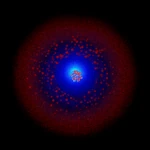
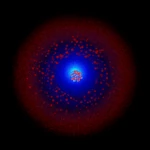
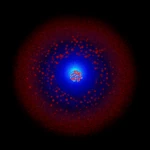
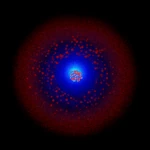
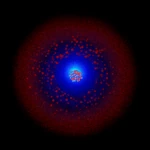
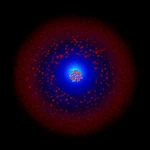
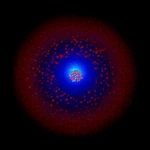
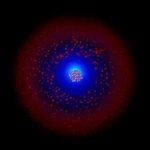
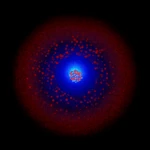
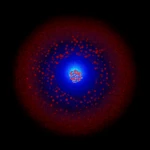
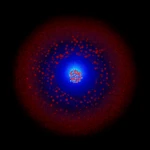
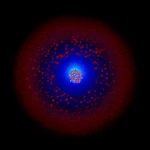
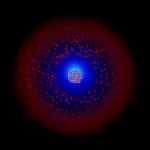
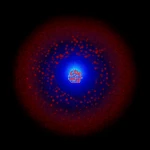
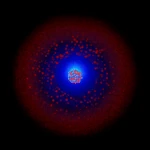
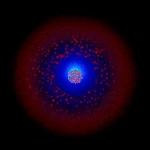
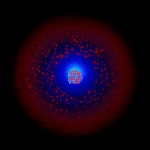
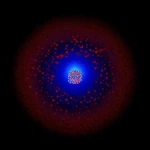
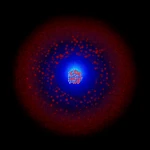
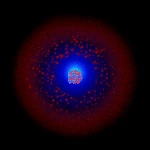
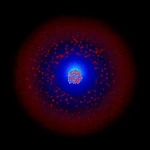
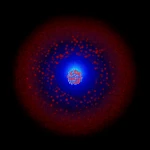
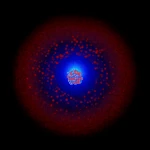
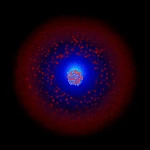
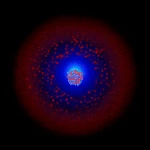
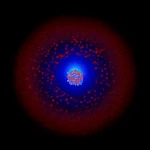
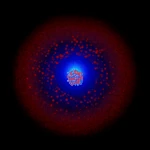
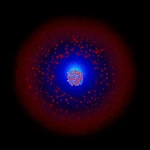
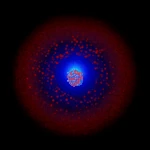
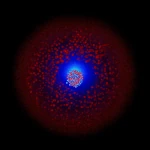
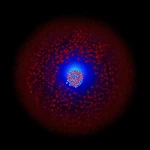
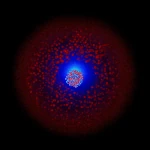
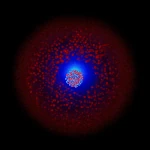
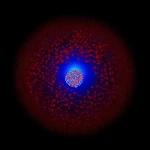
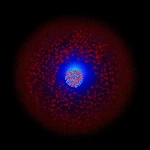
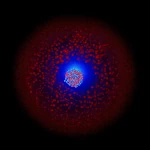
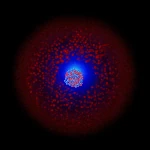
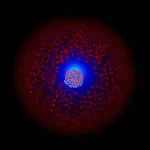
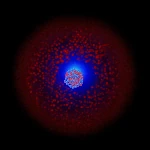
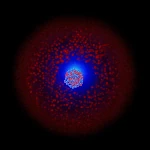
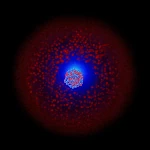
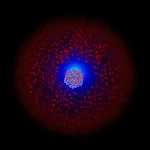
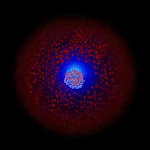
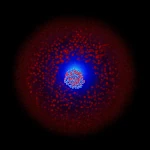
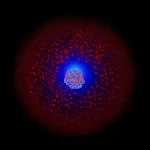
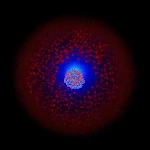
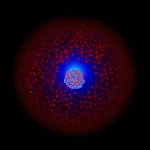
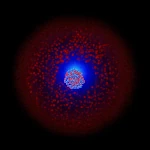
Simplified atomic model of the iron atom.
The most abundant isotope is \(\,^{56}\mathrm{Fe}\,\) with its 26 protons, 26 electrons, and 30 neutrons.
Image source: astronoo.com (new window) — AI-generated image, public domain.
History of the Discovery of Iron
Iron has been known and used by humanity since prehistoric times. The earliest traces of iron use date back to around 4000 BCE, when ancient civilizations worked with meteoric iron that fell from the sky. These iron meteorites were considered divine gifts and were shaped into precious objects and tools. The Iron Age truly began around 1200 BCE in the Near East, when the Hittites mastered the technique of smelting iron ore and manufacturing steel. This technological revolution profoundly transformed human societies, enabling the production of more efficient agricultural tools, stronger weapons, and durable infrastructure. The name "iron" comes from the Latin ferrum, whose exact origin remains uncertain, possibly linked to Indo-European roots meaning "metal" or "solid."
Structure and Fundamental Properties
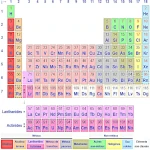
Iron (symbol Fe, atomic number 26) is a transition metal in group 8 of the periodic table.
Its atom has 26 protons, usually 30 neutrons (for the most abundant isotope \(\,^{56}\mathrm{Fe}\)) and 26 electrons with the electronic configuration [Ar] 3d⁶ 4s².
At room temperature, iron is a shiny, silvery-gray, ductile, and malleable solid metal (density ≈ 7.874 g/cm³).
It has remarkable ferromagnetic properties, being one of the three magnetic elements at room temperature, along with cobalt and nickel.
Pure iron easily oxidizes in humid air, forming rust (hydrated iron oxide), which requires protective treatments for industrial applications.
Melting point of iron (liquid state): 1,811 K (1,538 °C).
Boiling point of iron (gaseous state): 3,134 K (2,861 °C).
Table of Iron Isotopes
| Isotope / Notation | Protons (Z) | Neutrons (N) | Atomic mass (u) | Natural abundance | Half-life / Stability | Decay / Remarks |
|---|---|---|---|---|---|---|
| Iron-54 — \(\,^{54}\mathrm{Fe}\,\) | 26 | 28 | 53.939610 u | ≈ 5.845 % | Stable | Lightest stable isotope of natural iron. |
| Iron-56 — \(\,^{56}\mathrm{Fe}\,\) | 26 | 30 | 55.934937 u | ≈ 91.754 % | Stable | Dominant isotope of iron and the most stable nucleus in the Universe (maximum binding energy per nucleon). |
| Iron-57 — \(\,^{57}\mathrm{Fe}\,\) | 26 | 31 | 56.935394 u | ≈ 2.119 % | Stable | Has a nuclear magnetic moment; used in Mössbauer spectroscopy. |
| Iron-58 — \(\,^{58}\mathrm{Fe}\,\) | 26 | 32 | 57.933275 u | ≈ 0.282 % | Stable | Heaviest stable isotope of natural iron. |
| Iron-55 — \(\,^{55}\mathrm{Fe}\,\) | 26 | 29 | 54.938291 u | Artificial | ≈ 2.73 years | Radioactive, electron capture to \(\,^{55}\mathrm{Mn}\). Used as a tracer in biology and medicine. |
| Iron-59 — \(\,^{59}\mathrm{Fe}\,\) | 26 | 33 | 58.934875 u | Artificial | ≈ 44.5 days | Radioactive, beta-minus decay to \(\,^{59}\mathrm{Co}\). Used to study iron metabolism. |
| Iron-60 — \(\,^{60}\mathrm{Fe}\,\) | 26 | 34 | 59.934072 u | Cosmic trace | ≈ 2.6 million years | Radioactive, beta-minus decay to \(\,^{60}\mathrm{Co}\). Produced in supernovae, detected in deep ocean sediments. |
Electronic Configuration and Electron Shells of Iron
N.B.:
Electron shells: How electrons are organized around the nucleus (new window).
Iron has 26 electrons distributed across four electron shells. Its full electronic configuration is: 1s² 2s² 2p⁶ 3s² 3p⁶ 3d⁶ 4s², or simplified: [Ar] 3d⁶ 4s². This configuration can also be written as: K(2) L(8) M(14) N(2).
Detailed Structure of the Shells
K shell (n=1): contains 2 electrons in the 1s subshell. This inner shell is complete and very stable.
L shell (n=2): contains 8 electrons distributed as 2s² 2p⁶. This shell is also complete, forming a noble gas configuration (neon).
M shell (n=3): contains 14 electrons distributed as 3s² 3p⁶ 3d⁶. The 3s and 3p orbitals are complete, while the 3d orbitals contain 6 out of 10 possible electrons.
N shell (n=4): contains 2 electrons in the 4s subshell. These electrons are the first to be involved in chemical bonding.
Valence Electrons and Oxidation States
The 8 electrons in the outer shells (3d⁶ 4s²) are the valence electrons of iron. This configuration explains its chemical properties:
By losing the 2 4s electrons, iron forms the Fe²⁺ ion (oxidation state +2), called ferrous ion, pale green in solution.
By losing the 2 4s electrons and 1 3d electron, it forms the Fe³⁺ ion (oxidation state +3), called ferric ion, yellow-brown in solution. This is the most stable state.
Higher oxidation states (+4, +5, +6) exist in some specialized compounds but are less common.
Negative oxidation states (-2, -1, 0) can be observed in some organometallic complexes.
Chemical Reactivity
Iron is a moderately reactive metal. In humid air, it easily oxidizes to form rust (a mixture of iron oxides and hydroxides), a process that can lead to complete corrosion of the metal. Pure iron reacts slowly with cold water but more rapidly with steam at high temperatures, releasing hydrogen. It dissolves easily in dilute acids (hydrochloric, sulfuric) producing hydrogen gas and iron(II) salts. At high temperatures, iron reacts with oxygen to form iron(II,III) oxide Fe₃O₄ (magnetite), with sulfur to form sulfides, and with carbon to form carbides. Iron mainly forms two series of compounds: ferrous compounds (Fe²⁺), generally green, and ferric compounds (Fe³⁺), generally brown or red. Passivation of iron by concentrated nitric acid forms a protective oxide layer that slows further corrosion.
Industrial and Technological Applications of Iron
- in the production of steel and ferrous alloys, accounting for over 90% of global metal production;
- for construction structures (beams, concrete reinforcements, metal frames) in buildings and bridges;
- in the automotive industry for chassis, bodies, and mechanical components;
- to manufacture rails, locomotives, and railway equipment;
- in shipbuilding, submarines, and offshore platforms;
- as a base material for tools, machine tools, and industrial equipment;
- to produce permanent magnets and electromagnets (transformers, electric motors, generators);
- in magnetic storage media (hard drives, magnetic tapes);
- as a catalyst in the Haber-Bosch process for ammonia synthesis;
- to manufacture pipes, pipelines, and industrial tanks;
- in the production of cast iron for casting applications;
- as a component of corrosion-resistant stainless steels;
- for welding electrodes and metallurgical processes;
- in the manufacture of household appliances and furniture;
- as a pigment (iron oxide) in paints, ceramics, and cosmetics;
- for metal packaging (cans, tin cans);
- in military armament and defense systems;
- as armor material for vehicles and protective structures.
Biological Role of Iron
Iron is an absolutely essential trace element for virtually all forms of life. In animals and humans, iron is the central component of hemoglobin, the protein in red blood cells that transports oxygen from the lungs to all body tissues. An adult human contains about 4 to 5 grams of iron, about 70% of which is found in hemoglobin. Iron is also present in myoglobin (oxygen storage in muscles), in many respiratory enzymes (cytochromes) involved in cellular energy production, and in enzymes involved in DNA synthesis.
Role in Astrophysics and Cosmology
Iron holds a unique and fundamental position in astrophysics. The isotope \(\,^{56}\mathrm{Fe}\) has the highest binding energy per nucleon of all atomic nuclei, meaning it represents the endpoint of nuclear fusion in massive stars. Beyond iron, nuclear fusion no longer releases energy but consumes it, marking the limit of stellar energy production.
N.B.:
Iron is the fourth most abundant element in the Earth's crust (about 5% by mass) and probably the most abundant element on Earth as a whole, making up about 35% of the planet's total mass.
It is mainly found in ores such as hematite (Fe₂O₃), magnetite (Fe₃O₄), limonite (FeO(OH)), and siderite (FeCO₃).
The main producing countries are China, Australia, Brazil, and India.
Global steel production exceeds 1.9 billion tons per year, making iron the most produced and used metal by humanity.
Iron and steel recycling is highly developed, with high recovery rates contributing to a circular economy.
Extraction is mainly done by reducing iron oxides in blast furnaces using coke (carbon), a process that dates back thousands of years but remains fundamentally similar today.
 The energies required for nuclear fusion and why uranium is a limit
 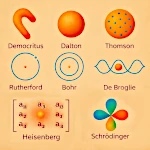 The Atom in All Its Forms: From Ancient Intuition to Quantum Mechanics