

Thallium (Tl, Z = 81): The Perfect Poison and the Element of Shadows
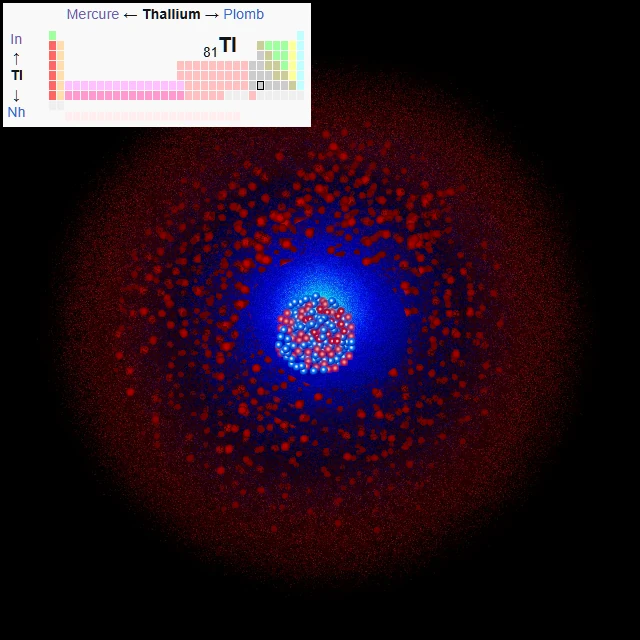
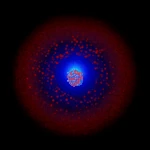
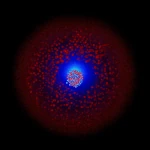
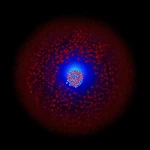
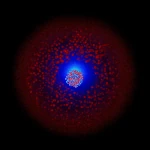
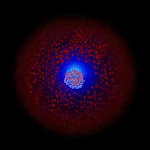
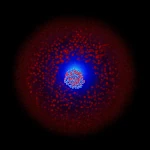
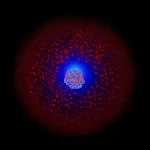
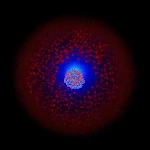
Image description:
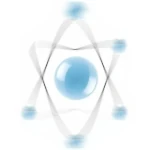
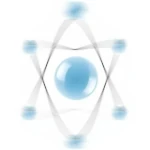
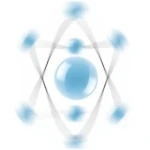
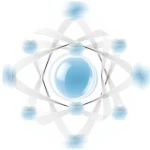
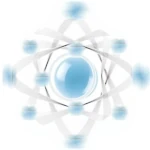
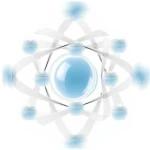
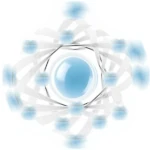
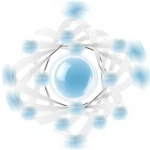
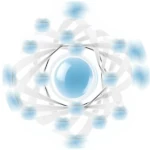
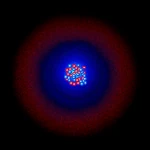
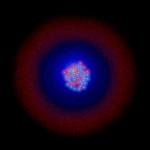
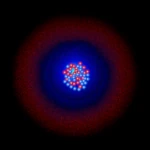
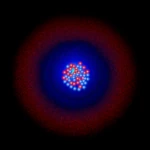
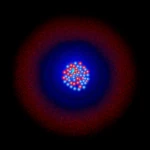
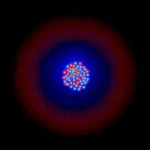
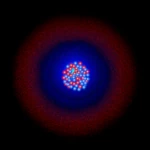
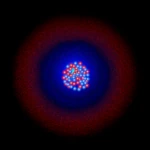
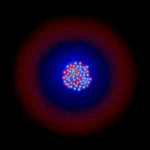
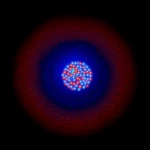
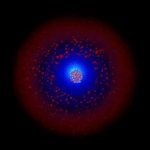
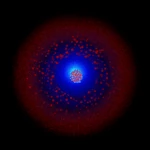
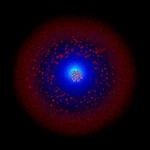
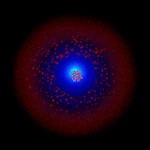
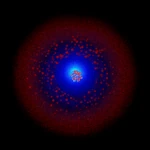
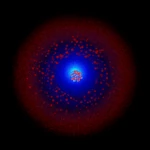
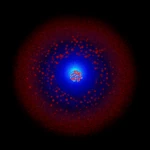
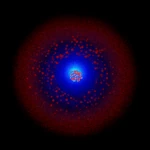
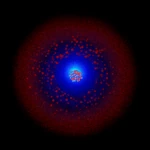
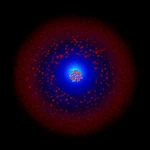
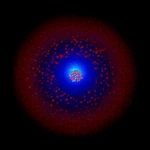
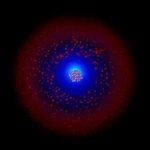
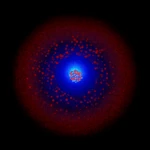
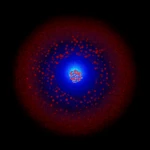
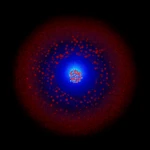
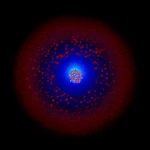
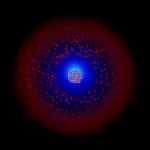
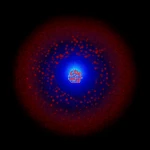
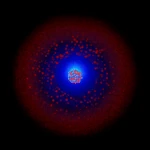
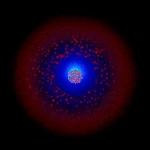
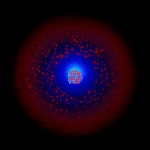
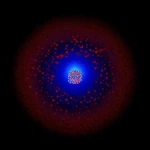
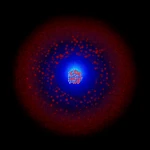
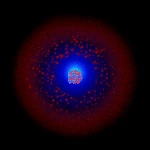
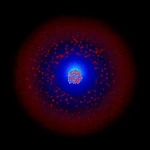
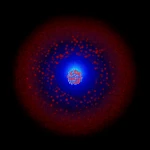
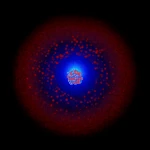
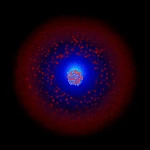
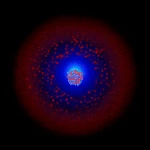
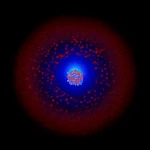
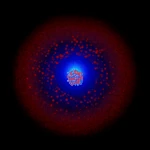
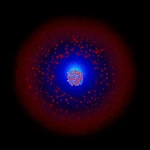
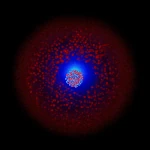
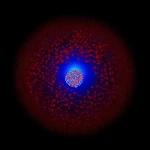
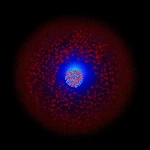
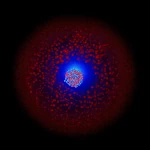
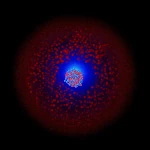
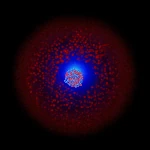
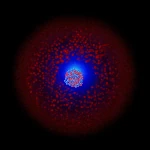
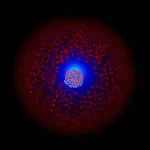
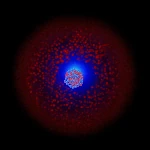
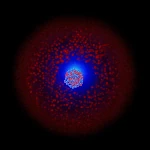
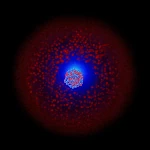
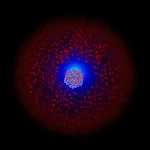
Simplified atomic model of the thallium atom. The main stable isotope is \(^{205}\mathrm{Tl}\)
with its 81 protons, 81 electrons, and 124 neutrons. Background illustrating the characteristic green spectral line and a hazard symbol.
Image source: astronoo.com (new window)
Why "Element of Shadows"?
This nickname reflects thallium's triple nature: discovered spectroscopically in the shadow of industrial residues (its green spectral line emerging from waste); acting as a biological shadow by usurping potassium's place in cells with insidious, delayed-toxicity effects; and historically used as the "perfect" criminal poison, operating in the shadows due to its odorless, tasteless nature and delayed symptoms.
Role of Thallium in Astrophysics and Cosmochemistry
Stellar synthesis: a rare heavy element
Thallium is a heavy element produced mainly by the s-process (slow neutron capture) in asymptotic giant branch (AGB) stars. It also has a significant contribution from the r-process (rapid capture) during supernovae and neutron star mergers. Its relatively low atomic number (Z=81) and position in the periodic table make its synthesis relatively efficient, but its cosmic abundance remains modest. It is one of the "heavy" elements whose presence in a star or galaxy reveals successive generations of nucleosynthesis.
Cosmic abundance and distribution
The cosmic abundance of thallium is about 1.0×10⁻¹² that of hydrogen in number of atoms, making it as rare as gold or platinum. Its presence in stellar spectra is difficult to detect due to the weakness of its lines. On Earth, it is highly dispersed and almost never forms its own minerals. It is found in trace amounts in the sulfides of many metals (pyrite, blende, galena), which is why it is often a byproduct of zinc, lead, and copper metallurgy.
An isotopic tracer in geochemistry
Thallium has two stable isotopes, \(^{203}\mathrm{Tl}\) and \(^{205}\mathrm{Tl}\). Variations in the \(^{205}\mathrm{Tl}/^{203}\mathrm{Tl}\) ratio are studied in isotopic geochemistry. Thallium exhibits strong incompatible lithophile behavior in magmatic processes, concentrating in liquids and rocks of the upper crust. Its isotopes can be fractionated by redox and adsorption processes, providing a new tool for tracing the cycle of elements in oceans, sediments, and hydrothermal systems. Thallium is thus used to study the evolution of ocean oxygenation in geological history.
Thallium in the early solar system
Like many volatile elements, thallium shows a deficit in chondritic meteorites and terrestrial planets compared to solar abundance. This is explained by its moderately volatile nature: it did not fully condense in the inner regions of the protoplanetary disk where the rocky planets formed. The study of thallium isotopic ratios in meteorites helps to understand the temperature and pressure conditions during the formation of the solar system.
History of the Discovery of Thallium
Etymology and origin of the name
The name "thallium" comes from the Greek θαλλός (thallós), meaning "young shoot" or "green twig". This name was given by its discoverer, Sir William Crookes, in 1861, because of the intense bright green spectral line he observed in the emission spectrum of dust from a sulfuric acid production chamber. This spectral line (at 535 nm) is so characteristic that it dominated the spectrum, evoking the color of a new bud.
Independent discovery by Crookes and Lamy
Thallium was discovered independently in 1861 by two scientists:
- Sir William Crookes (1832-1919), an English chemist and physicist, identified it by spectroscopy in the residues of a selenium ore processing plant. He later isolated small amounts of the element.
- Claude-Auguste Lamy (1820-1878), a French chemist, isolated the metal almost simultaneously from pyrite and studied its chemical properties more systematically.
A priority dispute followed, but today both men are credited with the discovery.
Early studies and isolation of the metal
Crookes produced the first sample of metallic thallium in 1862 by electrolysis of a thallium salt solution. Lamy, for his part, produced enough to determine several of its physical properties. The extreme toxicity of thallium and its compounds quickly became apparent, which limited its study and caused several fatal accidents among pioneering chemists.
Deposits and production
There are no primary thallium mines. Thallium is always recovered as a byproduct of the metallurgy of other metals:
- Roasting of zinc, lead, and copper sulfide ores: Thallium volatilizes and concentrates in the dust and sludge of furnaces.
- Processing of pyrite (FeS₂): An important historical source.
- Certain selenium and tellurium ores.
The main producing countries are China, Russia, and Kazakhstan. Global annual production is very low, on the order of 10 to 15 tons, reflecting its rarity and the limited (and strictly controlled) demand for this dangerous element. Its price is high due to recovery and purification costs.
Structure and Fundamental Properties of Thallium
Classification and atomic structure
Thallium (symbol Tl, atomic number 81) is a poor metal of the p-block, located in group 13 of the periodic table, with boron, aluminum, gallium, and indium. It is the heaviest stable element in this group. Its atom has 81 protons, usually 123 or 124 neutrons (for the isotopes \(^{203}\mathrm{Tl}\) and \(^{205}\mathrm{Tl}\)), and 81 electrons with the electronic configuration [Xe] 4f¹⁴ 5d¹⁰ 6s² 6p¹. It therefore has three valence electrons (6s² 6p¹).
Physical properties
Thallium is a bluish-gray, soft, malleable metal that tarnishes rapidly in air, taking on a grayish tint. It is soft enough to be scratched with a fingernail.
- High density: 11.85 g/cm³ at 20 °C.
- Relatively low melting point: 304 °C.
- Boiling point: 1473 °C.
- Crystal structure: Hexagonal close-packed (HCP) at room temperature.
- Superconductivity: Becomes superconducting at very low temperature (2.38 K).
- Extreme toxicity: Most notable property (see below).
Transformation points
Thallium melts at 304 °C (577 K) and boils at 1473 °C (1746 K). Its moderate melting point facilitated its historical metallurgical processing.
Chemical reactivity
Thallium is a fairly reactive metal. It tarnishes in air, forming a mixture of oxide (Tl₂O) and nitride. It reacts slowly with water (especially if the water contains dissolved oxygen) to form the hydroxide TlOH, which is a strong and soluble base. It dissolves easily in mineral acids (sulfuric and nitric acids) to give the corresponding Tl(I) or Tl(III) salts. It forms amalgams with mercury.
Summary of physical characteristics
Density: 11.85 g/cm³.
Melting point: 577 K (304 °C).
Boiling point: 1746 K (1473 °C).
Crystal structure: Hexagonal close-packed (HCP).
Electronic configuration: [Xe] 4f¹⁴ 5d¹⁰ 6s² 6p¹.
Main oxidation states: +1 and +3.
Table of Thallium Isotopes
| Isotope / Notation | Protons (Z) | Neutrons (N) | Atomic mass (u) | Natural abundance | Half-life / Stability | Decay / Remarks |
|---|---|---|---|---|---|---|
| Thallium-203 — \(^{203}\mathrm{Tl}\) | 81 | 122 | 202.972344 u | ≈ 29.52 % | Stable | Stable isotope. Used as a target to produce lead-203 (for nuclear medicine) or as a tracer in research. |
| Thallium-205 — \(^{205}\mathrm{Tl}\) | 81 | 124 | 204.974427 u | ≈ 70.48 % | Stable | Major stable isotope. Reference isotope for geochemical measurements. |
| Thallium-204 (artificial/natural) | 81 | 123 | 203.97386 u | Trace | 3.78 years | Radioactive β⁻ (97%) and electron capture (3%). Used as a beta source in thickness gauges and detectors. Present in trace amounts in the environment (product of uranium decay). |
| Thallium-201 (artificial) | 81 | 120 | 200.9708 u | 0 % | 73.1 hours | Radioactive by electron capture. Major medical isotope used in myocardial scintigraphy (cardiac imaging). Emits gamma rays of 135 and 167 keV. Produced by irradiation of thallium-203 in a cyclotron. |
Electron Configuration and Electron Shells of Thallium
N.B.:
Electron shells:
How electrons are organized around the nucleus (new window).
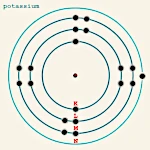
Thallium has 81 electrons distributed over six electron shells. Its electronic configuration [Xe] 4f¹⁴ 5d¹⁰ 6s² 6p¹ has a 6p subshell with only one electron. This can also be written as: K(2) L(8) M(18) N(32) O(18) P(3), or in full: 1s² 2s² 2p⁶ 3s² 3p⁶ 3d¹⁰ 4s² 4p⁶ 4d¹⁰ 4f¹⁴ 5s² 5p⁶ 5d¹⁰ 6s² 6p¹.
Detailed structure of the shells
K shell (n=1): 2 electrons (1s²).
L shell (n=2): 8 electrons (2s² 2p⁶).
M shell (n=3): 18 electrons (3s² 3p⁶ 3d¹⁰).
N shell (n=4): 32 electrons (4s² 4p⁶ 4d¹⁰ 4f¹⁴).
O shell (n=5): 18 electrons (5s² 5p⁶ 5d¹⁰).
P shell (n=6): 3 electrons (6s² 6p¹).
Valence electrons and oxidation states
Thallium has 3 valence electrons (6s² 6p¹). It exhibits a fascinating chemical duality with two stable oxidation states: +1 (thallium(I) or thallous) and +3 (thallium(III) or thallic).
- Thallium(I) (Tl⁺): The most stable state in aqueous conditions. Chemically, Tl⁺ closely resembles the potassium ion (K⁺) and, to a lesser extent, the silver(I) ion (Ag⁺). This mimicry is the key to its extreme toxicity (see below). Tl(I) compounds are generally soluble in water (except TlCl, TlBr, TlI, and Tl₂CrO₄).
- Thallium(III) (Tl³⁺): A powerful oxidant, unstable in water (reduces to Tl⁺) unless stabilized in complexes (e.g., with chlorides: TlCl₄⁻). Chemically, it resembles aluminum(III) (Al³⁺). Tl₂O₃ is an amphoteric oxide.
This duality (+1 stable) is surprising for a heavy element in group 13 (where Al, Ga, In prefer the +3 state). It is explained by the inert pair effect: the 6s² electron pair is very stable and reluctant to participate in bonding, leaving the chemistry of the 6p¹ electron to predominate.
Chemical Reactivity of Thallium
Reaction with air and oxygen
Metallic thallium tarnishes slowly in moist air, forming a mixture of gray-black thallium(I) oxide (Tl₂O) and hydroxide (TlOH). When heated in air, it burns with an emerald green flame (characteristic of Tl⁺ ions) to form mainly Tl₂O, as well as some mixed oxides and thallium(III) oxide (Tl₂O₃) on the surface.
Reaction with water and acids
- Water: Reacts very slowly with cold water, more rapidly with hot water or in the presence of oxygen, to form thallium(I) hydroxide (TlOH), which is a strong and very soluble base: 2Tl + 2H₂O → 2TlOH + H₂.
- Acids: Dissolves easily in dilute mineral acids (sulfuric acid, nitric acid) to give the corresponding Tl(I) salts and release hydrogen. In concentrated nitric acid, it can be partially oxidized to Tl(III).
Reactions with halogens and sulfur
Thallium reacts directly with halogens to form halides. With chlorine, it forms TlCl (insoluble, white) or, in excess chlorine, Tl(III) complexes. With sulfur, it gives thallium(I) sulfide (Tl₂S), which is black.
Important compounds
- Thallium(I) sulfate (Tl₂SO₄): Soluble, colorless, and odorless. It was the compound most commonly used as a pesticide and rodenticide, and unfortunately also as a criminal poison. Extremely toxic.
- Thallium(I) acetate (TlCH₃COO): Also soluble and very toxic.
- Thallium(I) chloride (TlCl): Slightly soluble in water (like AgCl), white precipitate.
- Thallium(III) oxide (Tl₂O₃): Black powder, oxidizing agent.
- Thallium(III) sulfate (Tl₂(SO₄)₃): Salt of a powerful oxidant.
Industrial and Technological Applications of Thallium
- Historically as a rodenticide and insecticide (thallium sulfate), banned in most countries since the 1970s;
- In special optical glasses with high refractive index (thallium-bromo-iodide glasses) for lenses and prisms;
- As a dopant in scintillator crystals (sodium iodide activated with thallium, NaI(Tl)) for radiation detectors (gamma, X-rays) in physics, nuclear medicine, and security;
- In low-melting-point alloys (with mercury, tin, lead, bismuth) for fuses, thermal switches, and seals;
- As a semiconductor material in certain specialized electronic components (infrared photodetectors made of thallium sulfide, Tl₂S);
- In the production of low-melting-point glasses (for sealing certain materials);
- As a catalyst in certain organic chemical reactions (oxidations, polymerizations);
- In nuclear medicine: The isotope thallium-201 (\(^{201}\mathrm{Tl}\)) is used for myocardial scintigraphy (cardiac stress test);
- In high-temperature superconductors (as a component of cuprates, e.g., Tl-Ba-Ca-Cu-O) in research;
- As an electrode (thallium amalgam) in certain electrochemical devices;
- For mineralization in mass spectrometry by ICP-MS (addition of thallium as an internal standard);
- In geochemical research as an isotopic tracer.
Toxicology and Health: The Perfect Poison
Mechanism of toxicity
The extreme toxicity of thallium(I) is mainly explained by its ionic mimicry with potassium (K⁺). Both ions have similar ionic radii (Tl⁺: 164 pm, K⁺: 152 pm). Thallium can thus usurp the place of potassium in many essential biological processes:
- Membrane transport: It enters cells via potassium pumps and channels (such as the Na⁺/K⁺ ATPase pump).
- Inhibition of potassium-dependent enzymes.
- Substitution in proteins and cellular structures.
- Binding to thiol groups (-SH) of proteins, disrupting their function (like lead or mercury).
- Interference with sulfur metabolism and disruption of keratin synthesis.
Once inside the cell, thallium cannot be effectively expelled and accumulates, causing irreversible damage.
Symptoms of thallium poisoning
Poisoning can be acute (single high dose) or chronic (repeated low doses). Symptoms usually appear 12 to 48 hours after ingestion.
- Early phase (1-5 days): Abdominal pain, nausea, vomiting, diarrhea (may be bloody), severe constipation. Flu-like symptoms.
- Neurological phase (from day 2-3): Damage to the peripheral nervous system: intense neuropathic pain ("burning feet" syndrome, tingling, "feeling of walking on coals"), muscle weakness, ascending paralysis. Central nervous system damage: confusion, hallucinations, seizures, coma.
- Characteristic sign: alopecia: Total hair loss (scalp, eyebrows, eyelashes, body hair) appearing about 2-3 weeks after poisoning. This is a very suggestive sign, due to the inhibition of keratin synthesis.
- Other signs: Mees' lines (transverse white stripes on the nails), skin rashes, kidney damage, cardiac disorders.
Poisoning is often fatal without treatment. Neurological sequelae (neuropathy, chronic pain) are common among survivors.
Treatment of poisoning
Treatment is a medical emergency and is based on:
- Elimination of the toxin: Gastric lavage, activated charcoal (which absorbs thallium well).
- Chelation: Administration of chelating agents that bind to thallium and promote its excretion. The treatment of choice is Prussian blue (ferric ferrocyanide). This insoluble compound selectively traps thallium(I) ions in the intestine, forming a non-absorbable complex that is eliminated in the feces. Other chelators such as D-penicillamine may be used.
- Forced diuresis with potassium supplementation: Paradoxically, administering potassium intravenously can increase urinary excretion of thallium by competing with it for renal reabsorption.
- Supportive treatments: Pain management, respiratory support, hemodialysis in severe cases.
Criminal uses and famous accidents
Due to its solubility, lack of odor and taste, and the delay in the onset of symptoms, thallium sulfate was nicknamed "inheritance powder" and was used in many criminal poisonings in the 20th century. Industrial accidents (e.g., cement plants using contaminated ores) and accidental food poisonings (treated seeds) have also caused deaths.
Environment, Pollution, and Regulation
Sources of pollution
The main sources of thallium in the environment are:
- Historical: Thallium pesticides (banned).
- Current:
- Coal combustion (thallium is present in some coals).
- Non-ferrous metal metallurgy (zinc, lead, copper smelting).
- Cement production (if raw materials are contaminated).
- Improperly recycled electronic waste.
Environmental cycle and bioaccumulation
Thallium is relatively mobile in the environment. As Tl⁺, it is soluble in water and can contaminate groundwater. It is poorly biodegradable. Some plants (such as cabbage) can accumulate thallium from the soil. Bioaccumulation in the food chain is less pronounced than for mercury, but the risk to ecosystems and humans via contaminated drinking water and food is real.
Regulation
Due to its high toxicity, thallium is strictly regulated:
- Drinking water: The WHO recommends a limit of 0.0001 mg/L (0.1 µg/L). The EU and EPA have similar limits.
- Workplace air: Exposure limits (ELVs) are very low (0.1 mg/m³ for soluble Tl, 0.01 mg/m³ for dusts).
- Ban: Most countries have banned the use of thallium in pesticides and rodenticides.
- Convention: Thallium and its compounds are listed in the Rotterdam Convention on the Prior Informed Consent Procedure for Certain Hazardous Chemicals in International Trade.
Recycling and Waste Management
Need for strict control
Any waste containing thallium must be treated as hazardous and toxic. Industrial processes generating thallium must capture and recycle this element to prevent its dispersion.
Treatment processes
- Chemical precipitation: Thallium(I) can be precipitated as insoluble iodide, chromate, or hydroxide.
- Adsorption: On activated carbon, manganese oxides, or specific ion exchange resins.
- Electrodeposition: Recovery of the metal by electrolysis from solutions.
- Stabilization/Solidification: Incorporation into cement or glass matrices for final disposal.
Perspectives
Research focuses on:
- The development of alternative materials to replace thallium in optical glasses and scintillators.
- Improving methods for detection and monitoring of thallium in the environment.
- Remediation of contaminated sites (soils, waters) by physicochemical or biological methods (phytoextraction).
Thallium remains an emblematic element of the dangers posed by toxic heavy metals, reminding us of the need for constant vigilance in their management throughout their life cycle, from extraction to disposal.
 The energies required for nuclear fusion and why uranium is a limit
 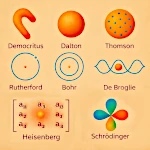 The Atom in All Its Forms: From Ancient Intuition to Quantum Mechanics