

Potassium (K, Z = 19): From Fire on Water to the Beating of the Heart
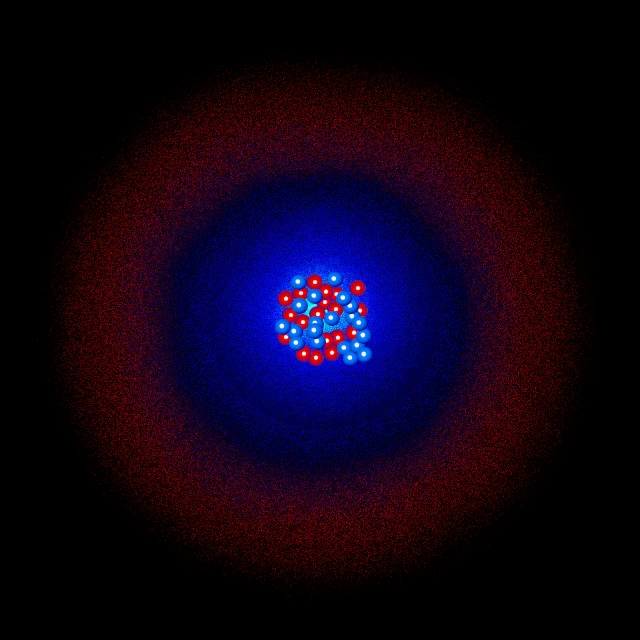
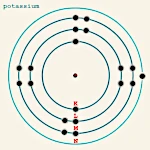
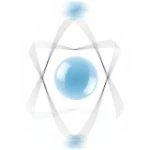
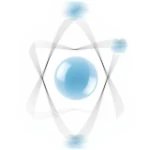
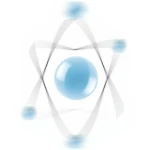
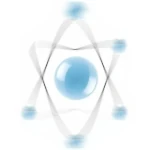
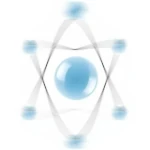
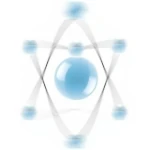
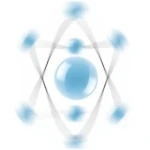
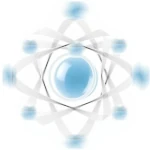
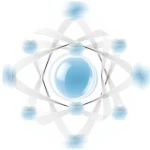
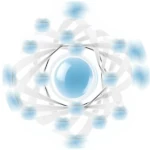
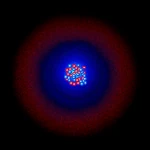
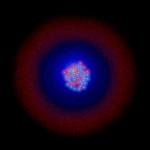
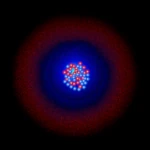
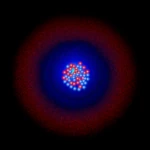
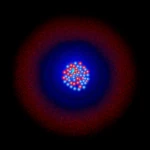
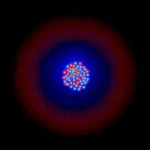
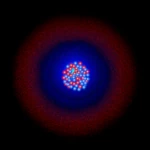
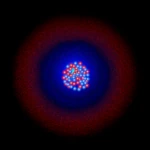
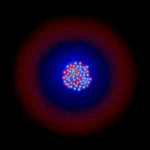
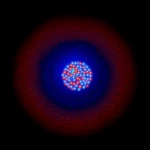
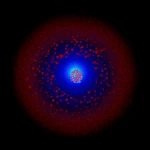
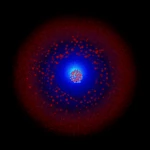
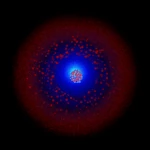
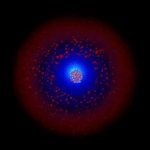
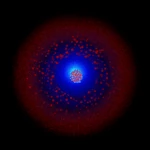
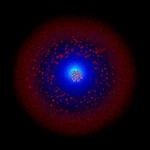
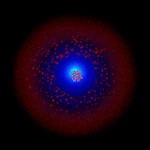
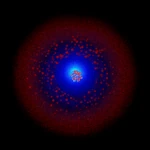
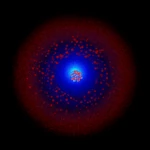
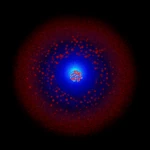
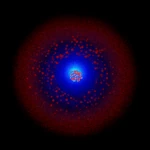
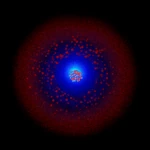
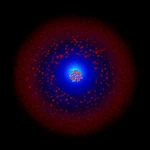
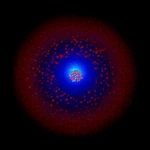
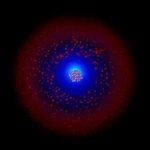
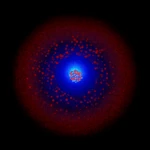
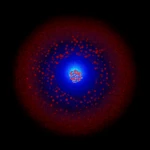
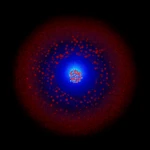
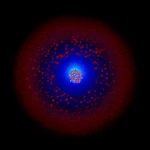
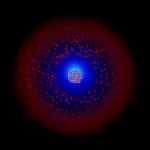
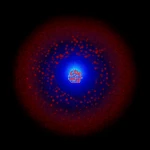
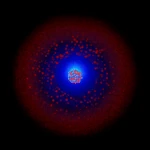
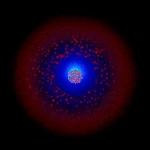
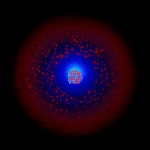
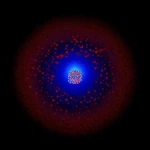
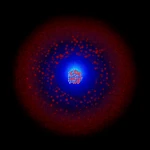
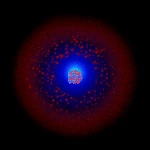
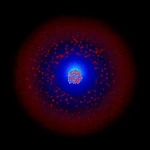
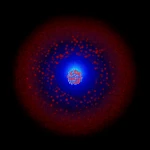
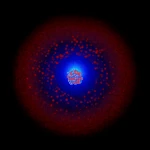
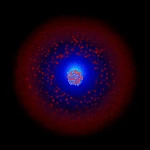
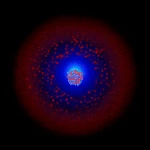
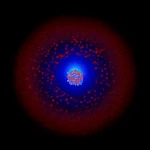
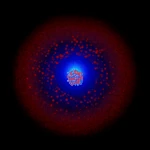
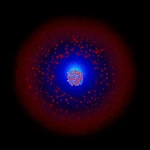
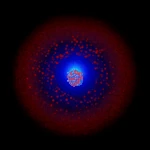
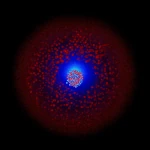
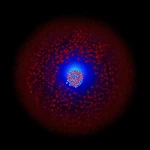
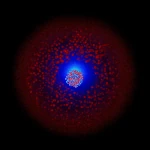
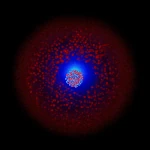
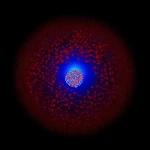
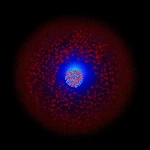
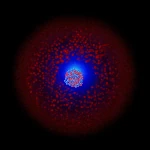
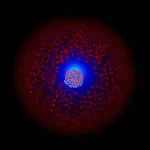
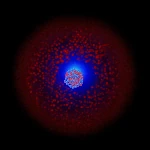
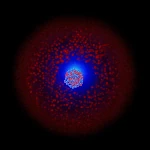
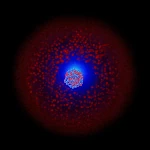
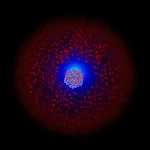
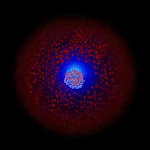
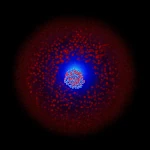
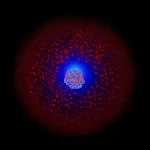
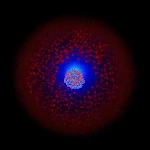
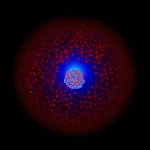
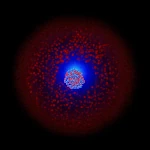
Simplified atomic model of the potassium atom.
The most abundant isotope is \(\,^{39}\mathrm{K}\,\) with its 19 protons and 20 neutrons.
Image source: astronoo.com (new window) — AI-generated image, public domain.
History of the Discovery of Potassium
Potassium was the first metal isolated by electrolysis, marking the beginning of a revolution in chemistry. Before its discovery, potassium compounds such as potash (potassium carbonate, K₂CO₃) were known and used since antiquity to make soap and glass. In 1807, British chemist Humphry Davy (1778–1829) succeeded in isolating metallic potassium by passing an electric current through molten potash, using a powerful voltaic battery. When the first drops of metallic potassium appeared, they immediately ignited with a spectacular violet flame. Davy was so enthusiastic about this discovery that he reportedly danced for joy in his laboratory. A few days later, he isolated sodium using the same method. The name potassium comes from the English potash, itself derived from pot ashes (ashes from a pot), as potash was obtained by leaching wood ashes in pots. The chemical symbol K comes from the Latin kalium, derived from the Arabic al-qalya (plant ash).
Structure and Fundamental Properties
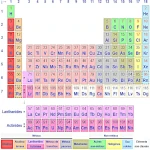
Potassium (symbol K, atomic number 19) is an alkaline metal in group 1 of the periodic table.
Its atom has 19 protons, 19 electrons, and usually 20 neutrons in its most abundant isotope (\(\,^{39}\mathrm{K}\)).
Three isotopes occur naturally: potassium-39 (\(\,^{39}\mathrm{K}\)), potassium-40 (\(\,^{40}\mathrm{K}\), radioactive), and potassium-41 (\(\,^{41}\mathrm{K}\)).
At room temperature, potassium is a soft, silvery-white solid metal that tarnishes rapidly in air due to the formation of an oxide layer.
It is soft enough to be cut with a knife. Density ≈ 0.862 g/cm³ (less dense than water, it floats!).
Melting point of potassium: 336.7 K (63.5 °C).
Boiling point: 1,032 K (759 °C).
Potassium is extremely chemically reactive, oxidizing instantly in air and reacting violently with water, producing hydrogen gas that spontaneously ignites with a characteristic violet flame (due to potassium's atomic emission).
It must be stored under mineral oil or in an inert atmosphere to prevent any reaction.
Table of Potassium Isotopes
| Isotope / Notation | Protons (Z) | Neutrons (N) | Atomic mass (u) | Natural abundance | Half-life / Stability | Decay / Remarks |
|---|---|---|---|---|---|---|
| Potassium-39 — \(\,^{39}\mathrm{K}\,\) | 19 | 20 | 38.963707 u | ≈ 93.26% | Stable | Ultra-dominant isotope of natural potassium. |
| Potassium-41 — \(\,^{41}\mathrm{K}\) | 19 | 22 | 40.961826 u | ≈ 6.73% | Stable | Second stable isotope; used in medical tracing. |
| Potassium-40 — \(\,^{40}\mathrm{K}\) | 19 | 21 | 39.963998 u | ≈ 0.012% | 1.248 billion years | Radioactive: 89.3% β\(^-\) → \(\,^{40}\mathrm{Ca}\) ; 10.7% electron capture → \(\,^{40}\mathrm{Ar}\). Major source of natural radioactivity in the human body and a key tool in geological dating. |
| Potassium-42 — \(\,^{42}\mathrm{K}\) | 19 | 23 | 41.962403 u | Non-natural | 12.355 hours | Radioactive β\(^-\) decay to calcium-42. Used as a tracer in medicine and biological research. |
| Other isotopes — \(\,^{32}\mathrm{K}\) to \(\,^{57}\mathrm{K}\) | 19 | 13 — 38 | — (variable) | Non-natural | Milliseconds to minutes | Very unstable isotopes produced artificially; experimental nuclear physics. |
Electronic Configuration and Electron Shells of Potassium
N.B.:
Electron shells: How electrons organize around the nucleus (new window).
Potassium has 19 electrons distributed across four electron shells. Its full electronic configuration is: 1s² 2s² 2p⁶ 3s² 3p⁶ 4s¹, or simplified as: [Ar] 4s¹. This configuration can also be written as: K(2) L(8) M(8) N(1).
Detailed Structure of the Shells
K Shell (n=1): contains 2 electrons in the 1s subshell. This inner shell is complete and highly stable.
L Shell (n=2): contains 8 electrons distributed as 2s² 2p⁶. This shell is also complete, forming a noble gas configuration (neon).
M Shell (n=3): contains 8 electrons distributed as 3s² 3p⁶. The 3s and 3p orbitals are complete, forming a stable configuration. Note that the 3d orbitals remain empty.
N Shell (n=4): contains only 1 electron in the 4s subshell. This single valence electron is very weakly bound and easily lost during chemical reactions.
Valence Electrons and Oxidation States
The single electron in the outer shell (4s¹) is the valence electron of potassium. This configuration explains its chemical properties:
By losing its 4s electron, potassium forms the K⁺ ion (oxidation state +1), its unique and systematic oxidation state.
The K⁺ ion then adopts an electronic configuration identical to that of argon [Ar], a noble gas, which gives this ion maximum stability.
The electronic configuration of potassium, with its valence shell containing a single 4s electron, classifies it among the alkali metals. This structure gives it characteristic properties: very high chemical reactivity (it reacts violently with water and spontaneously ignites in moist air), low ionization energy (the valence electron is very easily removed), and exclusive formation of compounds with an oxidation state of +1. Potassium exhibits no coloration in its compounds because the K⁺ ion has no electrons in partially filled orbitals. Its extremely strong tendency to lose its valence electron makes potassium one of the most reactive metals and an excellent reducing agent. Potassium is so reactive that it must be stored under mineral oil to protect it from air and moisture.
Chemical Reactivity
Potassium is one of the most reactive metals in the periodic table. It reacts violently and instantly with water, producing potassium hydroxide (KOH) and hydrogen gas, which spontaneously ignites: 2 K + 2 H₂O → 2 KOH + H₂ (with a characteristic violet flame). Potassium oxidizes rapidly in air, forming potassium oxide (K₂O), peroxide (K₂O₂), and superoxide (KO₂) successively. It reacts vigorously with halogens, acids, and most non-metals. Potassium forms almost exclusively ionic compounds in the +I oxidation state. Major compounds include potassium hydroxide (KOH, a strong base), potassium chloride (KCl), potassium carbonate (K₂CO₃), potassium nitrate (KNO₃, saltpeter), and potassium permanganate (KMnO₄). In organic chemistry, potassium derivatives such as potassium tert-butoxide are very strong bases used as reagents.
Industrial and Technological Applications of Potassium
- in agricultural fertilizers (potassium chloride, potassium sulfate), essential for plant growth;
- to produce potassium hydroxide (caustic potash), used in the manufacture of liquid soaps;
- as a component of black powder (saltpeter, KNO₃) and other explosives;
- in fireworks to produce a characteristic violet color;
- to manufacture special heat-resistant glass;
- as a food additive (acidity regulator, leavening agent, preservative);
- in salt substitutes for people on a low-sodium diet;
- to produce superoxides used in air regeneration systems (submarines, space stations);
- as a powerful reducing agent in organic chemical synthesis;
- in certain types of detergents and soaps;
- for leather tanning and textile dyeing;
- as a catalyst in certain chemical reactions;
- in the production of certain dyes and pigments;
- to manufacture electrodes in electrochemical research;
- as a heat transfer fluid in certain nuclear reactors (liquid sodium-potassium alloy NaK);
- in photocells and photomultipliers;
- for the synthesis of specific pharmaceutical products.
Absolutely Essential Biological Role
Potassium is indispensable for all forms of life and is the main intracellular cation (K⁺) in all living organisms. It plays a fundamental role in many vital biological functions. The sodium-potassium pump (Na⁺/K⁺-ATPase), present in all cell membranes, actively pumps potassium into cells and sodium out, consuming about 20 to 40% of the body's total metabolic energy. This electrochemical gradient is essential for nerve impulse transmission, muscle contraction (including the heart muscle), cell volume regulation, and membrane potential maintenance. Potassium is involved in regulating blood pressure, acid-base balance, protein synthesis, and carbohydrate metabolism. In plants, potassium regulates the opening and closing of stomata, photosynthesis, sugar transport, and disease resistance. A potassium deficiency (hypokalemia) can cause fatigue, muscle cramps, and potentially fatal cardiac arrhythmias, while an excess (hyperkalemia) can also be dangerous for the heart.
Natural Radioactivity and Implications
Potassium-40 is one of the main natural radionuclides present on Earth. With a half-life of 1.248 billion years, it slowly decays into calcium-40 (89.3% of the time) and argon-40 (10.7% of the time). Although it represents only 0.012% of natural potassium, its ubiquitous presence makes potassium-40 the main source of internal radioactivity in the human body. A 70 kg human containing about 140 grams of potassium undergoes about 4,400 radioactive decays per second from potassium-40, contributing to an annual dose of about 0.17 millisieverts. Bananas, rich in potassium, naturally contain potassium-40, giving rise to the humorous concept of the "banana equivalent dose" in radiation protection. Potassium-40 also contributes to the internal heating of the Earth through radioactive decay, along with uranium and thorium.
Abundance and Sources
Potassium is the seventh most abundant element in the Earth's crust (about 2.1% by mass). It is never found in its metallic state in nature due to its high reactivity, but exists in many silicate minerals (feldspars, micas) and evaporite salts. The main potassium minerals are sylvite (KCl), carnallite (KMgCl₃·6H₂O), and polyhalite. Dissolved potassium is present in seawater at a concentration of about 0.38 g/L. Major deposits of potassium salts are found in Canada, Russia, Belarus, and Germany. Potassium is also abundantly present in soils and is an essential macronutrient for agriculture. Extraction is mainly done by mining salt deposits, followed by refining to produce potassium chloride or other compounds.
Role in Astrophysics and Geochronology
Potassium is produced in stars during the explosive nucleosynthesis of supernovae by silicon fusion and neutron capture. Radioactive potassium-40 is a fundamental tool in geological dating. The potassium-argon (K-Ar) dating method and its argon-argon (⁴⁰Ar/³⁹Ar) variant are among the most important in geochronology, allowing the dating of rocks from a few thousand years to several billion years. These methods have made it possible to date the age of the Earth, major events in geological history, meteorite impact craters, and the evolution of hominids. The argon-40 trapped in minerals comes exclusively from the decay of potassium-40, forming the basis of this dating technique. The isotopic ratio of potassium in meteorites and lunar samples provides information on the formation of the solar system.
N.B.:
The spectacular reaction of potassium with water has long fascinated chemists and students, but it is also dangerous.
When a piece of potassium is placed on water, it reacts so violently that the hydrogen produced ignites instantly with a characteristic violet flame, and the potassium melts into a bright sphere that dances frantically on the water's surface.
The heat released can be sufficient to cause the potassium to explode, projecting flaming fragments of molten metal.
For this reason, this classic demonstration must be performed with very small pieces and strict safety precautions.
The violet flame results from the excitation of potassium electrons, which, when returning to their ground energy level, emit characteristic photons at 766 nm and 770 nm (potassium doublet).
 The energies required for nuclear fusion and why uranium is a limit
 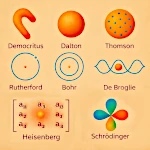 The Atom in All Its Forms: From Ancient Intuition to Quantum Mechanics