

Platinum (Pt, Z = 78): The Unalterable King of Precious Metals
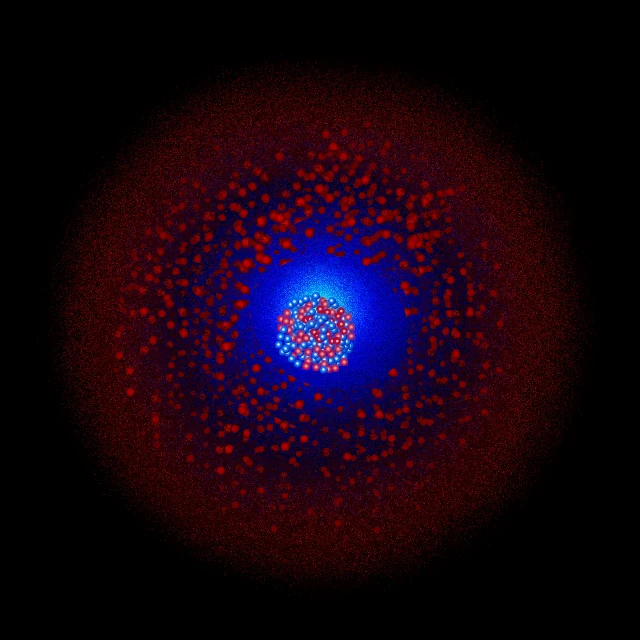
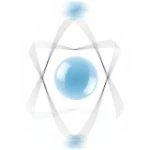
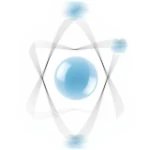
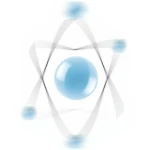
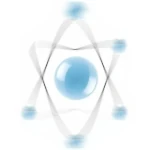
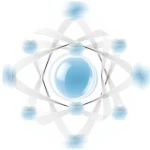
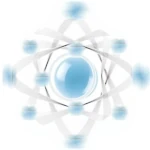
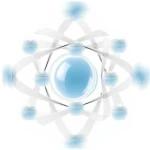
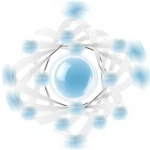
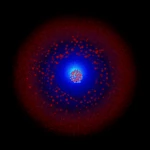
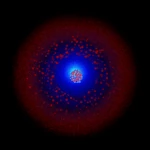
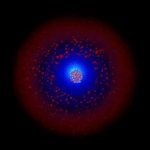
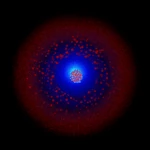
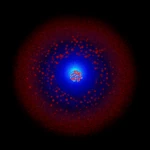
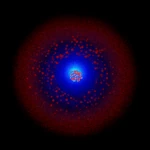
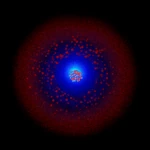
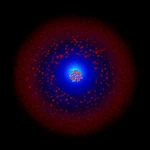
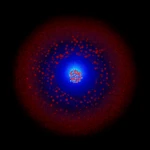
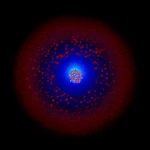
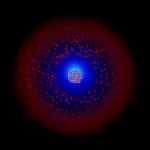
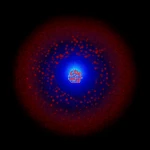
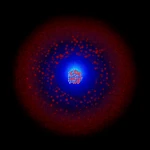
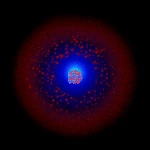
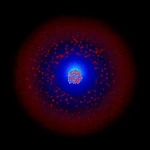
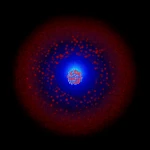
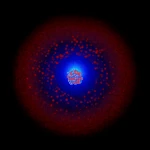
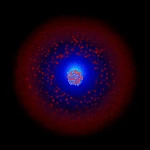
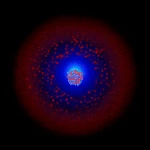
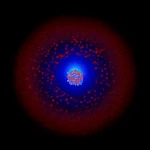
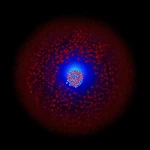
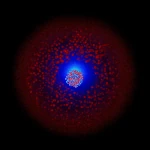
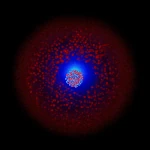
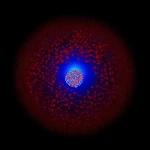
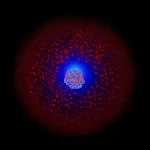
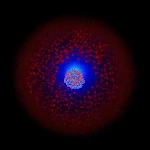
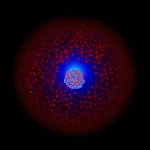
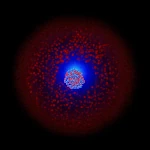
Image description:
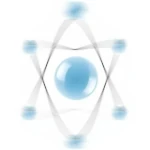
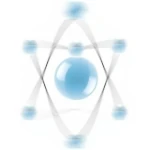
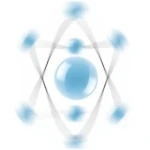
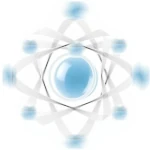
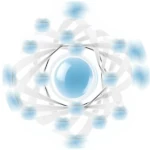
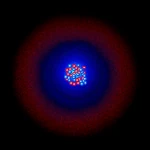
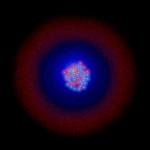
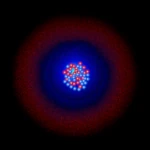
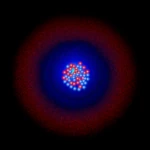
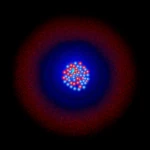
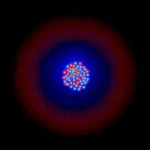
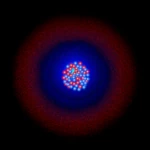
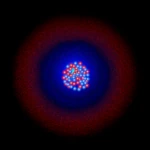
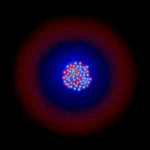
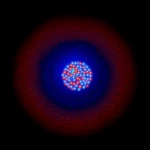
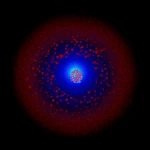
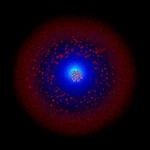
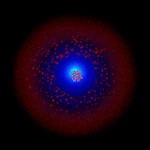
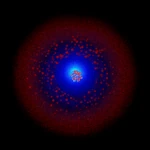
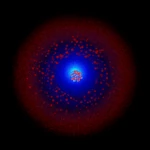
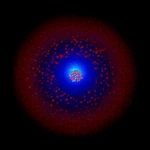
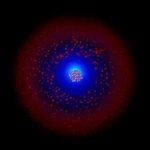
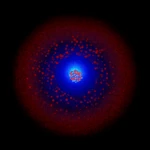
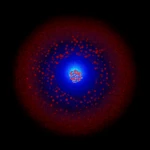
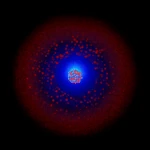
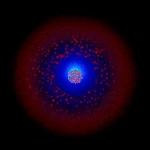
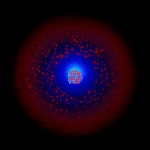
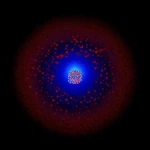
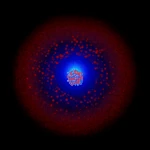
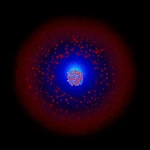
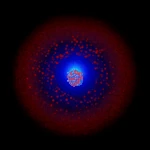
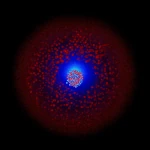
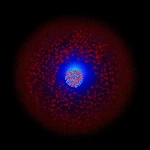
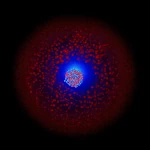
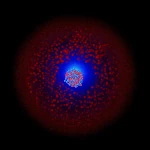
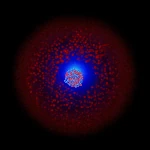
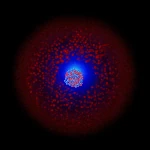
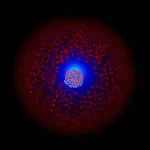
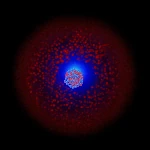
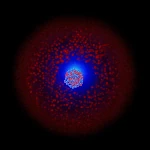
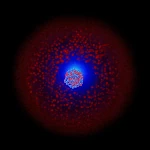
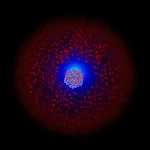
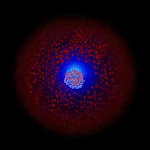
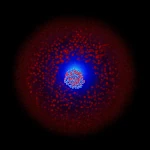
Simplified atomic model of the platinum atom. The main stable isotope is \(^{195}\mathrm{Pt}\)
with its 78 protons, 78 electrons, and 117 neutrons.
Image source: astronoo.com (new window)
Role of Platinum in Astrophysics and Cosmochemistry
Stellar synthesis and cosmic origin
Platinum is a heavy element mainly synthesized by the r-process (rapid neutron capture) during violent events such as supernovae and neutron star mergers. It is a siderophile element, with a strong affinity for metallic iron. This geochemical trait explains why, during Earth's formation, most of the platinum in primordial matter migrated to the metallic core. The extremely low concentration of platinum in the mantle and Earth's crust (parts per billion) contrasts with its relative abundance in chondritic meteorites, which better reflect the composition of the nascent solar system.
Cosmic abundance and significance
The cosmic abundance of platinum is about 1.5×10⁻¹² times that of hydrogen in number of atoms, making it slightly more abundant than gold but much rarer than silver or palladium. In meteorites, the abundance ratios between platinum and other siderophile elements (such as iridium, osmium, ruthenium) are used as "fingerprints" to classify meteorite types and understand planetary accretion processes.
Tracer of impact events and planetary differentiation
Like iridium, platinum is a key tracer of extraterrestrial material in geological layers. Platinum anomalies are sought in sedimentary strata to identify past asteroid impacts. The platinum-osmium isotopic system (\(^{190}\mathrm{Pt}\) decays to \(^{186}\mathrm{Os}\)) is a complementary dating tool to the Re-Os system, used to date very ancient planetary differentiation events or to study the source of platinum in terrestrial deposits.
Platinum in stars and interstellar dust
Spectral lines of platinum have been detected in the atmospheres of some metal-rich stars, providing information on nucleosynthesis processes. In the interstellar medium, platinum is probably present in the form of refractory dust grains, similar to those that may have been incorporated into planets during their formation.
History of the Discovery of Platinum
Etymology and origin of the name
The name "platinum" comes from the Spanish "platina", a diminutive of "plata" meaning silver. This term was used somewhat pejoratively by Spanish conquistadors in the 16th century, who found this white metal mixed with gold in Colombian rivers and considered it "little silver" or "impure gold," sometimes discarding it. Its true value was only recognized later.
Pre-Columbian uses and European discovery
Artifacts made of gold-platinum alloy dating from the pre-Columbian era have been found in Ecuador, attesting to the ancient mastery of the metal by indigenous peoples. For European science, platinum was formally identified as a new element in the 1740s-1750s, notably through the work of the Spanish scholar Antonio de Ulloa (who brought it from America) and the British scientist William Brownrigg. The Swedish chemist Henrik Scheffer published a detailed description in 1752, calling it "white gold."
Purification and production in the 18th and 19th centuries
Purifying platinum was a major challenge due to its extremely high melting point. The first method, developed in the 1780s by the Frenchman Pierre-François Chabaneau under the patronage of the King of Spain, involved purifying platinum sponge by hammering and hot forging. The "fire assay" technique made it possible to produce the first malleable ingot. In the 19th century, the discovery of other platinum group metals (palladium, rhodium, etc.) in raw platinum and the development of hydrogen-oxygen furnaces by Henri Sainte-Claire Deville and Jules Henri Debray (1857) paved the way for industrial production.
Deposits and modern production
The main platinum deposits are of two types:
- Layered magmatic deposits: The Bushveld complex in South Africa contains about 70-80% of the world's known reserves. Platinum is associated with chromium and other platinum group metals in ultramafic rock layers.
- Nickel sulfide deposits: Such as in Norilsk, Russia (the world's second largest producer) and Sudbury, Canada. Platinum is a byproduct of nickel and copper extraction.
- Alluvial deposits: Historically important (Colombia, Ural Mountains), they are now marginal.
Global annual production is about 180-200 tons. South Africa dominates production (≈70%), followed by Russia (≈20%). Platinum is one of the most expensive metals, generally more valuable than gold except during periods of high gold demand. Its value is driven by critical industrial applications, far beyond jewelry.
Structure and Fundamental Properties of Platinum
Classification and atomic structure
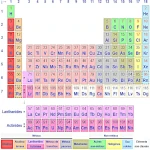
Platinum (symbol Pt, atomic number 78) is a transition metal of the 6th period, located in group 10 (formerly VIII) of the periodic table, along with nickel, palladium, and darmstadtium. It is the leader of the six platinum group metals (PGM). Its atom has 78 protons, usually 117 neutrons (for the stable isotope \(^{195}\mathrm{Pt}\)), and 78 electrons with the electronic configuration [Xe] 4f¹⁴ 5d⁹ 6s¹. This particular configuration (5d⁹ 6s¹ instead of the expected 5d⁸ 6s²) results from increased stability of half-filled subshells.
Characteristic physical properties
Platinum is a precious metal, silvery-white, lustrous, very dense, malleable, ductile, and relatively soft in its pure state.
- High density: 21.45 g/cm³ at 20°C (almost twice as heavy as lead).
- Very high melting point: 1768.3°C.
- Exceptional ductility and malleability: Can be drawn into very fine wires (less than 1 micron) and rolled into extremely thin sheets.
- Corrosion resistance: Exceptional, unalterable in air and atmospheric agents.
- Thermal stability: Can be heated to white heat without oxidizing.
Platinum crystallizes in a face-centered cubic (FCC) structure.
Transformation points
Platinum melts at 1768.3°C (2041.4 K) and boils at 3825°C (4098 K). Its wide solid temperature range and excellent chemical stability at high temperatures make it a material of choice for high-temperature equipment.
Chemical reactivity (very low)
Platinum is the archetype of the noble metal. It is resistant to most chemical agents:
- Air and oxygen: Unalterable at any temperature. Does not form stable oxide (PtO₂ decomposes around 450°C).
- Water and simple acids: Resistant to hydrochloric, sulfuric, nitric, and hydrofluoric acids, even when concentrated and hot.
- Aqua regia: Dissolves to form chloroplatinic acid (H₂PtCl₆). This is the characteristic reagent for platinum.
- Molten alkalis: Generally resistant, can be attacked by molten alkaline cyanides in the presence of oxidants.
- Halogens: Reacts with chlorine when hot to form PtCl₂ or PtCl₄. Attacked by fluorine.
Summary of physical characteristics
Density: 21.45 g/cm³.
Melting point: 2041.4 K (1768.3°C).
Boiling point: 4098 K (3825°C).
Crystal structure: Face-centered cubic (FCC).
Electronic configuration: [Xe] 4f¹⁴ 5d⁹ 6s¹.
Main oxidation states: +2 and +4.
Table of Platinum Isotopes
| Isotope / Notation | Protons (Z) | Neutrons (N) | Atomic mass (u) | Natural abundance | Half-life / Stability | Decay / Remarks |
|---|---|---|---|---|---|---|
| Platinum-190 — \(^{190}\mathrm{Pt}\) | 78 | 112 | 189.959932 u | ≈ 0.012% | 6.5×10¹¹ years | Alpha radioactive with extremely long half-life. Decays to \(^{186}\mathrm{Os}\). Considered stable for usual applications. |
| Platinum-192 — \(^{192}\mathrm{Pt}\) | 78 | 114 | 191.961038 u | ≈ 0.782% | Stable | Stable isotope. |
| Platinum-194 — \(^{194}\mathrm{Pt}\) | 78 | 116 | 193.962680 u | ≈ 32.967% | Stable | Stable isotope, one of the most abundant. |
| Platinum-195 — \(^{195}\mathrm{Pt}\) | 78 | 117 | 194.964791 u | ≈ 33.832% | Stable | Stable and major isotope. The only natural isotope with non-zero nuclear spin (I=1/2), making it active in \(^{195}\mathrm{Pt}\) Nuclear Magnetic Resonance (NMR). |
| Platinum-196 — \(^{196}\mathrm{Pt}\) | 78 | 118 | 195.964952 u | ≈ 25.242% | Stable | Stable isotope, very abundant. |
| Platinum-198 — \(^{198}\mathrm{Pt}\) | 78 | 120 | 197.967893 u | ≈ 7.163% | Stable | Stable isotope. |
Electronic Configuration and Electron Shells of Platinum
N.B.:
Electron shells:
How electrons are organized around the nucleus (new window).
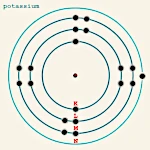
Platinum has 78 electrons distributed over six electron shells. Its electronic configuration [Xe] 4f¹⁴ 5d⁹ 6s¹ is an exception to simple filling rules. It can also be written as: K(2) L(8) M(18) N(32) O(17) P(1), or in full: 1s² 2s² 2p⁶ 3s² 3p⁶ 3d¹⁰ 4s² 4p⁶ 4d¹⁰ 4f¹⁴ 5s² 5p⁶ 5d⁹ 6s¹. The 5d subshell is one electron short of being complete.
Detailed Structure of the Shells
K shell (n=1): 2 electrons (1s²).
L shell (n=2): 8 electrons (2s² 2p⁶).
M shell (n=3): 18 electrons (3s² 3p⁶ 3d¹⁰).
N shell (n=4): 32 electrons (4s² 4p⁶ 4d¹⁰ 4f¹⁴).
O shell (n=5): 17 electrons (5s² 5p⁶ 5d⁹).
P shell (n=6): 1 electron (6s¹).
Valence Electrons and Oxidation States
Platinum has 10 valence electrons if we count the electrons in the 5d and 6s shells (9+1). It exhibits rich chemistry with several stable oxidation states, the most important being +2 and +4. The +2 state (d⁸ configuration) is very common in square planar complexes, such as the famous cisplatin (cis-[PtCl₂(NH₃)₂]), an anticancer drug. The +4 state (d⁶ configuration) is also stable (e.g., PtO₂, PtF₆). Other states such as 0, +1, +3, +5, and +6 exist but are less common.
The coordination chemistry of platinum is vast and of paramount importance, both in catalysis and medicine. Its tendency to form square planar complexes with "soft" ligands (such as phosphines, thioethers) and its ability to catalyze hydrogenation, oxidation, and coupling reactions make it a central metal in organometallic and industrial chemistry.
Chemical Reactivity of Platinum
Reaction with air and oxygen
Platinum is perfectly stable in air at all temperatures. It does not form stable oxide under normal conditions. A PtO₂ oxide can form at high temperature under high oxygen pressure, but it decomposes around 450°C. On the surface, it can form a thin oxide layer that contributes to certain catalytic properties.
Reaction with water and acids
Platinum is unaffected by water and simple mineral acids, even when concentrated and boiling. This inertness is the basis for its use in laboratory utensils (crucibles, dishes) and chemical equipment.
Its only notable weakness is aqua regia, a mixture of concentrated nitric and hydrochloric acids, which dissolves it to form hexachloroplatinic acid (IV), H₂[PtCl₆]: Pt + 4 HNO₃ + 6 HCl → H₂[PtCl₆] + 4 NO₂ + 4 H₂O. This compound is the starting point for the preparation of most other platinum compounds.
N.B.:
Reactions with halogens and other elements
- Chlorine: Reacts when hot (≈300°C) to give PtCl₂ (brown) or PtCl₄ (red-brown).
- Fluorine: Attacked to form PtF₄, PtF₅, or PtF₆ (one of the most powerful oxidants known).
- Sulfur: Reacts when hot to form PtS.
- Phosphorus, arsenic, silicon: Form compounds at high temperature.
- Cyanides: Dissolves in alkaline cyanides in the presence of air (used in extraction).
Important compounds
- Hexachloroplatinic acid (H₂[PtCl₆]): Orange salt, key precursor.
- Potassium chloroplatinite (K₂[PtCl₄]): Red salt, precursor of Pt(II) complexes.
- Platinum(IV) chloride (PtCl₄): Brown-red hygroscopic solid.
- Cisplatin (cis-[PtCl₂(NH₃)₂]): Square planar complex, major anticancer drug.
- Adams' catalyst (PtO₂·H₂O): Hydrogenation catalyst.
Industrial and Technological Applications of Platinum
- Main component of automotive catalysts (catalytic converters) to reduce emissions of pollutants (CO, NOx, unburned hydrocarbons);
- In prestige jewelry, for the manufacture of rings, watches, chains, and settings (platinum-950 alloys);
- As a material for high-precision laboratory equipment (crucibles, dishes, electrodes, resistance wires);
- Key catalyst in the Ostwald process for the industrial production of nitric acid (from ammonia);
- In hard drives as a magnetic layer (cobalt-platinum-chromium alloys) for high-density data storage;
- As an unattackable electrode in electrochemical devices (electrolyzers, fuel cells, cathodic protection systems);
- In dentistry for crown, bridge, and implant alloys;
- As a catalyst in the catalytic reforming of petroleum to produce high-octane gasoline;
- In platinum resistance thermometers (PRT) and type S thermocouples (Pt-Rh) for precise temperature measurement;
- As a catalyst for the production of hydrogen by water electrolysis and for proton exchange membrane fuel cells (PEMFC);
- In pharmacy as the active ingredient in anticancer drugs (cisplatin, carboplatin, oxaliplatin);
- In fiberglass as a material for spinneret nozzles (platinum-rhodium alloy nozzles);
- As a reference standard in electrochemistry (the standard hydrogen electrode often uses platinum-plated platinum);
- For reliable electrical contacts in telecommunications equipment and medical devices.
Key Applications: Automotive, Jewelry, and Chemistry
The catalytic converter (automotive catalyst)
This is the largest industrial application of platinum (about 30-40% of annual demand). The catalytic converter converts harmful exhaust gases into less dangerous compounds:
- Oxidation of carbon monoxide (CO) and unburned hydrocarbons (HC) into CO₂ and H₂O.
- Reduction of nitrogen oxides (NOx) into N₂ and O₂.
Platinum (often combined with palladium and rhodium) is dispersed as nanoparticles on a ceramic honeycomb support. Its efficiency and durability at high temperatures are unmatched. Global antipollution standards (Euro, EPA) make this material indispensable.
Jewelry and goldsmithing
Platinum is a prestigious jewelry metal, appreciated for:
- Its natural white color and luster that never tarnishes (unlike silver).
- Its density and "presence" to the touch.
- Its durability: It is harder than gold and more scratch-resistant.
- Its purity: Jewelry alloys are 950‰ (95% platinum), compared to 750‰ for 18-karat gold.
It is mainly used for wedding rings, solitaires, high-end watches, and diamond settings (its neutral white perfectly enhances the stone).
Industrial chemical catalysis
Beyond the catalytic converter, platinum catalyzes fundamental reactions:
- Ostwald process: Oxidation of ammonia (NH₃) into nitrogen oxides, the first step towards nitric acid (fertilizers, explosives).
- Selective hydrogenations in fine and pharmaceutical chemistry (Adams' catalyst).
- Catalytic reforming: Conversion of petroleum naphthas into high-octane gasolines and aromatics (benzene, toluene).
- Silicone production: Catalysis of hydrosilylation.
Medical and Scientific Applications
Platinum-based anticancer drugs
Square planar platinum(II) complexes are a major class of chemotherapies:
- Cisplatin (discovered in the 1960s): Treats testicular, ovarian, bladder, lung, and other cancers. It binds to the DNA of cancer cells, blocking their replication.
- Carboplatin: Less toxic to the kidneys than cisplatin.
- Oxaliplatin: Used against colorectal cancer.
These drugs save hundreds of thousands of lives each year.
Laboratory and measurement equipment
- Crucibles and dishes: For high-temperature fusions (soda, borax) without risk of contamination.
- Electrodes: Inert electrodes for electrogravimetry, electrolysis, sensors.
- Platinum resistance thermometers (PRT): The electrical resistance of platinum varies in a very linear and reproducible manner with temperature. PRTs are international standards for precise measurement between -200°C and 1000°C.
- Resistance wires: For high-precision laboratory furnaces.
Clean energy technologies
Platinum is a critical material for the energy transition:
- Proton exchange membrane fuel cells (PEMFC): Platinum (and its alloys) is the essential catalyst on the electrodes for hydrogen oxidation and oxygen reduction. It equips fuel cell vehicles and some stationary generators.
- PEM electrolyzers: For the production of "green" hydrogen from water and renewable electricity. Platinum catalyzes the hydrogen evolution reaction.
Toxicology, Environment, and Recycling
Toxicity
Metallic platinum is inert and non-toxic. This is why it is used in jewelry and dentistry without risk. However:
- Dust: Inhalation of platinum dust or fumes (during metalworking) can cause allergic reactions (platinosis): irritation of the respiratory tract, asthma, dermatitis.
- Soluble platinum salts: Some salts (such as chloroplatinates) can be irritating and sensitizing.
- Anticancer complexes: Cisplatin and its derivatives are cytotoxic (this is their therapeutic effect) but have significant systemic side effects (nephrotoxicity, neurotoxicity, myelosuppression). They must be handled with strict pharmaceutical precautions.
Environmental impact
Platinum mining generates large amounts of waste rock and tailings and can have local impacts on water and soil quality. Platinum from used catalytic converters can end up as fine particles in road dust and roadside soils, but at measured concentrations, its direct ecological impact is considered low. Research continues to assess the long-term fate and effects of these particles.
Recycling
Platinum recycling is highly economically attractive and crucial for supply security. The main sources are:
- Used automotive catalytic converters: The most important recycling source. Catalysts are collected, crushed, and platinum is recovered through complex pyrometallurgical and hydrometallurgical processes.
- Electronic waste: Hard drives, printed circuits, contacts.
- Used chemical catalysts from industry.
- Jewelry and dentistry: Filings, broken pieces, old jewelry.
- End-of-life laboratory equipment.
The overall recycling rate is estimated at about 25-30% of demand, but it could be significantly improved with better collection systems. South Africa has set up infrastructure to recycle a large part of its catalytic waste.
Critical issues and perspectives
Platinum is a critical material for the modern economy, with a geographically concentrated supply chain (South Africa). The challenges are:
- Supply security: Diversification of sources (recycling, mining exploration outside South Africa).
- Reduction of content: Developing automotive catalysts and fuel cells that use less platinum, or partially replacing it with palladium or other metals.
- Closed-loop recycling: Improving efficiency and collection rates.
- New applications: Platinum will remain central to hydrogen technologies, which are promising for renewable energy storage.
 The energies required for nuclear fusion and why uranium is a limit
 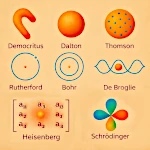 The Atom in All Its Forms: From Ancient Intuition to Quantum Mechanics