

Radium (Ra, Z = 88): The Element That Glowed in the Dark
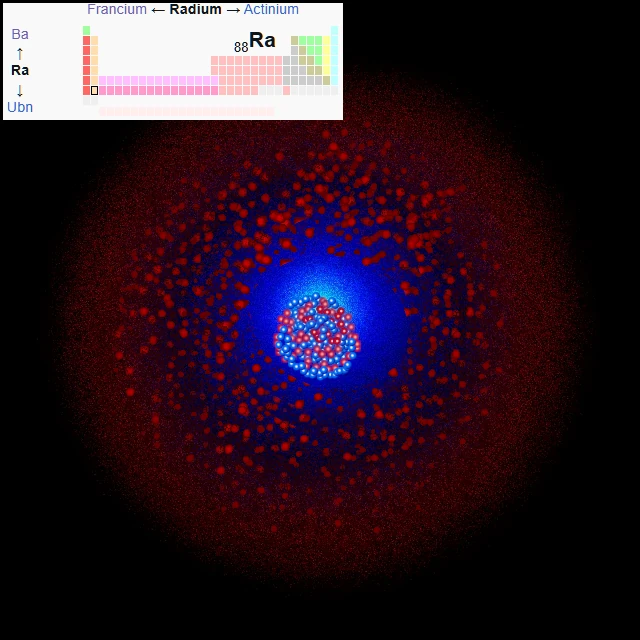
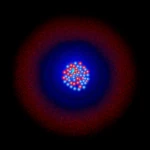
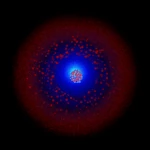
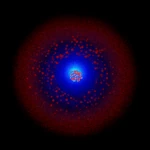
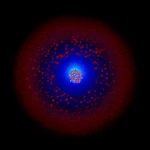
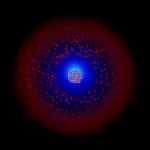
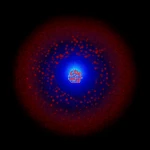
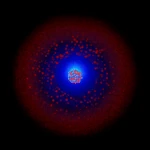
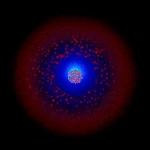
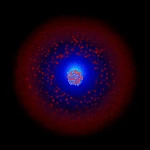
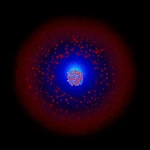
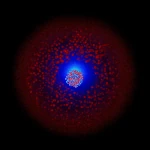
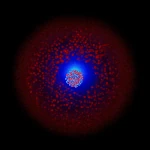
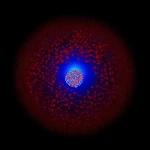
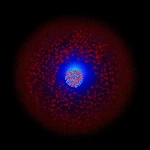
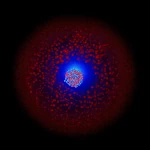
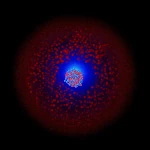
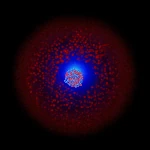
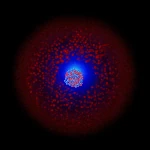
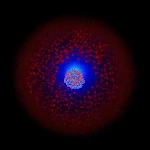
Image description:
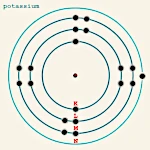
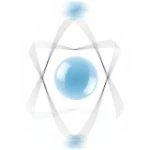
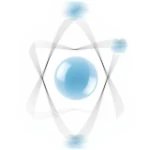
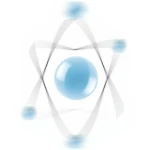
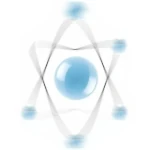
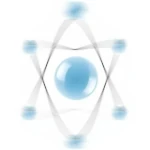
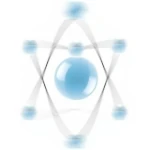
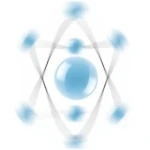
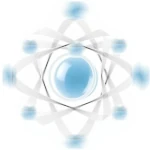
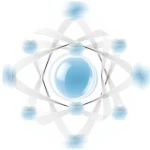
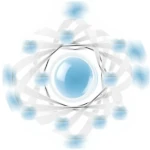
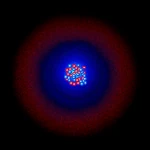
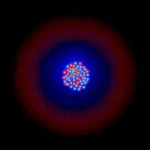
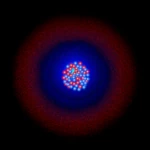
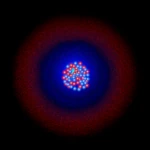
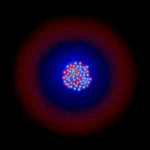
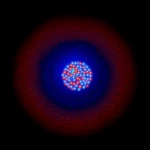
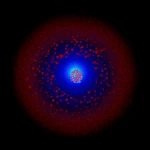
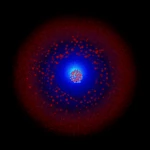
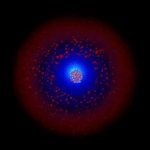
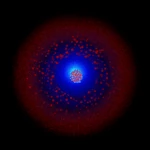
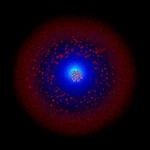
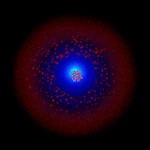
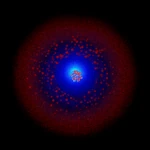
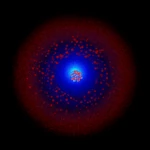
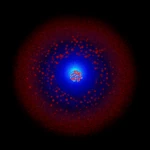
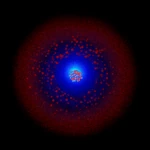
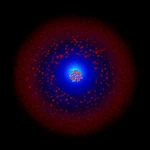
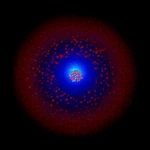
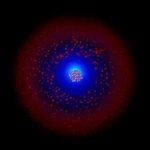
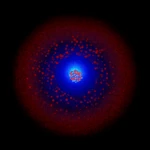
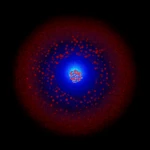
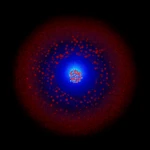
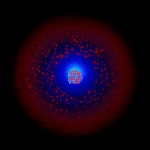
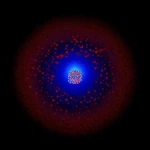
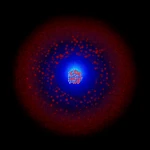
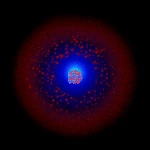
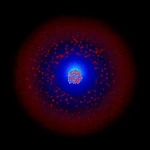
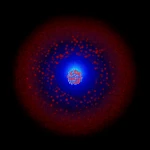
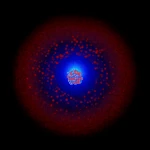
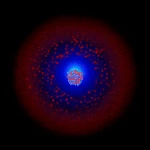
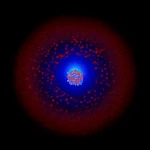
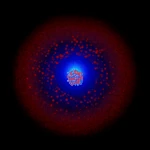
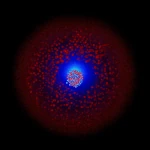
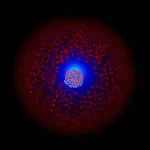
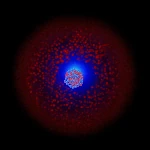
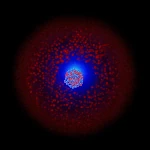
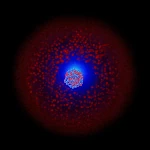
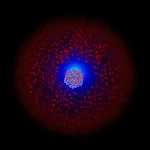
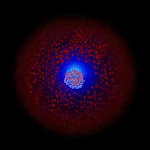
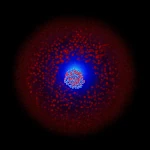
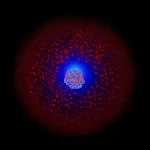
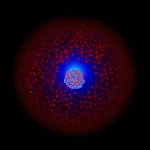
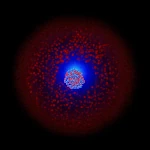
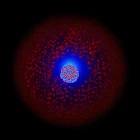
Simplified atomic model of the radium atom.
The most stable isotope is \(^{226}\mathrm{Ra}\) with its 88 protons, 88 electrons, and 138 neutrons.
Image source: astronoo.com (new window)
Role of Radium in Geophysics and Radiochronology
Key Member of the Uranium Decay Chain
Radium is a crucial intermediate element in the uranium-238 decay chain (4n+2 series). It is produced by the alpha decay of thorium-230 (ionium) and itself decays into radon-222 by alpha emission. Several radium isotopes exist in different chains, but the most important is radium-226 (half-life 1600 years), which is in secular equilibrium with uranium-238 in ancient minerals. Its presence and relative abundance are therefore directly related to the uranium content of the environment.
Geochronology and Dating of Marine Sediments
The uranium-thorium/radium isotopic system is used to date geological processes on timescales ranging from a few years to about 500,000 years. The \(^{226}\mathrm{Ra}/^{230}\mathrm{Th}\) ratio is particularly useful for dating marine carbonates (corals, concretions) and recent oceanic sediments. Since radium is more soluble than thorium, it is leached from continents and transported to the oceans. Measuring its activity in sediment cores allows the reconstruction of sedimentation rates and past climate changes.
Tracer of Oceanic and Subsurface Circulations
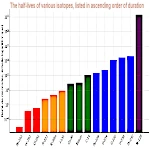
Radium has four natural isotopes with different half-lives (\(^{223}\mathrm{Ra}\), 11.4 days; \(^{224}\mathrm{Ra}\), 3.66 days; \(^{226}\mathrm{Ra}\), 1600 years; \(^{228}\mathrm{Ra}\), 5.75 years). This "string" of isotopes with decreasing timescales makes it an ideal tracer for processes at different scales:
- \(^{228}\mathrm{Ra}\) and \(^{226}\mathrm{Ra}\): Trace large-scale oceanic circulations and continental inputs over decades to millennia.
- \(^{224}\mathrm{Ra}\) and \(^{223}\mathrm{Ra}\): Perfect for studying rapid coastal processes such as groundwater mixing in the ocean, water-sediment exchanges, or estuarine dynamics on timescales of days to weeks.
Natural Source of Domestic Radon
Radium-226 present in soils and rocks is the direct source of radon-222, a radioactive gas that migrates into buildings. The radium content of a soil is therefore the main determinant of the radon potential of a region.
History of Discovery and the Golden Age of Radium
Etymology and Origin of the Name
The name "radium" was chosen by its discoverers, Pierre and Marie Curie, and derives from the Latin word "radius", meaning "ray". This name celebrates the most striking property of the new element: its intense radioactivity, which manifests itself by the emission of invisible but detectable "rays". The Curies had already named "polonium"; "radium" completed the pair of radioactive elements they had extracted from pitchblende (a uranium ore).
Discovery by the Curies (1898)
In 1898, following the work of Henri Becquerel (1852-1903) on uranium, Marie Curie (1867-1934) discovered that pitchblende (a uranium ore) was much more radioactive than pure uranium. She deduced, with her husband Pierre, the presence of unknown, more radioactive elements. After months of titanic and physically grueling work in a rudimentary shed, they managed to separate two new elements: first polonium (July 1898), then radium (December 1898). They announced it to the Academy of Sciences on December 26, 1898. The definitive proof and isolation of radium in the form of pure chloride (RaCl₂) would not come until 1902, after the treatment of several tons of ore.
Isolation of Metallic Radium
Pure metallic radium was first isolated in 1910 by Marie Curie in collaboration with André-Louis Debierne (1874-1949), by electrolysis of molten radium chloride on a mercury cathode, followed by distillation of the mercury. This success consolidated Marie Curie's international fame, who received a second Nobel Prize (this time in Chemistry) in 1911, becoming the first person to win two Nobels in different disciplines.
The "Radium Craze": Global Enthusiasm (1910-1930)
The extraordinary properties of radium—its intense radioactivity, spontaneous luminescence (due to the excitation of air or impurities), and decay heat—made it a true scientific and commercial celebrity. It was attributed almost miraculous virtues, leading to a craze:
- Medicine: Creation of "curietherapy" (use of radiation to treat cancers). Appearance of "medical" radium products (creams, mineral waters, suppositories) promising youth and vitality.
- Industry: Manufacture of luminous paints with radium (zinc sulfide + radium) for watch dials, instrument panels, and signs.
- Popular culture: Radium became a symbol of modernity and power, present in songs, advertisements, and even product names.
This period illustrates the gap between fascination with a new technology and understanding of its dangers.
Deposits and Production
Radium does not exist in its native state. It is present in minute quantities (about 1 part per 10¹¹) in uranium ores, mainly pitchblende (UO₂) and carnotite (K₂(UO₂)₂(VO₄)₂·3H₂O). Historically, the richest mines were in Joachimsthal (now the Czech Republic) and the Belgian Congo. Extraction was extremely difficult and costly: hundreds of tons of ore had to be processed to obtain one gram of radium, making it the most expensive substance in the world (up to $120,000 per gram in the 1910s, equivalent to several million today).
Today, radium is no longer intentionally produced. The little that is used in medicine comes from historical stocks or is produced as a byproduct of nuclear waste treatment. Demand has almost disappeared.
Structure and Fundamental Properties of Radium
Classification and Atomic Structure
Radium (symbol Ra, atomic number 88) is an element of group 2, the alkaline earth metals. It is the heaviest and most radioactive member of this family, which includes beryllium, magnesium, calcium, strontium, and barium. Its atom has 88 protons and, depending on the isotope, 135 to 150 neutrons. The most stable isotope, \(^{226}\mathrm{Ra}\), has 138 neutrons. Its electronic configuration is [Rn] 7s², with two valence electrons in the 7s shell.
Physical and Radioactive Properties
Radium is a silvery-white alkaline earth metal that quickly blackens in air due to oxidation and nitridation. Its properties are largely extrapolated from those of barium, but complicated by its intense radioactivity.
- Intense alpha radioactivity: Radium-226 emits alpha particles of 4.78 MeV with a half-life of 1600 years. One gram of radium-226 has an activity of 3.7×10¹⁰ Bq (1 curie, the historical unit defined from it).
- Decay heat: A macroscopic amount of radium is warm to the touch (about 0.1 watt per gram for \(^{226}\mathrm{Ra}\)).
- Luminescence: Radium salts cause certain materials (such as zinc sulfide) to glow and ionize the surrounding air, making it conductive and producing a faint glow.
- High density: Estimated at about 5.5 g/cm³.
- Melting point: Estimated at 700 °C.
- Boiling point: Estimated at 1737 °C.
In solid form, it crystallizes in a body-centered cubic structure.
Transformation Points (Estimated)
Estimated melting point: ~973 K (~700 °C).
Estimated boiling point: ~2010 K (~1737 °C).
Chemical Reactivity
Chemically, radium closely resembles barium, but is even more reactive. It is a highly electropositive metal.
- Reaction with water: Reacts violently to release hydrogen and form soluble radium hydroxide, Ra(OH)₂.
- Reaction with air: Rapidly oxidizes to form a mixture of oxide (RaO) and nitride (Ra₃N₂).
- Reaction with acids: Easily dissolves, releasing hydrogen (for non-oxidizing acids) and forming corresponding salts (RaCl₂, Ra(NO₃)₂, etc.).
- Compounds: Generally colorless (unless the anion is colored). The chloride (RaCl₂), bromide (RaBr₂), sulfate (RaSO₄, very insoluble), and carbonate (RaCO₃) are the best known.
The chemistry of radium is difficult to study due to its radioactivity and the formation of decay products that contaminate solutions.
Main Characteristics
Atomic number: 88.
Group: 2 (Alkaline earth metals).
Electronic configuration: [Rn] 7s².
Oxidation state: +2 (exclusive).
Most stable isotope: \(^{226}\mathrm{Ra}\) (T½ = 1600 years).
Appearance: Silvery-white metal that blackens in air.
Table of Radium Isotopes (Natural)
| Isotope / Notation | Protons (Z) | Neutrons (N) | Atomic mass (u) | Parent chain | Half-life / Decay mode | Remarks / Applications |
|---|---|---|---|---|---|---|
| Radium-223 — \(^{223}\mathrm{Ra}\) | 88 | 135 | 223.018502 u | Uranium-235 (4n+3) | 11.43 days (α) | Used in medicine under the trade name Xofigo® for the treatment of painful bone metastases from prostate cancer (targeted alpha therapy). |
| Radium-224 — \(^{224}\mathrm{Ra}\) | 88 | 136 | 224.020212 u | Thorium-232 (4n) | 3.66 days (α) | Historically used in medicine. Today studied for alpha therapy. |
| Radium-226 — \(^{226}\mathrm{Ra}\) | 88 | 138 | 226.025410 u | Uranium-238 (4n+2) | 1600 years (α) | The historical and most important isotope. Discovered by the Curies. Used for decades in curietherapy and luminous paints. Source of radon-222. |
| Radium-228 — \(^{228}\mathrm{Ra}\) | 88 | 140 | 228.031070 u | Thorium-232 (4n) | 5.75 years (β⁻) | Mesothorium I. Historically used separately in luminous paints. Product of thorium-228. |
Electronic Configuration and Electron Shells of Radium
N.B.:
Electron shells:
How electrons are organized around the nucleus (new window).
Radium has 88 electrons distributed over seven electron shells. Its electronic configuration [Rn] 7s² is simple: it consists of the configuration of radon (a noble gas) plus two additional electrons in the 7s shell. This can also be written as: K(2) L(8) M(18) N(32) O(18) P(8) Q(2), or in full: 1s² 2s² 2p⁶ 3s² 3p⁶ 3d¹⁰ 4s² 4p⁶ 4d¹⁰ 4f¹⁴ 5s² 5p⁶ 5d¹⁰ 6s² 6p⁶ 7s².
Detailed Structure of the Shells
K shell (n=1): 2 electrons (1s²).
L shell (n=2): 8 electrons (2s² 2p⁶).
M shell (n=3): 18 electrons (3s² 3p⁶ 3d¹⁰).
N shell (n=4): 32 electrons (4s² 4p⁶ 4d¹⁰ 4f¹⁴).
O shell (n=5): 18 electrons (5s² 5p⁶ 5d¹⁰).
P shell (n=6): 8 electrons (6s² 6p⁶).
Q shell (n=7): 2 electrons (7s²).
Valence Electrons and Chemical Properties
Radium has two valence electrons (7s²). Like other alkaline earth metals, it easily loses these two electrons to form the Ra²⁺ ion, thus achieving the stable configuration of the noble gas radon. This high electropositivity explains its great reactivity with water and acids.
- Ionic radius: The radius of Ra²⁺ is the largest of all alkaline earth ions (≈170 pm), which influences the solubility of its salts. As expected, most radium salts are soluble, with the notable exception of radium sulfate (RaSO₄), which is very insoluble, and carbonate (RaCO₃) and chromate (RaCrO₄), which are moderately insoluble. This property was used for its separation and purification.
- Basic character: Radium hydroxide Ra(OH)₂ is a strong base, more soluble than that of barium.
Historical and Modern Applications of Radium
- Historical curietherapy: Use of sealed "sources" or "needles" of radium-226 (or its emanation, radon-222) placed near or inside tumors to destroy them by irradiation. It was crucial for the treatment of cervical, skin, and other cancers. Gradually replaced after 1950 by cobalt-60, cesium-137, and today iridium-192.
- Self-luminous paints: Mixture of zinc sulfide (phosphor) and a tiny amount of radium (or mesothorium). Massively used between 1910 and 1960 for watch dials, aviation instruments, military compasses, and signs. This application is at the origin of the tragedy of the "Radium Girls".
- Modern nuclear medicine (alpha therapy): Radium-223 (Xofigo®) is approved for the treatment of castration-resistant prostate cancer bone metastases. As a calcium analog, Ra²⁺ selectively binds to active bone remodeling sites (such as metastases). Its alpha emission locally destroys tumor cells and reduces bone pain, prolonging survival.
- Standard radioactivity sources: Radium-226 long served as the primary standard for measuring activity (the curie was defined relative to it).
- Historical artifacts and collectibles: Watches, instruments, and various objects painted with radium are now museum or collectible items, to be handled with extreme caution due to the degradation of paints (radioactive dust).
The Tragedy of the "Radium Girls" and the Awareness of Dangers
The Factory in Orange, New Jersey (USA)
In the 1910s-20s, the U.S. Radium Corporation employed hundreds of young women to hand-paint watch dials with radium paint. To obtain a fine point, the workers were encouraged to sharpen their brushes with their lips ("lip-pointing"), thus ingesting small amounts of radium daily. In addition, they worked in dusty workshops and sometimes smeared their hair and nails with fluorescent paint for fun.
Onset of Diseases
As early as the 1920s, the workers began to develop horrible pathologies: severe anemia, jaw necrosis ("radium jaw") (the jawbones literally disintegrated), spontaneous fractures, bone sarcomas, and various cancers. Doctors were initially perplexed, but the link with radium was established by Dr. Harrison Martland (1883-1954). Once ingested, radium behaved like calcium and became fixed in the bones, irradiating the bone marrow and surrounding tissues from within for decades.
Legal Battle and Consequences
Five workers, the "Radium Girls" (including Grace Fryer, Katherine Schaub), filed a landmark lawsuit against their employer in 1927. Despite the company's delaying tactics and the deteriorating health of the plaintiffs, they won their case in 1928. This trial:
- Established the legal precedent for occupational diseases caused by toxic substances.
- Forced industry to improve safety conditions.
- Contributed to the creation of the Occupational Safety and Health Administration (OSHA) in the United States.
- Marked the beginning of the decline in the use of radium in consumer products.
Toxicology and Radiation Protection
Mechanism of Toxicity
The toxicity of radium is purely radiological (unlike lead or mercury, which have chemical toxicity). Once incorporated (mainly by ingestion, rarely by inhalation of dust), the Ra²⁺ ion follows the metabolism of calcium:
- It is absorbed by the intestine (weakly, about 20%).
- It is distributed in the blood.
- It is irreversibly deposited in the bones, substituting for calcium in the mineral matrix of hydroxyapatite.
- Once incorporated, it emits alpha particles throughout its half-life (1600 years for Ra-226), irradiating the bone marrow cells (responsible for anemia and leukemias) and the bone cells themselves (responsible for necrosis and sarcomas) from within.
Health Effects
- Bone cancer (osteosarcoma) and sinus cancer (by inhalation).
- Jaw necrosis and skull bones.
- Aplastic anemia and leukemias (bone marrow irradiation).
- Cataracts (for significant external eye exposure).
Long-term epidemiological studies of radium workers, patients treated with radium, and watchmakers have provided fundamental data on the effects of internal alpha radiation.
Handling and Protection
Today, radium is handled with drastic precautions:
- Confinement: In sealed glove boxes or closed enclosures.
- Protection against alpha particles: Gloves, lab coats. Sources are stored in lead containers to block gamma rays emitted by descendants (such as bismuth-214).
- Prevention of incorporation: Absolute prohibition of eating, drinking, or smoking in the area. Control of surface and air contamination.
- Dosimetric monitoring: Operational dosimeters and internal monitoring (whole-body counting).
Waste Management and Contaminated Sites
A Lasting Radioactive Legacy
Former industrial uses of radium have left a legacy of contaminated sites (former luminous paint factories, watchmaking workshops, waste dumps). The long half-life of Ra-226 (1600 years) means that this contamination will persist for millennia.
Decontamination Techniques
- Excavation and final storage: The most common method for contaminated soils. Waste is packaged and sent to storage centers for medium-level long-lived waste.
- Soil washing: Use of chemical solutions (acids, complexing agents) to leach radium, followed by wastewater treatment.
- Stabilization/Solidification: Mixing contaminated waste with cement or other binders to immobilize radium and reduce its leaching.
Management of Historical Objects (Watches, Instruments)
Collectors and museums must be aware of the risk. Objects must be stored in ventilated display cases, handled with gloves, and never opened or repaired without expertise. Flaking paint is particularly dangerous.
Perspectives
The era of radium as a miracle material is over. Its future lies in two very distinct areas:
- Precision nuclear medicine: The success of radium-223 (Xofigo®) paves the way for other targeted alpha therapies using similar isotopes (actinium-225, bismuth-213). Research aims to improve targeting and reduce side effects.
- Legacy management and remediation: Cleaning up historically contaminated sites remains a major technical and financial challenge for the decades to come.
Radium will remain in history as the element that opened the age of radioactivity, with its share of scientific genius, naive enthusiasm, and human suffering that ultimately led to strict regulation and acute awareness of radiological risks.
 The energies required for nuclear fusion and why uranium is a limit
 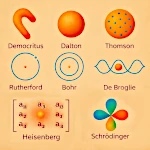 The Atom in All Its Forms: From Ancient Intuition to Quantum Mechanics