


Black holes of galaxies
Dark stars at the heart of galaxies
Not all stars shine: the Universe harbors objects so compact and so massive that their light cannot escape. Black holes are among these extreme stars. Their gravitational field is so intense that no form of matter or radiation can cross their horizon, the boundary beyond which everything disappears.
The spectacular end of massive stars
Stellar black holes are born from the gravitational collapse of very massive stars. When the core of a dying star exceeds the limit allowing the formation of a neutron star, it contracts inexorably until it becomes a black hole. This process, described by general relativity, gives rise to one of the most mysterious and fascinating objects in the cosmos.
Masses ranging from stellar to colossal
Black holes can have very varied masses: some weigh only a few times the mass of the Sun, while others, nestled at the centers of galaxies, reach millions or billions of solar masses. These galactic giants influence the dynamics of surrounding stars and play a major role in the evolution of galaxies.
There are articles on this page
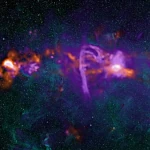 Sagittarius A*: Observations and Mysteries of the Galactic Black Hole
  Gravitational Waves: Vibrations in the Cosmic Fabric
  At the origins of time: the birth of primordial black holes
  The curvature of time, a non-intuitive concept!
 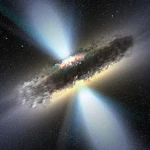 On the trail of invisible black holes: gravitational impact and effects on nearby stars
 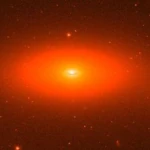 The Monster of NGC 1277: A Black Hole That Defies Theories
 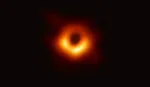 The first image of a black hole
 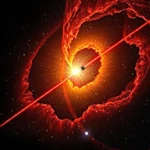 Quasars: Beacons of the Distant Cosmos