


Space telescopes play an essential role in exploring the Universe. Placed above Earth's atmosphere, they escape the turbulence, optical distortions, and absorptions that limit ground-based observations. This privileged position allows them to obtain images of a sharpness and precision inaccessible to terrestrial instruments.
Space probes, artificial satellites, and orbital telescopes form a set of complementary instruments. Probes travel to planets, comets, or asteroids to analyze their composition and structure. Observation satellites scan Earth or monitor solar activity, while space telescopes observe the Universe across all wavelengths, from gamma rays to radio waves.
Thanks to these instruments, astronomy has undergone a profound transformation. They have revealed distant galaxies, spectacular nebulae, exoplanets, and phenomena invisible from Earth's surface. Their contribution continues to expand our understanding of the cosmos and open new perspectives on the evolution of the Universe.
There are articles on this page
 How to Spot Starlink Satellite Trains in the Sky?
  AI, the Astronomer's New Eye: From Analysis to Cosmic Prediction
 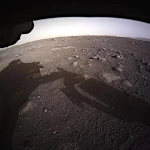 What the First Images from Perseverance Show Us: The Surface of Mars, As If We Were There
 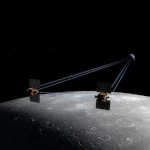 GRAIL Twin Probes: Mapping the Moon's Hidden Interior
 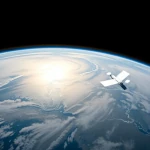 Earth Under Surveillance: Observation Satellites
 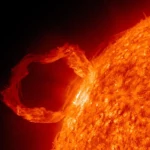 March 2010: The Ring of Fire Captured by the SDO Observatory
 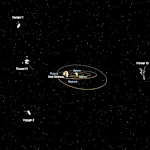 Positions of Space Probes in 2025
  Giants of Observation: The Largest Ground-Based Telescopes
 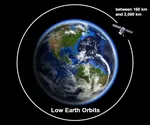 Low Earth Orbits and their uses
 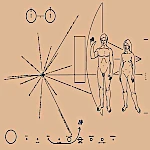 Pioneer, first message to extraterrestrials!
 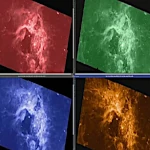 How to see infrared images from JWST?
 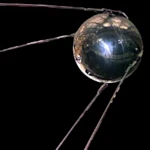 Sputnik 1 and 2: The Dawn of the Space Age
 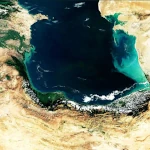 ENVISAT: Ten Years of Uninterrupted Observation of Earth's Ecosystems
 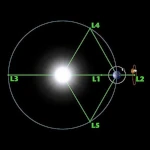 Lagrange Points: Gravitational Gateways of the Solar System
 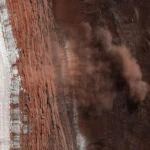 Mars Reconnaissance Orbiter: The Lynx Eye Revealing Martian Secrets
 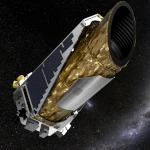 Kepler: 4,000 Worlds and More, A New Map of the Sky
 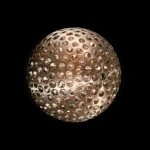 Why Measure Space at the Nanometer Level?
 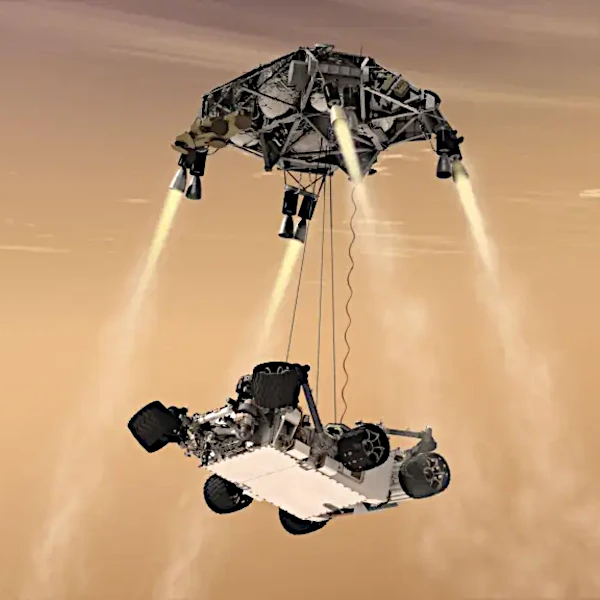 High-risk landing for Curiosity in 2012
  Cheops Space Telescope: A New Vision on Exoplanets
 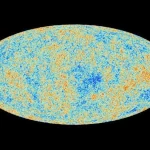 The world of Planck
 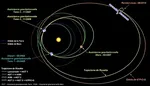 Rosetta Space Probe: Comet Churyumov-Gerasimenko
 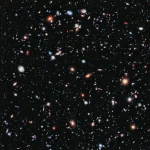 The Hubble Space Telescope: Three Decades of Revelations
 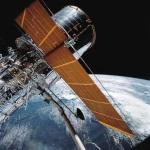 Première photo du télescope Hubble
 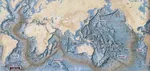 Satellites that measure underwater relief
 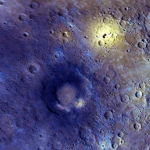 MESSENGER: The First Probe to Visit the Mysterious Planet
 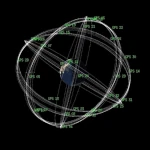 How GPS Locates Your Position at Any Time?
 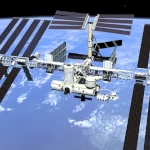 The ISS and Beyond? Towards the End of a Space Chapter
 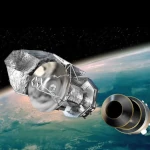 Space Telescopes: Humanity's Eye Beyond the Atmosphere
 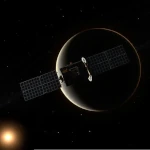 Space Probes: Interplanetary Travelers and Beyond
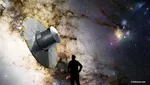 The GAIA satellite maps the Milky Way
 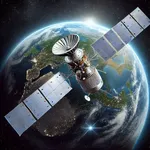 How to calculate the synchronous orbit?
 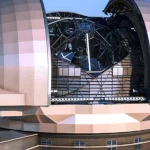 E-ELT: The World's Largest Optical Telescope
 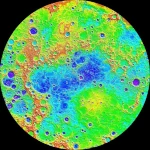 Mercury probes
 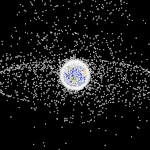 Space Debris: The Nightmare of Modern Satellites
 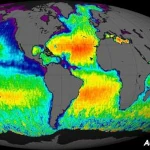 Aquarius: A Mission to Map Ocean Salinity
 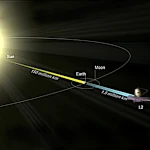 JWST: An Unprecedented Look at the First Lights of the Universe
  METEOSAT: A Key Satellite for Climate Monitoring
 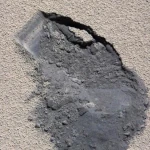 Curiosity, the first shovel, sample of Martian soil
 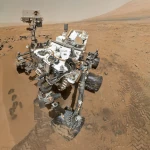 From Mariner to Perseverance: Successes and Failures of Mars Probes
 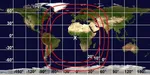 Where is the geostationary orbit?
 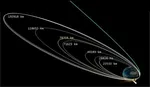 MOM, the technological demonstration
 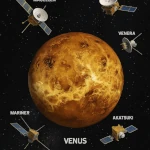 Venus under surveillance: an overview of space probes
 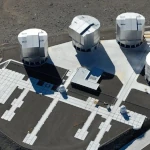 What Is an Astronomical Interferometer?
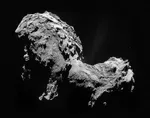 The Philae Robot and the Rosetta Comet
 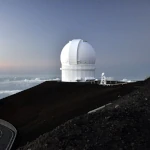 Mauna Kea Under the Stars: The CFHT Telescope in Pursuit of the Universe's Mysteries