


The earliest traces of the Universe — fossil light, primordial fluctuations, and signatures of the first instants — still reach us today. They provide direct testimony of the birth of the cosmos and allow us to explore an era when matter, energy, and spacetime were intimately linked.
The Universe contains everything that exists, including space and time themselves. Therefore, it cannot have a "edge" in the classical sense: beyond an imaginary boundary, there would be no "outside" to go to. This absence of a border follows directly from the very definition of the Universe and current cosmological models.
What we call the "edge" is actually the limit of the observable Universe: the maximum distance from which light has been able to reach us since the Big Bang. Beyond that, the Universe likely continues, but its light has not yet reached us. Crossing this limit is impossible, not due to a lack of technology, but because it depends on the speed of light and the expansion of the cosmos itself.
There are articles on this page
 The Weak and Strong Anthropic Principles: Two Ways of Reading the Same Universe
  The Universe: Matter... or Information?
  Dark Energy: The Most Mysterious Force in the Universe
  The Fountains of Creation: The Myth of White Holes
  The Great Silence: 10 Insurmountable Walls to Meeting E.T.
 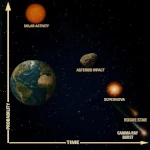 The 5 Cosmic "End of the World" Scenarios (and Why They Won't Happen)
 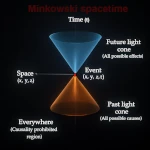 Why the Cause Always Precedes the Effect: The Order of the World is Written in This Principle
  Absolute Zero and Nothingness: Two Limits the Universe Refuses to Reach
  Economical Nature: The Secrets of Conserved Quantities
 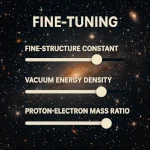 The Incredible Precision of the Universe's Laws: Chance or Necessity?
  The Mystery of the Arrow of Time: Why Can't We Go Back?
 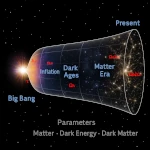 The Big Bang: At the Frontiers of the Model
  When Space Bends: The Tiny Slope That Guides the Universe
  Nabataean Astronomy: Masters of the Desert Between Starry Skies and Stone Constructions
  Polynesian Astronomy: The Art of Navigating the Pacific Ocean
  Mesopotamian Astronomy: The Cradle of Celestial Observation
  Andean Astronomy: A Sacred Link Between Sky and Earth
 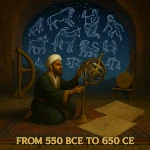 Ancient Persian Astronomy: Between Babylon and the Islamic Golden Age
 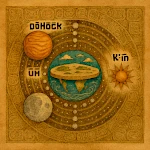 Mayan Astronomy: Celestial Cycles Dictated Religious, Agricultural, and Political Time
 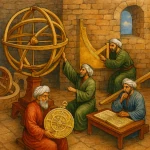 Islamic Astronomy: When Baghdad Illuminated the Sky of Science
  Indian Astronomy: From Sacred Poetry to Scientific Thought
 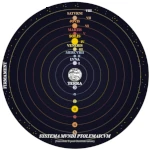 Ancient Greek Astronomy: The Universe of Philosophers in Search of Cosmic Order
 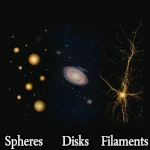 The Three Cosmic Shapes: A Hidden Geometry of the Universe
 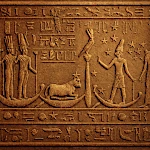 Egyptian Astronomy: Between Sky and Nile, the Secrets of Time
  Babylonian Astronomy: When the Sky Predicted Destiny
  Chinese Imperial Astronomy: A Millennial Scientific Legacy
 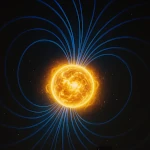 Extreme Cosmic Objects: Where Physics Explodes
  Mirror Universe: Coexistence of Two Worlds in a Cosmic Reflection
 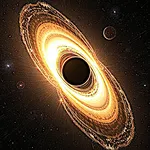 The first second of our history
 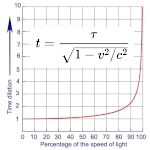 Time Dilation: Relativistic Mirage or Reality?
 Space Through Time: A Constantly Evolving Concept
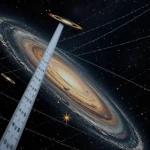 The Expanding Universe: What Does "Creating Space" Really Mean?
  From Nothingness to the Cosmos: Why Is There Something Rather Than Nothing?
 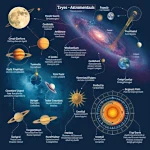 Glossary of Astronomy and Astrophysics: Key Definitions and Fundamental Concepts
 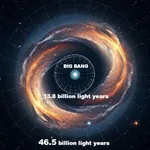 How can the Universe measure 93 billion light-years?
  How can we say that the Universe has an age?
  First Proof of the Expansion of the Universe
 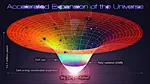 Space-time slices of the observable Universe
 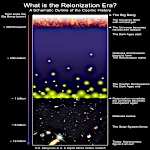 When the Universe Was Blind: The Long Night Before the First Stars
 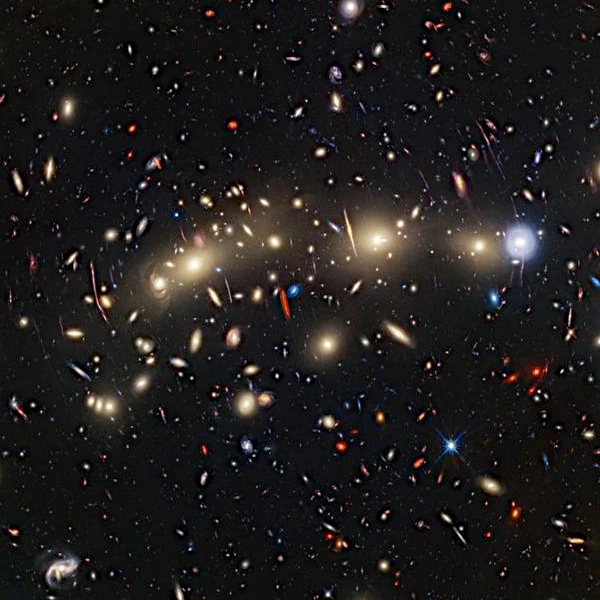 Alternative theories to the accelerated expansion of the universe
  The primitive atom of Abbot Georges Lemaître
 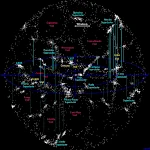 Great walls and filaments: the great structures of the Universe
 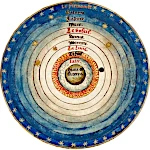 The Origins of the Universe: A History of Cosmic Representations
 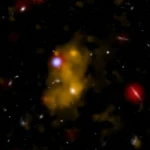 Lyman-alpha Blobs: Gaseous Traces of the First Galaxies
  Gamma-Ray Bursts: The Ultimate Breath of Giant Stars
 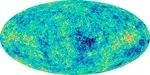 Perspective on the Inflation of the Universe
 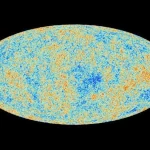 The Planck Universe: the Image of the Universe Becomes Clearer
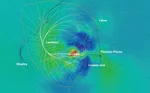 The sky is immense with Laniakea
  The Symmetries of the Universe: A Journey Between Mathematics and Physical Reality
  The Geometry of Time: Exploring the Fourth Dimension of the Universe
 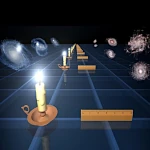 How to measure distances in the Universe?
  Why ‘nothing’ is impossible: Do nothingness and emptiness exist?
 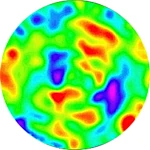 The Horizon Problem: Understanding the Uniformity of the Cosmos
 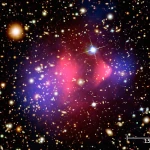 What is Dark Matter? The Invisible Force Shaping the Universe
  Metaverse, the next stage of evolution
  Multiverse: An Ocean of Expanding Space-Time Bubbles
 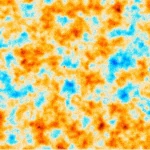 Cosmological Recombination: When the Universe Became Transparent
  The cosmological and physical constants of our Universe
  The Thermodynamics of the Sandpile and the Avalanche Effect
 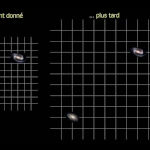 The engine of the accelerated expansion of the Universe
 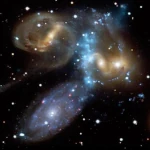 The X-Ray Universe: When Space Becomes Transparent
 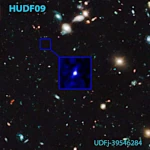 The oldest galaxies in the universe
 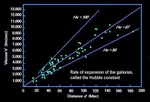 Hubble constant and expansion of the Universe
  Dark Energy: When the Universe Defies Its Own Gravity
 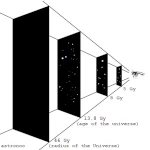 What is the Size of the Universe? Between Cosmological Horizon and Infinity
  Quantum Vacuum and Virtual Particles: The Physical Reality of Nothingness
  Paradox of the dark night
  Journey into the Heart of Paradoxes: The Enigmas That Revolutionized Science
 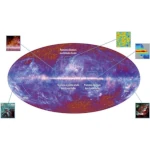 Cosmic Microwave Background: The Thermal Echo of the Big Bang