


The First Second of Our History
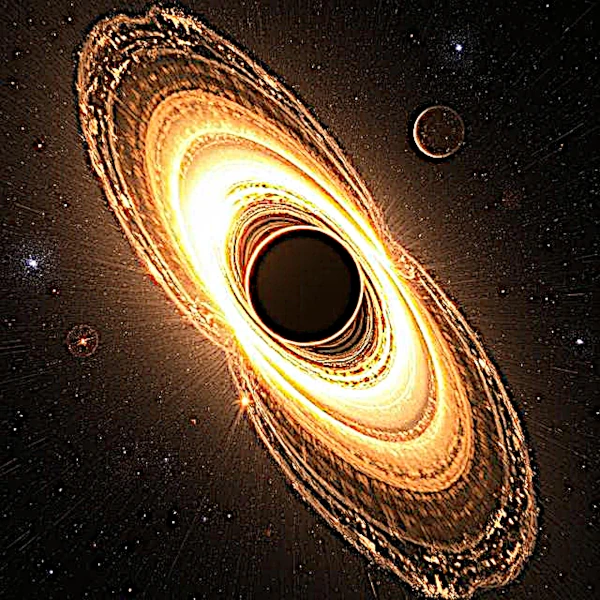
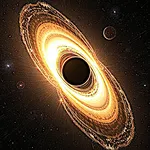
The first second begins 10-43 seconds (Planck time) after the Big Bang, 13.77 billion years ago. Image source: astronoo.com (new window)
The Zero Moment of the Universe
About 13.8 billion years ago, in a fraction of a second, the universe was born. The mystery of creation is hidden in this first second after the Big Bang.
How, when there was nothing, no energy, no matter, no time, did a tremendous explosion suddenly give birth to space, matter, and time?
From this first second, chaos emerged from nothingness, burning with unimaginable heat. An informal mush expanded, stretched in all directions, and slowly cooled.
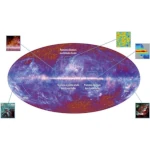
This "initial moment" is ours, the beginning of our clock. Even today, we capture in the sky the trace of the first moments (380,000 years after the first second) called "cosmic microwave background radiation" or "background radiation." This low-temperature microwave radiation, close to absolute zero, reaches the Earth's surface from all directions of the cosmos.
The cosmic microwave background is part of the background of all radio sources detected by our radiotelescopes since its discovery by Arno Penzias and Robert Wilson in 1965. It is proof that our observable Universe had a beginning. The first second of our Universe remains the greatest mystery of modern science. It seems that our mathematical formulas shatter against the wall of creation. In the beginning, there was nothing, no matter, no void, time and space did not exist. The explosion of a luminous point smaller than an atom and of infinite heat gave birth to the universe.
Everything begins an infinitesimal fraction of a second after the original explosion, the Big Bang. Time begins to unfold, and within a second, the entire cosmos takes shape. There is no zero time; before time did not exist. The cosmic clock strikes its first beat at 10-43 seconds.
The universe at this moment is an energy-dense boiling void, incredibly hot. Then, it is assumed to inflate suddenly, which is cosmic inflation. At 10-32 seconds, during this short period, the Universe filled with particles of all kinds. Elementary particles and their antiparticles emerged from the rapidly expanding space.
The first elements of matter, accompanied by antimatter, quarks, electrons, neutrinos, and photons, bathed in a cosmic soup. At 10-6 seconds, or one millionth of a second later, the first force, the strong nuclear force, comes into play. This force pulls quarks out of the void in threes to form protons and neutrons and create hydrogen and helium nuclei. After this mysterious first second, a very long and even more mysterious history will unfold, that of our existence.
"To understand our place in the universe, we must go back to the very beginning and see how it all formed." Professor Lawrence Krauss (Case Western Reserve University).
 Beyond Our Senses: What the Universe Still Hides from Us
  Little Red Dots: The Compact Enigmas of the Early Universe
  The Weak and Strong Anthropic Principles: Two Ways of Reading the Same Universe
  The Universe: Matter... or Information?
  Dark Energy: The Most Mysterious Force in the Universe
  The Fountains of Creation: The Myth of White Holes
  The Great Silence: 10 Insurmountable Walls to Meeting E.T.
  Why the Cause Always Precedes the Effect: The Order of the World is Written in This Principle
 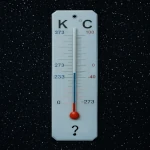 Absolute Zero and Nothingness: Two Limits the Universe Refuses to Reach
  Economical Nature: The Secrets of Conserved Quantities
 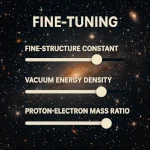 The Incredible Precision of the Universe's Laws: Chance or Necessity?
  The Mystery of the Arrow of Time: Why Can't We Go Back?
 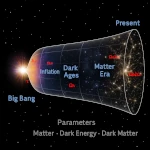 The Big Bang: At the Frontiers of the Model
  When Space Bends: The Tiny Slope That Guides the Universe
 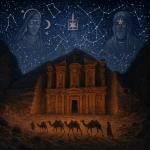 Nabataean Astronomy: Masters of the Desert Between Starry Skies and Stone Constructions
  Polynesian Astronomy: The Art of Navigating the Pacific Ocean
 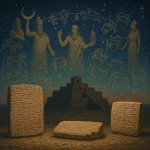 Mesopotamian Astronomy: The Cradle of Celestial Observation
  Andean Astronomy: A Sacred Link Between Sky and Earth
  Ancient Persian Astronomy: Between Babylon and the Islamic Golden Age
 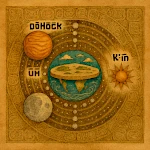 Mayan Astronomy: Celestial Cycles Dictated Religious, Agricultural, and Political Time
 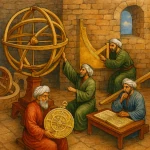 Islamic Astronomy: When Baghdad Illuminated the Sky of Science
  Indian Astronomy: From Sacred Poetry to Scientific Thought
 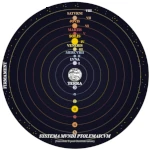 Ancient Greek Astronomy: The Universe of Philosophers in Search of Cosmic Order
 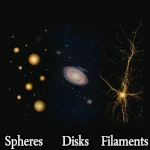 The Three Cosmic Shapes: A Hidden Geometry of the Universe
  Egyptian Astronomy: Between Sky and Nile, the Secrets of Time
  Babylonian Astronomy: When the Sky Predicted Destiny
  Chinese Imperial Astronomy: A Millennial Scientific Legacy
  Extreme Cosmic Objects: Where Physics Explodes
  Mirror Universe: Coexistence of Two Worlds in a Cosmic Reflection
  The first second of our history
  Time Dilation: Relativistic Mirage or Reality?
  Space Through Time: A Constantly Evolving Concept
 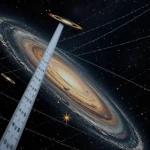 The Expanding Universe: What Does "Creating Space" Really Mean?
  From Nothingness to the Cosmos: Why Is There Something Rather Than Nothing?
 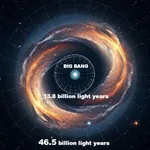 How can the Universe measure 93 billion light-years?
  How can we say that the Universe has an age?
 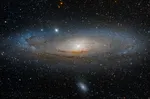 First Proof of the Expansion of the Universe
 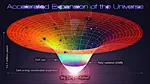 Space-time slices of the observable Universe
 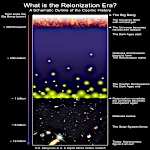 When the Universe Was Blind: The Long Night Before the First Stars
  Alternative theories to the accelerated expansion of the universe
  The primitive atom: the first cosmological theory
 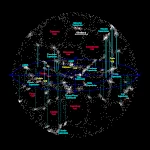 Great walls and filaments: the great structures of the Universe
 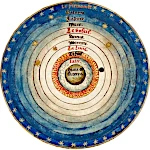 The Origins of the Universe: A History of Cosmic Representations
  Lyman-alpha Blobs: Gaseous Traces of the First Galaxies
 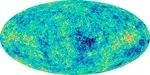 Perspective on the Inflation of the Universe
 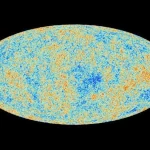 The Planck Universe: the Image of the Universe Becomes Clearer
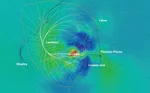 The sky is immense with Laniakea
  The Symmetries of the Universe: A Journey Between Mathematics and Physical Reality
  The Geometry of Time: Exploring the Fourth Dimension of the Universe
  How to measure distances in the Universe?
  Why ‘nothing’ is impossible: Do nothingness and emptiness exist?
  The Horizon Problem: Understanding the Uniformity of the Cosmos
  What is Dark Matter? The Invisible Force Shaping the Universe
  Metaverse, the next stage of evolution
  Multiverse: An Ocean where each Spacetime Bubble has its own Physical Laws
 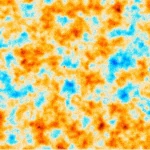 Cosmological Recombination: When the Universe Became Transparent
  Cosmological constants: the fine-tuning of the universe
  The Thermodynamics of the Sandpile and the Avalanche Effect
 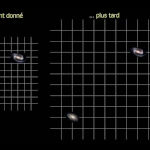 The engine of the accelerated expansion of the Universe
 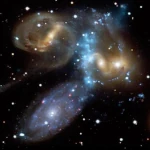 The X-Ray Universe: When Space Becomes Transparent
 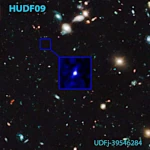 The oldest galaxies in the universe
 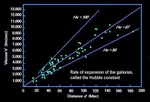 Hubble constant and expansion of the Universe
  Dark Energy: When the Universe Defies Its Own Gravity
 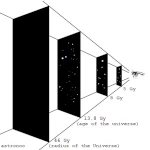 What is the Size of the Universe? Between Cosmological Horizon and Infinity
  Quantum Vacuum and Virtual Particles: The Physical Reality of Nothingness
  Paradox of the dark night
  Journey into the Heart of Paradoxes: The Enigmas That Revolutionized Science
  Cosmic Microwave Background: The Thermal Echo of the Big Bang