


Equations of Physics
Mathematics at the Heart of Natural Laws
The equations of physics are essential tools for describing and understanding the fundamental laws that govern the universe. They allow us to model natural phenomena, explain their mechanisms, and predict their behavior, from the infinitesimally small world of subatomic particles to the gigantic structures of galaxies.
Theoretical Frameworks for Understanding the World
In classical mechanics, Newton's equations describe the motion of objects subjected to forces. In electromagnetism, Maxwell's equations unify electric and magnetic fields. In quantum mechanics, the Schrödinger equation describes the evolution of quantum states. In relativity, Einstein's equations define the structure of spacetime and gravitation. In particle physics, the equations of the Standard Model organize fundamental interactions.
Applications That Shape Modern Technology
These equations are not mere abstractions: they are the source of countless technological advancements. They enable the design of satellites, lasers, nuclear reactors, electronic systems, high-precision measuring instruments, and many other innovations. Understanding these equations means grasping the mathematical foundations that support contemporary science and technology.
There are articles on this page
 Full text of Einstein's 1905 article on the nature and evolution of light
  The Speed of Light: The Ultimate Limit That Nothing Can Exceed
 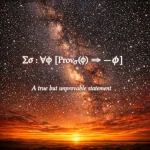 Reality Escapes Us: Truths We Can Never Prove
 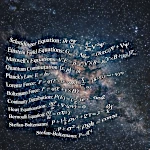 The Physics of the Universe in 50 Equations: User Guide
  The Kaya Identity: The Equation Complicating Our Decarbonization
  The Unsurpassable Speed in the Universe: When Energy Becomes Infinite
 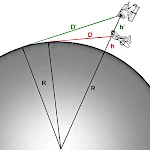 How far is the horizon?
 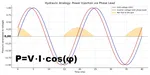 How Do Solar Panels Inject Electricity into the Grid?
 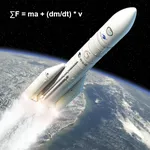 Dynamics of Momentum to explain the propulsion of rockets or jellyfish
 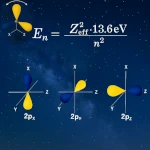 How Electron Energy Dictates Chemical Properties
  How to weigh the sun?
 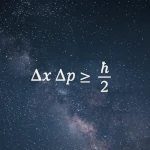 The Key Role of Quantum Uncertainty: No Particle Can Be at Rest
 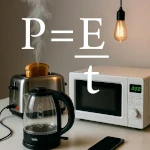 Energy and Power: Don't Confuse Them, Time Makes All the Difference
  Why is there a limit to cold, but not to heat?
 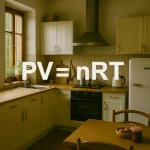 The Ideal Gas Law: One Equation, Thousands of Applications
 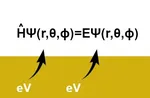 Schrödinger's Equation Revolutionized Our View of Matter
 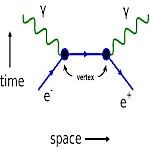 Feynman Diagram: Visualizing Particle Physics
 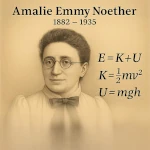 The Magic of Noether's Theorem: From the Principle of Least Action to Conservation Laws
  Relationship between gravitational mass and inertial mass and the equivalence principle
 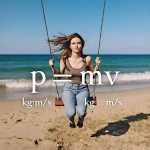 Third Equation of Physics: Momentum to Understand Collisions
 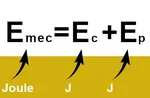 The second essential equation in physics: The intuition of a conserved quantity
 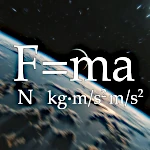 The First Equation of Physics: How to Mathematize Force
 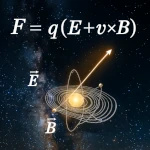 The electromagnetic force or Lorentz force
 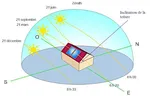 The solar energy received depends on the angle of incidence
  Why is marble colder than wood?
 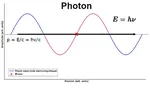 Why does a photon, which has no mass, have energy?
 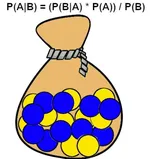 Bayes Formula and Artificial Intelligence
  The seven fundamental constants of physics
 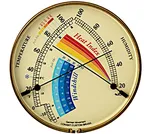 What temperature does it feel like in interstellar space?
 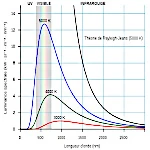 Black body radiation curves: Planck's law
  The equivalence principle, gravitational effects are indistinguishable from acceleration
 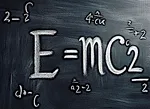 The consequences of E=mc2 for our understanding of the Universe
  Equation of the free fall of bodies (1604)
 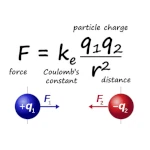 Coulomb vs Newton: The Mysterious Similarity of the Universe's Forces
  Boltzmann Equation (1877), or Order Emerging from Chaos
 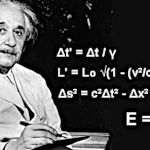 Special relativity equations (1905)
 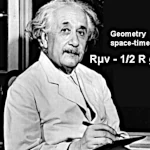 The equation of general relativity (1915)
  Planetary Rotation Equations: Between Angular Momentum and Gravitational Balance
 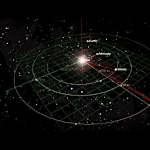 Equation of the orbital velocity of a planet
 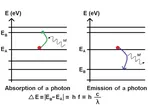 Planck's equation
  Understanding Schrödinger's Equation Without Math
 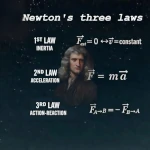 Newton's Three Laws: From the Falling Apple to the Orbiting Planets
  Maxwell's equations
 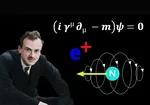 Dirac Equation (1928): definition and explanation
 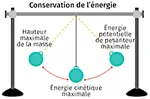 Conservation of energy: A fundamental principle of physics
  Equation of electromagnetic induction
 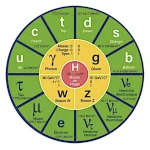 Why do elementary particles have no mass?