


Light and Photons
A Fundamental Manifestation of Matter
Light is a form of energy carried by elementary particles called photons. It results from fundamental physical processes, such as electronic transitions in atoms or interactions between charged particles. This wave-particle duality makes light a central phenomenon in modern physics.
Radiation Filtered by Earth's Atmosphere
The atmosphere only allows a small portion of the electromagnetic radiation emitted by celestial bodies to pass through. Short waves, such as gamma rays or extreme ultraviolet rays, are absorbed in the upper layers, while very long waves are reflected or deflected. The optical window—that of visible light—is one of the few frequency ranges that effectively reaches the Earth's surface.
Understanding the Spectrum to Understand the Universe
The light that reaches us carries valuable information about celestial objects: temperature, chemical composition, speed, and internal structure. By studying the electromagnetic spectrum, astronomers can analyze phenomena invisible to the naked eye and explore regions of the Universe otherwise inaccessible. Light is thus one of the most powerful tools for understanding the cosmos.
There are articles on this page
 Why does infrared pass through dust clouds?
  The Perception of Radiant Cold Explained by Physics
  Sprites and Cosmic Rays: The Ghostly Lightning of the Atmosphere
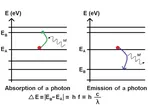
 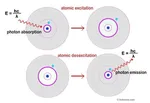 Principle of absorption and emission of a photon
  The Femtosecond Laser: From Ultra-Short Time to Extreme Power
  The World of Color
 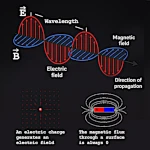 The secret of the speed of light: electromagnetic runaway
  Rainbow: formation, colors and types of arcs explained
 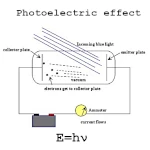 Photoelectric effect: Einstein, photons and electrons
  The Nature of Light
  Plasma Lamp and Field Concept
  What is Vantablack?
 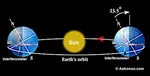 Michelson-Morley Experiment
 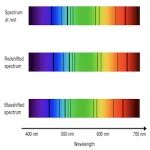 Redshift calculation (z)
 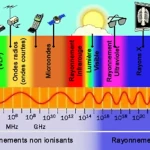 All the Light of the Electromagnetic Spectrum
  Solar Pillars: Celestial Mirages and Light Phenomena
  The Speed of Light: A Universal Constant
 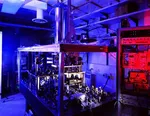 The incredible precision of the second
  Aberration of Light: The Great Gathering, Blueshift, and Dazzling
 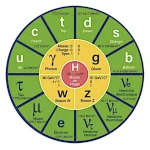 Why do elementary particles have no mass?
  Polar Auroras: Light, Magnetism and Solar Activity
 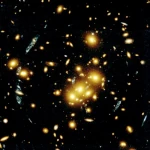 Gravitational Lenses: When Spacetime Becomes a Mirage
 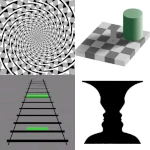 Optical Illusions: Deceptions and Mysteries of Visual Perception
 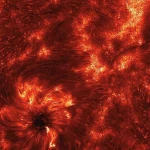 Traveling Light: How a Photon Leaves the Sun to Reach Earth?
 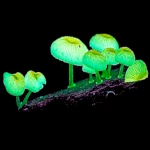 Bioluminescence of living organisms
  Laser light
 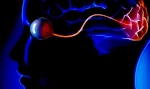 We do not see with our eyes but with our brain
 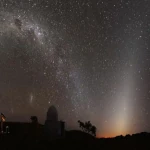 Zodiacal Light: Reflection of Interplanetary Dust
  The Antitwilight Arch: Earth's Shadow
  How many photons to heat a cup of coffee?
  Biosignatures: Presence of Life in the Universe
 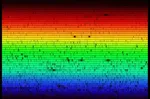 Spectroscopy: A Key to Analyzing the Invisible World
  Field concept in physics
  Why is Cherenkov light blue? Explanations and physical phenomenon
 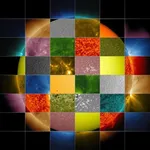 The lights of the Sun
  What is a Wave?
  Planck's equation and black body light