

Tantalum (Ta, Z = 73): The Metal of Life and High Technology

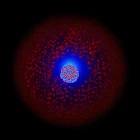
Image description:
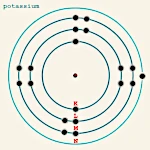
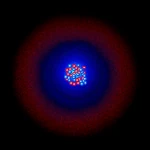
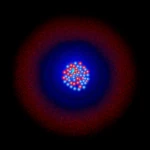
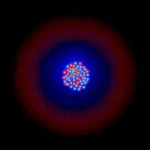
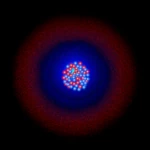
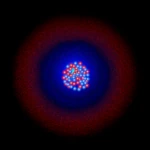
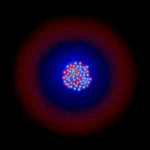
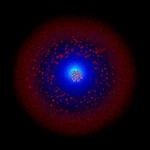
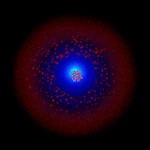
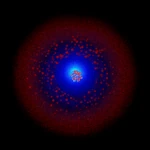
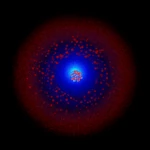
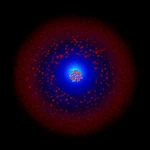
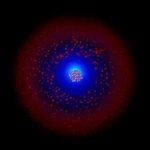
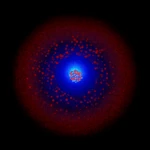
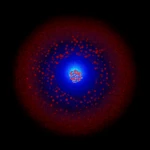
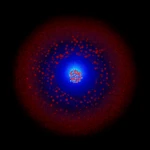
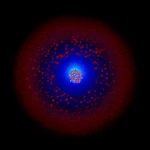
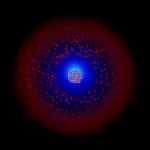
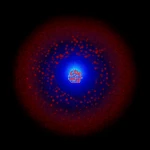
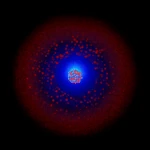
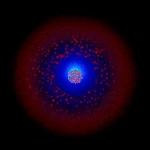
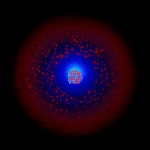
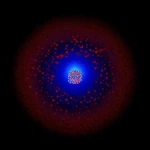
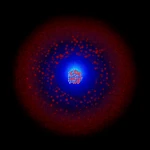
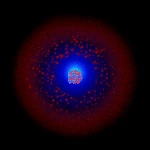
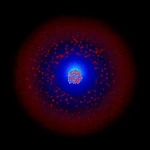
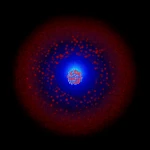
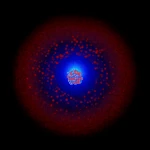
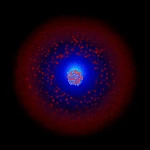
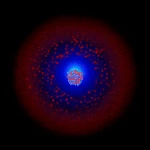
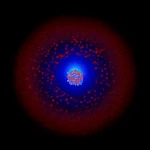
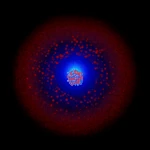
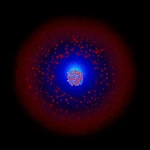
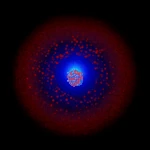
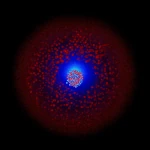
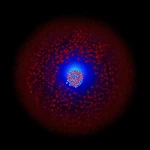
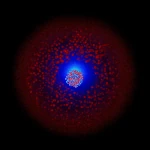
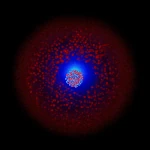
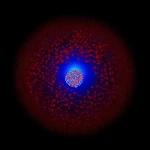
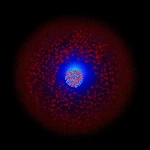
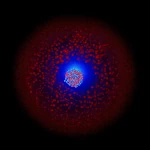
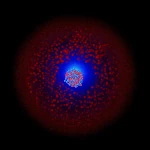
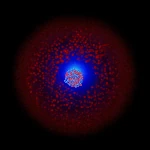
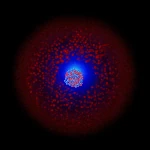
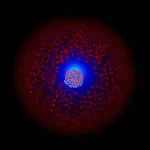
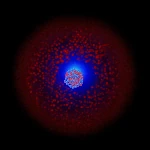
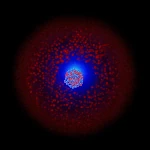
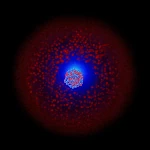
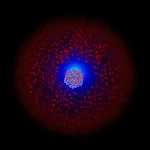
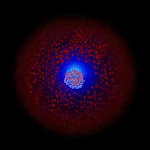
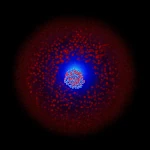
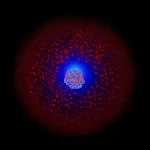
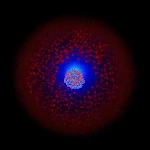
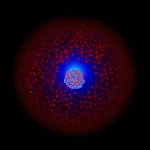
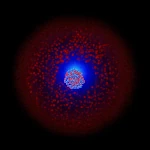
Simplified atomic model of the tantalum atom. The main stable isotope is \(\,^{181}\mathrm{Ta}\,\)
with its 73 protons, 73 electrons, and 108 neutrons.
Image source: astronoo.com (new window)
Role of Tantalum in Astrophysics and Cosmology
Stellar synthesis of tantalum
Tantalum is synthesized in stars mainly through the s-process (slow neutron capture) occurring in low- to medium-mass AGB stars (asymptotic giant branch), with a significant contribution from the r-process (rapid neutron capture) during explosive events such as supernovae. As a heavy element with an odd atomic number (Z=73), it is less abundant than its even-numbered neighbors (hafnium-72 and tungsten-74) according to the Oddo-Harkins rule. Tantalum-181, its only stable natural isotope, is mainly produced by the s-process, but some short-lived radioactive isotopes of tantalum are produced exclusively by the r-process.
Cosmic abundance and isotopic characteristics
The cosmic abundance of tantalum is about 8.0×10⁻¹³ times that of hydrogen in number of atoms, making it about twice as rare as hafnium and one of the rarest heavy elements. In the solar system, tantalum has an abundance similar to that of gold and platinum. Tantalum-181 is the only stable natural isotope, accounting for 99.988% of natural tantalum, with tantalum-180m (metastable isomer) making up the remaining 0.012%.
Detection in stars and implications for nucleosynthesis
Detecting tantalum in stellar atmospheres is extremely difficult due to its rarity. However, it has been detected in some s-process-rich stars through the spectral lines of Ta I and Ta II. The tantalum/hafnium (Ta/Hf) ratio in stars provides information on the conditions of neutron-capture nucleosynthesis, as these two neighboring elements have similar nuclear behaviors but different chemical properties that can affect their observation in stellar spectra.
Ta-W dating system in cosmochemistry
Tantalum plays an important role in the tantalum-tungsten (Ta-W) dating system. Tantalum-182, a now-extinct radioactive isotope (half-life of 114.43 days), decays into tungsten-182. This chronometer system is crucial for dating very early events in the solar system, as tantalum and tungsten have very different geochemical behaviors during planetary core formation: tantalum is lithophile (prefers silicates) while tungsten is siderophile (prefers metal). Tungsten-182 anomalies in meteorites and lunar samples allow dating the formation of the Earth's core and the differentiation of planetary bodies in the first few million years of the solar system.
History of the Discovery of Tantalum
Etymology and origin of the name
Tantalum is named after the Greek mythological figure Tantalus, king of Lydia punished by the gods for stealing their nectar and ambrosia. According to the myth, Tantalus was condemned to stand in a lake whose water receded when he tried to drink, and under a fruit tree whose branches rose when he tried to eat, leaving him in eternal thirst and hunger. The name was chosen by the discoverer Anders Gustaf Ekeberg to evoke the inability of tantalum oxide to absorb acids and dissolve, remaining "insatiable" like Tantalus in the myth.
Discovery of Tantalum by Anders Gustaf Ekeberg
Tantalum was discovered in 1802 by the Swedish chemist Anders Gustaf Ekeberg (1767-1813) at Uppsala University. Ekeberg was analyzing minerals from Sweden and Finland when he isolated a new oxide insoluble in acids. He named this oxide "tantalite" after the myth of Tantalus, and the corresponding element "tantalum". Ekeberg was already deaf at the time of his discovery, but this did not prevent him from making major contributions to mineral chemistry.
Confusion with niobium and clarification
For several decades, tantalum was confused with another element discovered around the same time, niobium (then called columbium). In 1809, the English chemist William Hyde Wollaston declared that tantalum and columbium were the same element. It was not until 1846 that the German chemist Heinrich Rose demonstrated that they were two distinct elements, which he named niobium and pelopium (the latter turning out to be a mixture of tantalum and niobium). The confusion persisted until 1866, when the Swiss chemist Jean-Charles Galissard de Marignac definitively separated the two elements by fractional crystallization of complex fluorides.
First production of the metal
The isolation of pure tantalum metal was extremely difficult. Early attempts produced impure powders. It was not until 1903 that the German chemist Werner von Bolton succeeded in producing ductile tantalum metal by electrolytic reduction of molten potassium fluorotantalate (K₂TaF₇). This method paved the way for industrial applications of tantalum. The process was improved in the 1920s to allow the production of tantalum wire for incandescent lamps.
Terrestrial presence and production
Tantalum is present in the Earth's crust at an average concentration of about 1.7 ppm (parts per million), making it rarer than uranium but more abundant than gold. There are no significant deposits of pure tantalum; it is always associated with other elements in complex minerals. The main ores are:
- Tantalite: (Fe,Mn)(Ta,Nb)₂O₆ - the most important source
- Coltan: Mixture of columbite (niobate) and tantalite, particularly important in the Democratic Republic of Congo
- Euxenite: (Y,Ca,Ce,U,Th)(Nb,Ta,Ti)₂O₆
- Microlite: (Na,Ca)₂Ta₂O₆(O,OH,F)
World production of tantalum is about 1,800 to 2,000 tons per year. The main producers are Rwanda, the Democratic Republic of Congo, Brazil, China, and Ethiopia. Due to its rarity and strategic applications, tantalum is an expensive metal, with typical prices of 200 to 400 dollars per kilogram (or more during supply tensions). Demand is mainly driven by electronics (capacitors) and superalloys.
Structure and Fundamental Properties of Tantalum
Classification and atomic structure of Tantalum
Tantalum (symbol Ta, atomic number 73) is a transition metal of the 6th period, located in group 5 (formerly VB) of the periodic table, with vanadium and niobium. Its atom has 73 protons, usually 108 neutrons (for the unique stable isotope \(\,^{181}\mathrm{Ta}\)) and 73 electrons with the electronic configuration [Xe] 4f¹⁴ 5d³ 6s². This configuration has three electrons in the 5d subshell, characteristic of group 5 transition metals.
Exceptional physical properties
Tantalum is a gray-blue, shiny, very dense (16.4 g/cm³), ductile metal with excellent thermal and electrical conductivity. Its melting point is extremely high (3017 °C), classifying it among refractory metals. Tantalum has a body-centered cubic (BCC) crystal structure at room temperature. It is paramagnetic and has low thermal expansion. Its hardness is moderate but can be increased by mechanical treatments or alloys.
Chemical properties: exceptional corrosion resistance
The most remarkable property of tantalum is its exceptional resistance to corrosion. At room temperature, it is practically inert: it does not react with air (thanks to a protective Ta₂O₅ oxide layer), resists most acids (including aqua regia), and is only attacked by hydrofluoric acid, hot concentrated alkaline solutions, and some molten salts. This exceptional chemical inertness is due to the formation of an extremely stable, adherent, and protective Ta₂O₅ oxide layer.
Transformation points and conductivity
Tantalum melts at 3017 °C (3290 K) - one of the highest melting points among metals - and boils at 5458 °C (5731 K). Its electrical conductivity is good (about 13% that of copper) and its thermal conductivity is moderate. Tantalum retains its mechanical properties at high temperatures, making it a valuable material for high-temperature applications.
Thermal and physical characteristics (summary)
Melting point of tantalum: 3290 K (3017 °C) - 3rd highest among metals after tungsten and rhenium.
Boiling point of tantalum: 5731 K (5458 °C).
Density: 16.4 g/cm³ - very dense, comparable to gold.
Crystal structure at room temperature: Body-centered cubic (BCC).
Corrosion resistance: Exceptional, almost inert at room temperature.
Table of Tantalum Isotopes
| Isotope / Notation | Protons (Z) | Neutrons (N) | Atomic mass (u) | Natural abundance | Half-life / Stability | Decay / Remarks |
|---|---|---|---|---|---|---|
| Tantalum-180 — \(\,^{180}\mathrm{Ta}\,\) | 73 | 107 | 179.947466 u | ≈ 0.012 % | >1.2×10¹⁵ years | Nuclear metastable isomer (180mTa). Only known natural isomer, extremely rare. |
| Tantalum-181 — \(\,^{181}\mathrm{Ta}\,\) | 73 | 108 | 180.947996 u | ≈ 99.988 % | Stable | Only stable isotope of tantalum, representing almost all natural tantalum. |
| Tantalum-182 — \(\,^{182}\mathrm{Ta}\,\) | 73 | 109 | 181.950152 u | Synthetic | ≈ 114.43 days | Radioactive (β⁻). Naturally extinct isotope, important for Ta-W dating in cosmochemistry. |
Electronic Configuration and Electron Shells of Tantalum
N.B.:
Electron shells:
How electrons are organized around the nucleus (new window).
Tantalum has 73 electrons distributed over six electron shells. Its electronic configuration [Xe] 4f¹⁴ 5d³ 6s² has a completely filled 4f subshell (14 electrons) and three electrons in the 5d subshell. This configuration can also be written as: K(2) L(8) M(18) N(18) O(32) P(5), or in full: 1s² 2s² 2p⁶ 3s² 3p⁶ 3d¹⁰ 4s² 4p⁶ 4d¹⁰ 4f¹⁴ 5s² 5p⁶ 5d³ 6s².
Detailed Structure of the Shells
K shell (n=1): contains 2 electrons in the 1s subshell. This inner shell is complete and very stable.
L shell (n=2): contains 8 electrons distributed as 2s² 2p⁶. This shell is complete, forming a noble gas configuration (neon).
M shell (n=3): contains 18 electrons distributed as 3s² 3p⁶ 3d¹⁰. This complete shell contributes to electronic screening.
N shell (n=4): contains 18 electrons distributed as 4s² 4p⁶ 4d¹⁰. This shell forms a stable structure.
O shell (n=5): contains 32 electrons distributed as 5s² 5p⁶ 4f¹⁴ 5d³. The completely filled 4f subshell and the three 5d electrons give tantalum its transition metal properties.
P shell (n=6): contains 5 electrons in the 6s² and 5d³ subshells.
Valence Electrons and Oxidation States
Tantalum effectively has 5 valence electrons: two 6s² electrons and three 5d³ electrons. Tantalum exhibits several oxidation states, but the most stable and common is +5. In this state, tantalum loses its two 6s electrons and three 5d electrons to form the Ta⁵⁺ ion with the electronic configuration [Xe] 4f¹⁴. This ion has a completely filled 4f subshell and is diamagnetic.
Tantalum can also form compounds in lower oxidation states (+4, +3, +2, +1, 0 and even -1 and -3 in some complexes), but these are less stable and generally reducing. For example, TaCl₅ (tantalum pentachloride) is the most common compound in the +5 state, while TaCl₄ (tantalum tetrachloride) represents the +4 state and is air-sensitive. The chemistry of tantalum is therefore dominated by the +5 state, where it chemically resembles niobium (Nb⁵⁺) but with a slightly smaller ionic size and stronger Lewis acidity.
Chemical Reactivity of Tantalum
Reaction with air and oxygen
Tantalum metal is remarkably stable in air at room temperature due to the formation of a protective Ta₂O₅ oxide layer. At high temperatures (above 300 °C), it gradually oxidizes: 4Ta + 5O₂ → 2Ta₂O₅. Tantalum(V) oxide is a white, very stable, chemically inert solid, and has a high dielectric constant (κ ~ 25). It is this oxide that gives tantalum its exceptional corrosion resistance. In fine powder form, tantalum can be pyrophoric.
Reaction with water and acids
Tantalum is practically inert to water and water vapor, even at high temperatures. It resists most acids, including concentrated hydrochloric acid, concentrated sulfuric acid (up to 150 °C), concentrated nitric acid, and even aqua regia. It is only significantly attacked by:
- Hydrofluoric acid (HF): Ta + 5HF → TaF₅ + 2.5H₂
- Hot concentrated alkaline solutions: Especially in the presence of oxidants
- Concentrated sulfuric acid at very high temperature
This exceptional resistance makes it a material of choice for chemical equipment.
Reactions with halogens and other elements
Tantalum reacts with halogens at moderate temperatures to form pentahalides: 2Ta + 5F₂ → 2TaF₅; 2Ta + 5Cl₂ → 2TaCl₅. Tantalum pentachloride (TaCl₅) is a very hygroscopic white solid, used as a precursor in chemical vapor deposition and organic synthesis. Tantalum reacts with nitrogen at high temperature (>300 °C) to form tantalum nitride (TaN), with carbon to form tantalum carbide (TaC, one of the most refractory materials known, melting point ~3880 °C), and with hydrogen to form hydrides (TaH).
Exceptional biocompatibility
The most remarkable property of tantalum, after its corrosion resistance, is its exceptional biocompatibility. Tantalum is totally biocompatible: it is non-toxic, does not cause allergic reactions, and does not interfere with biological processes. Moreover, its oxide Ta₂O₅ is also biocompatible and forms a stable layer that does not dissolve in body fluids. These properties, combined with its mechanical strength and ability to be machined with precision, make tantalum an ideal material for medical implants.
Industrial and Technological Applications of Tantalum
- in high-performance electronic capacitors (dominant application, ~50% of consumption);
- for medical and surgical implants (plates, screws, stents, prostheses) thanks to its exceptional biocompatibility;
- in chemical industry equipment (reactors, heat exchangers, valves) for handling corrosive products;
- as an alloying element in superalloys for gas turbines and aircraft engines;
- for cutting tools and dies (alloys with tungsten carbide);
- in semiconductor production equipment (sputtering targets, reactor parts);
- as a material for high-temperature furnaces and vacuum equipment;
- in anti-corrosion coatings for marine and chemical applications;
- for luxury jewelry (alternative to white gold, particularly durable);
- as a neutron absorber in the nuclear industry;
- in high-performance permanent magnets (alloys with cobalt);
- for optical coatings (low reflection, high durability);
- as a catalyst in organic chemistry and petrochemistry;
- in seawater desalination equipment;
- for space propulsion systems (rocket engine components).
Electronic Capacitors: The Heart of Modern Devices
Importance of tantalum capacitors
The most important application of tantalum is its use in electronic capacitors. Tantalum capacitors account for about 50% of the world's consumption of this metal. They are essential in virtually all electronic devices: mobile phones, computers, medical equipment, automotive systems, etc. Their popularity comes from their excellent combination of properties: high volumetric capacity, stability, reliability, and wide operating temperature range.
Operating principle
Tantalum capacitors are electrolytic capacitors that use tantalum metal as the anode. The anode is made of sintered tantalum powder (to maximize surface area) or tantalum foil. A thin layer of tantalum oxide (Ta₂O₅) formed by anodization serves as the dielectric. The cathode is usually manganese dioxide (MnO₂) or a conductive polymer. This structure allows for very high capacities in a small volume.
Advantages over other capacitors
- High volumetric capacity: The highest of all types of capacitors (up to several farads in a small volume).
- Stability: Excellent temperature and frequency stability.
- Reliability: Very long lifespan, low failure rate.
- Wide temperature range: Operates from -55 °C to +125 °C (or even +150 °C for some versions).
- Low ESR: Low equivalent series resistance, important for high-frequency applications.
Specific applications
Tantalum capacitors are particularly used in:
- Consumer electronics: Smartphones, tablets, laptops, cameras.
- Automotive electronics: Safety systems, engine control, infotainment.
- Medical equipment: Defibrillators, pacemakers, diagnostic devices.
- Military and aerospace systems: Equipment that must operate in extreme conditions.
- Industrial electronics: Programmable logic controllers, process control.
Medical Implants: Tantalum that Saves Lives
Exceptional biocompatibility
Tantalum is one of the most biocompatible materials known. It offers several advantages for medical applications:
- Total chemical inertness: Does not corrode in the human body, does not release toxic ions.
- Non-allergenic: Does not cause allergic reactions (unlike nickel present in some stainless steels).
- Osseointegration: Bone adheres well to tantalum, promoting implant fixation.
- X-ray visibility: High density allows excellent visualization in radiography.
- Easy to sterilize: Resists all sterilization methods (autoclave, radiation).
Types of tantalum implants
- Orthopedic implants: Plates, screws, pins for fracture fixation and bone reconstruction.
- Joint prostheses: Components for hips, knees, shoulders (often as an alloy or with coating).
- Vascular stents: Tubular structures to keep coronary arteries open.
- Surgical mesh: For hernias and abdominal wall reconstructions.
- Dental implants: Artificial roots for dental prostheses.
- Craniofacial implants: For reconstruction after trauma or tumor surgery.
Recent developments: Porous tantalum
An important development is porous tantalum (Trabecular Metal™), which mimics the structure of spongy bone. This material has a porosity of about 75-80%, allowing bone growth inside the implant (osteointegration). Porous tantalum implants are particularly used for revision joint prostheses (replacement of failed implants) where bone fixation is problematic.
Chemical and Industrial Applications
Equipment for the chemical industry
Thanks to its exceptional corrosion resistance, tantalum is used to manufacture equipment for handling aggressive chemicals:
- Reactors and tanks: For the production of acids, pharmaceuticals, specialty chemicals.
- Heat exchangers: For cooling or heating corrosive fluids.
- Valves and fittings: For controlling the flow of corrosive products.
- Piping: For transporting aggressive chemicals.
- Thermocouples: For measuring temperatures in corrosive environments.
Tantalum is often used as a coating on less expensive metals (steel, copper) or in combination with glass (tantalized glass) to reduce costs.
Superalloys for high-temperature applications
Tantalum is an important alloying element in nickel-, cobalt-, and iron-based superalloys for high-temperature applications. It improves:
- Creep resistance: By forming stable precipitates at grain boundaries.
- Oxidation resistance: By promoting the formation of a protective alumina layer.
- Microstructural stability: By stabilizing precipitated phases.
These alloys are used in gas turbine blades (aeronautics, power generation), combustion chambers, and space propulsion systems.
Cutting tools
Tantalum carbide (TaC) and tungsten carbide alloys containing tantalum are used for high-performance cutting tools. Tantalum improves wear resistance, hot hardness, and deformation resistance of tools. These tools are used for machining steels, cast irons, and superalloys.
Toxicity of Tantalum and Environmental Concerns
Low chemical toxicity
Tantalum metal and its insoluble compounds (such as Ta₂O₅ oxide) have very low chemical toxicity. Tantalum is considered biologically inert and non-toxic. Tantalum powders can cause mechanical irritation (like any fine powder), but no specific toxic effects. Soluble tantalum compounds (such as potassium fluorotantalate K₂TaF₇) have moderate toxicity, mainly through irritation.
Safe medical use
The exceptional biocompatibility of tantalum is demonstrated by its extensive and safe use in medicine for decades. In-depth studies have shown no carcinogenic, mutagenic, or teratogenic effects. Tantalum implants can remain in the body for the patient's lifetime without causing adverse reactions.
Problems related to extraction: coltan
The main environmental and social problem associated with tantalum concerns its extraction, particularly that of coltan (columbite-tantalite) in the Democratic Republic of Congo (DRC) and the African Great Lakes region. The problems include:
- Armed conflicts: The trade in "conflict tantalum" finances armed groups.
- Child labor and deplorable working conditions in artisanal mines.
- Environmental degradation: Deforestation, water pollution, ecosystem disruption.
In response, initiatives such as the OECD's "Due Diligence Guidance" for supply chains of minerals from conflict areas, and certification programs such as the "Conflict-Free Smelter Program" have been developed to ensure responsible sourcing.
Recycling
Tantalum is widely recycled, with an estimated recycling rate of 20-30%. Sources of recycling include:
- Production waste: Scrap, dust, sludge from manufacturing plants.
- Old catalysts: From the chemical and petrochemical industries.
- Electronic waste: Tantalum capacitors from end-of-life electronic equipment.
- Used superalloys: From turbines and engines.
Recycling is economically attractive due to the high price of tantalum and helps reduce pressure on mines. However, the collection and sorting of tantalum-containing waste remains a challenge, especially for small electronic devices.
Occupational exposure to Tantalum
Occupational exposure to tantalum occurs mainly in mines, processing plants, manufacturers of electronic and medical equipment, and industries using tantalum equipment. Standard precautions for metal dusts apply. No specific occupational exposure limit for tantalum is established in most countries, but general recommendations for heavy metal dusts apply (typically 5-10 mg/m³ for total dust).
 The energies required for nuclear fusion and why uranium is a limit
 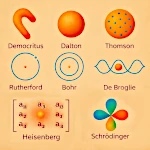 The Atom in All Its Forms: From Ancient Intuition to Quantum Mechanics