

Yttrium (Y, Z = 39): A Rare Earth with Revolutionary Technological Applications

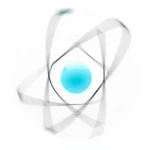
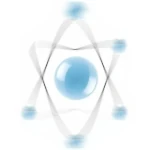
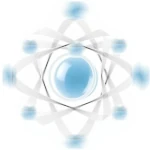
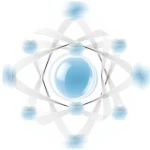
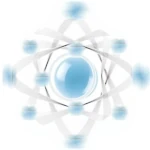
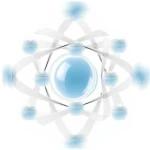
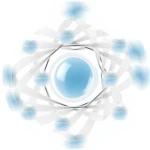
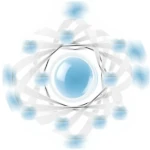
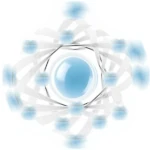
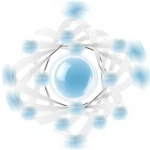
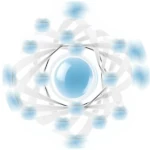
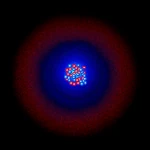
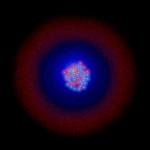
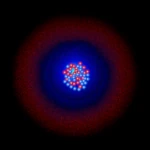
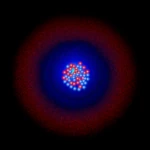
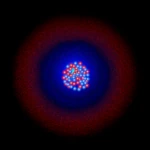
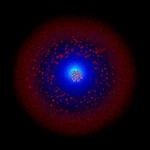
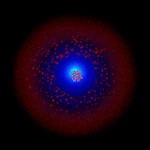
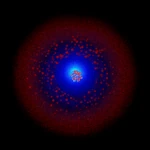
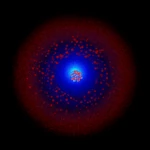
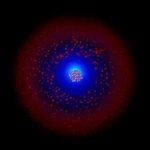
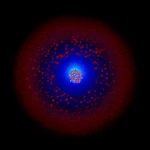
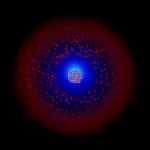
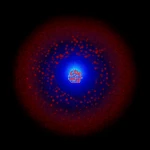
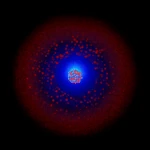
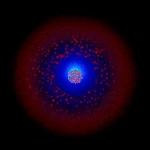
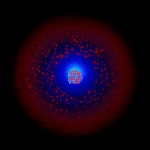
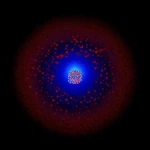
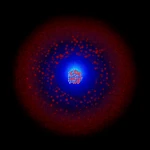
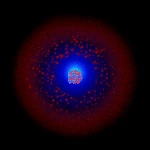
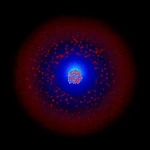
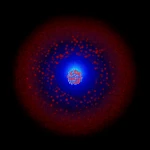
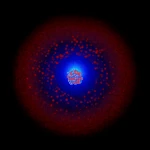
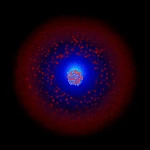
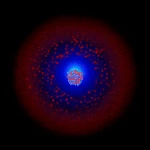
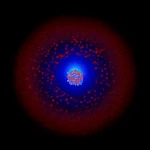
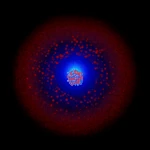
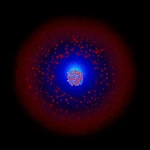
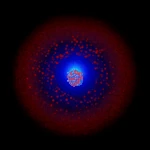
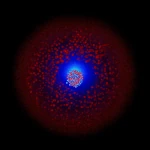
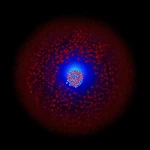
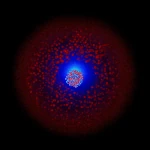
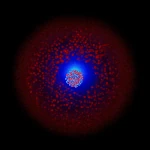
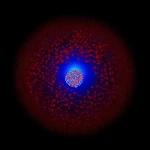
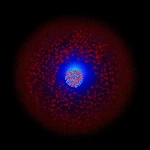
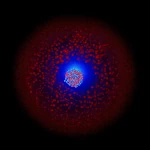
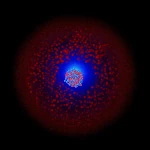
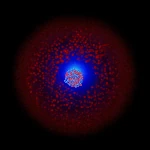
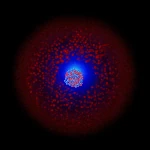
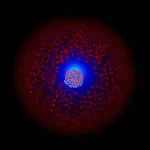
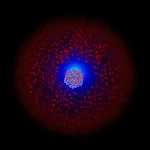
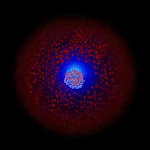
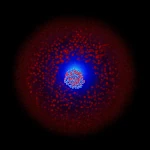
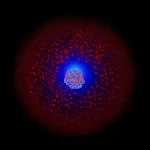
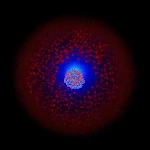
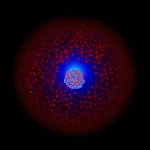
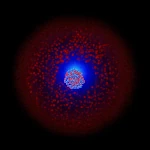
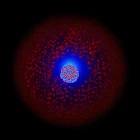
Image description:
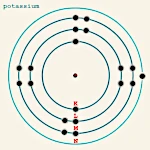
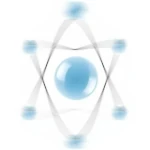
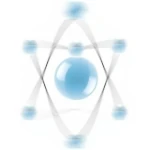
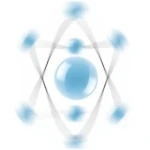
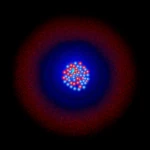
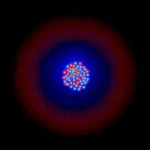
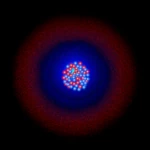
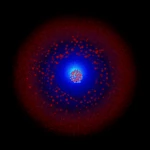
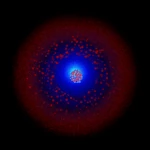
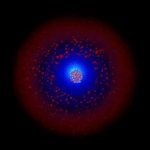
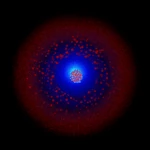
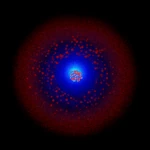
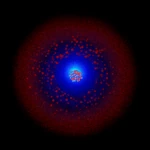
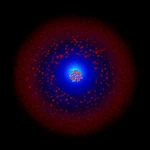
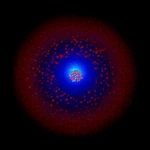
Simplified atomic model of the yttrium atom.
The most abundant (and only stable) isotope is \(\,^{89}\mathrm{Y}\,\) with its 39 protons, 39 electrons, and 50 neutrons.
Image source: astronoo.com (new window) — AI-generated image, public domain.
History of the Discovery of Yttrium
Yttrium has a fascinating history linked to a small Swedish village that gave its name to four chemical elements. In 1787, Swedish lieutenant and amateur chemist Carl Axel Arrhenius (1757-1824) discovered near the village of Ytterby (located on the island of Resarö in the Stockholm archipelago) an unusual black mineral that he named ytterbite (now called gadolinite).
In 1794, Finnish chemist Johan Gadolin (1760-1852) analyzed this mineral and isolated what he believed to be a new earth oxide, which he named yttria (yttrium oxide, Y₂O₃). However, this oxide actually contained several mixed rare earth elements, and it took over a century to separate them all.
Pure yttrium metal was not isolated until 1828 by German chemist Friedrich Wöhler (1800-1882), who managed to reduce yttrium chloride (YCl₃) with potassium. However, the metal obtained still contained impurities. It was not until the early 20th century, with the development of more sophisticated separation techniques, that truly pure yttrium was obtained.
The name yttrium comes from the village of Ytterby, which also gave its name to three other elements discovered in the same ore: ytterbium (Yb), terbium (Tb), and erbium (Er). No other place in the world has given its name to as many chemical elements.
Structure and Fundamental Properties
Yttrium (symbol Y, atomic number 39) is a transition metal in group 3 of the periodic table. Although chemically very similar to the lanthanides (rare earths), it is not strictly part of them because it has no electrons in the 4f orbitals. Its atom has 39 protons, 50 neutrons (for the stable isotope \(\,^{89}\mathrm{Y}\)) and 39 electrons with the electronic configuration [Kr] 4d¹ 5s².
At room temperature, yttrium is a bright silvery-white solid metal, relatively light for a transition metal (density ≈ 4.47 g/cm³). It has a hexagonal close-packed crystal structure at room temperature, which transforms into a body-centered cubic structure above 1,478 °C.
Yttrium is a relatively soft and ductile metal that can be easily machined, rolled, and drawn. It has good electrical and thermal conductivity, typical of transition metals. Like most rare earths, yttrium is paramagnetic at room temperature.
A remarkable property of yttrium is its strong affinity for oxygen. At room temperature, it quickly forms a thin oxide layer (Y₂O₃) that partially protects it from further oxidation. However, in the presence of moisture or at high temperatures, oxidation becomes faster. Finely divided yttrium can even be pyrophoric (spontaneously ignite in air).
Melting point of yttrium (liquid state): 1,799 K (1,526 °C).
Boiling point of yttrium (gaseous state): 3,609 K (3,336 °C).
Table of Yttrium Isotopes
| Isotope / Notation | Protons (Z) | Neutrons (N) | Atomic mass (u) | Natural abundance | Half-life / Stability | Decay / Remarks |
|---|---|---|---|---|---|---|
| Yttrium-89 — \(\,^{89}\mathrm{Y}\,\) | 39 | 50 | 88.905848 u | 100 % | Stable | Only stable and natural isotope of yttrium. Mononuclidic element. |
| Yttrium-90 — \(\,^{90}\mathrm{Y}\,\) | 39 | 51 | 89.907152 u | Synthetic | ≈ 64.0 hours | Radioactive (β⁻). Pure beta emitter used in radiotherapy and nuclear medicine to treat certain cancers (radioactive microspheres). |
| Yttrium-88 — \(\,^{88}\mathrm{Y}\,\) | 39 | 49 | 87.909501 u | Synthetic | ≈ 106.6 days | Radioactive (electron capture, β⁺). Positron emitter used in PET imaging (positron emission tomography). |
| Yttrium-91 — \(\,^{91}\mathrm{Y}\,\) | 39 | 52 | 90.907305 u | Synthetic | ≈ 58.5 days | Radioactive (β⁻). Fission product in nuclear reactors. Contributor to radioactive fallout. |
| Yttrium-87 — \(\,^{87}\mathrm{Y}\,\) | 39 | 48 | 86.910876 u | Synthetic | ≈ 79.8 hours | Radioactive (electron capture, β⁺). Used in medical research. |
Electronic Configuration and Electron Shells of Yttrium
N.B.:
Electron shells: How electrons are organized around the nucleus (new window).
Yttrium has 39 electrons distributed over five electron shells. Its full electronic configuration is: 1s² 2s² 2p⁶ 3s² 3p⁶ 3d¹⁰ 4s² 4p⁶ 4d¹ 5s², or simplified: [Kr] 4d¹ 5s². This configuration can also be written as: K(2) L(8) M(18) N(8) O(3).
Detailed Structure of the Shells
K shell (n=1): contains 2 electrons in the 1s subshell. This inner shell is complete and very stable.
L shell (n=2): contains 8 electrons distributed as 2s² 2p⁶. This shell is also complete, forming a noble gas configuration (neon).
M shell (n=3): contains 18 electrons distributed as 3s² 3p⁶ 3d¹⁰. This shell is complete with the 3d subshell fully filled.
N shell (n=4): contains 8 electrons distributed as 4s² 4p⁶. This shell has a noble gas configuration (krypton), which is why the simplified electronic configuration starts with [Kr].
O shell (n=5): contains 3 electrons distributed as 4d¹ 5s². These three electrons are the valence electrons of yttrium.
Valence Electrons and Oxidation States
The 3 electrons in the outer shell (4d¹ 5s²) are the valence electrons of yttrium. This configuration explains its chemical properties:
The almost exclusive oxidation state of yttrium is +3, where it loses its three valence electrons to form the Y³⁺ ion with the stable configuration [Kr] (isoelectronic with krypton). This noble gas configuration with complete subshells is extremely stable, which is why yttrium almost exclusively forms compounds with an oxidation state of +3.
Oxidation states of +2 and +1 have been observed in very rare organometallic compounds or under extreme experimental conditions, but they are very unstable and quickly re-oxidize. The +3 state completely dominates the chemistry of yttrium.
Chemical Reactivity
Yttrium is a relatively reactive metal, particularly with oxygen and water. At room temperature, it quickly forms a thin oxide layer (Y₂O₃) that partially protects it from further oxidation. However, this protection is imperfect, especially in the presence of moisture.
Yttrium reacts slowly with oxygen at room temperature but vigorously at high temperatures (>400 °C), forming yttrium(III) oxide: 4Y + 3O₂ → 2Y₂O₃. Finely divided yttrium can spontaneously ignite in air (pyrophoric), emitting intense light.
With water, yttrium reacts slowly at room temperature but rapidly when heated, forming yttrium hydroxide and releasing hydrogen gas: 2Y + 6H₂O → 2Y(OH)₃ + 3H₂. This reaction accelerates considerably with increasing temperature.
Yttrium reacts with all acids, even diluted ones, to form yttrium(III) salts and release hydrogen: 2Y + 6HCl → 2YCl₃ + 3H₂. It also dissolves in concentrated strong bases, forming complex hydroxides.
With halogens, yttrium reacts vigorously to form trihalides: 2Y + 3X₂ → 2YX₃ (where X = F, Cl, Br, I). It also reacts with sulfur, selenium, tellurium, nitrogen (forming nitride Y₃N₅ at high temperature), carbon (forming carbides YC₂ and Y₂C₃), and many other non-metals.
Yttrium oxide (Y₂O₃), also called yttria, is a particularly important compound. It is a very thermally stable (melting point: 2,425 °C) and chemically inert white powder. It has a cubic bixbyite-type crystal structure and is used in many technological applications.
Industrial and Technological Applications of Yttrium
- In high-temperature superconductors of the YBCO type (YBa₂Cu₃O₇) operating above 77 K (liquid nitrogen temperature);
- For YAG lasers (yttrium aluminum garnet, Y₃Al₅O₁₂ doped with neodymium) used in surgery, industry, and research;
- In phosphors for television screens, monitors, and LEDs (notably Y₂O₃:Eu³⁺ for red and YAG:Ce³⁺ for white LEDs);
- For the manufacture of technical ceramics with high thermal and mechanical resistance (yttria-stabilized zirconia, YSZ);
- In solid electrolytes for high-temperature solid oxide fuel cells (SOFC);
- As an additive in aluminum and magnesium alloys to improve their mechanical strength and oxidation resistance;
- In iron and stainless steel alloys to improve their ductility and corrosion resistance;
- For crucibles and refractory materials resistant to extreme temperatures;
- In nuclear medicine (⁹⁰Y) for targeted radiotherapy of liver tumors and certain lymphomas;
- In the production of special optical glass resistant to thermal shock and radiation;
- As a dopant in scintillator crystals for radiation detectors (YAP, YSO);
- For diesel particulate filters (DPF) where yttrium improves thermal stability;
- In catalysts for petroleum cracking and automotive catalytic conversion;
- As a component of certain permanent magnets (rare earth-cobalt alloys);
- For thermal barrier coatings protecting gas turbines and aircraft reactors;
- In TIG welding electrodes (tungsten inert gas) where yttrium improves the electric arc.
Role in Astrophysics and Cosmology
Yttrium is synthesized in stars through several nucleosynthesis processes. It is mainly formed during the explosive burning of silicon during type II supernova explosions, which produces nuclei in the mass region A ≈ 90. the s-process (slow neutron capture) in AGB stars (asymptotic giant branch) also contributes to the production of yttrium.
The stable isotope \(\,^{89}\mathrm{Y}\) is the only natural isotope of yttrium (mononuclidic element), which simplifies the study of its cosmic abundance. This isotopic uniqueness reflects the particular stability of the nucleus with 39 protons and 50 neutrons, close to the magic neutron number N = 50.
The abundance of yttrium in the universe is relatively high for a rare earth element, about 5 × 10⁻¹⁰ times that of hydrogen in number of atoms. This abundance places it at the level of neodymium or samarium among the lanthanides, although it is not itself a lanthanide.
The yttrium/iron ([Y/Fe]) ratio measured in old metal-poor stars provides important information on primordial nucleosynthesis. Very old stars in the galactic halo show a relatively constant [Y/Fe] ratio, suggesting that both yttrium and iron are mainly produced by type II supernovae, although by different processes.
The spectral lines of ionized yttrium (Y II) are easily observable in stellar spectra and are important indicators of the chemical composition of stars. The Y II line at 3982.6 Å is particularly used in stellar spectroscopy. The study of these lines in stars of different populations (young, old, metal-poor) allows tracing the history of the chemical enrichment of the Galaxy.
In primitive meteorites, the analysis of yttrium abundances and other refractory elements helps to understand the processes of condensation and chemical fractionation in the primitive solar nebula. Yttrium, being a refractory element (condensing at high temperature), is preferentially concentrated in certain types of minerals in the oldest meteorites.
The radioactive isotopes of yttrium, notably ⁸⁸Y and ⁹⁰Y, are produced during supernova explosions and briefly contribute (from a few months to a few years) to the residual luminosity of these events. The study of these isotopes helps to understand the detailed mechanisms of stellar explosions.
N.B.:
Yttrium is present in the Earth's crust at a concentration of about 0.0033% by mass (33 ppm), making it more abundant than lead, tin, or molybdenum.
Contrary to its name "rare earth," yttrium is not particularly rare; this historical name refers to the difficulty of its extraction and purification rather than its absolute rarity.
Yttrium does not form its own ores but is always associated with lanthanides in rare earth minerals. The main minerals containing yttrium are xenotime (YPO₄, yttrium phosphate rich in heavy rare earths, containing up to 60% Y₂O₃), bastnäsite ((Ce,La,Y)CO₃F, fluorocarbonate of light rare earths with 0.1 to 10% Y₂O₃), monazite ((Ce,La,Nd,Th)PO₄, rare earth phosphate containing 2 to 3% Y₂O₃), and the ion adsorption clays of southern China (rich in medium and heavy rare earths including yttrium).
The extraction of yttrium is complex and costly. The ores are first attacked by concentrated acids to dissolve the rare earths. Then, sophisticated separation techniques are employed: solvent extraction (using organic chelating agents), ion exchange on specific resins, or fractional precipitation. These processes must be repeated many times because the chemical properties of rare earths are extremely similar. The final reduction of Y₂O₃ oxide to yttrium metal is done by metallothermic reduction (with calcium) under vacuum or inert atmosphere, followed by distillation to remove excess calcium.
Global production of rare earth oxides containing yttrium is dominated by China (≈ 60% of world production), followed by the United States, Australia, Myanmar, and India. Major deposits include Bayan Obo in Inner Mongolia (China), Mountain Pass in California (United States), Mount Weld in Australia, and the ionic clays of Jiangxi (China). Annual yttrium production is about 8,900 tons (expressed as Y₂O₃ equivalent).
The recycling of yttrium is becoming strategically important with the rapid growth in demand (≈ 8% per year), particularly for permanent magnets, phosphors from used screens, and catalysts. However, the current recycling rate remains low (<1%) due to technical complexity and the high cost of recovery processes. The European Union and the United States classify yttrium as a critical strategic material due to its importance for advanced technologies (renewable energies, defense, electronics) and the geographical concentration of its production.
 The energies required for nuclear fusion and why uranium is a limit
 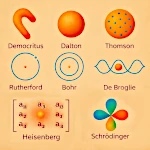 The Atom in All Its Forms: From Ancient Intuition to Quantum Mechanics