

Titanium (Ti, Z = 22): A Light Metal with Extraordinary Properties

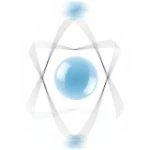
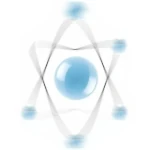
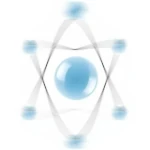
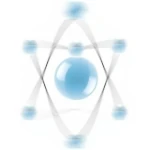
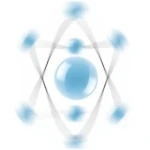
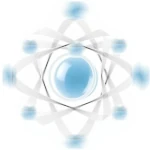
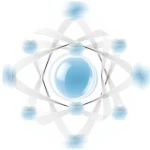
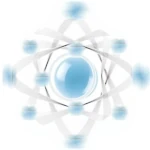
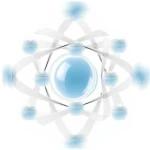
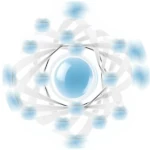
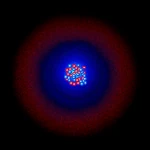
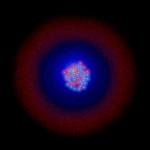
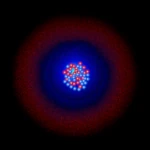
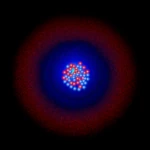
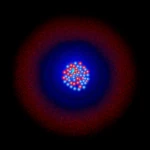
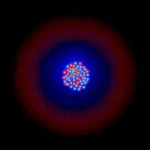
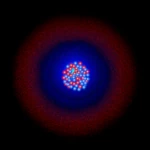
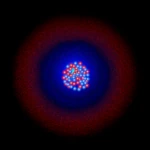
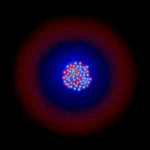
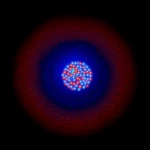
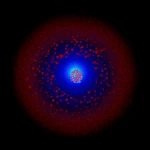
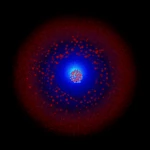
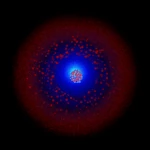
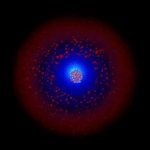
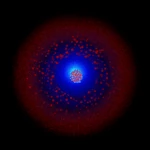
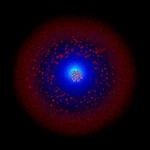
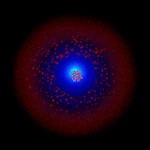
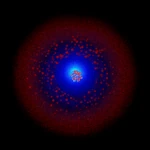
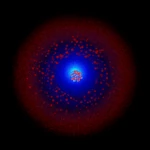
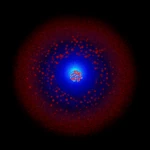
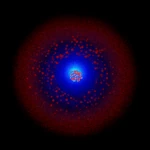
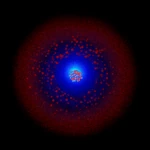
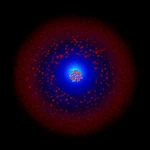
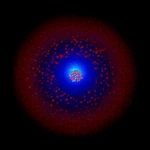
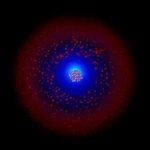
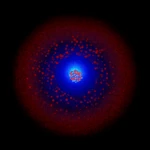
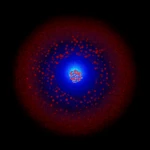
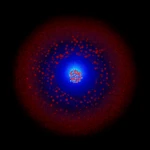
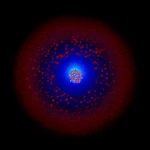
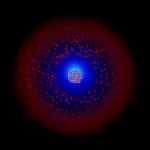
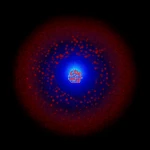
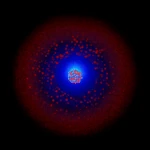
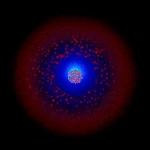
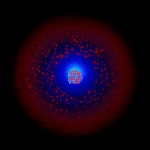
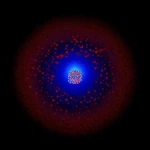
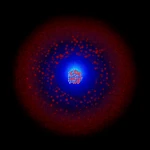
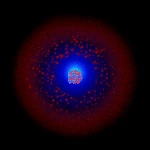
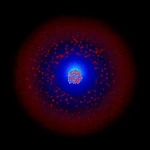
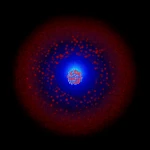
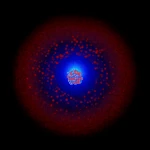
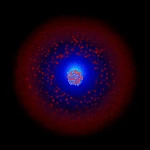
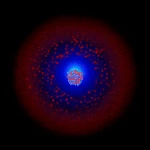
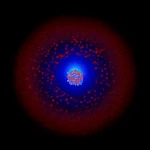
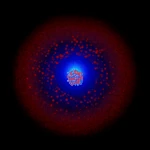
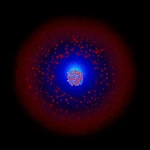
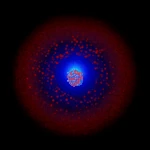
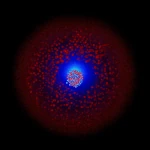
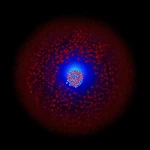
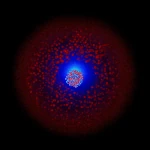
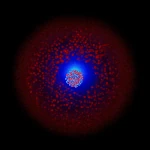
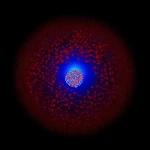
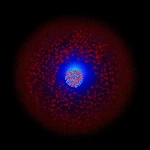
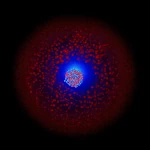
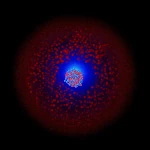
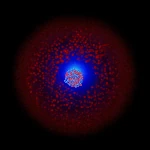
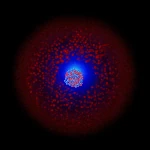
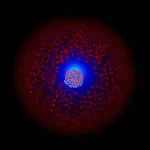
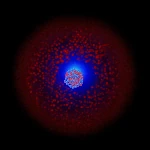
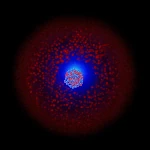
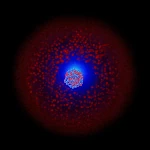
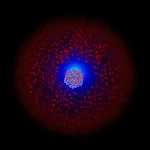
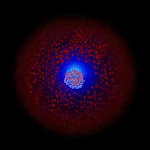
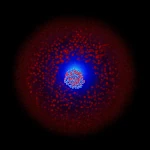
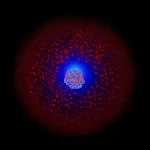
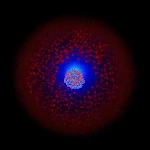
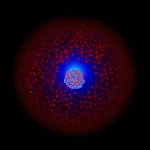
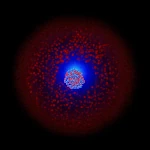
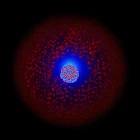
Simplified atomic model of the titanium atom.
The most abundant isotope is \(\,^{48}\mathrm{Ti}\,\) with its 22 protons, 22 electrons, and 26 neutrons.
Image source: astronoo.com (new window) — AI-generated image, public domain.
History of the Discovery of Titanium
Titanium was discovered independently on two occasions. In 1791, British reverend William Gregor (1761-1817) analyzed black magnetic sand from Cornwall and identified a new element, which he named menaccanite. A few years later, in 1795, German chemist Martin Heinrich Klaproth (1743-1817) independently rediscovered this element in the mineral rutile and named it titanium, in reference to the Titans of Greek mythology, symbols of power and strength. Klaproth later recognized that his titanium was identical to Gregor's menaccanite. It was not until 1910 that Matthew Albert Hunter (1878-1961) first isolated pure metallic titanium by heating titanium tetrachloride with sodium.
Structure and Fundamental Properties
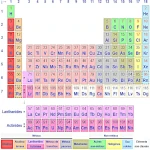
Titanium (symbol Ti, atomic number 22) is a transition metal in group 4 of the periodic table.
Its atom has 22 protons, usually 26 neutrons (for the most abundant isotope \(\,^{48}\mathrm{Ti}\)) and 22 electrons with the electronic configuration [Ar] 3d² 4s².
At room temperature, titanium is a silvery-gray solid metal, remarkably light (density ≈ 4.506 g/cm³), about 60% lighter than steel while being just as strong.
It has excellent corrosion resistance due to the spontaneous formation of a protective oxide layer (TiO₂) on its surface.
The melting point of titanium: 1,941 K (1,668 °C).
The boiling point of titanium: 3,560 K (3,287 °C).
Table of Titanium Isotopes
| Isotope / Notation | Protons (Z) | Neutrons (N) | Atomic mass (u) | Natural abundance | Half-life / Stability | Decay / Remarks |
|---|---|---|---|---|---|---|
| Titanium-46 — \(\,^{46}\mathrm{Ti}\,\) | 22 | 24 | 45.952632 u | ≈ 8.25 % | Stable | Lightest stable isotope of natural titanium. |
| Titanium-47 — \(\,^{47}\mathrm{Ti}\,\) | 22 | 25 | 46.951763 u | ≈ 7.44 % | Stable | Has a nuclear magnetic moment; used in NMR spectroscopy. |
| Titanium-48 — \(\,^{48}\mathrm{Ti}\,\) | 22 | 26 | 47.947946 u | ≈ 73.72 % | Stable | Dominant isotope of titanium; doubly magic, very stable nucleus. |
| Titanium-49 — \(\,^{49}\mathrm{Ti}\,\) | 22 | 27 | 48.947870 u | ≈ 5.41 % | Stable | Stable isotope used in nuclear physics research. |
| Titanium-50 — \(\,^{50}\mathrm{Ti}\,\) | 22 | 28 | 49.944791 u | ≈ 5.18 % | Stable | Heaviest stable isotope of natural titanium. |
| Titanium-44 — \(\,^{44}\mathrm{Ti}\,\) | 22 | 22 | 43.959690 u | Cosmic trace | ≈ 60 years | Radioactive, electron capture to \(\,^{44}\mathrm{Sc}\). Produced in supernovae, used as a cosmic tracer. |
Electronic Configuration and Electron Shells of Titanium
N.B.:
Electron shells: How electrons organize around the nucleus (new window).
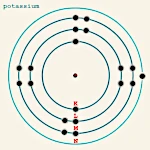
Titanium has 22 electrons distributed across four electron shells. Its full electronic configuration is: 1s² 2s² 2p⁶ 3s² 3p⁶ 3d² 4s², or simplified as: [Ar] 3d² 4s². This configuration can also be written as: K(2) L(8) M(10) N(2).
Detailed Structure of the Shells
K Shell (n=1): contains 2 electrons in the 1s subshell. This inner shell is complete and highly stable.
L Shell (n=2): contains 8 electrons distributed as 2s² 2p⁶. This shell is also complete, forming a noble gas configuration (neon).
M Shell (n=3): contains 10 electrons distributed as 3s² 3p⁶ 3d². The 3s and 3p orbitals are complete, while the 3d orbitals contain only 2 out of 10 possible electrons.
N Shell (n=4): contains 2 electrons in the 4s subshell. These electrons are the first to be involved in chemical bonding.
Valence Electrons and Oxidation States
The 4 electrons in the outer shells (3d² 4s²) are the valence electrons of titanium. This configuration explains its chemical properties:
By losing the 2 electrons in the 4s subshell, titanium forms the Ti²⁺ ion (oxidation state +2).
By losing the 2 electrons in the 4s subshell and 1 electron in the 3d orbital, it forms the Ti³⁺ ion (oxidation state +3).
By losing all its valence electrons (4s² 3d²), it forms the Ti⁴⁺ ion (oxidation state +4), the most stable and common state.
The unique electronic configuration of titanium, with its partially filled 3d orbitals, classifies it among the transition metals. This structure gives it characteristic properties: ability to form colored compounds, catalytic activity, and the possibility of forming strong metallic bonds due to the overlap of d orbitals.
Electronic Configuration and Electron Shells
Titanium has 22 electrons distributed across four electron shells. Its full electronic configuration is: 1s² 2s² 2p⁶ 3s² 3p⁶ 3d² 4s², or simplified: [Ar] 3d² 4s². This configuration can also be written as: K(2) L(8) M(10) N(2).
Detailed Structure of the Shells
K shell (n=1): contains 2 electrons in the 1s subshell. This inner shell is complete and very stable.
L shell (n=2): contains 8 electrons distributed as 2s² 2p⁶. This shell is also complete, forming a noble gas configuration (neon).
M shell (n=3): contains 10 electrons distributed as 3s² 3p⁶ 3d². The 3s and 3p orbitals are complete, while the 3d orbitals contain only 2 out of 10 possible electrons.
N shell (n=4): contains 2 electrons in the 4s subshell. These electrons are the first to be involved in chemical bonding.
Valence Electrons and Oxidation States
The 4 electrons in the outer shells (3d² 4s²) are the valence electrons of titanium. This configuration explains its chemical properties:
By losing the 2 4s electrons, titanium forms the Ti²⁺ ion (oxidation state +2).
By losing the 2 4s electrons and 1 3d electron, it forms the Ti³⁺ ion (oxidation state +3).
By losing all its valence electrons (4s² 3d²), it forms the Ti⁴⁺ ion (oxidation state +4), the most stable and common state.
Titanium's particular electronic configuration, with its partially filled 3d orbitals, classifies it among the transition metals. This structure gives it characteristic properties: the ability to form colored compounds, catalytic activity, and the ability to form strong metallic bonds through the overlap of d orbitals.
Chemical Reactivity
Titanium is a relatively reactive metal in its pure state. At high temperatures, it reacts with oxygen, nitrogen, hydrogen, carbon, and halogens. It mainly forms compounds with an oxidation state of +4 (such as TiO₂, TiCl₄), but can also exist in +3 and +2 states. Titanium dioxide (TiO₂) is particularly stable and gives the metal its remarkable corrosion resistance by forming a passive protective layer. Titanium resists many acids and bases but can be attacked by hydrofluoric acid, hot concentrated alkaline solutions, and certain acids in the presence of fluoride ions.
Industrial and Technological Applications of Titanium
- in the aeronautical and space industry for manufacturing engine parts, fuselages, and landing gear;
- for medical implants (hip prostheses, screws, plates) due to its exceptional biocompatibility;
- in the maritime industry for propellers, submarine hulls, and offshore equipment resistant to seawater;
- as a white pigment (TiO₂) in paints, plastics, papers, and cosmetics;
- for manufacturing high-end sports equipment (golf clubs, bicycle frames, tennis rackets);
- in the chemical industry for reactors, heat exchangers, and corrosion-resistant piping;
- for eyeglass frames and jewelry combining lightness, strength, and hypoallergenicity;
- in modern architecture for facades and roofs (Guggenheim Museum in Bilbao);
- for surgical and dental instruments requiring repeated sterilization;
- in the production of electrodes for welding and electrolysis;
- as a material for capacitors and electronic components;
- for military armor and structures requiring an optimal strength-to-weight ratio;
- in seawater desalination and wastewater treatment;
- as a catalyst or catalyst support in various chemical reactions;
- for sunscreens and UV protection products exploiting the properties of TiO₂.
Role in Astrophysics and Cosmology
Titanium is mainly synthesized during the explosion of massive stars in supernovae, through the rapid neutron capture process (r-process) and silicon burning. The radioactive isotope \(\,^{44}\mathrm{Ti}\) (half-life of about 60 years) is particularly interesting because it allows dating and studying recent supernova remnants. Its detection by gamma spectroscopy provides crucial information on stellar explosion mechanisms and explosive nucleosynthesis.
In evolved stars, titanium forms in the layers where silicon burns, just before the core collapse leading to a supernova. The abundance of titanium in meteorites and ancient stars helps astronomers understand the gradual chemical enrichment of our galaxy. The spectral lines of neutral and ionized titanium (Ti I, Ti II) are used to determine the temperature, surface gravity, and chemical composition of stars.
N.B.:
Titanium is the ninth most abundant element in the Earth's crust (about 0.6% by mass), but it is rarely found in pure form.
It is mainly found in ores such as ilmenite (FeTiO₃) and rutile (TiO₂).
Despite its relative abundance, the extraction and purification of metallic titanium are costly and energy-intensive processes (Kroll process), which explains its high price compared to other structural metals such as steel or aluminum.
This production complexity contrasts with its exceptional mechanical properties and corrosion resistance.
 The energies required for nuclear fusion and why uranium is a limit
 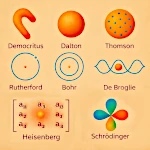 The Atom in All Its Forms: From Ancient Intuition to Quantum Mechanics