

Cobalt (Co, Z = 27): A Magnetic Metal with Strategic Properties
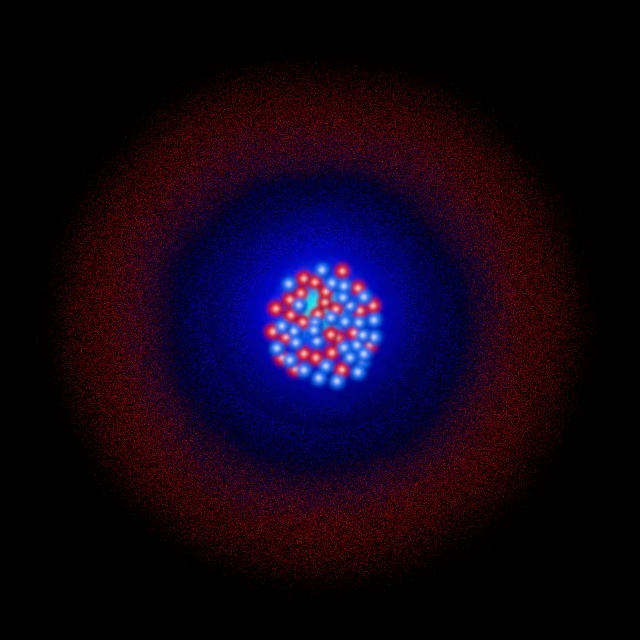
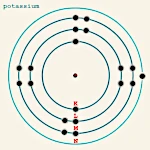
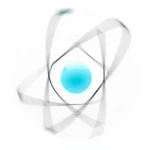
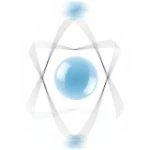
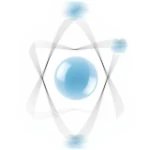
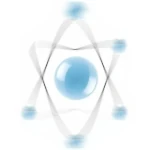
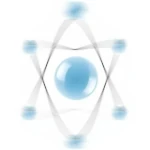
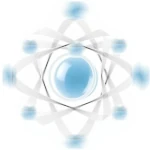
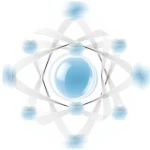
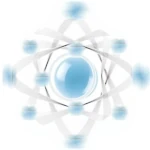
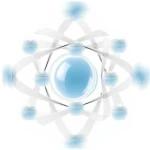
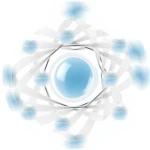
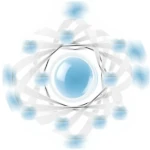
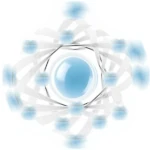
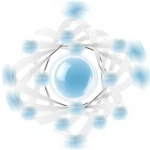
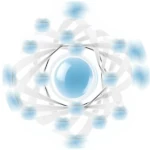
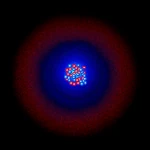
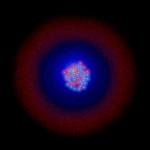
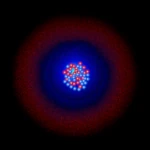
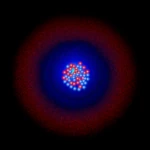
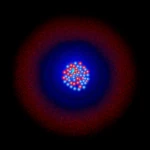
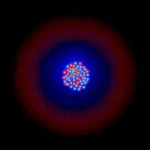
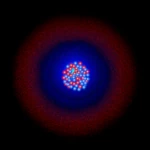
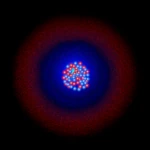
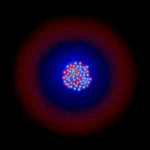
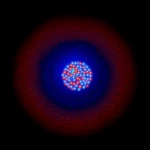
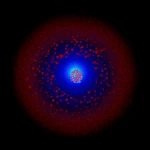
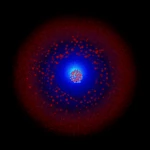
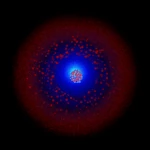
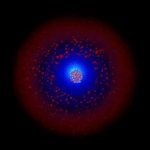
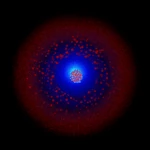
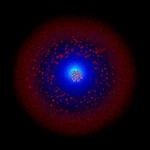
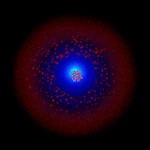
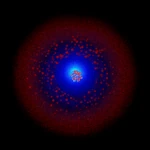
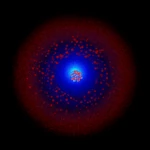
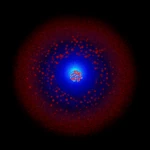
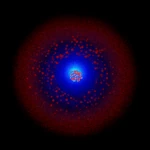
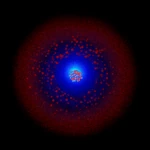
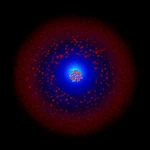
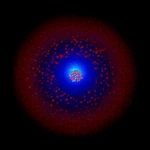
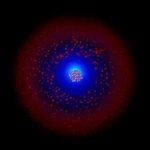
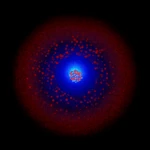
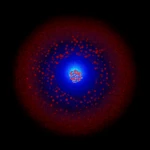
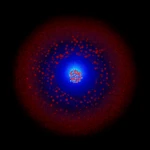
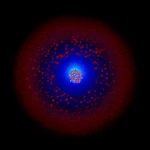
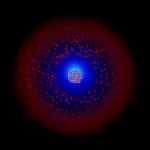
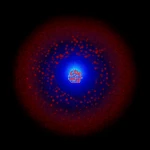
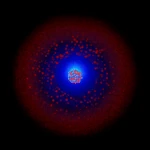
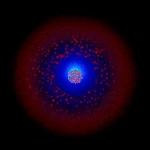
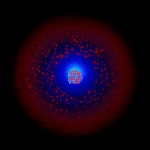
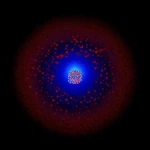
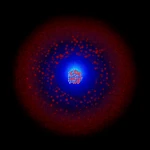
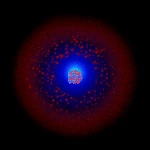
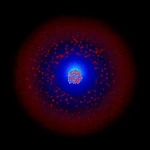
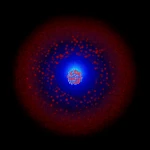
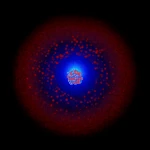
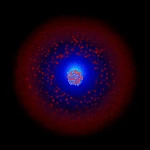
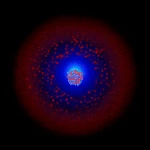
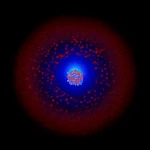
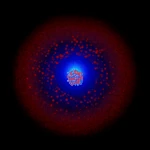
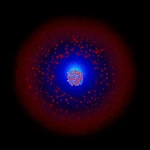
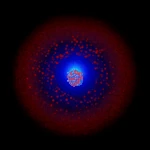
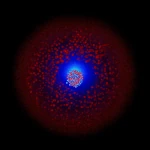
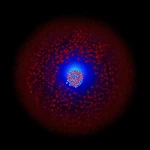
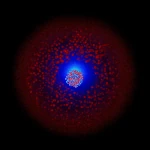
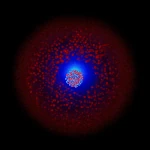
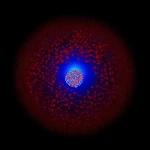
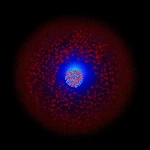
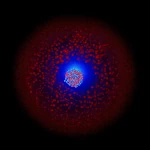
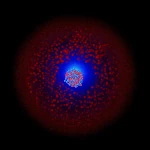
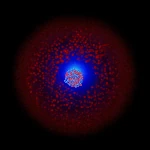
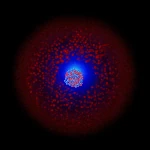
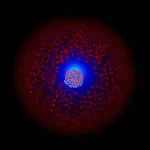
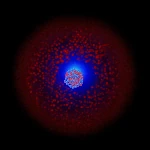
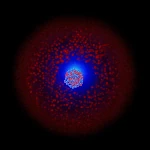
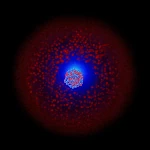
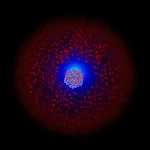
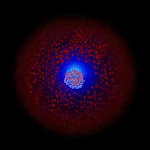
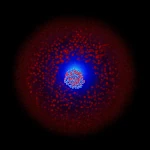
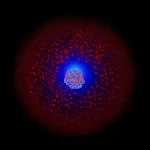
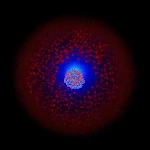
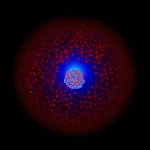
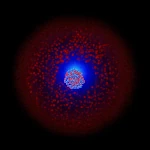
Simplified atomic model of the cobalt atom.
The stable isotope is \(\,^{59}\mathrm{Co}\,\) with 27 protons, 27 electrons, and 32 neutrons.
Image source: astronoo.com (new window) — AI-generated image, public domain.
History of the Discovery of Cobalt
Cobalt was identified in 1735 by the Swedish chemist Georg Brandt (1694–1768), making it the first metal discovered through modern scientific methods. Before this discovery, German and Saxon miners used the term kobold (a malevolent spirit in German) to describe certain ores that, when smelted, released toxic arsenic fumes and did not yield the expected copper. Brandt demonstrated that these ores contained a distinct metallic element, which he named cobalt in reference to these spirits. Cobalt had been used since antiquity to color glass an intense blue, particularly in Egypt and Persia, long before its chemical nature was understood. Brandt's discovery marked an important step in the development of analytical chemistry.
Structure and Fundamental Properties
Cobalt (symbol Co, atomic number 27) is a transition metal in group 9 of the periodic table.
Its atom has 27 protons, usually 32 neutrons (for the stable isotope \(\,^{59}\mathrm{Co}\)) and 27 electrons with the electronic configuration [Ar] 3d⁷ 4s².
At room temperature, cobalt is a shiny silver-gray solid metal, relatively dense (density ≈ 8.90 g/cm³).
It exhibits exceptional ferromagnetic properties, similar to iron and nickel, retaining its magnetism up to 1,115 °C (Curie temperature).
Cobalt has good resistance to corrosion and oxidation due to the formation of a protective oxide layer on its surface.
The melting point of cobalt (liquid state): 1,768 K (1,495 °C).
The boiling point of cobalt (gaseous state): 3,200 K (2,927 °C).
Table of Cobalt Isotopes
| Isotope / Notation | Protons (Z) | Neutrons (N) | Atomic mass (u) | Natural abundance | Half-life / Stability | Decay / Remarks |
|---|---|---|---|---|---|---|
| Cobalt-59 — \(\,^{59}\mathrm{Co}\,\) | 27 | 32 | 58.933195 u | 100 % | Stable | Only stable isotope of natural cobalt; monoisotopic isotope. |
| Cobalt-60 — \(\,^{60}\mathrm{Co}\,\) | 27 | 33 | 59.933817 u | Synthetic | ≈ 5.27 years | Radioactive, β⁻ decay to \(\,^{60}\mathrm{Ni}\). Emits powerful gamma rays; used in radiotherapy, sterilization, and dating. |
| Cobalt-57 — \(\,^{57}\mathrm{Co}\,\) | 27 | 30 | 56.936291 u | Synthetic | ≈ 271.8 days | Radioactive, electron capture to \(\,^{57}\mathrm{Fe}\). Used in nuclear medicine and as a calibration source. |
| Cobalt-56 — \(\,^{56}\mathrm{Co}\,\) | 27 | 29 | 55.939839 u | Cosmic trace | ≈ 77.27 days | Radioactive, electron capture to \(\,^{56}\mathrm{Fe}\). Produced in Type Ia supernovae; important tracer in astrophysics. |
| Cobalt-58 — \(\,^{58}\mathrm{Co}\,\) | 27 | 31 | 57.935753 u | Synthetic | ≈ 70.86 days | Radioactive, electron capture to \(\,^{58}\mathrm{Fe}\). Used in medical and industrial research. |
Electronic Configuration and Electron Shells of Cobalt
N.B.:
Electron shells: How electrons are organized around the nucleus (new window).
Cobalt has 27 electrons distributed across four electron shells. Its full electronic configuration is: 1s² 2s² 2p⁶ 3s² 3p⁶ 3d⁷ 4s², or simplified: [Ar] 3d⁷ 4s². This configuration can also be written as: K(2) L(8) M(15) N(2).
Detailed Structure of the Shells
K Shell (n=1): contains 2 electrons in the 1s subshell. This inner shell is complete and very stable.
L Shell (n=2): contains 8 electrons distributed as 2s² 2p⁶. This shell is also complete, forming a noble gas configuration (neon).
M Shell (n=3): contains 15 electrons distributed as 3s² 3p⁶ 3d⁷. The 3s and 3p orbitals are complete, while the 3d orbitals contain 7 out of 10 possible electrons.
N Shell (n=4): contains 2 electrons in the 4s subshell. These electrons are the first to be involved in chemical bonding.
Valence Electrons and Oxidation States
The 9 electrons in the outer shells (3d⁷ 4s²) constitute the valence electrons of cobalt. This configuration explains its chemical and magnetic properties:
By losing the 2 4s electrons, cobalt forms the Co²⁺ ion (oxidation state +2), the most common state.
By losing the 2 4s electrons and 1 3d electron, it forms the Co³⁺ ion (oxidation state +3), which is also very stable.
Less common oxidation states (+1, +4) exist in some organometallic compounds or coordination complexes.
Chemical Reactivity
Cobalt is a moderately reactive metal. At room temperature, it is relatively stable in dry air due to a protective oxide layer. At high temperatures, it reacts with oxygen to form cobalt oxides (CoO, Co₃O₄), and can also react with sulfur, chlorine, and other halogens. Cobalt mainly forms compounds with oxidation states +2 and +3. Cobalt(II) compounds are generally pink or blue, while cobalt(III) compounds are often orange or yellow. Metallic cobalt is slowly attacked by dilute acids, releasing hydrogen, but is more resistant to bases. It forms many remarkably stable coordination complexes, some of which play essential biological roles, such as vitamin B12 (cobalamin).
Industrial and Technological Applications of Cobalt
- In lithium-ion batteries (phones, laptops, electric vehicles) as a component of LiCoO₂ cathodes;
- To manufacture high-temperature resistant superalloys used in aircraft turbines and jet engines;
- As a blue pigment (cobalt blue) in ceramics, porcelain, paints, and glass since antiquity;
- In the production of very powerful permanent magnets (cobalt-samarium alloys, alnico) for motors and generators;
- As a catalyst in petroleum refining (hydrodesulfurization) and chemical synthesis (Fischer-Tropsch process);
- In nuclear medicine: cobalt-60 is used for cancer radiotherapy and sterilization of medical equipment;
- In tungsten-carbide-cobalt cutting tools for machining hard metals;
- For anti-corrosion coatings and protective electrolytic deposits;
- In dental alloys and orthopedic prostheses (cobalt-chromium alloys);
- As a drying agent (siccative) in paints, varnishes, and printing inks;
- In animal nutrition as a feed additive (source of vitamin B12);
- In magnetic sensors and read/write heads of hard drives;
- For the manufacture of tires (rubber adhesion to steel);
- In photovoltaic cells and new-generation energy storage devices;
- As a radioactive tracer in biological and medical research (cobalt-57, cobalt-58).
Role in Astrophysics and Cosmology
Cobalt is mainly synthesized during supernova explosions through various nucleosynthesis processes. The radioactive isotope \(\,^{56}\mathrm{Co}\) (half-life of 77.3 days) plays a crucial role in the light emission of Type Ia supernovae. It forms from the decay of nickel-56 produced during the explosion, and its own radioactive decay to iron-56 powers the characteristic light curve of these supernovae for several months. This signature is used to calibrate cosmic distances and study the expansion of the Universe.
Cobalt-60, although rare in space, is detected in some supernova remnants and provides information on the extreme physical conditions during these explosions. The abundance of stable cobalt in stars and meteorites helps astrophysicists trace the history of galactic nucleosynthesis. The spectral lines of cobalt are observed in stellar atmospheres and allow the determination of the chemical composition and physical conditions of evolved stars.
N.B.:
Cobalt is relatively rare in the Earth's crust (about 0.0025% by mass), ranking 32nd in elemental abundance.
It is mainly extracted as a byproduct of copper and nickel mining, particularly in the Democratic Republic of Congo (which produces over 70% of the world's cobalt), Australia, Canada, and Russia.
The main ores are cobaltite (CoAsS), erythrite (Co₃(AsO₄)₂·8H₂O), and smaltite (CoAs₂).
The growing demand for cobalt in electric vehicle batteries raises geopolitical and environmental concerns, stimulating research into alternative technologies and effective recycling methods.
 The energies required for nuclear fusion and why uranium is a limit
 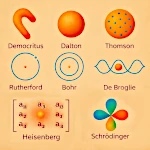 The Atom in All Its Forms: From Ancient Intuition to Quantum Mechanics