

铁(Fe,Z=26):人类文明的金属支柱
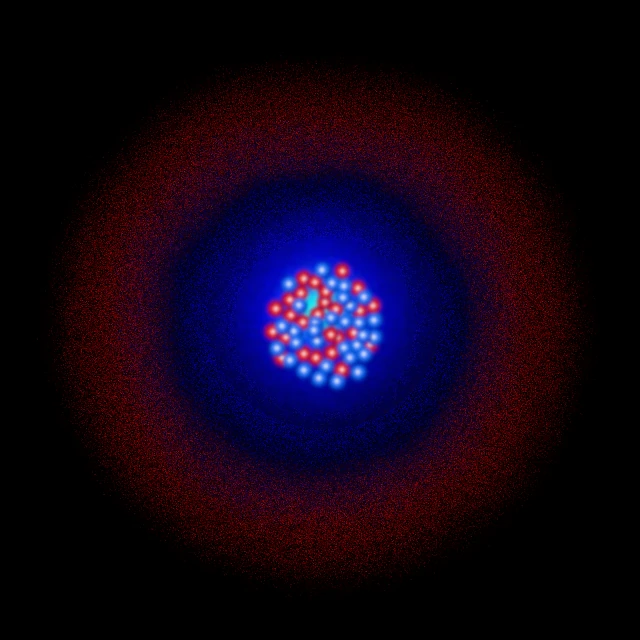
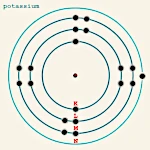
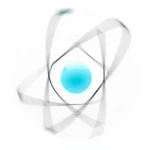
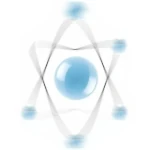
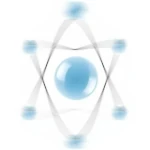
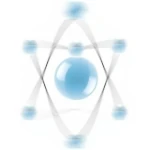
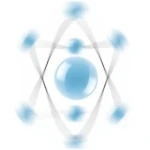
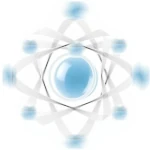
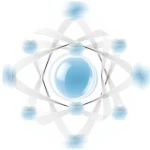
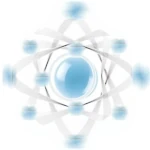
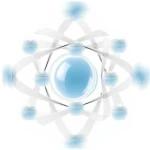
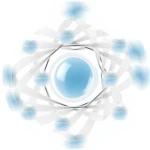
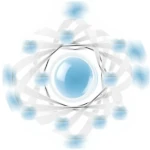
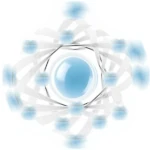
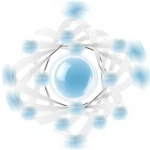
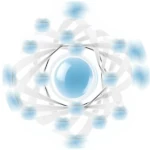
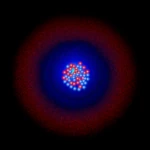
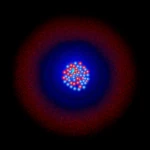
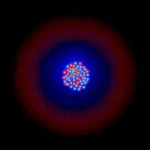
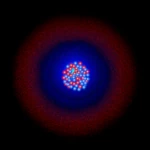
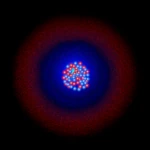
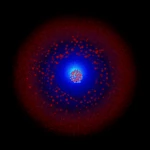
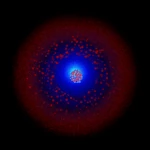
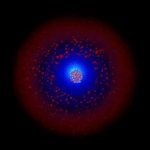
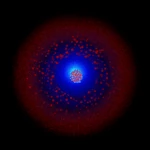
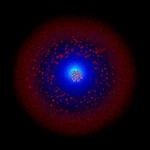
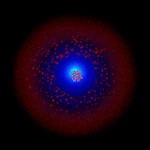
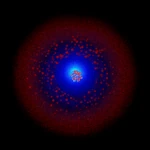
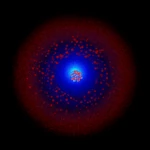
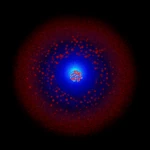
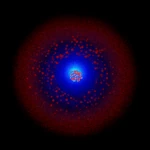
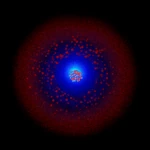
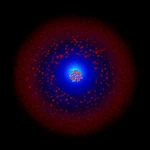
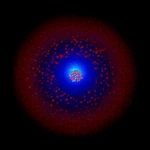
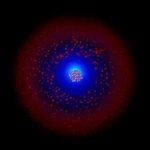
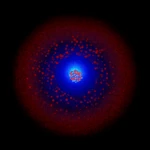
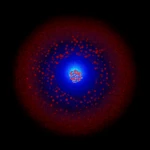
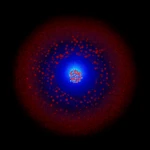
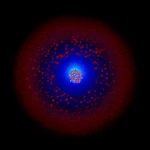
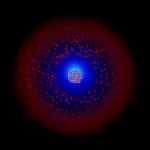
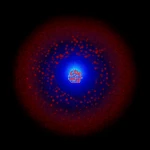
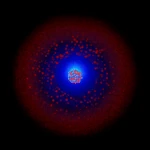
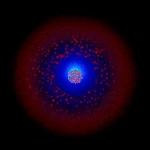
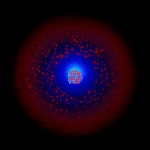
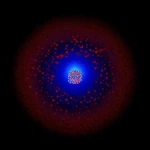
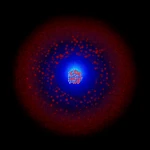
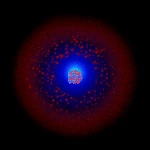
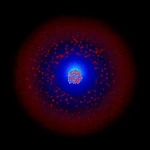
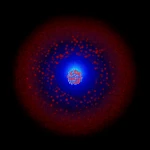
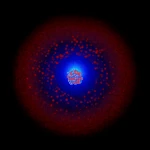
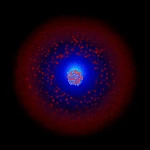
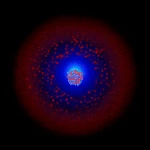
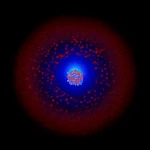
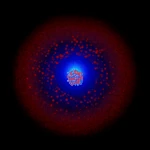
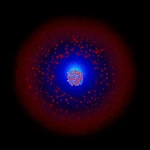
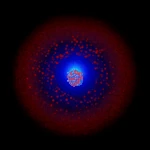
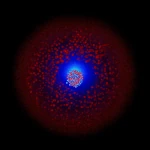
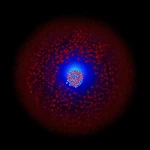
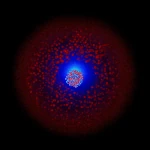
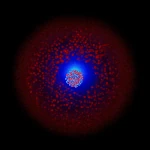
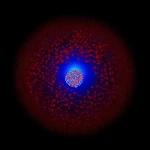
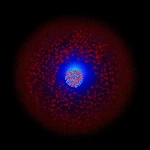
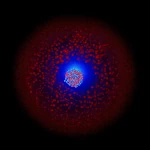
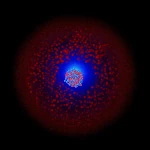
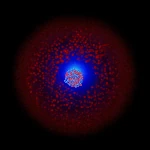
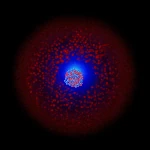
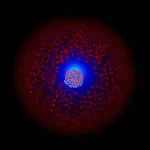
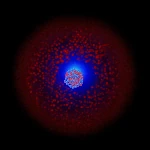
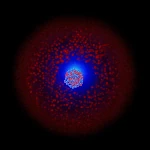
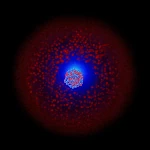
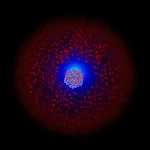
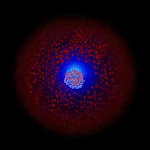
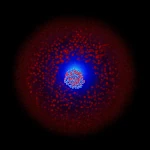
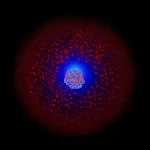
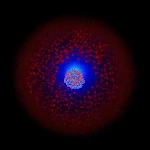
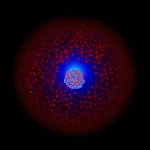
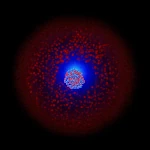
Simplified atomic model of the iron atom.
The most abundant isotope is \(\,^{56}\mathrm{Fe}\,\) with its 26 protons, 26 electrons, and 30 neutrons.
Image source: astronoo.com (新窗口)
铁的发现历史
Iron has been known and used by humanity since prehistoric times. The earliest traces of iron use date back to around 公元前4000年, when ancient civilizations worked with meteoric iron that fell from the sky. These iron meteorites were considered divine gifts and were shaped into precious objects and tools. The 铁器时代 truly began around 公元前1200年 in the Near East, when the Hittites mastered the technique of smelting iron ore and manufacturing steel. This technological revolution profoundly transformed human societies, enabling the production of more efficient agricultural tools, stronger weapons, and durable infrastructure. The name "iron" comes from the Latin 铁, whose exact origin remains uncertain, possibly linked to Indo-European roots meaning "metal" or "solid."
结构与基本性质
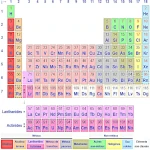
Iron (symbol Fe, atomic number 26) is a transition metal in group 8 of the periodic table.
Its atom has 26 protons, usually 30 neutrons (for the most abundant isotope \(\,^{56}\mathrm{Fe}\)) and 26 electrons with the electronic configuration [Ar] 3d⁶ 4s².
At room temperature, iron is a shiny, silvery-gray, ductile, and malleable solid metal (density ≈ 7.874 g/cm³).
It has remarkable ferromagnetic properties, being one of the three magnetic elements at room temperature, along with cobalt and nickel.
Pure iron easily oxidizes in humid air, forming rust (hydrated iron oxide), which requires protective treatments for industrial applications.
Melting point of iron (liquid state): 1,811 K (1,538 °C).
Boiling point of iron (gaseous state): 3,134 K (2,861 °C).
铁同位素表
| 同位素 / 符号 | 质子(Z) | 中子(N) | 原子质量(u) | 天然丰度 | 半衰期/稳定性 | 衰变 / 备注 |
|---|---|---|---|---|---|---|
| 铁-54 — \(\,^{54}\mathrm{Fe}\,\) | 26 | 28 | 53.939610 u | ≈ 5.845% | 稳定的 | 天然铁中最稳定的轻同位素。 |
| 铁-56 — \(\,^{56}\mathrm{Fe}\,\) | 26 | 30 | 55.934937 u | ≈ 91.754% | 稳定的 | 铁的主要同位素,也是宇宙中最稳定的原子核(每个核子的结合能最大)。 |
| 铁-57 — \(\,^{57}\mathrm{Fe}\,\) | 26 | 31 | 56.935394 u | ≈ 2.119% | 稳定 | 具有核磁矩;用于穆斯堡尔谱学。 |
| 铁-58 — \(\,^{58}\mathrm{Fe}\,\) | 26 | 32 | 57.933275 u | ≈ 0.282% | 稳定的 | 天然铁中最稳定的同位素。 |
| 铁-55 — \(\,^{55}\mathrm{Fe}\,\) | 26 | 29 | 54.938291 u | 人工 | ≈ 2.73 年 | 放射性,电子捕获至\(\,^{55}\mathrm{Mn}\)。在生物学和医学中用作示踪剂。 |
| 铁-59 — \(\,^{59}\mathrm{Fe}\,\) | 26 | 33 | 58.934875 u | 人工 | ≈ 44.5 天 | 放射性,β⁻衰变为\(\,^{59}\mathrm{Co}\)。用于研究铁代谢。 |
| 铁-60 — \(\,^{60}\mathrm{Fe}\,\) | 26 | 34 | 59.934072 u | 宇宙痕迹 | 约260万年 | 放射性,β⁻衰变为\(\,^{60}\mathrm{Co}\)。在超新星中产生,在深海沉积物中被探测到。 |
铁的电子排布与电子层
注意::
Electron shells: 电子如何围绕原子核组织 (新窗口).
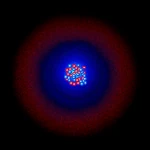
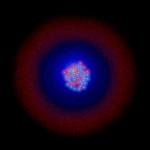
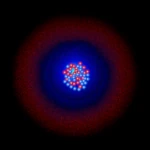
铁有26个电子,分布在四个电子层中。其完整电子排布为:1s² 2s² 2p⁶ 3s² 3p⁶ 3d⁶ 4s², 或简写为:[Ar] 3d⁶ 4s²。该排布也可写作:K(2) L(8) M(14) N(2)。
壳层的详细结构
K层(n=1): contains 2 electrons in the 1s subshell. This inner shell is complete and very stable.
L壳层(n=2): contains 8 electrons distributed as 2s² 2p⁶. This shell is also complete, forming a noble gas configuration (neon).
M层(n=3): contains 14 electrons distributed as 3s² 3p⁶ 3d⁶. The 3s and 3p orbitals are complete, while the 3d orbitals contain 6 out of 10 possible electrons.
N层(n=4): contains 2 electrons in the 4s subshell. These electrons are the first to be involved in chemical bonding.
价电子与氧化态
The 8 electrons in the outer shells (3d⁶ 4s²) are the 价电子 of iron. This configuration explains its chemical properties:
By losing the 2 4s electrons, iron forms the Fe²⁺ ion (oxidation state +2), called ferrous ion, pale green in solution.
By losing the 2 4s electrons and 1 3d electron, it forms the Fe³⁺ ion (oxidation state +3), called ferric ion, yellow-brown in solution. This is the most stable state.
Higher oxidation states (+4, +5, +6) exist in some specialized compounds but are less common.
Negative oxidation states (-2, -1, 0) can be observed in some organometallic complexes.
化学反应活性
铁是一种中等活性的金属。在潮湿空气中,它容易氧化生成铁锈(铁氧化物和氢氧化物的混合物),这一过程可能导致金属完全腐蚀。纯铁与冷水反应缓慢,但在高温下与水蒸气反应较快,并释放氢气。它易溶于稀酸(盐酸、硫酸),生成氢气和铁(II)盐。在高温下,铁与氧气反应生成四氧化三铁Fe₃O₄(磁铁矿),与硫反应生成硫化物,与碳反应生成碳化物。铁主要形成两类化合物:亚铁化合物(Fe²⁺),通常呈绿色;以及铁化合物(Fe³⁺),通常呈棕色或红色。浓硝酸对铁的钝化作用会形成一层保护性氧化膜,从而减缓进一步腐蚀。
铁及其工业技术应用
- 在钢铁和铁合金生产中,占全球金属产量的90%以上;
- 用于建筑和桥梁中的施工结构(梁、混凝土钢筋、金属框架);
- 在汽车行业中用于底盘、车身和机械部件;
- 制造铁轨、机车及铁路设备;
- 在造船、潜艇和海上平台中;
- 作为工具、机床和工业设备的基础材料;
- 用于生产永磁体和电磁体(变压器、电动机、发电机);
- 在磁存储介质(硬盘、磁带)中;
- 作为哈伯-博世法合成氨过程中的催化剂;
- 制造管道、管线及工业储罐;
- 在铸造用铸铁的生产中;
- 作为耐腐蚀不锈钢的一种成分;
- 用于焊接电极和冶金工艺;
- 在家用电器和家具制造中;
- 作为颜料(氧化铁)用于油漆、陶瓷和化妆品中;
- 用于金属包装(罐、锡罐)
- 在军事装备和国防系统中;
- 作为车辆和防护结构的装甲材料。
铁的生物作用
铁是几乎所有生命形式绝对必需的微量元素。在动物和人类体内,铁是血红蛋白的核心成分——这种红细胞中的蛋白质负责将氧气从肺部输送到全身组织。一个成年人体内约含4至5克铁,其中约70%存在于血红蛋白中。铁还存在于肌红蛋白(肌肉中的氧气储存)、参与细胞能量生成的多种呼吸酶(细胞色素)以及参与DNA合成的酶中。
在天体物理学和宇宙学中的作用
铁在天体物理学中占据着独特且根本的地位。同位素\(\,^{56}\mathrm{Fe}\)在所有原子核中具有最高的每个核子结合能,这意味着它代表了巨大恒星核聚变的终点。超过铁元素后,核聚变不再释放能量,反而消耗能量,标志着恒星能量生产的极限。
注意::
Iron is the 第四丰富的元素 in the Earth's crust (about 5% by mass) and probably the most abundant element on Earth as a whole, making up about 35% of the planet's total mass.
It is mainly found in ores such as hematite (Fe₂O₃), magnetite (Fe₃O₄), limonite (FeO(OH)), and siderite (FeCO₃).
The main producing countries are China, Australia, Brazil, and India.
Global steel production exceeds 1.9 billion tons per year, making iron the most produced and used metal by humanity.
Iron and steel recycling is highly developed, with high recovery rates contributing to a circular economy.
Extraction is mainly done by reducing iron oxides in blast furnaces using coke (carbon), a process that dates back thousands of years but remains fundamentally similar today.
 核聚变所需的能量以及为什么铀是一个极限
 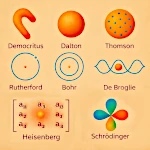 原子的各种形态:从古代直觉到量子力学