

钯(Pd,Z = 46):绿色技术的氢海绵
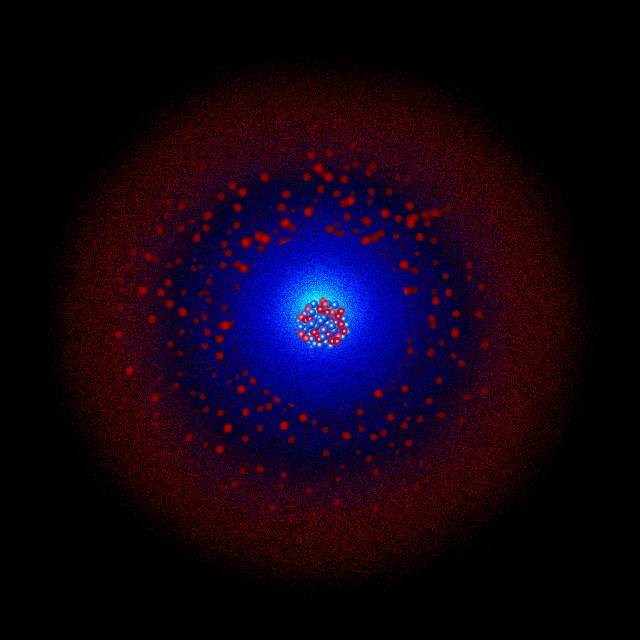
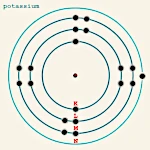
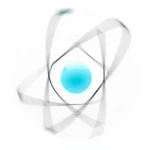
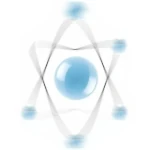
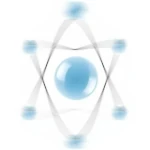
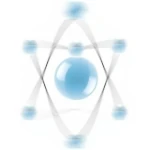
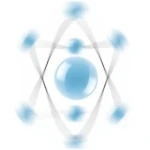
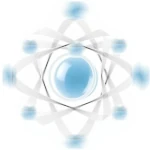
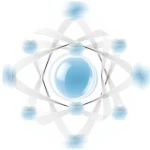
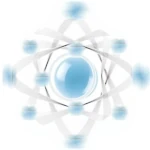
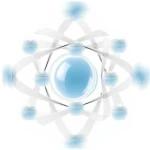
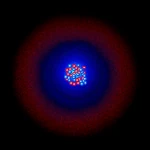
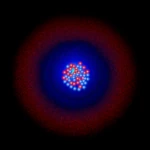
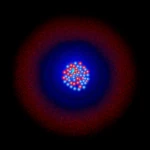
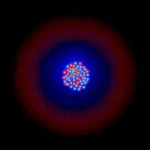
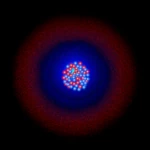
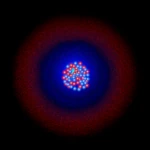
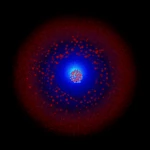
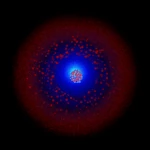
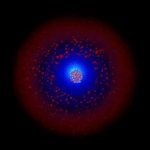
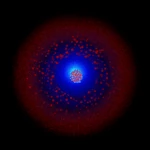
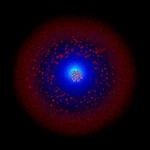
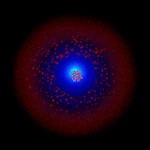
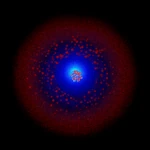
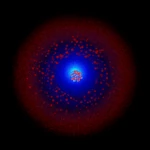
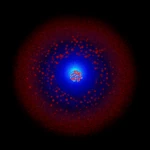
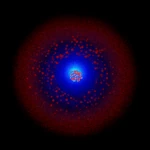
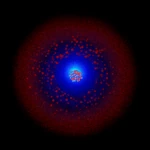
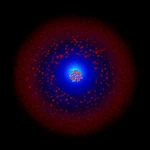
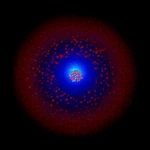
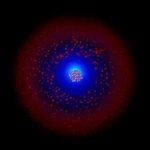
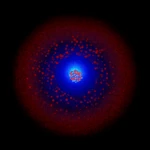
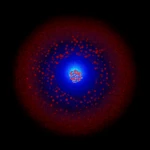
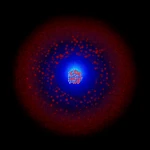
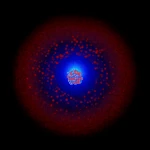
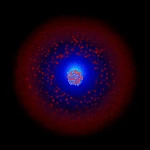
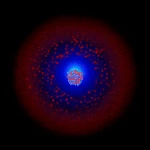
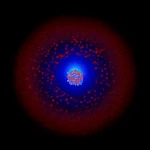
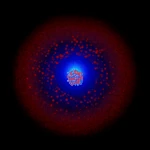
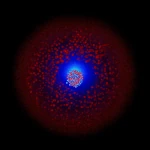
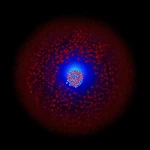
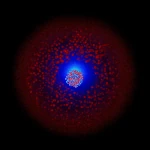
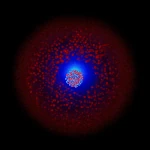
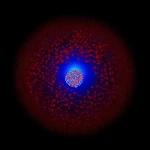
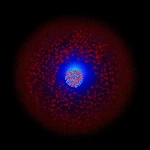
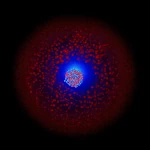
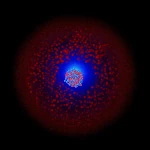
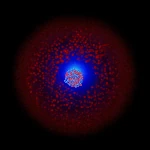
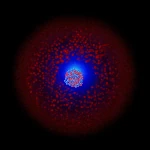
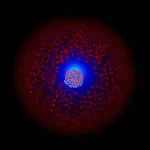
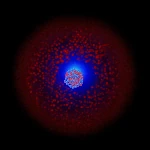
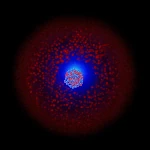
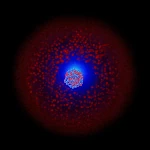
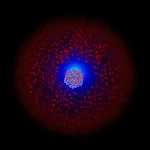
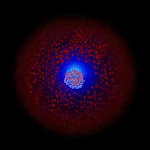
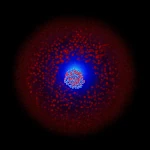
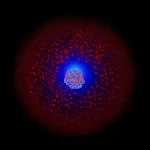
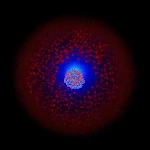
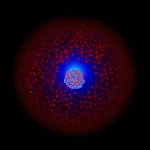
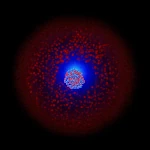
Image description: Simplified atomic model of the palladium atom. The most abundant isotope is \(\,^{106}\mathrm{Pd}\,\)
with its 46 protons, 46 electrons, and 60 neutrons.
Image source:
astronoo.com (新窗口)
钯的发现历史
Palladium was discovered in 1803 by the British chemist 威廉·海德·沃拉斯顿 (1766-1828), who also discovered rhodium the same year. Wollaston was working on the purification and analysis of crude platinum imported from South America. After dissolving the ore in aqua regia and precipitating the platinum, he treated the residual solution with mercury cyanide, obtaining a precipitate that he identified as a new metal.
Wollaston named this element 钯 in honor of the asteroid Pallas, discovered the previous year in 1802 by the German astronomer Heinrich Wilhelm Olbers. Pallas itself is named after Pallas Athena, the Greek goddess of wisdom and war. This astronomical nomenclature was a trend of the time, also followed for cerium (named after Ceres).
沃拉斯顿以一种巧妙而非同寻常的方式,没有立即在科学期刊上宣布他的发现。相反,他匿名在伦敦一家商店出售少量钯,引起了科学界的好奇。一些化学家,包括著名的理查德·切内维克斯,声称钯只是铂和汞的合金,而非真正的元素。沃拉斯顿最终在1805年公开了他作为发现者的身份,无可辩驳地证明了钯的元素性质。
结构与基本性质
钯(符号Pd,原子序数46)是元素周期表第10族的过渡金属,属于铂族金属。其原子含有46个质子,通常有60个中子(对应最丰富的同位素\(\,^{106}\mathrm{Pd}\)),以及46个电子,电子排布为[Kr] 4d¹⁰。
钯是一种亮银白色金属,是铂族金属中最轻、最软的。其密度为12.02克/立方厘米,显著低于铂(21.45克/立方厘米)。钯以面心立方(fcc)结构结晶。它具有延展性和可锻性,可轧制成极薄的箔片并拉制成细丝。
Palladium melts at 1555 °C (1828 K) and boils at 2963 °C (3236 K). It has the lowest melting point of all platinum group metals, which facilitates its processing and alloying. Palladium also has high thermal and electrical conductivity, as well as a low coefficient of thermal expansion.
钯最显著的特性是其非凡的吸氢能力。在室温下,钯可吸收高达自身体积900倍的氢气,形成氢化钯(PdHₓ,其中x可达0.7)。这一独特性质使钯成为储氢、氢纯化及催化领域不可或缺的关键材料。
Melting point of palladium: 1828 K (1555 °C).
Boiling point of palladium: 3236 K (2963 °C).
Palladium can absorb up to 900 times its volume in hydrogen gas.
钯同位素表
| 同位素 / 符号 | 质子(Z) | 中子(N) | 原子质量(u) | 天然丰度 | 半衰期/稳定性 | 衰减 / 备注 |
|---|---|---|---|---|---|---|
| 钯-102 — \(\,^{102}\mathrm{Pd}\,\) | 46 | 56 | 101.905609 u | ≈ 1.02% | 稳定 | 天然钯中最轻且最稀有的稳定同位素。 |
| 钯-104 — \(\,^{104}\mathrm{Pd}\,\) | 46 | 58 | 103.904036 u | ≈ 11.14% | 稳定的 | 天然钯中第二稀有的稳定同位素。 |
| 钯-105 — \(\,^{105}\mathrm{Pd}\,\) | 46 | 59 | 104.905085 u | ≈ 22.33% | 稳定 | 天然钯中第三丰富的稳定同位素。 |
| 钯-106 — \(\,^{106}\mathrm{Pd}\,\) | 46 | 60 | 105.903486 u | ≈ 27.33% | 稳定的 | 钯的最丰富同位素,占总量的四分之一以上。 |
| 钯-108 — \(\,^{108}\mathrm{Pd}\,\) | 46 | 62 | 107.903892 u | ≈ 26.46% | 稳定的 | 第二丰富的同位素,几乎与Pd-106一样常见。 |
| 钯-110 — \(\,^{110}\mathrm{Pd}\,\) | 46 | 64 | 109.905153 u | ≈ 11.72% | 稳定的 | 天然钯中最重的稳定同位素。 |
| 钯-107 — \(\,^{107}\mathrm{Pd}\,\) | 46 | 61 | 106.905133 u | 合成 | ≈ 6.5 × 10⁶ 年 | 放射性(β⁻)。裂变产物。太阳系形成期间存在的灭绝同位素。 |
| 钯-103 — \(\,^{103}\mathrm{Pd}\,\) | 46 | 57 | 102.906087 u | 合成 | ≈ 17.0 天 | 放射性(电子俘获)。用于近距离放射治疗前列腺癌。 |
钯的电子构型与电子层
注意::
Electron shells:
电子如何围绕原子核组织 (新窗口).
钯有46个电子,分布在五个电子壳层中。其完整电子排布为:1s² 2s² 2p⁶ 3s² 3p⁶ 3d¹⁰ 4s² 4p⁶ 4d¹⁰,或简写为:[Kr] 4d¹⁰。这一排布独特之处在于,钯是其周期中唯一在5s亚层没有电子的元素,而4d亚层完全填满。该排布也可写作:K(2) L(8) M(18) N(18)。
壳层的详细结构
K层(n=1): contains 2 electrons in the 1s subshell. This inner shell is complete and very stable.
L壳层(n=2): contains 8 electrons distributed as 2s² 2p⁶. This shell is also complete, forming a noble gas configuration (neon).
M层(n=3): contains 18 electrons distributed as 3s² 3p⁶ 3d¹⁰. This complete shell contributes to the electronic screen.
N层(n=4): contains 18 electrons distributed as 4s² 4p⁶ 4d¹⁰. The complete 4d subshell constitutes the valence shell of palladium.
价电子与氧化态
Palladium has 10 价电子 in its complete 4d¹⁰ subshell. Despite this d10 configuration generally associated with low reactivity, palladium is chemically active because the 4d electrons can be easily excited or lost. Palladium mainly exhibits oxidation states +2 and +4, although the +2 state is by far the most common and stable.
+2氧化态出现在大多数钯化合物中,特别是氯化钯(II)(PdCl₂)、氧化钯(II)(PdO)以及无数配位络合物中。+4氧化态存在于少数化合物中,例如六氟钯(IV)酸盐(PdF₆²⁻)。氧化态0、+1和+3也存在于某些有机金属络合物中。
化学反应活性与氢吸收
钯在室温下相对耐腐蚀,在正常条件下空气中不会失去光泽。它能抵抗多种稀酸,但会缓慢溶于浓硝酸,并在王水中溶解更快。高温下,钯会缓慢氧化生成氧化钯(II)(PdO),这是一种黑色化合物,在750°C以上会分解。
钯最非凡的特性是其与氢的相互作用。钯可逆地吸收氢气,形成钯-氢体系,其中氢原子占据晶格中的间隙位置。在室温和常压下,钯可形成PdH₀.₆,而在低温高压条件下,其组成可达PdH₁。
这种氢吸收会导致晶格膨胀(体积增加约10%),并显著改变钯的物理性质:导电性降低、机械脆化以及颜色变化。载氢钯可通过加热或真空处理释放纯氢,这一特性被用于将氢气提纯至99.9999%的纯度。
钯是唯一允许氢气在高温下通过膜选择性透过的金属。这一独特性质被应用于钯膜分离器中,以生产用于半导体行业、燃料电池和电子领域的超高纯氢气。
钯的工业与技术应用
- 在三元汽车催化剂中用于氧化一氧化碳和碳氢化合物(约占需求的85%);
- 在电子领域,用于多层陶瓷电容器(MLCC)和连接器;
- 作为精细化学中交叉偶联反应(Suzuki、Heck、Negishi反应——2010年诺贝尔奖)的催化剂;
- 在牙科领域用于耐腐蚀牙科合金;
- 在质子交换膜燃料电池(PEMFC)中作为电催化剂;
- 用于氢气净化膜和钯银分离器;
- 在珠宝中作为铂金的廉价替代品(钯金白色黄金);
- 用于继电器和开关的高可靠性电触点;
- 作为制药和石化工业中的氢化催化剂;
- 用于精密热电偶和电阻器;
- 用于光致变色眼镜和光学涂层;
- 在核医学中(钯-103)用于前列腺癌近距离放射治疗;
- 作为半导体外延生长的衬底;
- 用于氢燃料电池汽车的储氢系统中。
钯催化:2010年诺贝尔奖
Palladium plays a central role in modern homogeneous catalysis. In 2010, the Nobel Prize in Chemistry was awarded to Richard F. Heck, Ei-ichi Negishi, and Akira Suzuki for the development of palladium-catalyzed cross-coupling reactions, which allow the formation of carbon-carbon bonds with exceptional precision and efficiency.
钯催化的交叉偶联反应彻底改变了有机合成领域。Suzuki-Miyaura反应将硼酸与有机卤化物偶联,Heck反应将烯烃与芳香卤化物偶联,而Negishi反应则使用有机锌化合物。这些转化如今已成为制药、农用化学品和材料化学中不可或缺的标准工具。
钯催化剂能够合成通过其他方法无法获得的复杂分子。如今市售的药物中,超过25%的制造过程至少包含一个钯催化步骤。OLED屏幕、导电聚合物以及许多先进材料也依赖于这些钯催化反应。
钯市场与价格
钯已成为最受追捧的铂族金属,自2016年起超越铂金。受"柴油门"丑闻及排放标准趋严影响,汽车行业从主要使用铂金的柴油发动机转向使用钯和铑的汽油发动机,导致对钯的需求激增。
钯金价格经历了惊人的上涨:2002年每金衡盎司约200美元,2010年代升至1000-1500美元,随后在2019-2020年飙升至3000美元以上,首次超越黄金价格,成为最昂贵的贵金属。随着回收量增加及铂金的部分替代,2022-2024年间价格稳定在每盎司1000-2000美元左右。
钯的供应在地理上高度集中:约40%来自俄罗斯(诺里尔斯克矿场),38%来自南非(布什维尔德杂岩体),其余来自加拿大和美国。这种地理集中性,加上地缘政治紧张局势,导致价格大幅波动。废旧汽车催化剂的回收提供了约30%的年供应量。
在天体物理学和宇宙学中的角色
Palladium is synthesized in stars mainly through the s-过程 (slow neutron capture) in asymptotic giant branch (AGB) stars, with contributions from the r-process (rapid neutron capture) during supernovae and neutron star mergers. The six stable isotopes of palladium reflect the contributions of these different processes.
钯在宇宙中的丰度约为氢原子数的1.4×10⁻⁹倍。这种铂族金属的适中丰度可通过其在核稳定性曲线中的有利位置来解释。
钯-107,一种已灭绝的放射性同位素(半衰期650万年),在太阳系形成期间存在。其衰变产物银-107在一些原始陨石中显示出可测量的过剩量。初始¹⁰⁷Pd/¹⁰⁸Pd比值对最后一次核合成事件与太阳系中第一批固体形成之间的时间间隔提供了约束,估计为几百万年。
陨石中钯的同位素变化也提供了关于原始太阳星云的不均匀性以及s过程和r过程相对贡献的信息。在一些富含重元素的恒星中可观测到钯的光谱线,从而能够追踪银河系的化学富集过程。
注::
Palladium is present in the Earth's crust at an average concentration of about 0.015 ppm, about 100 times rarer than silver but 5 times more abundant than gold. It does not form its own ores but is always associated with other platinum group metals, mainly in nickel-copper deposits and layered ultramafic rock complexes.
全球钯年产量约为210吨。俄罗斯是最大的生产国(约占40%),其次是南非(38%)、加拿大和美国。约90%的钯是作为镍和铂提取的副产品获得的。汽车催化剂回收提供了约30%的总供应量,这一比例正在持续增长。
钯从铂族金属精矿中提取,通过湿法冶金工艺,涉及在王水中溶解、选择性沉淀氯钯酸铵((NH₄)₂PdCl₆),随后用水合肼或甲酸还原。经电解精炼或反复溶解-再沉淀后,可获得纯度为99.95%的纯钯。
 核聚变所需的能量以及为什么铀是一个极限
 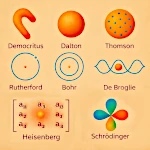 原子的各种形态:从古代直觉到量子力学