

铟(In,Z = 49):现代屏幕中的隐形元素
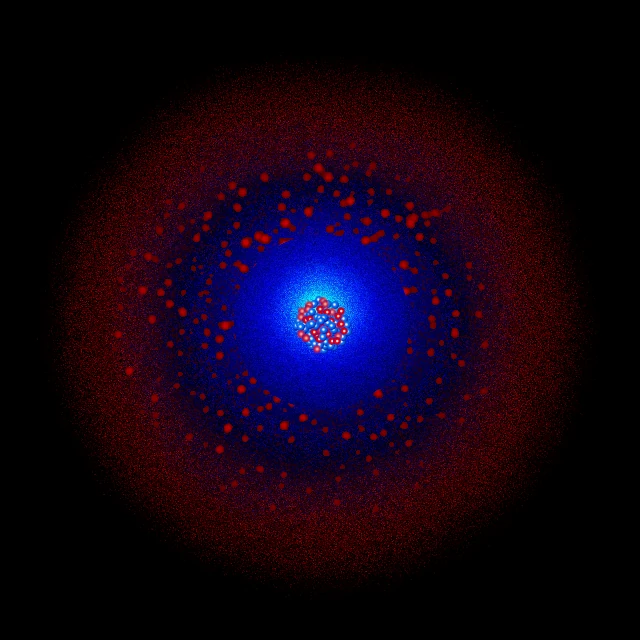
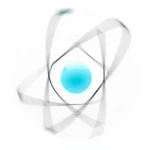
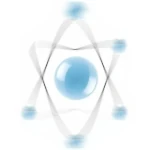
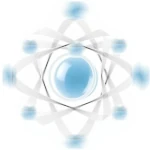
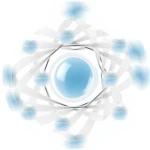
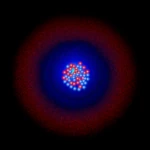
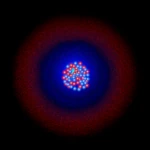
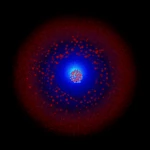
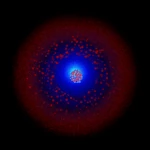
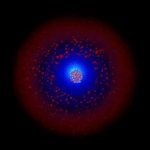
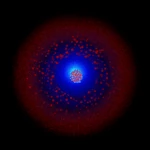
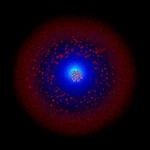
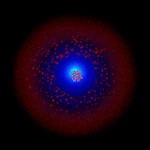
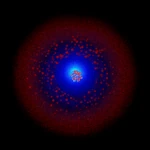
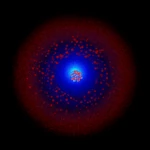
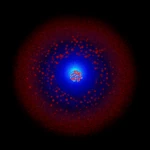
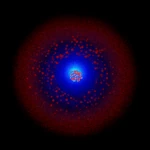
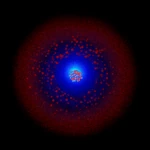
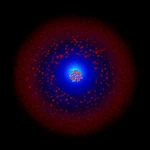
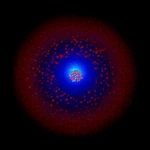
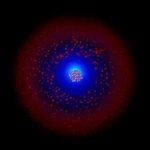
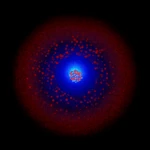
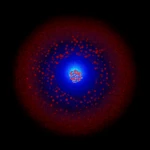
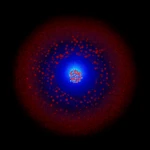
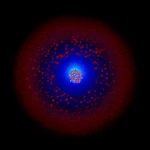
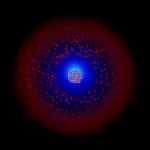
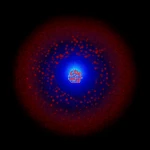
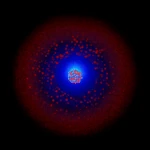
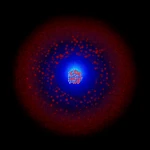
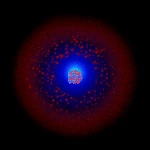
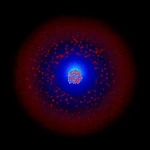
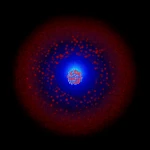
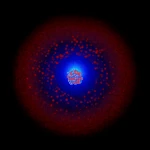
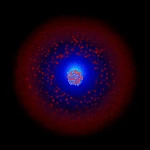
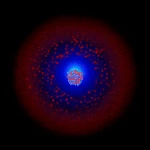
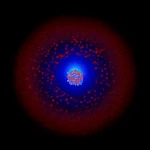
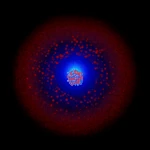
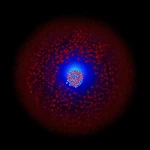
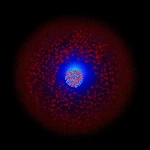
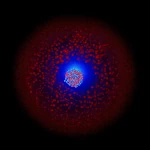
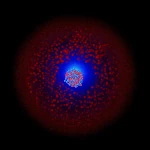
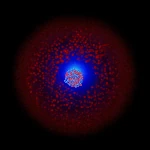
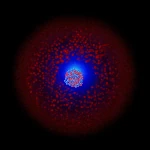
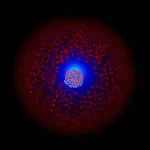
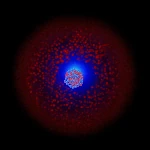
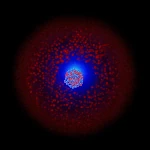
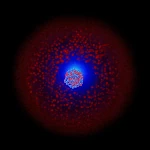
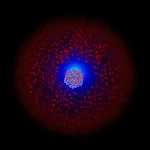
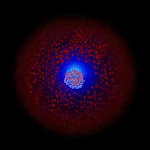
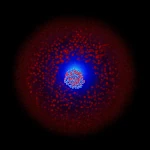
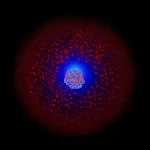
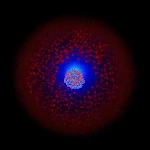
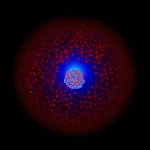
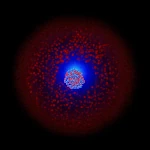
Image description: Simplified atomic model of the indium atom. The most abundant isotope is \(\,^{115}\mathrm{In}\,\)
with its 49 protons, 49 electrons, and 66 neutrons.
Image source:
astronoo.com (新窗口)
铟的发现历史
Indium was discovered in 1863 by German chemists 费迪南德·赖希 (1799-1882) and 希罗尼穆斯·特奥多尔·里希特 (1824-1898) at the Freiberg Mining Academy in Saxony. Reich was searching for thallium in zinc ores from the region using spectroscopy, a revolutionary technique developed by Bunsen and Kirchhoff a few years earlier.
Reich, who was colorblind, asked his assistant Richter to observe the emission spectrum of a purified sample. Richter observed two intense blue lines that did not correspond to any known element. Reich and Richter recognized that they had discovered a new element, which they named 铟 from the Latin indicum, meaning indigo, in reference to the indigo-blue color of the spectral lines that revealed its existence.
分离出足够数量以研究其性质的纯铟金属耗时数年。里希特最终于1867年成功制得相对纯净的金属铟。在近一个世纪的时间里,铟始终只是实验室中的新奇之物,直到20世纪40至50年代现代电子技术发展起来,它才获得重要的实际应用。
结构与基本性质
铟(符号In,原子序数49)是元素周期表第13族的后过渡金属,与铝、镓、铊同族。其原子含有49个质子,通常有66个中子(对应最丰富的同位素\(\,^{115}\mathrm{In}\)),以及49个电子,电子排布为[Kr] 4d¹⁰ 5s² 5p¹。
铟是一种明亮的银白色金属,质地极软且具有延展性。其密度为7.31克/立方厘米,属于中等重量金属。铟的柔软程度可用指甲划出痕迹,并能像铅笔一样在纸上留下印记。它结晶为体心四方结构,这在金属中较为罕见。当铟被弯曲时会发出特有的"啼叫声",这是由于晶体重新定向时产生的摩擦所致。
Indium melts at 157 °C (430 K), a very low melting point that makes it liquid just above the boiling point of water. It boils at 2072 °C (2345 K). Liquid indium wets glass remarkably well, a property exploited to create thin, uniform coatings and hermetic glass-metal seals.
铟具有优异的抗大气腐蚀性能,在空气中几乎不会失去光泽。它在室温下对水、碱及大多数稀酸保持稳定。这种化学稳定性,加上其形成低熔点合金和附着于玻璃的能力,使其成为多种技术应用中的宝贵材料。
Melting point of indium: 430 K (157 °C).
Boiling point of indium: 2345 K (2072 °C).
Indium is the softest metal after sodium, lithium, and lead.
铟同位素表
| 同位素 / 符号 | 质子(Z) | 中子(N) | 原子质量(u) | 天然丰度 | 半衰期/稳定性 | 衰变 / 备注 |
|---|---|---|---|---|---|---|
| 铟-113 — \(\,^{113}\mathrm{In}\,\) | 49 | 64 | 112.904058 u | ≈ 4.29% | 稳定 | 铟的唯一稳定同位素,在天然铟中含量较少。 |
| 铟-115 — \(\,^{115}\mathrm{In}\,\) | 49 | 66 | 114.903878 u | ≈ 95.71% | ≈ 4.41 × 10¹⁴ 年 | 放射性(β⁻)。半衰期极长(为宇宙年龄的31,000倍),被视为准稳定。 |
| 铟-111 — \(\,^{111}\mathrm{In}\,\) | 49 | 62 | 110.905103 u | 合成 | ≈ 2.80 天 | 放射性(电子俘获)。用于SPECT医学成像和闪烁显像的伽马发射源。 |
| 铟-114m — \(\,^{114m}\mathrm{In}\,\) | 49 | 65 | 113.904917 u | 合成 | ≈ 49.5 天 | 放射性(同质异能跃迁,β⁻)。亚稳态用作工业示踪剂。 |
铟的电子排布与电子层
注::
Electron shells:
电子如何围绕原子核组织 (新窗口).
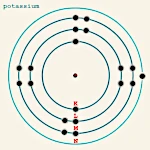
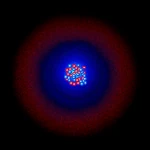
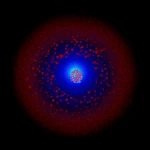
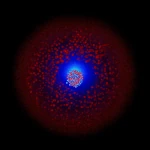
铟有49个电子,分布在五个电子壳层中。其完整电子排布为: 1s² 2s² 2p⁶ 3s² 3p⁶ 3d¹⁰ 4s² 4p⁶ 4d¹⁰ 5s² 5p¹,简写为:[Kr] 4d¹⁰ 5s² 5p¹。该排布也可写作:K(2) L(8) M(18) N(18) O(3)。
壳层的详细结构
K壳层(n=1): contains 2 electrons in the 1s subshell. This inner shell is complete and very stable.
L层(n=2): contains 8 electrons distributed as 2s² 2p⁶. This shell is also complete, forming a noble gas configuration (neon).
M壳层(n=3): contains 18 electrons distributed as 3s² 3p⁶ 3d¹⁰. This complete shell contributes to the electronic screen.
N层(n=4): contains 18 electrons distributed as 4s² 4p⁶ 4d¹⁰. The complete 4d subshell is particularly stable.
O壳层(n=5): contains 3 electrons distributed as 5s² 5p¹. These three electrons are the valence electrons of indium.
价电子与氧化态
Indium has 3 价电子: two 5s² electrons and one 5p¹ electron. The most common oxidation state is +3, where indium loses its three valence electrons to form the In³⁺ ion with the configuration [Kr] 4d¹⁰. This state appears in most indium compounds: indium(III) oxide (In₂O₃), indium(III) chloride (InCl₃), and indium tin oxide (ITO).
+1氧化态也存在,并且由于惰性电子对效应(5s²电子保持成对,不参与成键),随着在13族中向下移动而变得更加稳定。诸如氯化铟(I)(InCl)和氧化铟(I)(In₂O)等化合物虽然存在,但不如其铟(III)对应物稳定。金属铟对应0氧化态。
化学反应活性
铟在室温空气中极为稳定,氧化速度非常缓慢。其表面会形成一层透明的薄氧化层,保护金属免受进一步氧化。在高温(超过800°C)下,铟在空气中燃烧时会产生特征性的蓝紫色火焰,生成氧化铟(III):4In + 3O₂ → 2In₂O₃。
铟与稀酸缓慢反应生成铟(III)盐:2In + 6HCl → 2InCl₃ + 3H₂。它在浓氧化性酸中溶解更快。铟在高温下与卤素反应生成三卤化物:2In + 3X₂ → 2InX₃。它还能与硫、硒、碲反应生成硫族化物。
铟与许多其他金属形成低熔点合金。铟锡、铟铅和铟铋合金的熔点低于100°C,可用作焊料、密封件和安全熔断器。铟对玻璃及许多其他材料具有极佳的附着力,这一特性被用于玻璃-金属密封和涂层。
铟的工业与技术应用
- 在触摸屏和平面LCD/LED屏幕中(ITO涂层:氧化铟锡);
- 用于薄膜太阳能电池(CIGS:铜铟镓硒);
- 在白色LED和OLED屏幕中(InGaN、InP半导体);
- 作为低熔点焊料和密封材料;
- 在核医学中(铟-111)用于SPECT成像和闪烁显像;
- 在牙科合金和牙科修复体中;
- 用于耐腐蚀反射镜;
- 作为防腐和减摩轴承涂层;
- 在半导体结和射频晶体管中;
- 用于粒子和辐射探测器;
- 作为核反应堆中的控制合金;
- 用于特殊液体温度计和压力计;
- 用于高级研究电池和电极。
ITO:触摸屏的隐形材料
铟的主要应用是铟锡氧化物(ITO:Indium Tin Oxide),约占全球需求的70%,其成分约为90%的In₂O₃和10%的SnO₂。ITO具有独特的性能组合:在可见光范围内具有优异的光学透明性(透光率>90%)和高导电性,使其成为理想的透明导体。
每部智能手机触摸屏、平板电脑、笔记本电脑及平板显示器中,都含有一层沉积在玻璃或塑料上的ITO薄膜(通常厚度为100-300纳米)。这层透明薄膜具有导电性,能够实现电容式触控检测。一部典型智能手机约含30-50毫克铟,笔记本电脑屏幕含200-300毫克,而大尺寸电视则高达1-2克。
21世纪初至2010年代,消费电子产品的爆发式增长催生了市场对铟的旺盛需求。2000年至2010年间,全球铟产量增长了两倍,从每年250吨攀升至750吨以上。这种巨大需求与铟的天然稀缺性相结合,引发了人们对供应安全的担忧,并推动了对替代材料(石墨烯、碳纳米管、银纳米线)的研发以及回收技术的改进。
铟与绿色技术
铟在多种可再生能源技术中发挥着关键作用。CIGS薄膜太阳能电池(铜-铟-镓-硒)具有高转换效率(实验室中可达23%),且材料消耗远低于晶体硅电池。典型的CIGS电池每瓦功率约含5-10毫克铟。
白光LED是逐步取代白炽灯和荧光灯的高效节能照明的关键元件,它采用氮化铟镓(InGaN)半导体来产生蓝光。通过调整铟/镓比例,可以精确调节发射波长,从而制造出不同颜色的LED。
绿色技术对铟的这种依赖造成了一个悖论:向可再生能源和能效转型需要大量使用一种极其稀有的金属。全球铟产量(约每年800-900吨)与这些技术普及后的潜在需求相比微不足道。因此,铟的回收利用成为一项战略重点。
在天体物理学和宇宙学中的作用
Indium is synthesized in stars mainly by the s-过程 (slow neutron capture) in asymptotic giant branch (AGB) stars, with contributions from the r-process (rapid neutron capture) during supernovae and neutron star mergers. Indium-115, the dominant quasi-stable isotope, is mainly produced by the s-process.
铟在宇宙中的丰度(按原子数计)约为氢的1.8×10⁻¹⁰倍,使其成为宇宙中相对稀有的元素之一。这种稀有性反映了它在核稳定性曲线中位于铁峰之后的位置。
铟-115虽然具有放射性,半衰期长达441万亿年(约为宇宙年龄的31000倍),但在人类甚至宇宙尺度上仍被视为准稳定元素。这种极其缓慢的放射性表现为β⁻衰变,最终转化为稳定的锡-115。其超长的半衰期虽使其无法用于放射性测年,却成为亚稳态原子核的迷人范例。
注意::
Indium is present in the Earth's crust at an average concentration of about 0.05 ppm, making it about as rare as silver but 3 times rarer than mercury. Indium does not form economically exploitable ores of its own but is always associated with zinc, lead, copper, and tin in their ores, with typical concentrations of 0.1 to 100 ppm (parts per million).
全球铟年产量约为800至900吨,完全作为锌精炼(约70%)、铅锌(20%)和锡(10%)的副产品产出。中国以约占全球总量55%的产量占据主导地位,其次是韩国(25%)、日本(10%)和加拿大。铟主要从电解锌精炼过程中产生的粉尘、残渣和污泥中回收提取。
铟的回收至关重要,因其稀缺性和生产集中度。目前,约25-30%的供应来自回收,主要源于报废液晶屏幕中的ITO回收及生产废料。随着回收技术的改进和电子废弃物数量的增加,未来几十年回收率预计将显著提升。铟被欧盟、美国及其他主要经济体视为关键材料。
 核聚变所需的能量以及为什么铀是一个极限
 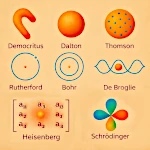 原子的各种形态:从古代直觉到量子力学