

钠(Na,Z = 11):生命的基础电解质
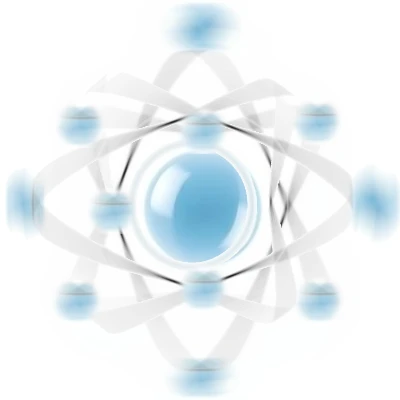
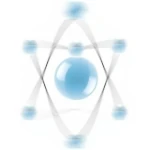
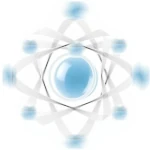
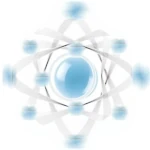
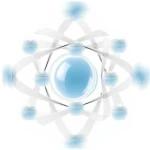
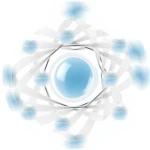
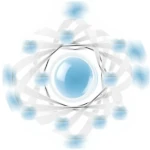
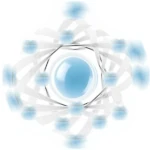
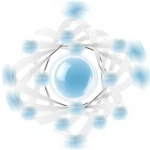
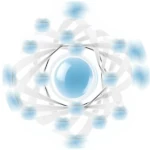
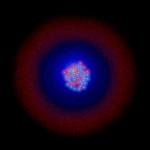
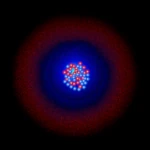
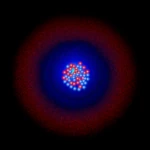
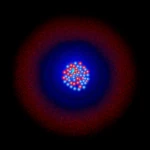
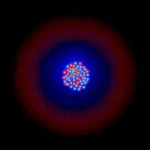
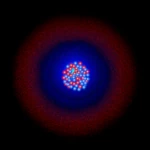
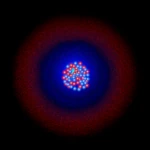
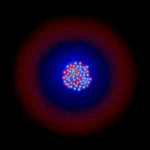
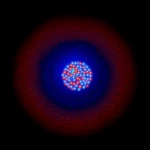
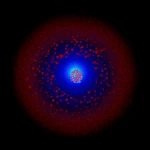
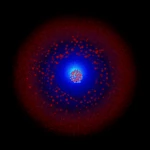
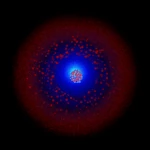
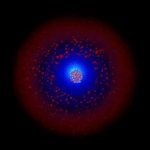
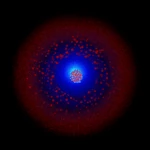
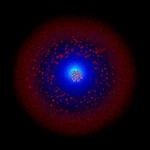
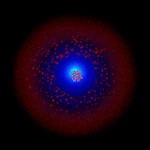
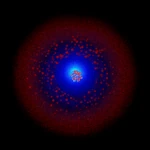
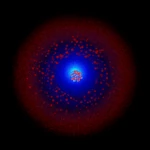
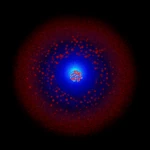
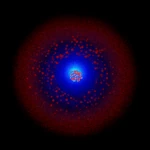
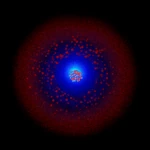
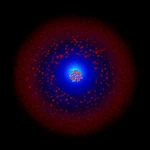
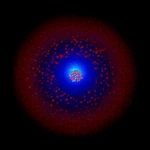
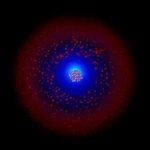
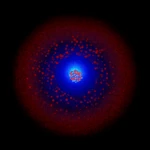
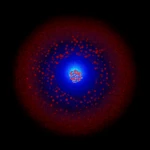
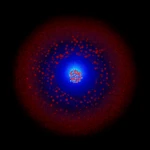
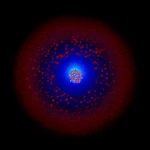
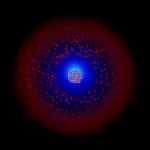
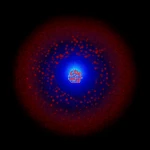
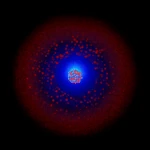
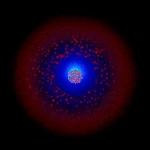
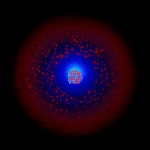
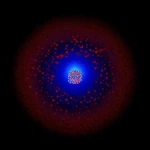
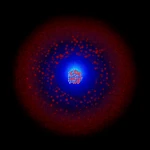
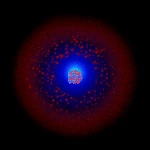
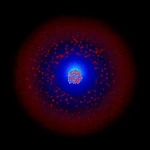
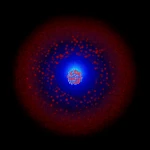
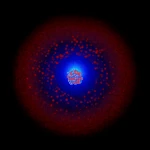
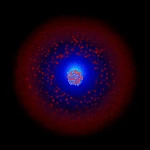
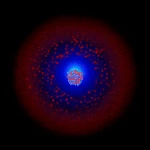
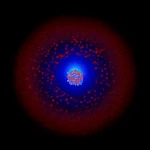
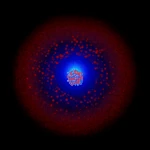
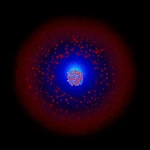
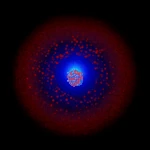
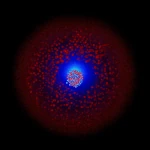
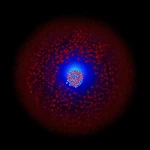
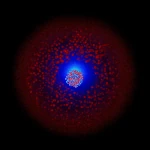
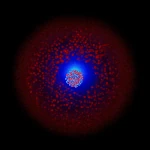
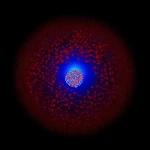
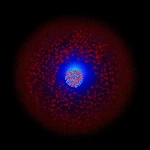
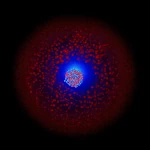
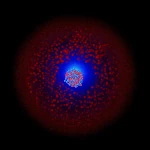
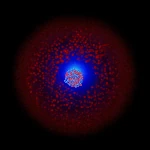
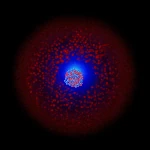
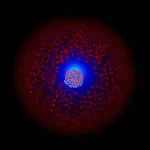
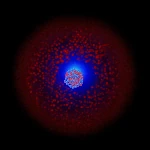
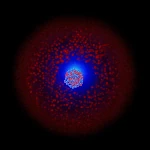
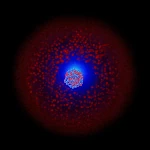
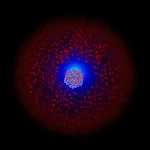
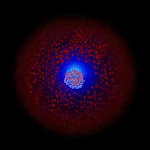
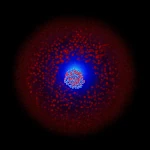
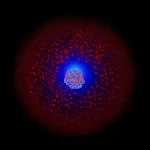
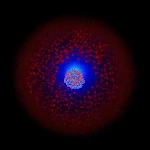
Image description:
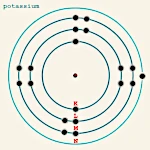
Simplified atomic model of the sodium atom.
The most abundant isotope is the \(\,^{23}\mathrm{Na}\,\) with its 11 protons and 12 neutrons.
Image source: astronoo.com (新窗口)
钠的发现历史
Sodium compounds, especially table salt (sodium chloride, NaCl), have been known and used since antiquity for food preservation and as a medium of exchange (hence the word "salary" from the Latin 薪水). However, metallic sodium was only isolated in the early 19th century thanks to advances in electrochemistry.
In 1807, the British chemist 汉弗里·戴维 (1778-1829) isolated metallic sodium for the first time by electrolysis of molten caustic soda (sodium hydroxide, NaOH). A few days after isolating potassium by the same method, Davy succeeded in producing shiny and extremely reactive sodium globules. He observed that this metal oxidized rapidly in air and reacted violently with water, releasing hydrogen gas.
Davy named this element 钠 (from the English word "soda" derived from the Arabic 苏瓦德 or 苏打, referring to certain plants from which soda was extracted). The chemical symbol Na comes from the Latin 钠, derived from 天然碱 (natural hydrated sodium carbonate) used since ancient Egypt. This discovery marked the beginning of the systematic study of alkali metals and revolutionized the understanding of the chemistry of elements.
结构与基本性质
Sodium (symbol Na, atomic number 11) is an alkali metal of group 1 of the periodic table, consisting of eleven protons, usually twelve neutrons (for the most common isotope), and eleven electrons.
The only natural stable isotope is sodium-23 \(\,^{23}\mathrm{Na}\) (100% natural abundance).
At room temperature, sodium is a soft, silvery-white metal, soft enough to be cut with a knife.
It has a relatively low density (≈ 0.968 g/cm³), lower than that of water, which means it would float on water if it did not react violently with it.
Sodium is highly reactive, oxidizing rapidly in air and reacting vigorously with water to produce sodium hydroxide and hydrogen gas, a reaction sufficiently exothermic to ignite the hydrogen produced.
Sodium must be stored under mineral oil or in an inert atmosphere (argon) to protect it from oxidation.
It has excellent electrical and thermal conductivity, typical characteristics of alkali metals.
The temperature at which the liquid and solid states can coexist (melting point): 370.944 K (97.794 °C).
The temperature at which it transitions from liquid to gaseous state (boiling point): 1156.090 K (882.940 °C).
钠同位素表
| 同位素 / 符号 | 质子(Z) | 中子(N) | 原子质量(u) | 天然丰度 | 半衰期/稳定性 | 衰变 / 备注 |
|---|---|---|---|---|---|---|
| 钠-22 — \(\,^{22}\mathrm{Na}\,\) | 11 | 11 | 21.994437 u | 宇宙成因的 | 2.602年 | 放射性β⁺和电子俘获产生²²Ne;由宇宙射线产生;用于核医学。 |
| 钠-23 — \(\,^{23}\mathrm{Na}\,\) | 11 | 12 | 22.989769 u | 100% | 稳定 | 唯一稳定同位素;对生物功能至关重要;所有钠化合物的基础。 |
| 钠-24 — \(\,^{24}\mathrm{Na}\,\) | 11 | 13 | 23.990963 u | 非自然的 | 14.997小时 | 放射性β⁻衰变产生²⁴Mg;在医学和工业中用作示踪剂;强伽马辐射。 |
| 钠-25 — \(\,^{25}\mathrm{Na}\,\) | 11 | 14 | 24.989954 u | 非自然的 | 59.1秒 | 放射性β⁻;在核反应堆中产生。 |
| 钠-26 — \(\,^{26}\mathrm{Na}\,\) | 11 | 15 | 25.992633 u | 非自然的 | 1.071秒 | 放射性β⁻;半衰期短。 |
| 其他同位素——\(\,^{18}\mathrm{Na}-\,^{21}\mathrm{Na},\,^{27}\mathrm{Na}-\,^{37}\mathrm{Na}\) | 11 | 7-10, 16-26 | — (共鸣) | 非自然的 | \(10^{-21}\) — 0.301秒 | 核物理中观察到非常不稳定的状态;有些具有中子晕结构。 |
钠的电子排布与电子壳层
注意::
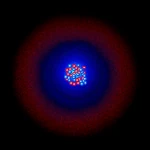
Electron shells: 电子如何围绕原子核组织排列 (新窗口).
钠有11个电子,分布在三个电子壳层中。其完整电子排布为:1s² 2s² 2p⁶ 3s¹, 或简写为:[Ne] 3s¹。该排布也可写作:K(2) L(8) M(1)。
壳层的详细结构
K 壳层 (n=1): contains 2 electrons in the 1s subshell. This inner shell is complete and highly stable.
L层(n=2): contains 8 electrons distributed as 2s² 2p⁶. This shell is also complete, forming a noble gas configuration (neon).
M壳层(n=3): contains only 1 electron in the 3s subshell. This single valence electron is very weakly bound to the nucleus and very easily lost during chemical reactions.
价电子与氧化态
The single electron in the outer shell (3s¹) is the 价电子 of sodium. This configuration explains its chemical properties:
By losing its 3s electron, sodium forms the Na⁺ ion (oxidation state +1), its unique and systematic oxidation state in all its compounds.
The Na⁺ ion then adopts an electronic configuration identical to that of neon [Ne], a noble gas, which gives this ion maximum stability.
Sodium exhibits no other oxidation state; only the +1 state is observed in chemistry.
钠的电子构型为价电子层含单个3s电子,这使其被归类为碱金属(元素周期表第1族)。该结构赋予其特性:极高的化学反应活性(遇水剧烈反应释放氢气和热量,在潮湿空气中自燃)、极低的电离能(价电子极易失去)、仅形成氧化态为+1的离子化合物。钠是一种柔软的银白色金属,必须储存在矿物油或惰性气体中以防氧化。其极强的失电子倾向使钠成为最强还原剂及最活泼金属之一。钠具有重要的生物学意义:Na⁺离子在调节生物体水平衡、传递神经冲动及维持细胞膜电位中起关键作用。在化学领域,金属钠用作强还原剂,其化合物更是无处不在:氯化钠NaCl(食盐)、氢氧化钠NaOH(烧碱)、碳酸钠Na₂CO₃及碳酸氢钠NaHCO₃均属应用最广泛的工业化学品。
化学反应活性
Sodium has a single valence electron in its outer shell, which it readily donates to form the sodium ion (Na⁺) with a stable noble gas electronic configuration. This high electropositivity makes sodium a 强还原剂 and an extremely reactive metal.
钠与水剧烈反应,反应式为:2 Na + 2 H₂O → 2 NaOH + H₂(气体)。该反应放热强烈,足以熔化钠并引燃产生的氢气,因钠原子受激而呈现特征性的黄色火焰。与空气中的氧气接触时,钠会迅速形成氧化钠(Na₂O)和过氧化钠(Na₂O₂)层,使其光亮的表面变得暗淡。
钠与卤素(氟、氯、溴、碘)反应生成卤化物,其中最广为人知且具有重要生物学意义的是氯化钠(NaCl,食盐)。钠还能与氢反应生成氢化钠(NaH),这是一种用于有机化学的强还原剂;与液氨反应则形成含有溶剂化电子的特征性蓝色溶液。
In living organisms, the sodium ion (Na⁺) plays an absolutely essential physiological role. It is the main extracellular cation and maintains osmotic balance, regulates blood volume and blood pressure. Sodium is crucial for the transmission of 神经冲动 and 肌肉收缩 via sodium-potassium pumps (Na⁺/K⁺-ATPase) that maintain electrochemical gradients across cell membranes. An imbalance of sodium (hyponatremia or hypernatremia) can have serious, even fatal, consequences.
钠的工业和技术应用
- 作为人类和动物营养中必需的电解质(氯化钠,食盐);
- 在化学工业中,通过电解盐来生产氢氧化钠(烧碱);
- 用于制造玻璃、洗涤剂和纸张的碳酸钠(纯碱)的生产。
- 在冶金中作为还原剂,从矿石(钛、锆)中提取某些金属;
- 在钠蒸气灯(城市公共照明)中产生高效黄橙色光;
- 作为某些快中子核反应堆中的传热流体(液态钠);
- 生产四乙基铅,曾用作汽油中的抗爆剂(已停止使用)。
- 在有机合成中作为强效脱水剂和还原剂;
- 用于制造金矿提取和电镀中使用的氰化钠;
- 作为食品添加剂(谷氨酸钠、苯甲酸钠)用于增味和防腐;
- 用于大规模储能的钠硫电池中;
- 用于生产空气再生系统(潜艇、太空)中的过氧化物和超氧化物。
- 作为某些特种金属合金的组分;
- 在制药工业中用于中和酸和调节pH值;
- 用于水处理(次氯酸钠作为消毒剂);
- 作为核医学中的放射性示踪剂(钠-24);
- 在通过氢氧化钠皂化脂肪制造肥皂的过程中;
- 冬季道路除冰(氯化钠,除冰盐)
- 在纺织工业中用于纤维处理和染色;
- 作为用于自适应天文学的钠波导激光器的光源。
在天体物理学和宇宙学中的作用
Sodium is a relatively abundant element in the universe, ranking approximately 14th in cosmic abundance. It is entirely produced by 恒星核合成, primarily in massive stars.
Sodium-23 is synthesized in massive stars through several nuclear processes. The main mechanism is 碳燃烧 at temperatures of about 600-800 million kelvins, where the fusion of two carbon-12 nuclei can produce sodium-23 plus a proton (¹²C + ¹²C → ²³Na + p). Sodium can also be produced during 氖燃烧 by photodisintegration of neon-20 followed by alpha particle captures, or by processes involving magnesium in the burning stellar layers.
During 超新星爆炸, sodium is produced in significant quantities and ejected into the interstellar medium. Type II supernovae (gravitational collapse of massive stars) and Type Ia supernovae (thermonuclear explosion of white dwarfs) both contribute to the galactic enrichment of sodium, although through different mechanisms and with varying yields.
In the interstellar medium, neutral atomic sodium (Na I) exhibits characteristic absorption lines in the visible spectrum, notably the sodium D lines (doublet at 589.0 and 589.6 nm). These lines, discovered by Joseph von Fraunhofer in the solar spectrum in 1814, are among the strongest and most easily observable. They serve as 星际介质结构与动力学示踪剂, allowing astronomers to map gas clouds between stars and study their velocities via the Doppler effect.
The 钠D线 are also observed in the spectra of stars, providing information on temperature, chemical composition, and the movements of stellar atmospheres. The intensity of these lines varies considerably from star to star, reflecting differences in chemical abundance related to stellar metallicity and the chemical evolution of the galaxy.
In the solar system, sodium has been detected in several surprising environments. A 稀薄的钠外逸层 surrounds the planet Mercury, created by the sputtering of the surface by the solar wind and micrometeorite impacts. This sodium exosphere extends tens of thousands of kilometers and exhibits a comet-like tail. Sodium has also been detected in the exosphere of the Moon, in the geysers of Enceladus (Saturn's moon), and in the tails of comets.
The 系外行星的大气层 have revealed the presence of sodium through transit spectroscopy. When an exoplanet passes in front of its star, the absorption of starlight by the planetary atmosphere creates a characteristic spectral signature. Sodium lines were among the first detected in the atmospheres of hot Jupiter-type exoplanets, providing crucial information on the composition, structure, and meteorology of these distant worlds.
In 自适应光学天文学, sodium lasers are used to create artificial guide stars. These lasers excite sodium atoms in the Earth's mesospheric layer (at about 90 km altitude), creating a point light source that allows real-time measurement and correction of atmospheric distortions, significantly improving the resolution of ground-based telescopes.
注意::
The 盐悖论 illustrates the complex relationship between sodium and human health.
Sodium is absolutely essential for life: without it, nerve impulses could not propagate, muscles could not contract, and the body's water balance would collapse.
Historically, salt was so valuable that it served as a medium of exchange and wars were fought to control salt routes.
However, in modern societies, the overconsumption of sodium (mainly in the form of salt) has become a major public health issue, contributing to high blood pressure, cardiovascular diseases, and strokes.
The World Health Organization recommends less than 5 grams of salt per day, but average consumption in many developed countries exceeds 9-12 grams.
This situation reflects a mismatch between our biology, which evolved in salt-poor environments (where conserving sodium was crucial), and our modern food environment rich in processed foods containing excessive amounts of added salt.
Sodium thus embodies the fundamental toxicological rule formulated by Paracelsus: "Everything is poison, nothing is poison, it is the dose that makes the poison."
 核聚变所需的能量以及为什么铀是一个极限
 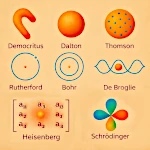 原子的各种形态:从古代直觉到量子力学