

镍(Ni,Z = 28):一种具有磁性的耐腐蚀金属
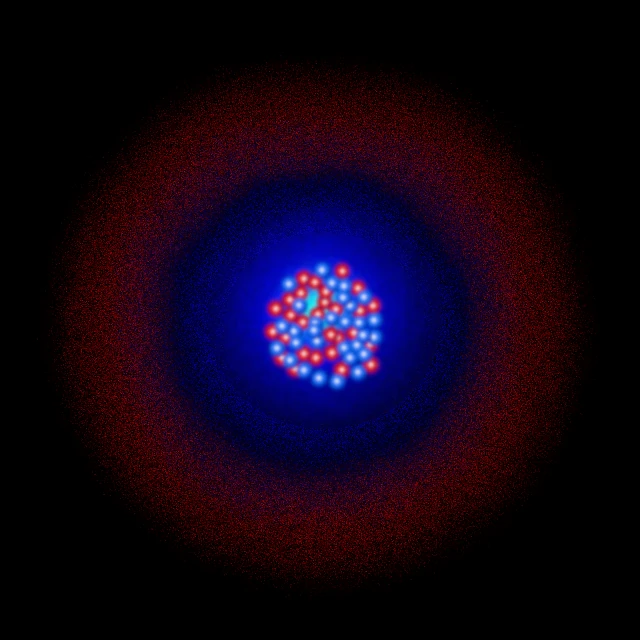
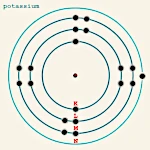
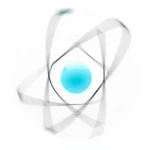
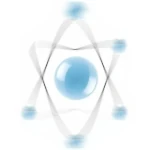
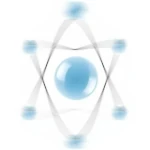
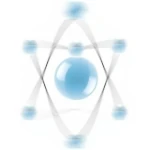
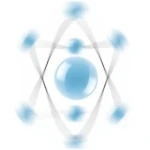
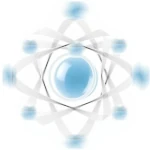
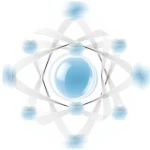
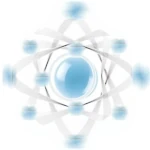
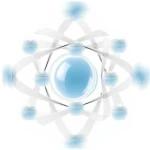
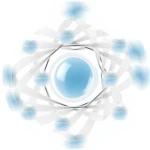
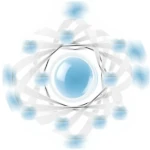
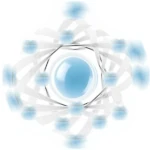
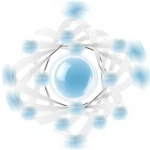
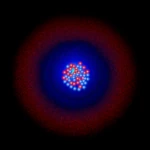
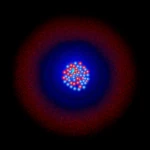
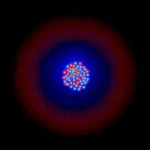
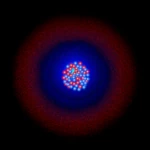
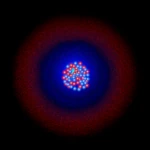
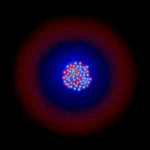
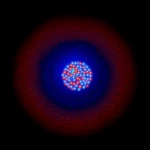
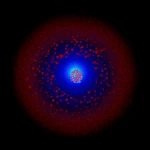
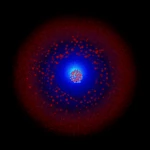
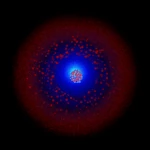
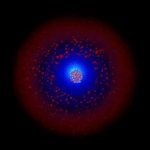
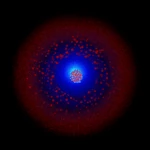
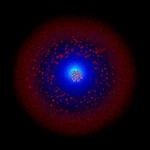
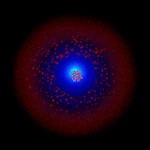
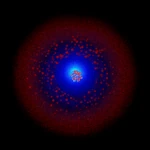
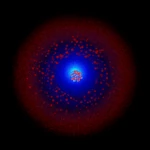
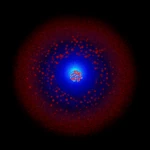
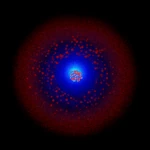
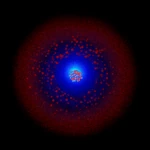
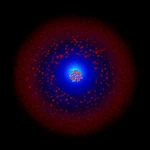
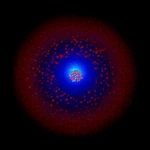
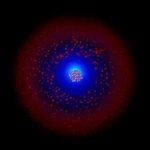
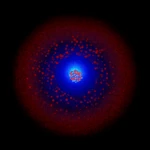
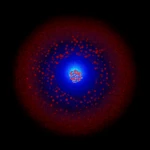
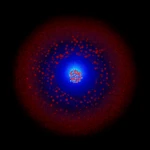
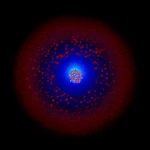
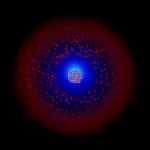
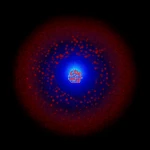
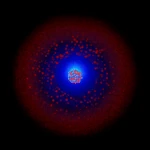
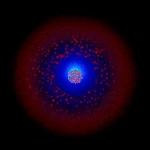
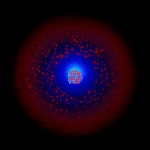
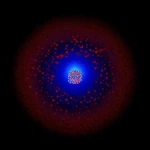
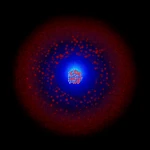
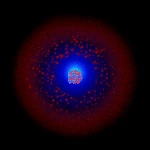
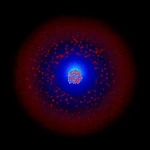
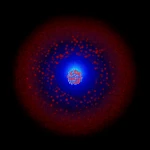
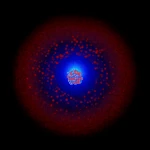
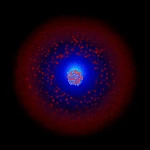
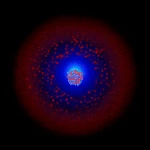
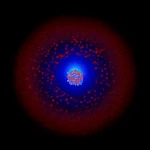
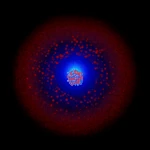
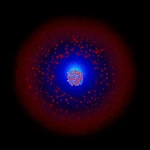
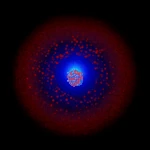
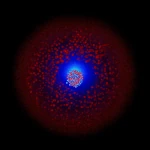
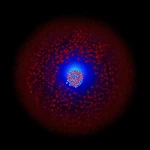
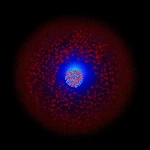
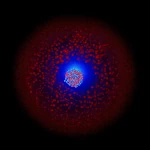
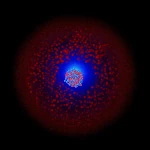
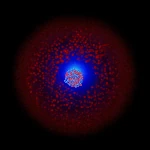
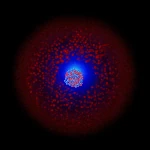
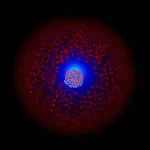
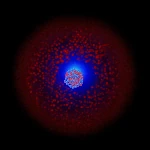
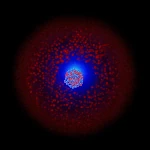
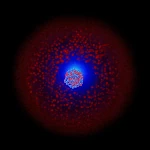
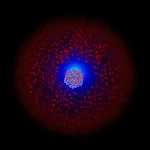
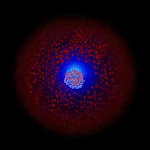
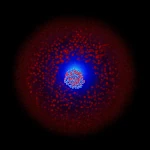
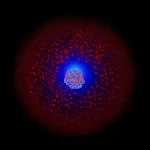
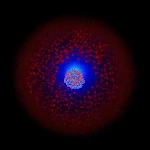
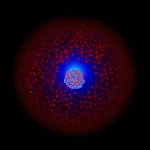
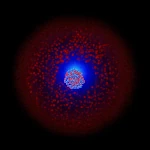
Simplified atomic model of the nickel atom.
The most abundant isotope is \(\,^{58}\mathrm{Ni}\,\) with its 28 protons, 28 electrons, and 30 neutrons.
Image source: astronoo.com (新窗口)
镍的发现历史
Nickel was first isolated in 1751 by the Swedish chemist and mineralogist 阿克塞尔·弗雷德里克·克龙斯泰特 (1722-1765). Cronstedt extracted this new metal from a reddish-brown ore called 红砷镍矿 (literally "devil's copper" in German), so named by miners who confused it with copper ore but obtained no copper from it. The name 镍 comes from 镍, a diminutive of 尼古拉斯, referring to a mischievous spirit from Germanic folklore said to have bewitched the ore. Although nickel-containing alloys had been used in China as early as 200 BC to make white coins called 屏东, the elemental nature of nickel was not understood until Cronstedt's work. The chemical symbol Ni was internationally adopted in the 19th century.
结构与基本性质
Nickel (symbol Ni, atomic number 28) is a transition metal in group 10 of the periodic table.
Its atom has 28 protons, usually 30 neutrons (for the most abundant isotope \(\,^{58}\mathrm{Ni}\)) and 28 electrons with the electronic configuration [Ar] 3d⁸ 4s².
At room temperature, nickel is a solid, silvery-white metal with a slight golden tint, dense (density ≈ 8.908 g/cm³), and hard.
It is one of the four natural ferromagnetic elements (along with iron, cobalt, and gadolinium), capable of being permanently magnetized.
Nickel has excellent resistance to corrosion and oxidation, even at high temperatures, making it valuable for high-performance alloys.
It is also ductile and malleable, allowing it to be easily worked.
The melting point of nickel (liquid state): 1,728 K (1,455 °C).
The boiling point of nickel (gaseous state): 3,186 K (2,913 °C).
镍同位素表
| 同位素 / 符号 | 质子(Z) | 中子(N) | 原子质量 (u) | 自然丰度 | 半衰期/稳定性 | 衰变 / 备注 |
|---|---|---|---|---|---|---|
| 镍-58 — \(\,^{58}\mathrm{Ni}\,\) | 28 | 30 | 57.935343 u | ≈ 68.08% | 稳定 | 天然镍的主要同位素,含量最丰富。 |
| 镍-60 — \(\,^{60}\mathrm{Ni}\,\) | 28 | 32 | 59.930786 u | ≈ 26.22% | 稳定 | 镍的第二丰富同位素。 |
| 镍-61 — \(\,^{61}\mathrm{Ni}\,\) | 28 | 33 | 60.931056 u | ≈ 1.14% | 稳定 | 唯一稳定的奇奇镍同位素。 |
| 镍-62 — \(\,^{62}\mathrm{Ni}\,\) | 28 | 34 | 61.928345 u | ≈ 3.63% | 稳定的 | 在所有原子核中,每个核子的结合能最高。 |
| 镍-64 — \(\,^{64}\mathrm{Ni}\,\) | 28 | 36 | 63.927966 u | ≈ 0.93% | 稳定的 | 天然镍中最重且丰度最低的稳定同位素。 |
| 镍-56 — \(\,^{56}\mathrm{Ni}\,\) | 28 | 28 | 55.942132 u | 合成 | ≈ 6.08 天 | 放射性物质,在Ia型超新星中大量产生。其衰变为\(\,^{56}\mathrm{Co}\),再衰变为\(\,^{56}\mathrm{Fe}\),为超新星的光度提供能量。 |
| 镍-59 — \(\,^{59}\mathrm{Ni}\,\) | 28 | 31 | 58.934347 u | 宇宙痕迹 | 约 76,000 年 | 长寿命放射性同位素,用于测定陨石年龄和研究太阳系历史。 |
| 镍-63 — \(\,^{63}\mathrm{Ni}\,\) | 28 | 35 | 62.929669 u | 合成 | 约100年 | 放射性,用于爆炸物探测器和某些电子设备。 |
镍的电子排布与电子壳层
注意::
Electron shells: 电子如何围绕原子核组织 (新窗口).
镍有28个电子,分布在四个电子壳层上。其完整电子排布为:1s² 2s² 2p⁶ 3s² 3p⁶ 3d⁸ 4s², 或简写为:[Ar] 3d⁸ 4s²。该排布也可写作:K(2) L(8) M(16) N(2)。
壳层的详细结构
K壳层(n=1): contains 2 electrons in the 1s subshell. This inner shell is complete and very stable.
L壳层(n=2): contains 8 electrons distributed as 2s² 2p⁶. This shell is also complete, forming a noble gas configuration (neon).
M壳层(n=3): contains 16 electrons distributed as 3s² 3p⁶ 3d⁸. The 3s and 3p orbitals are complete, while the 3d orbitals contain 8 out of 10 possible electrons.
N层(n=4): contains 2 electrons in the 4s subshell. These electrons are the first to be involved in chemical bonding.
价电子与氧化态
The 10 electrons in the outer shells (3d⁸ 4s²) are the 价电子 of nickel. This configuration explains its chemical properties:
By losing the 2 4s electrons, nickel forms the Ni²⁺ ion (oxidation state +2), the most common and stable state in aqueous solution.
By losing the 2 4s electrons and 1 3d electron, it forms the Ni³⁺ ion (oxidation state +3), less common but present in some compounds.
Oxidation states 0, +1, and +4 exist in specific compounds but are rare.
化学反应活性
镍是一种在室温下相对不活泼的金属。它会迅速形成一层薄薄的氧化镍(NiO),从而保护自身免受进一步氧化和腐蚀。这种天然钝化作用使镍在空气、淡水和海水中具有出色的抗腐蚀性能。镍不与碱反应,并能抵抗多种稀酸,但会缓慢溶于稀硝酸,并在浓氧化性酸中溶解得更快。在高温下,镍与氧气反应生成NiO,与硫反应生成硫化物,与卤素反应生成卤化物。镍主要形成氧化态为+2的化合物,其盐类在水溶液中通常呈绿色。镍能与许多配体形成配位络合物,这是其在催化领域的重要特性。
镍的工业与技术应用
- 在不锈钢中(约占全球镍产量的70%),提供耐腐蚀和耐热性能;
- 用于航空涡轮机、发电厂和火箭发动机的超级合金;
- 在可充电电池中(含镍的镍镉电池、镍氢电池和锂离子电池);
- 用于电镀(镀镍)以保护其他金属免受腐蚀;
- 在制造硬币时,与铜制成合金;
- 作为植物油氢化和许多化学反应中的催化剂;
- 用于与其他金属(铝镍钴、钐钴)形成合金的永磁体;
- 在医学和工程中使用的形状记忆合金(镍钛诺:镍-钛)中;
- 镍铬合金(Nichrome)电热电阻用
- 在化学工业设备中,耐腐蚀环境的设备;
- 用于燃料电池和水电解的电极;
- 作为牙科合金和医疗假体的组成部分;
- 在玻璃工业中用于将玻璃染成绿色并改善其性能;
- 适用于需要高耐热性的电线和电缆。
- 在海洋应用(如螺旋桨、阀门)中,因其耐海水腐蚀性而得到使用。
在天体物理学和宇宙学中的作用
镍在天体物理学中占有特殊地位。同位素\(\,^{62}\mathrm{Ni}\)在所有原子核中具有最高的每核子结合能,因此是能量上最稳定的原子核。然而,铁-56是恒星聚变中最丰富的最终产物,因为恒星核反应更倾向于形成铁。镍主要在大质量恒星生命末期发生的硅燃烧过程以及超新星爆发中合成。
放射性同位素\(\,^{56}\mathrm{Ni}\)在Ia型超新星中扮演着关键角色。 它在爆炸过程中大量产生,通过放射性衰变依次转化为钴-56和铁-56,释放的能量维持了这类超新星持续数周的特征光度。 观测这一光变曲线使天文学家能够测量宇宙距离,并研究宇宙的膨胀。
长寿命同位素\(\,^{59}\mathrm{Ni}\)(76,000年)可作为示踪剂,用于确定早期太阳系中的核合成事件时间。 其在古老陨石中的存在,为揭示孕育太阳系的原始气体尘埃云所经历的核过程提供了关键信息。 恒星中镍的光谱线有助于测定其化学组成与演化历程。
注意::
Nickel is the 第24位最丰富的元素 in the Earth's crust (about 0.0089% by mass).
However, it is much more abundant in the Earth's core, where it makes up about 5% of the composition alongside iron.
Nickel is mainly found in ores such as pentlandite ((Fe,Ni)₉S₈), garnierite (nickel and magnesium silicate), and nickeliferous laterite.
Iron meteorites contain significant proportions of nickel (5-20%), evidence of the composition of the cores of differentiated planets.
Nickel extraction is mainly done by pyrometallurgical or hydrometallurgical processes depending on the type of ore, and the metal can be refined to high purity by the Mond process using gaseous nickel carbonyl Ni(CO)₄.
 核聚变所需的能量以及为什么铀是一个极限
 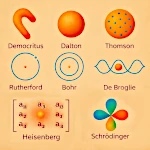 原子的各种形态:从古代直觉到量子力学