

铊(Tl,Z = 81):完美毒药与阴影元素
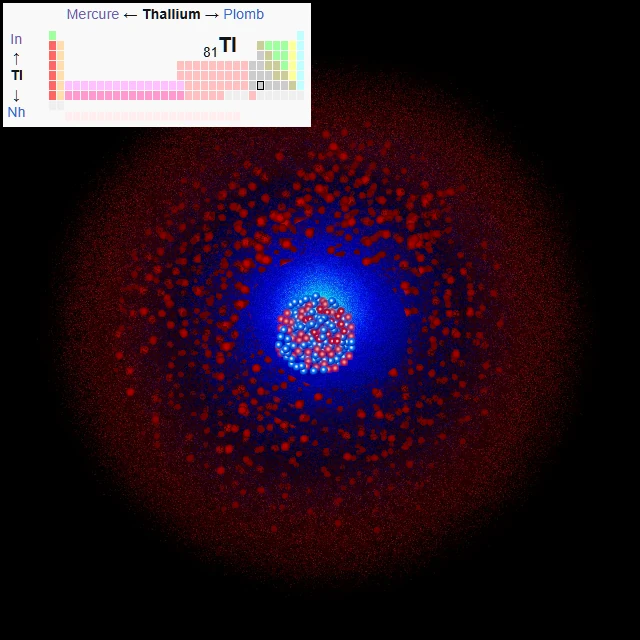
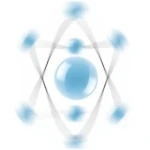
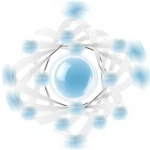
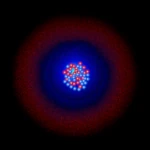
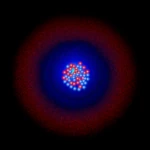
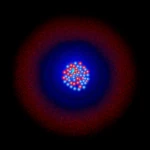
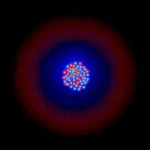
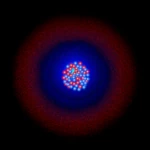
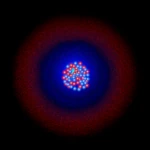
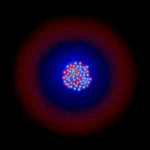
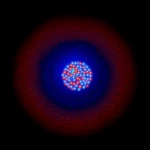
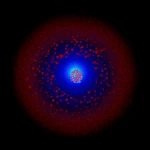
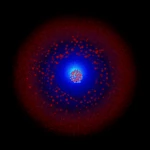
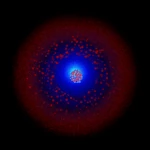
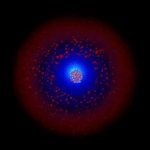
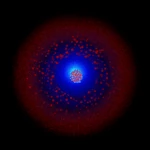
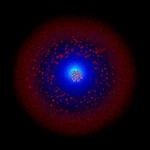
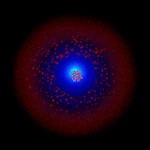
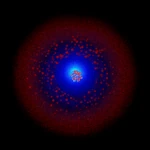
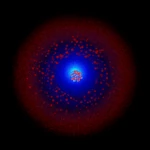
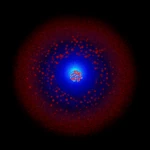
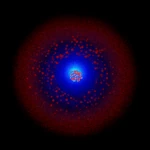
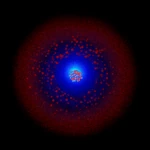
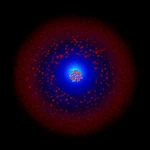
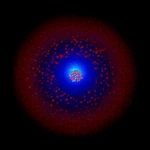
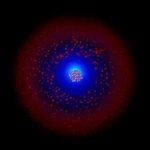
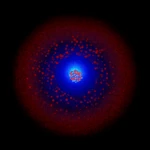
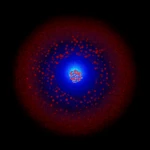
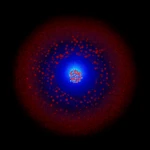
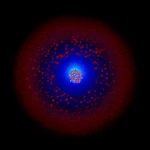
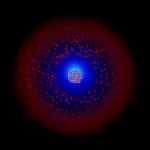
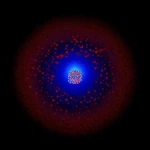
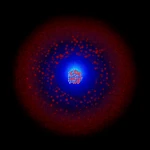
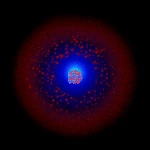
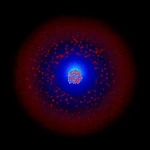
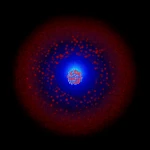
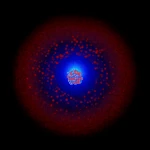
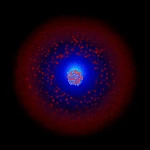
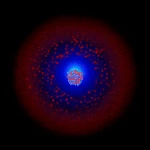
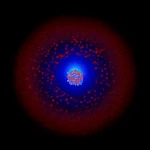
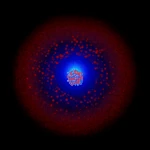
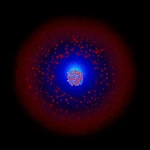
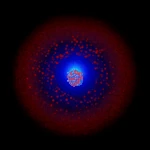
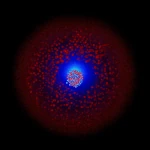
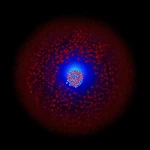
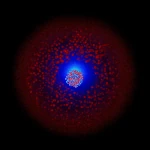
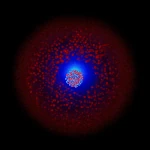
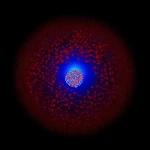
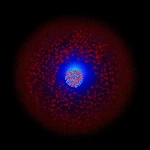
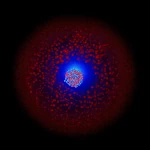
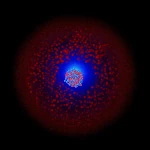
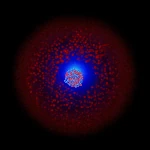
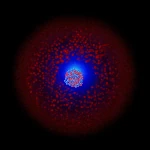
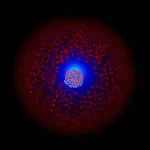
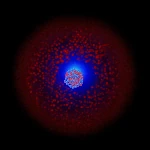
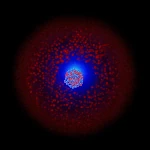
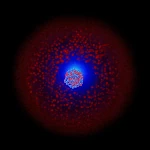
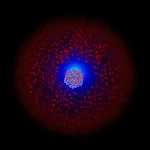
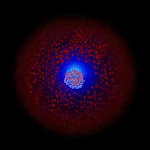
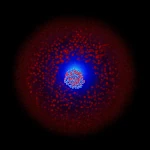
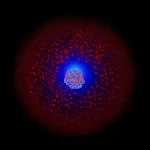
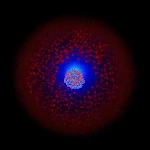
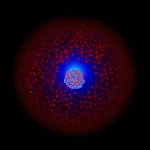
Image description:
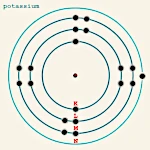
Simplified atomic model of the thallium atom. The main stable isotope is \(^{205}\mathrm{Tl}\)
with its 81 protons, 81 electrons, and 124 neutrons. Background illustrating the characteristic green spectral line and a hazard symbol.
Image source: astronoo.com (新窗口)
为什么是“阴影元素”?
这个绰号反映了铊的三重特性:在工业废料的阴影中通过光谱被发现(其绿色谱线从废弃物中显现);通过取代钾在细胞中的位置,以隐蔽且延迟的毒性效应扮演生物阴影的角色;历史上曾被用作“完美”的犯罪毒药,因其无臭无味且症状延迟的特性,始终在暗处运作。
铊在天体物理学与宇宙化学中的作用
恒星合成:一种稀有重元素
Thallium is a heavy element produced mainly by the 慢速中子俘获过程 (slow neutron capture) in asymptotic giant branch (AGB) stars. It also has a significant contribution from the r过程 (rapid capture) during supernovae and neutron star mergers. Its relatively low atomic number (Z=81) and position in the periodic table make its synthesis relatively efficient, but its cosmic abundance remains modest. It is one of the "heavy" elements whose presence in a star or galaxy reveals successive generations of nucleosynthesis.
宇宙丰度与分布
宇宙中铊的原子丰度约为氢的1.0×10⁻¹²,与金或铂同样稀有。由于谱线微弱,其在恒星光谱中难以探测。在地球上,铊高度分散,几乎从不形成独立矿物。它微量存在于多种金属硫化物(黄铁矿、闪锌矿、方铅矿)中,因此常作为锌、铅、铜冶炼的副产品。
地球化学中的同位素示踪剂
Thallium has two stable isotopes, \(^{203}\mathrm{Tl}\) and \(^{205}\mathrm{Tl}\). Variations in the \(^{205}\mathrm{Tl}/^{203}\mathrm{Tl}\) ratio are studied in isotopic geochemistry. Thallium exhibits strong 不相容的亲石元素 behavior in magmatic processes, concentrating in liquids and rocks of the upper crust. Its isotopes can be fractionated by redox and adsorption processes, providing a new tool for tracing the cycle of elements in oceans, sediments, and hydrothermal systems. Thallium is thus used to study the evolution of ocean oxygenation in geological history.
早期太阳系中的铊
Like many volatile elements, thallium shows a 赤字 in chondritic meteorites and terrestrial planets compared to solar abundance. This is explained by its moderately volatile nature: it did not fully condense in the inner regions of the protoplanetary disk where the rocky planets formed. The study of thallium isotopic ratios in meteorites helps to understand the temperature and pressure conditions during the formation of the solar system.
铊的发现历史
名称的词源与起源
The name "thallium" comes from the Greek θαλλός (thallós), meaning "young shoot" or "green twig". This name was given by its discoverer, Sir William Crookes, in 1861, because of the 明亮的深绿色光谱线 he observed in the emission spectrum of dust from a sulfuric acid production chamber. This spectral line (at 535 nm) is so characteristic that it dominated the spectrum, evoking the color of a new bud.
克鲁克斯和拉米独立发现
铊于1861年由两位科学家独立发现:
- 威廉·克鲁克斯爵士 (1832-1919), an English chemist and physicist, identified it by spectroscopy in the residues of a selenium ore processing plant. He later isolated small amounts of the element.
- 克劳德-奥古斯特·拉米 (1820-1878), a French chemist, isolated the metal almost simultaneously from pyrite and studied its chemical properties more systematically.
随后引发了一场优先权之争,但如今两人都被公认为这一发现的贡献者。
早期研究及金属的分离
克鲁克斯于1862年通过电解铊盐溶液制得了第一块金属铊样品。拉米则制备了足够多的铊,以测定其多项物理性质。铊及其化合物的剧毒性很快显现,这不仅限制了相关研究,还导致多位先驱化学家遭遇致命事故。
存款与产量
There are no primary thallium mines. Thallium is always recovered as a 副产品 of the metallurgy of other metals:
- 锌、铅和铜硫化矿的焙烧: Thallium volatilizes and concentrates in the dust and sludge of furnaces.
- 黄铁矿(FeS₂)的加工处理: An important historical source.
- 某些硒和碲矿石.
The main producing countries are 中国, 俄罗斯, and 哈萨克斯坦. Global annual production is very low, on the order of 10至15吨, reflecting its rarity and the limited (and strictly controlled) demand for this dangerous element. Its price is high due to recovery and purification costs.
铊的结构与基本性质
分类与原子结构
铊(符号Tl,原子序数81)是一种p区贫金属,位于元素周期表第13族,与硼、铝、镓、铟同族。它是该族中最重的稳定元素。其原子含有81个质子,通常有123或124个中子(对应同位素\(^{203}\mathrm{Tl}\)和\(^{205}\mathrm{Tl}\)),以及81个电子,电子构型为[Xe] 4f¹⁴ 5d¹⁰ 6s² 6p¹。因此它具有三个价电子(6s² 6p¹)。
物理性质
铊是一种蓝灰色、柔软、具有延展性的金属,在空气中会迅速失去光泽,呈现灰色调。其质地柔软,甚至可以用指甲划出痕迹。
- 高密度: 11.85 g/cm³ at 20 °C.
- 相对较低的熔点: 304 °C.
- 沸点: 1473 °C.
- 晶体结构: Hexagonal close-packed (HCP) at room temperature.
- 超导性: Becomes superconducting at very low temperature (2.38 K).
- 极度毒性: Most notable property (see below).
变换点
Thallium melts at 304°C (577 K) and boils at 1473 °C (1746 K). Its moderate melting point facilitated its historical metallurgical processing.
化学反应活性
铊是一种相当活泼的金属。它在空气中会失去光泽,形成氧化物(Tl₂O)和氮化物的混合物。它与水(尤其是含有溶解氧的水)缓慢反应,生成氢氧化铊(TlOH),这是一种强且可溶的碱。它易溶于无机酸(硫酸和硝酸),生成相应的Tl(I)或Tl(III)盐。它能与汞形成汞齐。
物理特性概述
Density: 11.85 g/cm³.
Melting point: 577 K (304 °C).
Boiling point: 1746 K (1473 °C).
Crystal structure: Hexagonal close-packed (HCP).
Electronic configuration: [Xe] 4f¹⁴ 5d¹⁰ 6s² 6p¹.
Main oxidation states: +1 and +3.
铊同位素表
| 同位素 / 符号 | 质子(Z) | 中子(N) | 原子质量(u) | 天然丰度 | 半衰期/稳定性 | 衰变/备注 |
|---|---|---|---|---|---|---|
| 铊-203 — \(^{203}\mathrm{Tl}\) | 81 | 122 | 202.972344 u | ≈ 29.52% | 稳定的 | 稳定同位素。用作生产铅-203(用于核医学)的靶材,或作为研究中的示踪剂。 |
| 铊-205 — \(^{205}\mathrm{Tl}\) | 81 | 124 | 204.974427 u | ≈ 70.48% | 稳定 | 主要稳定同位素。地球化学测量的参考同位素。 |
| 铊-204(人造/天然) | 81 | 123 | 203.97386 u | 追踪 | 3.78年 | 放射性β⁻(97%)和电子俘获(3%)。用作厚度计和探测器中的β放射源。环境中存在微量(铀衰变产物)。 |
| 铊-201(人造) | 81 | 120 | 200.9708 u | 0 % | 73.1小时 | Radioactive by electron capture. 主要医用同位素 used in myocardial scintigraphy (cardiac imaging). Emits gamma rays of 135 and 167 keV. Produced by irradiation of thallium-203 in a cyclotron. |
铊的电子排布与电子层
注意::
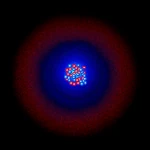
Electron shells:
电子如何围绕原子核组织 (新窗口).
铊有81个电子,分布在六个电子壳层中。其电子排布为 [Xe] 4f¹⁴ 5d¹⁰ 6s² 6p¹,其中6p亚层仅有一个电子。也可写作:K(2) L(8) M(18) N(32) O(18) P(3),或完整形式:1s² 2s² 2p⁶ 3s² 3p⁶ 3d¹⁰ 4s² 4p⁶ 4d¹⁰ 4f¹⁴ 5s² 5p⁶ 5d¹⁰ 6s² 6p¹。
壳的详细结构
K层(n=1): 2 electrons (1s²).
L壳层(n=2): 8 electrons (2s² 2p⁶).
M层(n=3): 18 electrons (3s² 3p⁶ 3d¹⁰).
N层(n=4): 32 electrons (4s² 4p⁶ 4d¹⁰ 4f¹⁴).
O壳层(n=5): 18 electrons (5s² 5p⁶ 5d¹⁰).
P壳层(n=6): 3 electrons (6s² 6p¹).
价电子与氧化态
Thallium has 3 价电子 (6s² 6p¹). It exhibits a fascinating chemical duality with two stable oxidation states: +1 (thallium(I) or thallous) and +3 (thallium(III) or thallic).
- 铊(I) (Tl⁺): The 最稳定的 state in aqueous conditions. Chemically, Tl⁺ closely resembles the potassium ion (K⁺) and, to a lesser extent, the silver(I) ion (Ag⁺). This mimicry is the key to its extreme toxicity (see below). Tl(I) compounds are generally soluble in water (except TlCl, TlBr, TlI, and Tl₂CrO₄).
- 铊(III) (Tl³⁺): A powerful oxidant, unstable in water (reduces to Tl⁺) unless stabilized in complexes (e.g., with chlorides: TlCl₄⁻). Chemically, it resembles aluminum(III) (Al³⁺). Tl₂O₃ is an amphoteric oxide.
This duality (+1 stable) is surprising for a heavy element in group 13 (where Al, Ga, In prefer the +3 state). It is explained by the 惰性电子对效应: the 6s² electron pair is very stable and reluctant to participate in bonding, leaving the chemistry of the 6p¹ electron to predominate.
铊的化学反应活性
与空气和氧气的反应
金属铊在潮湿空气中缓慢失去光泽,形成灰黑色氧化亚铊(Tl₂O)和氢氧化铊(TlOH)的混合物。在空气中加热时,它会燃烧出翠绿色火焰(Tl⁺离子的特征),主要生成Tl₂O,同时表面也会形成一些混合氧化物和氧化铊(Tl₂O₃)。
与水及酸的反应
- 水: Reacts very slowly with cold water, more rapidly with hot water or in the presence of oxygen, to form thallium(I) hydroxide (TlOH), which is a strong and very soluble base: 2Tl + 2H₂O → 2TlOH + H₂.
- 酸类: Dissolves easily in dilute mineral acids (sulfuric acid, nitric acid) to give the corresponding Tl(I) salts and release hydrogen. In concentrated nitric acid, it can be partially oxidized to Tl(III).
与卤素和硫的反应
铊与卤素直接反应生成卤化物。与氯反应时,会形成不溶于水的白色氯化亚铊(TlCl),或在过量氯气中生成三价铊配合物。与硫反应则生成黑色的硫化亚铊(Tl₂S)。
重要化合物
- 硫酸亚铊(I) (Tl₂SO₄): Soluble, colorless, and odorless. It was the compound most commonly used as a pesticide and rodenticide, and unfortunately also as a criminal poison. Extremely toxic.
- 乙酸亚铊(TlCH₃COO): Also soluble and very toxic.
- 氯化亚铊(TlCl): Slightly soluble in water (like AgCl), white precipitate.
- 三氧化二铊(Tl₂O₃): Black powder, oxidizing agent.
- 硫酸铊(III) (Tl₂(SO₄)₃): Salt of a powerful oxidant.
铊的工业与技术应用
- Historically as a 灭鼠剂和杀虫剂 (thallium sulfate), banned in most countries since the 1970s;
- In 特种光学玻璃 with high refractive index (thallium-bromo-iodide glasses) for lenses and prisms;
- As a dopant in 闪烁晶体 (sodium iodide activated with thallium, NaI(Tl)) for radiation detectors (gamma, X-rays) in physics, nuclear medicine, and security;
- In 低熔点合金 (with mercury, tin, lead, bismuth) for fuses, thermal switches, and seals;
- As a 半导体材料 in certain specialized electronic components (infrared photodetectors made of thallium sulfide, Tl₂S);
- In the production of 低熔点玻璃 (for sealing certain materials);
- 作为某些有机化学反应(氧化、聚合)中的催化剂;
- In 核医学: The isotope thallium-201 (\(^{201}\mathrm{Tl}\)) is used for myocardial scintigraphy (cardiac stress test);
- In 高温超导体 (as a component of cuprates, e.g., Tl-Ba-Ca-Cu-O) in research;
- 作为某些电化学装置中的电极(铊汞齐);
- For 矿化作用 in mass spectrometry by ICP-MS (addition of thallium as an internal standard);
- In geochemical research as an 同位素示踪剂.
毒理学与健康:完美的毒药
毒性机制
The extreme toxicity of thallium(I) is mainly explained by its 离子拟态 with potassium (K⁺). Both ions have similar ionic radii (Tl⁺: 164 pm, K⁺: 152 pm). Thallium can thus usurp the place of potassium in many essential biological processes:
- 膜运输: It enters cells via potassium pumps and channels (such as the Na⁺/K⁺ ATPase pump).
- 抑制钾依赖性酶.
- 蛋白质及细胞结构中的替代.
- 与巯基(-SH)结合 of proteins, disrupting their function (like lead or mercury).
- 干扰硫代谢 and disruption of keratin synthesis.
一旦进入细胞,铊无法被有效排出并逐渐积累,造成不可逆的损伤。
铊中毒的症状
中毒可分为急性(单次高剂量)和慢性(反复低剂量)两种。症状通常在摄入后12至48小时内出现。
- 早期阶段(1-5天): Abdominal pain, nausea, vomiting, diarrhea (may be bloody), severe constipation. Flu-like symptoms.
- 神经阶段(从第2-3天开始): Damage to the peripheral nervous system: intense neuropathic pain ("burning feet" syndrome, tingling, "feeling of walking on coals"), muscle weakness, ascending paralysis. Central nervous system damage: confusion, hallucinations, seizures, coma.
- 特征性体征:脱发: Total hair loss (scalp, eyebrows, eyelashes, body hair) appearing about 2-3 weeks after poisoning. This is a very suggestive sign, due to the inhibition of keratin synthesis.
- 其他迹象: Mees' lines (transverse white stripes on the nails), skin rashes, kidney damage, cardiac disorders.
中毒若不治疗常会致命。幸存者中常见神经系统后遗症(神经病变、慢性疼痛)。
中毒的治疗
治疗属于医疗急症,其依据包括:
- 消除毒素: Gastric lavage, activated charcoal (which absorbs thallium well).
- 螯合: Administration of chelating agents that bind to thallium and promote its excretion. The treatment of choice is 普鲁士蓝(亚铁氰化铁). This insoluble compound selectively traps thallium(I) ions in the intestine, forming a non-absorbable complex that is eliminated in the feces. Other chelators such as D-penicillamine may be used.
- 强制利尿并补钾: Paradoxically, administering potassium intravenously can increase urinary excretion of thallium by competing with it for renal reabsorption.
- 支持性治疗: Pain management, respiratory support, hemodialysis in severe cases.
犯罪用途与著名事故
由于硫酸铊具有可溶性、无臭无味且症状发作延迟,它被戏称为“继承粉”,并在20世纪被用于多起刑事投毒案。工业事故(如水泥厂使用受污染矿石)和意外食物中毒(处理过的种子)也曾导致死亡。
环境、污染与监管
污染源
环境中铊的主要来源有:
- 历史的: Thallium pesticides (banned).
- 当前:
- 煤炭燃烧(某些煤炭中含有铊)。
- 有色金属冶金(锌、铅、铜冶炼)。
- 水泥生产(如果原材料受到污染)。
- 不当回收的电子废弃物。
环境循环与生物累积
铊在环境中相对活跃。以Tl⁺形式存在时,它可溶于水并污染地下水。其生物降解性较差。部分植物(如卷心菜)能从土壤中富集铊。虽然食物链中的生物累积性不如汞显著,但通过受污染饮用水和食物对生态系统及人类构成的威胁确实存在。
监管
由于其高毒性,铊受到严格管制:
- 饮用水: The WHO recommends a limit of 0.0001 mg/L (0.1 µg/L). The EU and EPA have similar limits.
- 工作场所空气: Exposure limits (ELVs) are very low (0.1 mg/m³ for soluble Tl, 0.01 mg/m³ for dusts).
- Ban: Most countries have banned the use of thallium in pesticides and rodenticides.
- 公约: Thallium and its compounds are listed in the Rotterdam Convention on the Prior Informed Consent Procedure for Certain Hazardous Chemicals in International Trade.
回收与废物管理
需要严格控制
Any waste containing thallium must be treated as 危险和有毒物质. Industrial processes generating thallium must capture and recycle this element to prevent its dispersion.
处理过程
- 化学沉淀: Thallium(I) can be precipitated as insoluble iodide, chromate, or hydroxide.
- 吸附: On activated carbon, manganese oxides, or specific ion exchange resins.
- 电沉积: Recovery of the metal by electrolysis from solutions.
- 稳定化/固化: Incorporation into cement or glass matrices for final disposal.
前景
研究重点在于:
- The development of 替代材料 to replace thallium in optical glasses and scintillators.
- Improving methods for 检测与监控 of thallium in the environment.
- 污染场地修复 (soils, waters) by physicochemical or biological methods (phytoextraction).
铊仍然是有毒重金属危害的标志性元素,提醒我们在其整个生命周期(从开采到处置)中必须保持持续警惕。
 核聚变所需的能量以及为什么铀是一个极限
  原子的各种形态:从古代直觉到量子力学