

镁(Mg,Z = 12):一种具有卓越性能的轻金属
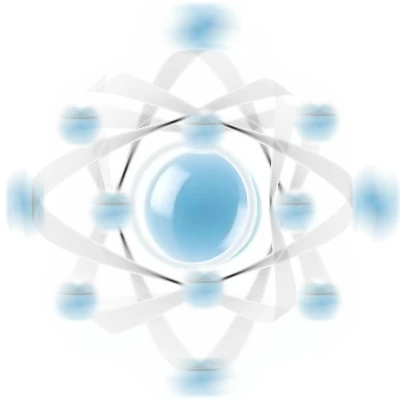
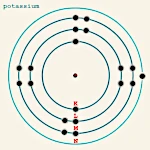
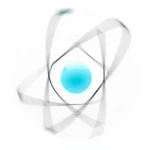
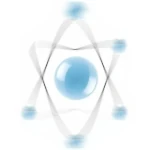
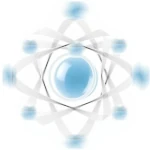
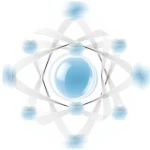
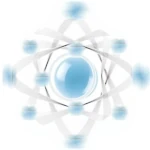
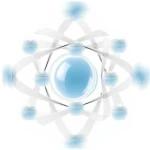
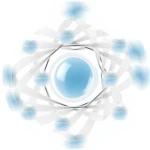
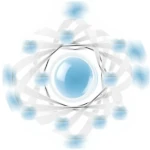
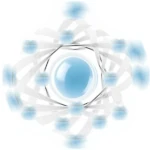
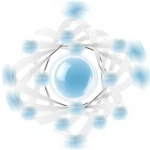
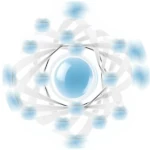
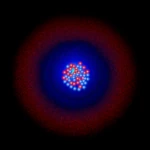
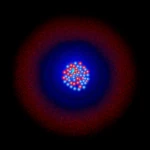
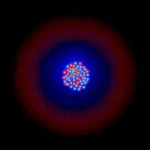
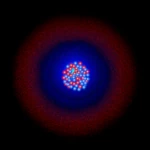
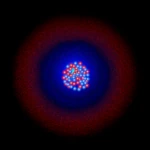
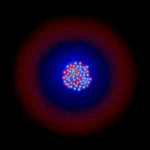
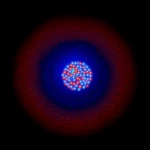
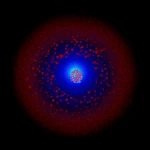
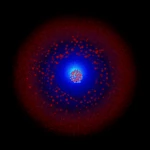
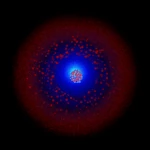
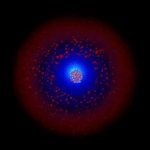
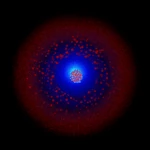
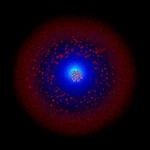
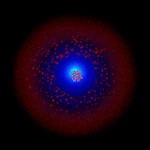
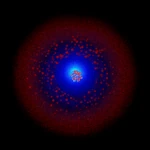
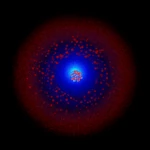
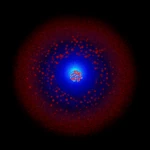
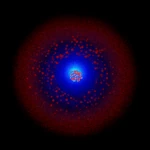
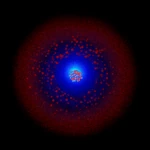
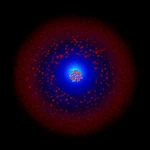
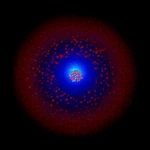
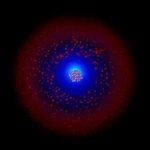
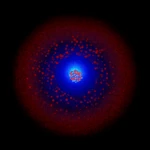
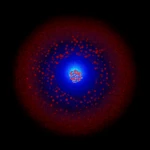
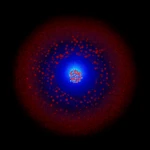
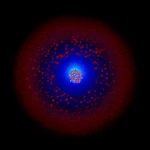
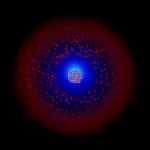
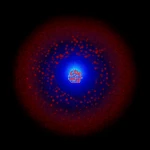
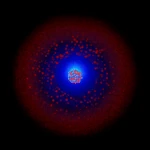
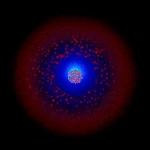
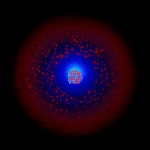
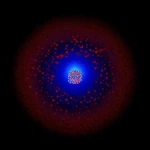
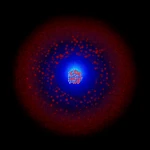
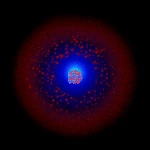
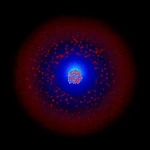
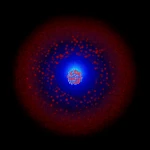
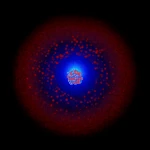
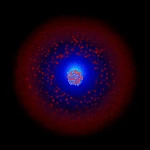
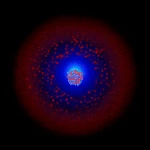
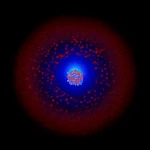
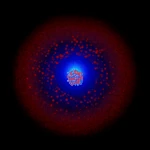
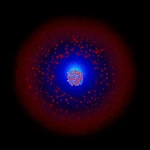
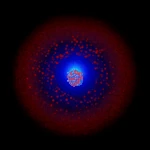
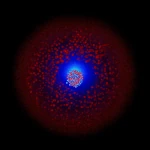
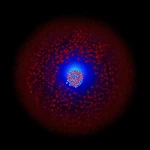
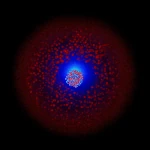
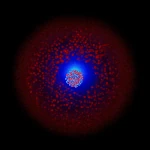
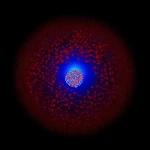
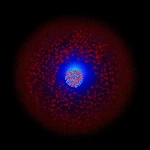
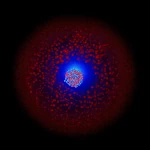
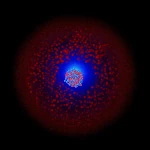
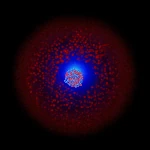
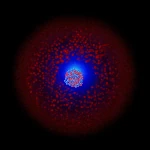
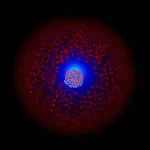
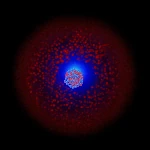
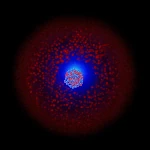
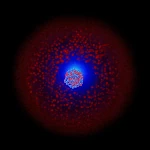
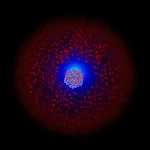
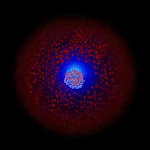
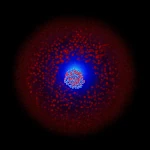
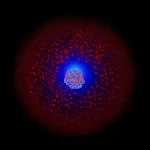
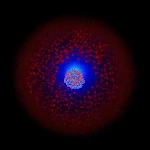
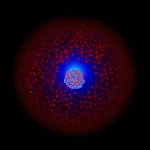
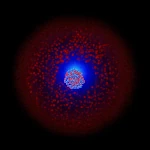
Simplified atomic model of the magnesium atom.
The most abundant isotope is \,^{24}\mathrm{Mg}\, with its 12 protons and 12 neutrons.
Image source: astronoo.com (新窗口)
镁的发现历史
Magnesium takes its name from the Magnesia region in Greece, where a white mineral called magnesia (magnesium oxide) was found in abundance. In 1755, 约瑟夫·布莱克 (1728-1799) recognized magnesia as a substance distinct from lime. In 1808, 汉弗里·戴维 (1778-1829) succeeded in isolating metallic magnesium by electrolyzing a mixture of magnesium oxide and mercury oxide. However, it was 安托万·布西 (1794-1882) who, in 1831, produced pure metallic magnesium by reducing magnesium chloride with potassium.
结构与基本性质
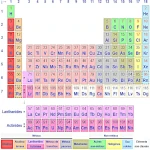
Magnesium (symbol Mg, atomic number 12) is an alkaline earth metal located in the second column of the periodic table.
Its atom has 12 protons, 12 electrons, and usually 12 neutrons in its most abundant isotope (\(\,^{24}\mathrm{Mg}\)).
Other stable isotopes exist: magnesium-25 (\(\,^{25}\mathrm{Mg}\)) and magnesium-26 (\(\,^{26}\mathrm{Mg}\)).
At room temperature, magnesium is a solid, silvery-white, lightweight metal (density ≈ 1.738 g/cm³), malleable, and a good conductor of heat and electricity.
The melting point of magnesium: 923 K (650 °C).
The boiling point: 1,363 K (1,090 °C).
Magnesium oxidizes easily in contact with air, forming a thin protective layer of magnesium oxide.
镁同位素表
| 同位素 / 符号 | 质子(Z) | 中子(N) | 原子质量(u) | 天然丰度 | 半衰期/稳定性 | 衰变/备注 |
|---|---|---|---|---|---|---|
| 镁-24 — \(\,^{24}\mathrm{Mg}\,\) | 12 | 12 | 23.985042 u | ≈ 78.99% | 稳定 | 天然镁中丰度最高的同位素。 |
| 镁-25 — \(\,^{25}\mathrm{Mg}\) | 12 | 13 | 24.985837 u | ≈ 10.00% | 稳定 | 第二种稳定同位素;用于同位素研究。 |
| 镁-26 — \(\,^{26}\mathrm{Mg}\) | 12 | 14 | 25.982593 u | ≈ 11.01% | 稳定 | 第三种稳定同位素;铝-26的衰变产物。 |
| 镁-28 — \(\,^{28}\mathrm{Mg}\) | 12 | 16 | 27.983877 u | 非自然的 | 20.915小时 | 放射性β⁻衰变为铝-28。用于核研究。 |
| 其他同位素——\(\,^{20}\mathrm{Mg}\) 到 \(\,^{40}\mathrm{Mg}\) | 12 | 8 — 28 | — (变量) | 非自然的 | 毫秒到分钟 | 人工产生的不稳定同位素;用于核物理领域。 |
镁的电子排布与电子层
注::
Electron shells: 电子如何围绕原子核组织排列 (新窗口).
镁有12个电子,分布在三个电子壳层中。其完整电子排布为:1s² 2s² 2p⁶ 3s², 或简写为:[Ne] 3s²。该排布也可写作:K(2) L(8) M(2)。
壳层的详细结构
K 壳层 (n=1): contains 2 electrons in the 1s subshell. This inner shell is complete and highly stable.
L壳层(n=2): contains 8 electrons distributed as 2s² 2p⁶. This shell is also complete, forming a noble gas configuration (neon).
M 壳层 (n=3): contains 2 electrons in the 3s subshell. The 3p and 3d orbitals remain empty. These two valence electrons are relatively easily lost during chemical reactions.
价电子与氧化态
The 2 electrons in the outer shell (3s²) are the 价电子 of magnesium. This configuration explains its chemical properties:
By losing its 2 electrons in the 3s subshell, magnesium forms the Mg²⁺ ion (oxidation state +2), its unique and systematic oxidation state in all its compounds.
The Mg²⁺ ion then adopts an electronic configuration identical to that of neon [Ne], a noble gas, which gives this ion great stability.
Magnesium exhibits no other stable oxidation state; only the +2 state is observed in chemistry.
镁的电子构型中,其价电子层在3s亚层含有2个电子,这使其归类为碱土金属(元素周期表第2族)。这种结构赋予其特性:显著的化学反应性(在空气中氧化,遇水反应,尤其在加热条件下)、仅形成氧化态为+2的离子化合物,以及在其晶体结构中形成金属键的能力。镁在空气中会自发形成一层薄薄的氧化镁(MgO)层,可减缓进一步氧化,尽管这种保护作用不如铝有效。其失去价电子的倾向使镁成为一种良好的还原剂。镁在生物学和工业领域都具有重要意义:镁对活细胞功能至关重要(作为酶辅因子、稳定DNA和RNA、植物叶绿素成分)。在工业上,镁用于制造轻质高强度的合金(尤其与铝结合),应用于航空航天和汽车制造;作为冶金中的还原剂;并因其剧烈燃烧产生明亮白光而用于烟花制造。
化学反应活性
Magnesium is a moderately reactive metal. It burns with an intense white flame in the presence of oxygen, producing magnesium oxide (MgO). It reacts slowly with cold water but vigorously with hot water or steam, releasing dihydrogen (H₂). Magnesium forms ionic compounds with non-metals and can act as a 还原剂 in many chemical reactions. Its main compounds include magnesium chloride (MgCl₂), magnesium sulfate (MgSO₄), magnesium carbonate (MgCO₃), and magnesium hydroxide (Mg(OH)₂).
镁的工业与技术应用
- 在航空、汽车和电子(笔记本电脑、智能手机)领域的轻质合金中;
- 作为钢和铸铁冶金中的脱氧剂和脱硫剂;
- 因其燃烧明亮,常用于烟花和求救信号;
- 通过化学还原法生产钛及其他金属;
- 作为牺牲阳极保护金属结构免受腐蚀;
- 在耐高温耐火水泥的生产中;
- 在传统摄影中作为强光源(镁闪光灯);
- 在化学工业中,通过格氏试剂合成有机化合物。
- 作为膳食补充剂和药物(柠檬酸盐、氧化物或硫酸镁);
- 在建筑材料中,尤其是轻质防火板方面;
- 用于制造需要轻便和强度的工具和机械零件。
- 在农业中,用于补充贫镁土壤并促进植物生长;
- 在可充电镁电池中,这种电池是锂离子电池的潜在替代品;
- 作为新兴能源技术中的氢储存材料。
关键的生物学作用
镁是人体中第四丰富的阳离子,在300多种酶促反应中发挥着关键作用。它参与蛋白质合成、神经传导、肌肉收缩、血糖调节以及能量(ATP)的产生。在植物中,镁是叶绿素分子的核心成分,对光合作用至关重要。镁缺乏可能导致疲劳、肌肉痉挛、心脏功能紊乱,而在植物中则表现为叶片黄化(失绿症)。
丰富性与天然来源
镁是地壳中含量第八丰富的元素(约占质量的2.3%),也是海水中溶解量第三丰富的元素。 它主要存在于白云石(CaMg(CO₃)₂)、菱镁矿(MgCO₃)、光卤石(KMgCl₃·6H₂O)和橄榄石((Mg,Fe)₂SiO₄)等矿物中。 工业提取主要通过电解熔融氯化镁或热还原氧化镁来实现。
在天体物理学中的作用
镁是在大质量恒星中通过氧和碳的聚变合成的。 在超新星爆发过程中,镁被扩散到星际介质中,为后续恒星和行星的化学富集做出贡献。 它在宇宙中的相对丰度以及在陨石中的存在,使其成为研究银河系化学演化的重要示踪剂。 天文学家利用镁的光谱线来研究遥远恒星和星系的成分。
注::
Metallic magnesium can be difficult to ignite in bulk form, but once lit, it burns with such intensity that it is almost impossible to extinguish with water.
Indeed, at high temperatures, magnesium reacts with water by extracting oxygen from H₂O molecules, which further fuels the combustion.
This property makes magnesium a formidable material in case of fire, requiring the use of special sands or powders to smother it.
 核聚变所需的能量以及为什么铀是一个极限
 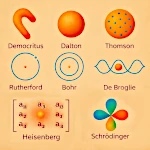 原子的各种形态:从古代直觉到量子力学