

镓(Ga,Z = 31):具有非凡物理特性的金属
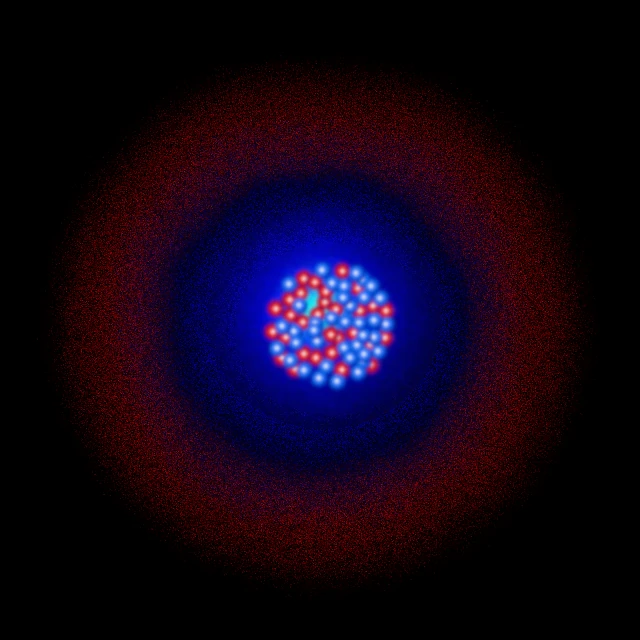
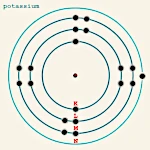
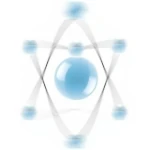
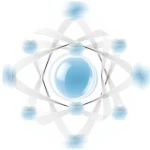
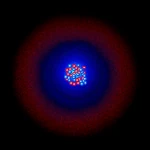
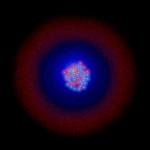
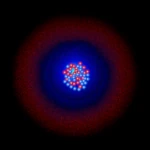
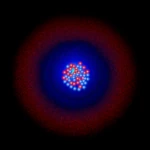
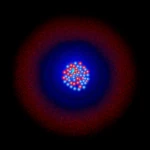
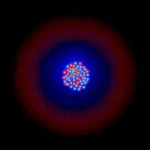
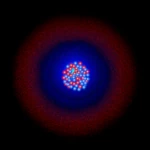
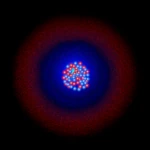
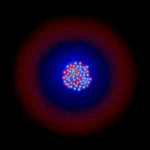
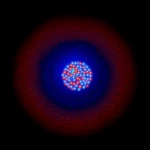
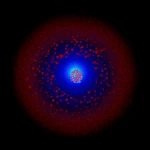
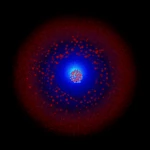
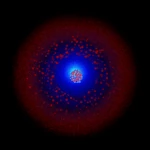
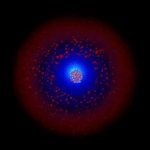
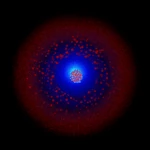
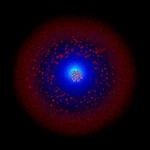
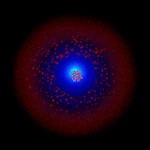
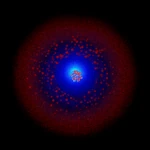
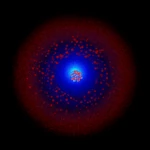
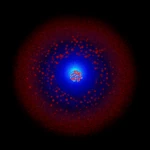
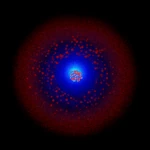
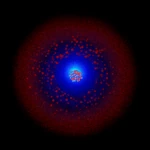
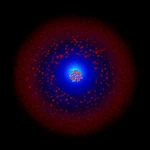
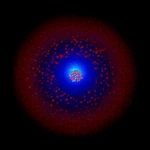
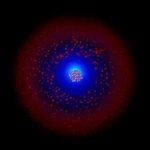
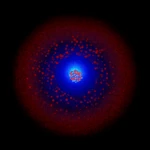
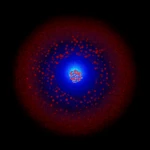
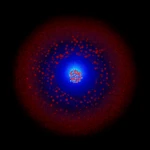
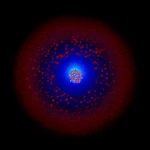
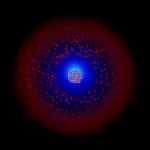
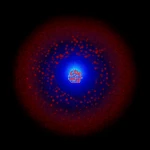
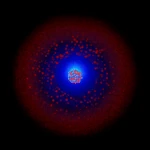
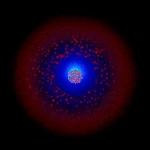
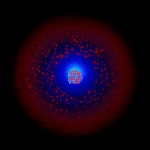
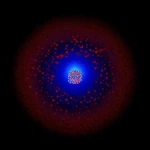
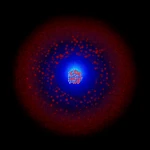
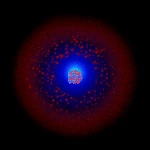
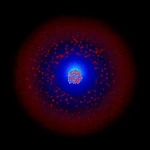
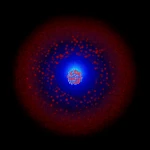
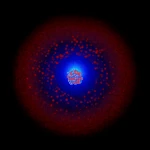
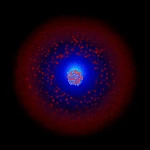
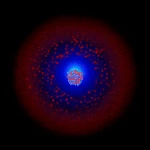
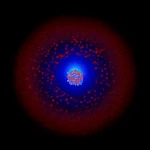
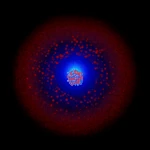
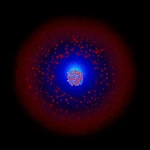
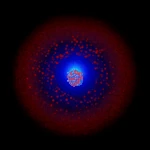
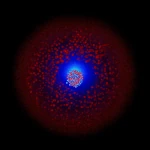
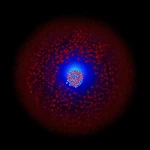
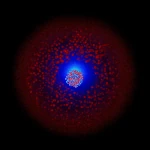
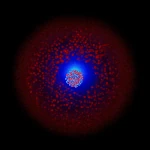
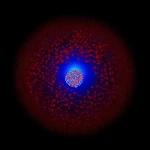
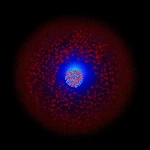
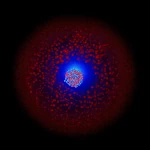
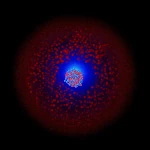
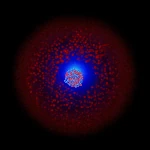
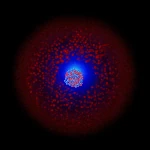
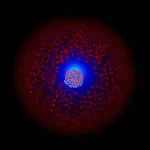
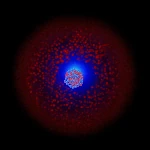
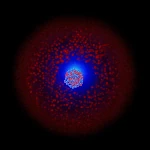
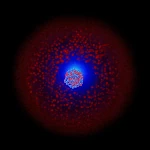
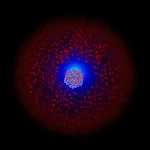
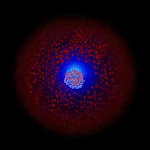
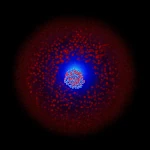
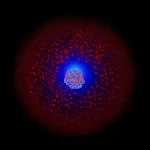
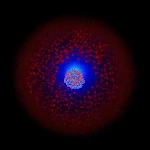
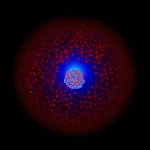
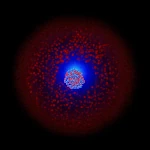
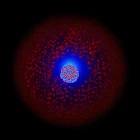
Image description: Simplified atomic model of the gallium atom. The most abundant isotope is \(\,^{69}\mathrm{Ga}\,
with its 31 protons, 31 electrons, and 38 neutrons.
Image source:
astronoo.com (新窗口)
镓的发现历史
Gallium has a remarkable history because its discovery validated one of the most famous predictions of 德米特里·门捷列夫 (1834-1907). In 1871, Mendeleev predicted the existence of an element he named 类铝, located below aluminum in his periodic table. He described its expected properties with astonishing accuracy: a density of about 5.9 g/cm³, a low melting point, and the ability to form oxides and salts.
In 1875, the French chemist 保罗-埃米尔·勒科克·德布瓦博德兰 (1838-1912) discovered gallium by analyzing a zinc blende from the Pyrenees using spectroscopy. He observed two new violet lines in the spectrum and succeeded in isolating a few milligrams of the new metal. The measured properties almost perfectly matched Mendeleev's predictions, providing a brilliant validation of the periodic table.
The name 镓 was chosen by Lecoq de Boisbaudran in reference to the Latin name for France (高卢), although some suggested a bilingual pun with his own name (公鸡 meaning 公鸡 in Latin). Mendeleev himself congratulated Lecoq de Boisbaudran while noting slight differences with his predictions, particularly regarding density.
结构与基本性质
镓(符号Ga,原子序数31)是元素周期表第13族的一种贫金属。其原子含有31个质子,通常有38个中子(对应最丰富的同位素\(\,^{69}\mathrm{Ga}\))和31个电子,电子构型为[Ar] 3d¹⁰ 4s² 4p¹。
Gallium has exceptional physical properties that distinguish it from almost all other metals. At room temperature, it is a solid, silvery-white, shiny metal, relatively dense (density ≈ 5.91 g/cm³ in solid form). Its most remarkable feature is its extraordinarily low melting point: 29.76 °C (302.91 K), meaning it literally melts in the human hand.
镓展现出一种独特而引人注目的特性:极宽的液态温度范围。它在29.76°C至沸点2,400°C(2,673 K)之间保持液态,跨度超过2,370°C。这是所有元素中最大的液态温度范围之一,唯有汞可与之媲美。
固态镓相对较软,可用刀切割。它具有独特斜方晶体结构,仅有一个最近邻原子(距离2.43 Å),这在一定程度上解释了其低熔点。与水类似,镓在凝固时会膨胀(体积增加约3.1%),这是金属中罕见的特性。
液态镓具有“润湿”大多数其他金属(除铁、钨和钽外)的特性, 会渗入其晶界并可能削弱它们。玻璃和瓷器是盛装液态镓的首选材料。
The melting point (liquid state) of gallium: 302.91 K (29.76 °C).
The boiling point (gaseous state) of gallium
: 2,673 K (≈ 2,400 °C).
镓同位素表
| 同位素 / 符号 | 质子(Z) | 中子(N) | 原子质量(u) | 天然丰度 | 半衰期/稳定性 | 衰变/备注 |
|---|---|---|---|---|---|---|
| 镓-69 — \(\,^{69}\mathrm{Ga}\,\) | 31 | 38 | 68.925574 u | ≈ 60.11% | 稳定的 | 天然镓的主要同位素。具有用于核磁共振的核磁矩。 |
| 镓-71 — \(\,^{71}\mathrm{Ga}\,\) | 31 | 40 | 70.924701 u | ≈ 39.89% | 稳定的 | 第二稳定同位素。也用于核磁共振波谱分析。 |
| 镓-67 — \(\,^{67}\mathrm{Ga}\,\) | 31 | 36 | 66.928202 u | 合成 | ≈ 3.26 天 | 放射性(电子俘获)。用于核医学成像感染和肿瘤的伽马发射体。 |
| 镓-68 — \(\,^{68}\mathrm{Ga}\,\) | 31 | 37 | 67.927980 u | 合成 | ≈ 67.7 分钟 | 放射性(β⁺,电子捕获)。正电子发射体,用于PET(正电子发射断层扫描)医学成像。 |
| 镓-72 — \(\,^{72}\mathrm{Ga}\,\) | 31 | 41 | 71.926367 u | 合成 | ≈ 14.1 小时 | 放射性(β⁻)。在核反应堆中产生,用于研究。 |
镓的电子排布与电子壳层
注意::
Electron shells:
电子如何围绕原子核进行组织 (新窗口).
镓有31个电子,分布在四个电子壳层中。其完整电子排布为:1s² 2s² 2p⁶ 3s² 3p⁶ 3d¹⁰ 4s² 4p¹,或简写为:[Ar] 3d¹⁰ 4s² 4p¹。该排布也可写作:K(2) L(8) M(18) N(3)。
壳层的详细结构
K壳层 (n=1): contains 2 electrons in the 1s subshell. This inner shell is complete and very
stable.
L层 (n=2): contains 8 electrons distributed as 2s² 2p⁶. This shell is also complete,
forming a noble gas configuration (neon).
M层(n=3): contains 18 electrons distributed as 3s²
3p⁶ 3d¹⁰. The presence of the complete 3d subshell is characteristic of post-transition elements and significantly
influences the properties of gallium.
N层(n=4): contains 3 electrons distributed as 4s² 4p¹. These three electrons
are the valence electrons of gallium.
价电子与氧化态
The 3 electrons in the outer shell (4s² 4p¹) are the 价电子 of gallium. This configuration explains its chemical properties:
The main oxidation state of gallium is +3, where it loses its three valence electrons to form the Ga³⁺ ion with the stable configuration [Ar] 3d¹⁰. This complete d-subshell configuration is particularly stable.
An oxidation state of +1 also exists, particularly in gallium(I) halides such as GaCl or GaBr, although it is less stable and easily disproportionates: 3Ga⁺ → 2Ga⁰ + Ga³⁺. The +1 state involves the loss of the single 4p¹ electron, leaving the 4s² pair intact (inert pair effect).
+2氧化态已在一些瞬态化合物中被观察到,但它们罕见且不稳定。金属镓(以0价态存在)以其单质形式天然存在。
The presence of the complete 3d¹⁰ subshell just before the valence electrons has a significant effect: it poorly shields the nuclear charge, making the 4s and 4p electrons more strongly bound to the nucleus. This is one of the reasons why the atomic radius of gallium (135 pm) is surprisingly similar to that of aluminum (143 pm) despite an additional electron shell, a phenomenon known as the 镧系收缩 (although in this case, it is due to the 3d series).
化学反应活性
镓在室温下相对不活泼。它会迅速形成一层薄薄的氧化镓(Ga₂O₃)保护层,防止进一步氧化。这层保护膜使镓对大气腐蚀具有良好的抵抗力。
镓在室温下与氧气缓慢反应,但在高温下迅速氧化,生成氧化镓(III):4Ga + 3O₂ → 2Ga₂O₃。这种氧化物是两性的,既能与酸反应也能与碱反应。
镓与大多数非氧化性酸反应生成镓(III)盐并释放氢气:2Ga + 6HCl → 2GaCl₃ + 3H₂。然而,它能抵抗浓硝酸,因为浓硝酸会形成一层保护性氧化膜(钝化)。
与强碱反应时,镓会生成镓酸盐:2Ga + 2OH⁻ + 6H₂O → 2[Ga(OH)₄]⁻ + 3H₂。该反应与铝的反应相似,反映了它们在元素周期表中同属一族的特性。
镓与卤素剧烈反应生成三卤化物:2Ga + 3X₂ → 2GaX₃(其中X = F、Cl、Br、I)。它还能与硫、硒、碲反应形成镓硫属化物。
A remarkable property of liquid gallium is its ability to dissolve many metals, forming amalgams or liquid alloys. It can embrittle certain metals through intergranular penetration, a phenomenon called 液态金属脆化.
镓的工业与技术应用
- 在化合物半导体(砷化镓GaAs、氮化镓GaN)中,用于高频电子学和光电子学;
- 用于制造LED(发光二极管),特别是基于GaN的蓝光和白光LED;
- 在用于光通信和光学读取器的半导体激光器中;
- 用于航空航天领域的高效太阳能电池(GaAs、CIGS)
- 用于移动通信(4G、5G)和雷达的高频晶体管中;
- 用于OLED屏幕和电子显示器(IGZO:铟镓锌氧化物)
- 在核医学中作为放射性示踪剂(⁶⁷Ga用于肿瘤检测,⁶⁸Ga用于PET);
- 在利用其宽液态范围的高温温度计中;
- 用于液态镜面与自适应光学系统(镓-铟-锡合金);
- 用于安全熔断器和冷却系统的低熔点共晶合金;
- 作为半导体薄膜外延生长的衬底;
- 在中微子探测器中(使用⁷¹Ga的GALLEX实验);
- 用于化学合成中有机金属化合物的生产;
- 在牙科合金及某些生物医学应用中;
- 作为硅半导体中的掺杂剂(p型)。
在天体物理学和宇宙学中的作用
镓元素在恒星中通过多种核合成过程生成。它主要形成于II型超新星爆发期间的硅燃烧爆炸阶段,以及渐进巨星分支(AGB)恒星中的慢中子捕获过程(s过程)。
镓的两种稳定同位素(\(\,^{69}\mathrm{Ga}\) 和 \(\,^{71}\mathrm{Ga}\))通过上述机制产生,并在灾变事件中散布到星际介质中。在原始陨石中测得的同位素比值 ⁶⁹Ga/⁷¹Ga 提供了原始太阳系核合成条件的信息。
镓在宇宙中的丰度相对较低,其原子数量约为氢的10⁻⁹倍。这种宇宙稀有性反映了在恒星核合成过程中,该原子质量区域(A ≈ 70)的原子核形成所面临的困难。
镓在中微子物理学中扮演着特殊角色。1991年至1997年间在意大利格兰萨索地下实验室进行的GALLEX(镓实验)使用了30吨金属镓,通过以下反应探测低能太阳中微子:νₑ + ⁷¹Ga → ⁷¹Ge + e⁻。该实验为发现中微子振荡做出了贡献,证实了中微子具有质量。
电离镓(Ga II, Ga III)的光谱线有时会在热恒星及特定恒星天体的光谱中被观测到。对这些谱线的研究有助于理解恒星的化学增丰过程以及星系的化学演化。
注意::
Gallium is present in the Earth's crust at a concentration of about
0.0019% by mass (19 ppm), making it a relatively rare element, comparable in abundance to lead. It does not form
its own ores but is always associated with other elements, mainly in aluminum (bauxite), zinc (blende), and germanium ores.
镓主要作为铝土矿加工生产铝的副产品提取,富集于拜耳液中。另一个重要来源是锌炉粉尘的处理。全球原生镓年产量约为450吨,主要来自中国(约占80%)、德国、哈萨克斯坦和韩国。
随着电子垃圾的增长,镓的回收利用正变得越来越重要。镓可以从旧集成电路、LED和光伏电池中回收,尽管回收过程成本高昂且尚未普及。目前回收率估计不到总产量的1%。
The demand for gallium is growing rapidly (about 10% per year) due to the expansion of the LED market, 5G devices, and electric vehicles. This growth raises questions about long-term supply security, especially since gallium is considered a 关键材料 by the European Union and the United States due to its strategic importance and the geographical concentration of its production.
 核聚变所需的能量以及为什么铀是一个极限
  原子的各种形态:从古代直觉到量子力学