

化学元素周期表
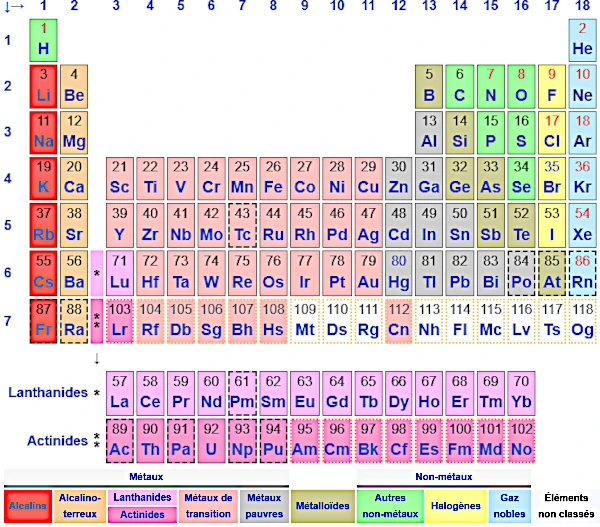
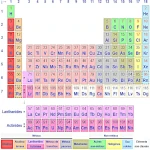
按元素族进行颜色编码的化学元素周期表表示。它有助于预测元素的化学性质、理解周期性趋势(电负性、原子半径等)、促进化学反应研究,并指导新材料的探索。
元素周期表的历史
The 化学元素周期表, one of the most important tools in chemistry, was developed by 德米特里·门捷列夫 (1834-1907) in 1869. Its original version classified the 63 known elements at the time by increasing atomic mass and highlighted the periodicity of their chemical properties. Mendeleev's great innovation was to leave blank spaces for elements unknown at the time, whose properties he predicted with remarkable accuracy.
门捷列夫未知但如今至关重要的10种元素
| 元素 | 符号 | 原子序数 | 发现 | 现代用途 |
|---|---|---|---|---|
| 氦 | He | 2 | 1868年(太阳光谱学) | 气球、核磁共振、焊接 |
| 镓 | Ga | 31 | 1875 | 半导体(电子芯片) |
| 锗 | Ge | 32 | 1886 | 光纤、红外透镜 |
| 镭 | Ra | 88 | 1898年(皮埃尔·居里和玛丽·居里) | 以前在医学(放射治疗)中 |
| 霓虹灯 | Ne | 10 | 1898 | 照明(霓虹灯) |
| 钚 | Pu | 94 | 1940 | 核能(民用和军用) |
| 锝 | Tc | 43 | 1937年(第一个人造元素) | 核医学(扫描仪) |
| 钫 | Fr | 87 | 1939 | 基础研究(非常罕见) |
| 铀 | U | 92 | 1789(但性质未知) | 核电站,军备 |
| 铂金 | Pt | 78 | 已知但未经研究 | 汽车催化剂、珠宝 |
历史评论
Mendeleev had predicted with remarkable accuracy the properties of 镓 (which he called "eka-aluminum"), 锗 ("eka-silicon"), and 钪 ("eka-boron"). These subsequent discoveries validated his periodic table.
结构与组织
现代元素周期表将已知的118种元素(截至目前)按照原子序数(质子数)及其周期性化学性质进行排列。它由以下部分组成:
- 7个时期 (horizontal rows)
- 18个小组 (vertical columns)
- 4个街区 (s, p, d, f) according to the electronic subshell being filled
元素分类
元素被分为三大类:
- 金属 (left and center) - good conductors, malleable
- 类金属 - intermediate properties
- 非金属 (right) - poor conductors, brittle
元素家族
某些族群的化学性质尤为相似:
- 碱金属 (Group 1) - very reactive
- 碱土金属 (Group 2)
- 卤素 (Group 17) - easily form salts
- 稀有气体 (Group 18) - very stable, low reactivity
合成元素
铀之后的元素(原子序数 >92)通常是人工合成的,在实验室中制备。它们往往极不稳定,会通过放射性迅速衰变。
 核聚变所需的能量以及为什么铀是一个极限
 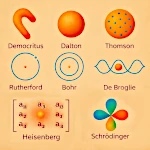 原子的各种形态:从古代直觉到量子力学