

氯(Cl,Z=17):从战争毒剂到公共卫生守护者
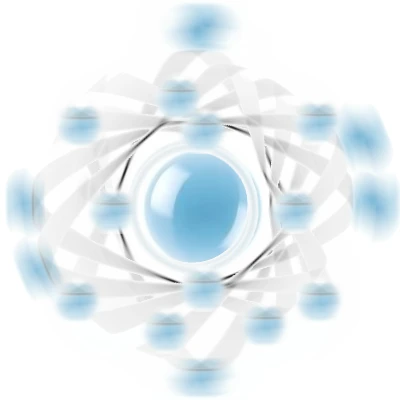
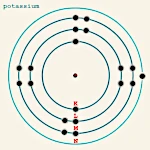
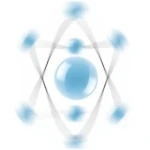
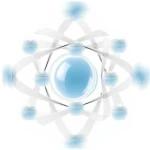
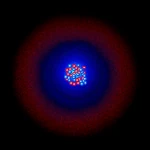
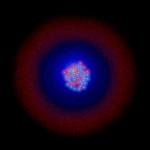
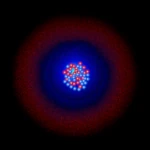
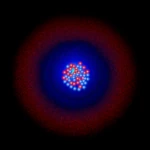
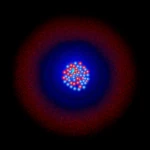
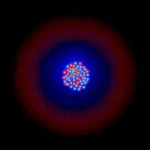
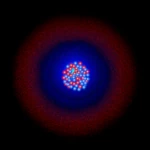
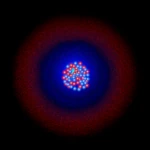
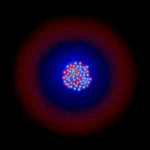
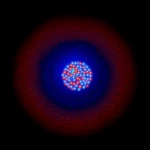
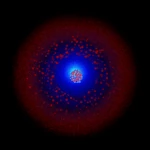
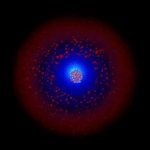
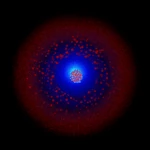
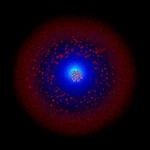
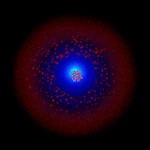
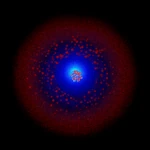
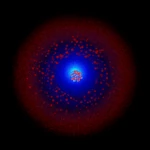
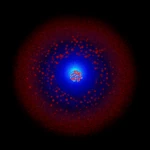
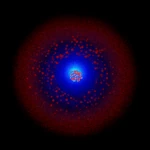
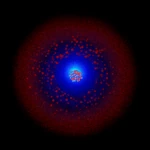
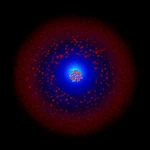
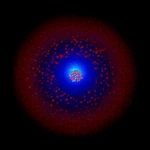
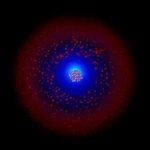
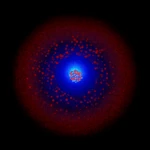
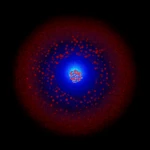
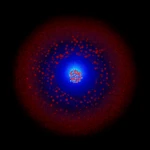
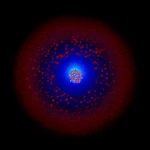
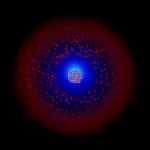
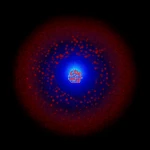
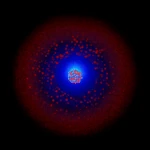
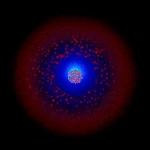
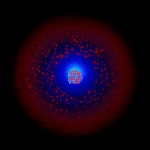
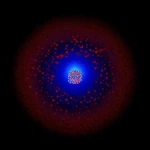
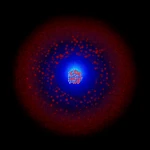
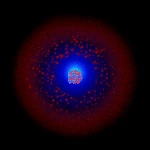
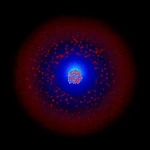
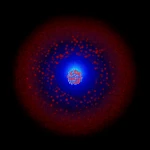
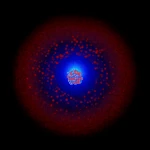
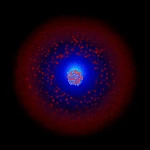
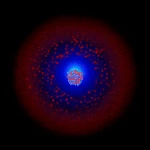
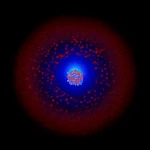
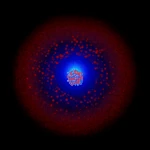
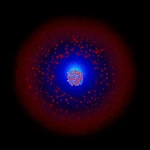
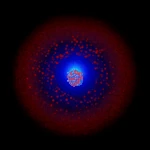
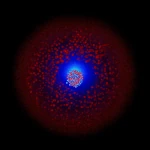
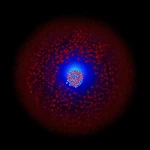
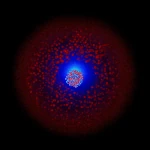
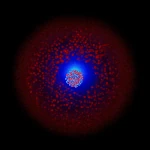
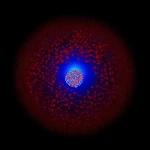
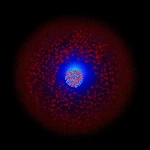
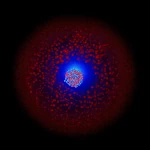
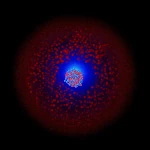
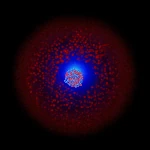
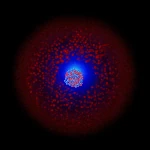
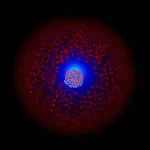
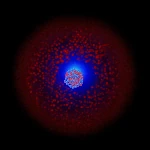
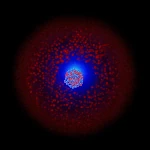
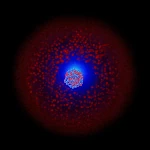
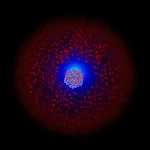
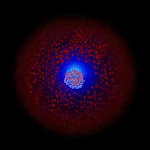
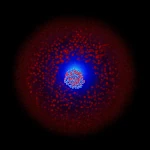
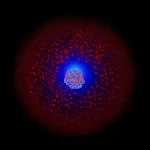
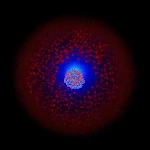
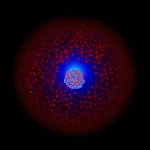
Simplified atomic model of the chlorine atom.
The most abundant isotope is \(\,^{35}\mathrm{Cl}\,\) with its 17 protons and 18 neutrons.
Image source: astronoo.com (新窗口)
氯的发现历史
Chlorine gas was first observed in 1774 by Swedish chemist 卡尔·威廉·舍勒 (1742–1786), who obtained it by reacting hydrochloric acid with manganese dioxide. Scheele noted that this yellow-green gas bleached plants and had a suffocating odor, but he believed it contained oxygen. In 1810, 汉弗里·戴维 (1778–1829) demonstrated that this substance was a distinct chemical element, not an oxygen compound as previously thought. He proposed the name 氯 (from Greek khlôros = pale green) in reference to its characteristic color. In 1811, 约瑟夫·路易·盖-吕萨克 (1778–1850) and 路易-雅克·泰纳尔 (1777–1857) confirmed the elemental nature of chlorine and proposed the French name 氯. The identification of chlorine as an element played a crucial role in abandoning the phlogiston theory.
结构与基本性质
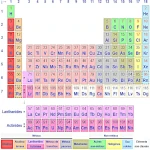
Chlorine (symbol Cl, atomic number 17) is a halogen in group 17 (formerly group VIIA) of the periodic table. Its atom has 17 protons, 17 electrons, and usually 18 neutrons in its most abundant isotope (\(\,^{35}\mathrm{Cl}\)). Two stable isotopes exist: chlorine-35 (\(\,^{35}\mathrm{Cl}\)) and chlorine-37 (\(\,^{37}\mathrm{Cl}\)).
At room temperature, elemental chlorine is a diatomic gas (Cl₂), yellow-green in color, about 2.5 times denser than air (density ≈ 3.214 g/L at 0 °C). It has a sharp, suffocating odor, detectable at very low concentrations. Melting point of dichlorine: 171.6 K (−101.5 °C). Boiling point: 239.11 K (−34.04 °C). Chlorine gas is toxic and corrosive, severely irritating the respiratory tract and mucous membranes. Chlorine is one of the most electronegative and reactive elements in the periodic table.
氯同位素表
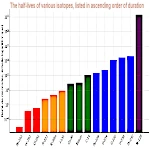
| 同位素 / 符号 | 质子(Z) | 中子(N) | 原子质量(u) | 天然丰度 | 半衰期 / 稳定性 | 衰变 / 备注 |
|---|---|---|---|---|---|---|
| 氯-35 — \(\,^{35}\mathrm{Cl}\,\) | 17 | 18 | 34.968853 u | ≈ 75.76% | 稳定 | 天然氯的主要同位素。 |
| 氯-37 — \(\,^{37}\mathrm{Cl}\) | 17 | 20 | 36.965903 u | ≈ 24.24% | 稳定的 | 第二种稳定同位素;自然丰度显著。 |
| 氯-36 —— \(\,^{36}\mathrm{Cl}\) | 17 | 19 | 35.968307 u | 宇宙成因示踪 | 301,000年 | 放射性β⁻和电子俘获产生³⁶Ar和³⁶S。用于测定古地下水年龄。 |
| 氯-38 — \(\,^{38}\mathrm{Cl}\) | 17 | 21 | 37.968010 u | 非自然的 | 37.24分钟 | 放射性β⁻衰变为氩-38。在实验室中产生。 |
| 其他同位素——\(\,^{28}\mathrm{Cl}\) 到 \(\,^{51}\mathrm{Cl}\) | 17 | 11 — 34 | — (变量) | 非自然的 | 毫秒转秒 | 人工合成的高度不稳定同位素;核物理研究。 |
氯的电子排布与电子层
注意::
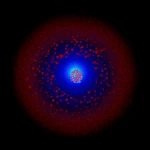
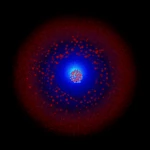
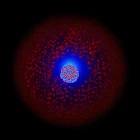
Electron shells: 电子如何围绕原子核组织 (新窗口).
氯原子有17个电子,分布在三个电子层中。其完整电子排布为:1s² 2s² 2p⁶ 3s² 3p⁵,或简写为:[Ne] 3s² 3p⁵。该排布也可写作:K(2) L(8) M(7)。
壳层的详细结构
K壳层 (n=1): contains 2 electrons in the 1s subshell. This inner shell is complete and highly stable.
L壳层 (n=2): contains 8 electrons distributed as 2s² 2p⁶. This shell is also complete, forming a noble gas configuration (neon).
M层(n=3): contains 7 electrons distributed as 3s² 3p⁵. The 3s orbitals are complete, while the 3p orbitals contain only 5 out of 6 possible electrons. Thus, 1 electron is missing to saturate this outer shell.
价电子与氧化态
The 7 electrons in the outer shell (3s² 3p⁵) are the 价电子 of chlorine. This configuration explains its chemical properties:
By gaining 1 electron, chlorine forms the Cl⁻ ion (oxidation state -1), its most stable and common state, thus adopting the configuration of argon [Ar].
By losing or sharing electrons, chlorine can exhibit positive oxidation states: +1, +3, +5, and +7, particularly in its oxygenated compounds (acids and oxyacids).
The oxidation state 0 corresponds to dichlorine Cl₂, its natural molecular form, where two chlorine atoms share a pair of electrons.
氯的电子构型在其价层有7个电子,因此被归类为卤素。这种结构赋予其特性:极高的化学反应活性(仅需获得一个电子即可达到稀有气体的稳定状态)、强电负性(吸引电子的能力)以及强氧化性。氯通过捕获一个电子易形成离子键,生成氯离子Cl⁻,存在于食盐(NaCl)中。它也能通过与其他原子共享电子形成共价键。其高电子亲和力和反应活性使氯成为化学中的重要元素,常用于水消毒、生产多种有机和无机化合物,以及作为漂白剂。
化学反应活性
氯气极其活泼,在自然界中从未以单质形态存在。在常温常压下,除稀有气体、氮气和氧气外,氯气几乎能与所有元素直接反应。氯气能与金属剧烈反应生成氯化物,与氢气反应生成氯化氢(HCl),后者溶于水形成盐酸。氯元素存在多种氧化态:-I价(氯化物,最常见)、+I价(次氯酸盐)、+III价(亚氯酸盐)、+V价(氯酸盐)和+VII价(高氯酸盐)。氯气是强氧化剂,能从许多物质中夺取电子。这种氧化特性被用于消毒和漂白。氯气与水反应生成盐酸和次氯酸(HOCl)的混合物,后者是氯气消毒能力的主要来源。
氯的工业与技术应用
- 用于饮用水和游泳池消毒(挽救了数百万人的生命);
- 在聚氯乙烯(PVC)的生产过程中,这是一种广泛使用的聚合物;
- 制造氯化溶剂(二氯甲烷、氯仿、三氯乙烯);
- 作为造纸和纺织工业中的漂白剂;
- 在许多药物和药品的合成中;
- 用于生产有机氯农药和除草剂;
- 在家用消毒剂(漂白剂)的生产中;
- 用于消毒医疗和手术器械;
- 作为生产许多有机化合物的一种试剂;
- 在冶金学中用于提取某些金属(钛、锆);
- 在电子工业中提纯硅;
- 在丙烯及其他烯烃的生产过程中;
- 作为废水处理中的氧化剂;
- 制造溴化阻燃剂(转化后);
- 在染料和颜料的合成中;
- 用于生产制冷剂(尽管氯氟烃现已被禁止);
- 作为生产碳酸钠(索尔维法)的中间体;
- 在表面处理和金属蚀刻中。
对公共健康的影响
饮用水氯化处理始于20世纪初,是公共卫生领域最重要的进步之一。它已在发达国家根除或显著减少了霍乱、伤寒和痢疾等水传播疾病,其拯救的生命可能超过任何其他公共卫生干预措施。氯通过氧化病原体细胞膜并破坏其代谢过程,从而消灭致病细菌、病毒和原生动物。然而,氯会与水中的有机物反应生成消毒副产物(三卤甲烷、卤乙酸),其中部分物质在高剂量下具有潜在致癌性。水质处理标准致力于在有效消毒与最小化这些副产物之间寻求最佳平衡。
丰裕与生产
氯是地壳中含量第19丰富的元素(约占质量的0.017%),主要以氯化钠(NaCl)形式存在于海洋(约占海水质量的1.9%)和岩盐矿床(石盐)中。其他含氯矿物包括钾盐(KCl)和光卤石(KMgCl₃·6H₂O)。工业氯气主要通过电解氯化钠溶液(盐水)生产,采用三种工艺:隔膜电解槽、汞电解槽(因环境原因正逐步淘汰)和膜电解槽。该电解过程同时产生氯气、氢气和氢氧化钠(烧碱),构成了氯碱工业的基础。全球氯气年产量超过7500万吨。
环境方面的问题与争议
尽管氯具有重要的有益应用,但其某些有机化合物已引发严重的环境问题。曾用作制冷剂和气雾推进剂的氯氟碳化物(CFCs)被确认为平流层臭氧层的破坏者,这促成了1987年《蒙特利尔议定书》的签署,逐步禁止其生产。像滴滴涕(DDT)这样的持久性有机氯农药虽然有效,但会在食物链中积累,已被广泛禁用。氯化二噁英和呋喃作为某些工业过程和焚烧的副产品,是已知毒性最强的物质之一。化学工业已开发出持久性较低的替代品和更清洁的工艺,以尽量减少这些环境影响。
在天体物理学中的角色
氯元素在大质量恒星的核合成过程中产生,主要通过中子捕获和聚变反应。尽管在地球上相对丰富,但从宇宙尺度来看,氯属于次要元素。它已在一些演化恒星、陨石和星际介质中被探测到。宇宙成因的氯-36由宇宙射线与大气中的氩相互作用产生。火星车已在火星上探测到氯化物盐类,表明过去曾存在液态盐水。氯化合物也存在于部分系外行星的大气中,尽管它们对宜居性的意义较为复杂。
注意::
Chlorine gas was used as the first modern chemical weapon during World War I. On April 22, 1915, the German army released 168 tons of chlorine gas near Ypres, Belgium, creating a deadly yellow-green cloud that drifted toward Allied trenches. The gas, denser than air, accumulated in the trenches and caused thousands of deaths by asphyxiation and pulmonary edema. This attack paved the way for chemical warfare, which later used even more toxic agents such as phosgene and mustard gas. Today, the use of chemical weapons is prohibited by the Chemical Weapons Convention (1997), but this dark chapter reminds us that chemical elements can be used for both good and evil, depending on humanity's choices.
 核聚变所需的能量以及为什么铀是一个极限
 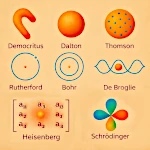 原子的各种形态:从古代直觉到量子力学