

硅(Si,Z = 14):改变世界的元素
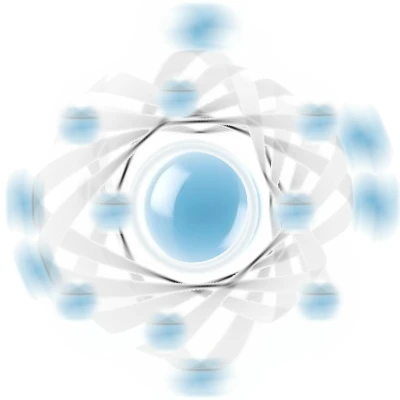
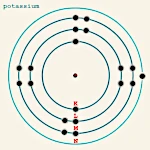
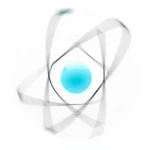
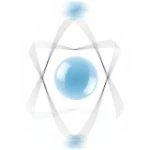
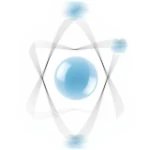
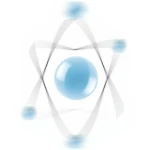
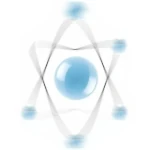
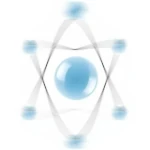
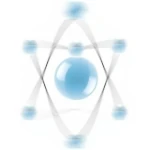
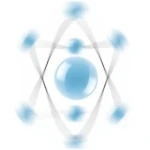
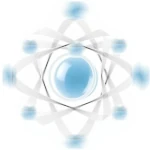
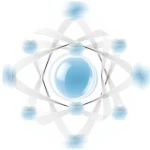
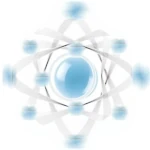
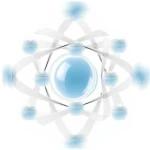
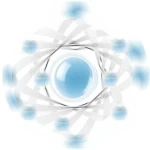
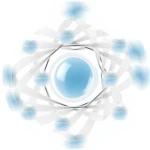
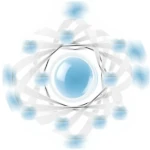
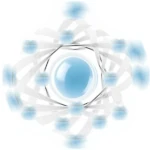
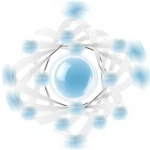
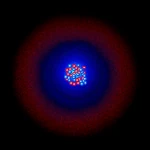
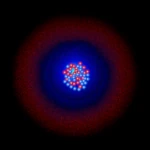
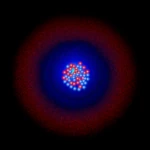
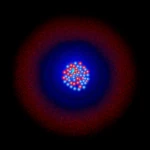
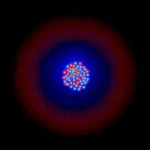
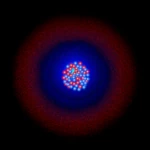
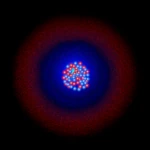
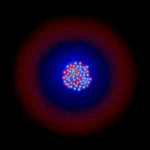
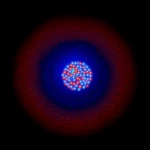
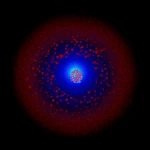
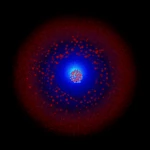
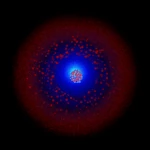
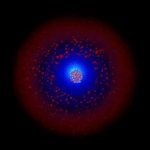
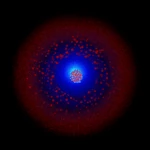
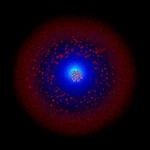
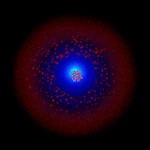
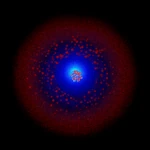
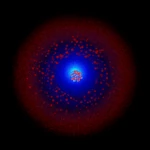
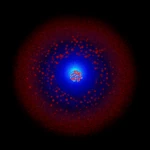
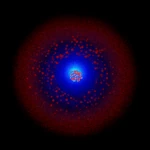
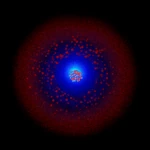
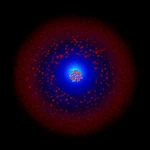
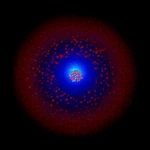
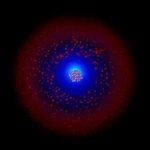
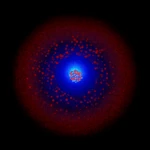
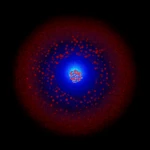
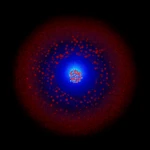
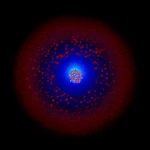
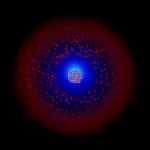
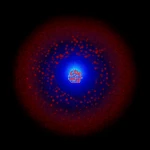
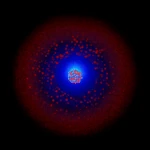
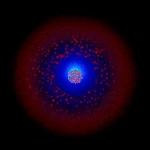
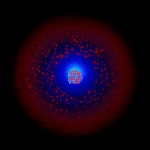
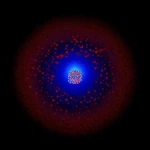
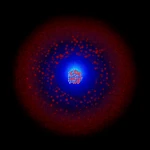
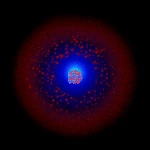
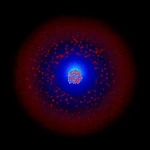
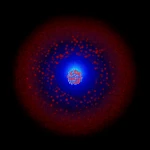
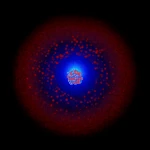
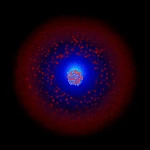
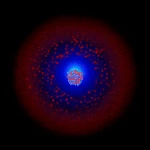
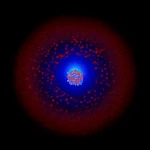
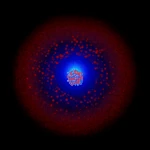
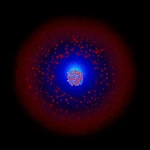
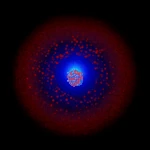
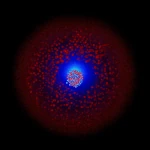
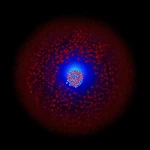
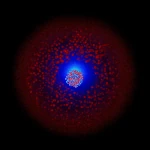
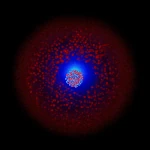
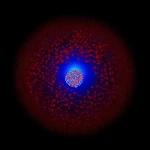
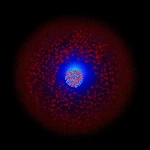
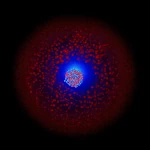
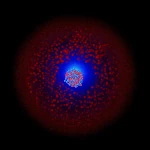
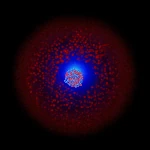
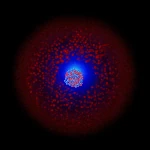
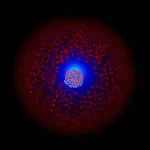
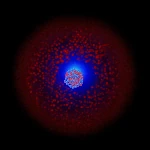
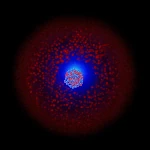
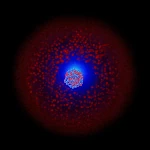
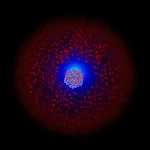
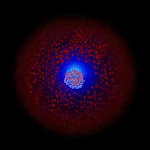
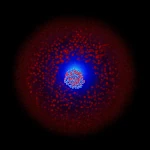
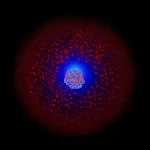
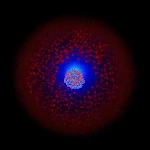
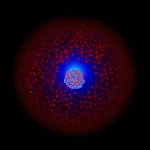
Simplified atomic model of the silicon atom.
The most abundant isotope is \(\,^{28}\mathrm{Si}\,\) with its 14 protons and 14 neutrons.
Image source: astronoo.com (新窗口)
硅的发现历史
Although silicon is ubiquitous in nature as silica (sand, quartz), it was isolated late. In 1787, 安托万·拉瓦锡 (1743-1794) suspected that silica was the oxide of an unknown element. In 1808, 汉弗里·戴维 (1778-1829) unsuccessfully attempted to isolate this element by electrolysis. It was in 1823 that 永斯·雅各布·贝采利乌斯 (1779-1848), a Swedish chemist, succeeded in obtaining amorphous silicon by reducing silicon tetrafluoride (SiF₄) with potassium. He named this element 硅 (from the Latin 燧石 = pebble). In 1854, 亨利·圣克莱尔·德维尔 (1818-1881) produced crystalline silicon, paving the way for the study of its semiconductor properties that would revolutionize the 20th century.
结构与基本性质
Silicon (symbol Si, atomic number 14) is a metalloid belonging to group 14 of the periodic table, in the same column as carbon.
Its atom has 14 protons, 14 electrons, and usually 14 neutrons in its most abundant isotope (\(\,^{28}\mathrm{Si}\)).
Three stable isotopes exist: silicon-28 (\(\,^{28}\mathrm{Si}\)), silicon-29 (\(\,^{29}\mathrm{Si}\)), and silicon-30 (\(\,^{30}\mathrm{Si}\)).
At room temperature, pure crystalline silicon is a hard, brittle solid with a metallic gray-blue color (density ≈ 2.33 g/cm³).
The melting point of silicon: 1,687 K (1,414 °C).
The boiling point: 3,538 K (3,265 °C).
Silicon has a diamond-like crystalline structure and exhibits essential semiconductor properties for modern electronics.
Its electrical conductivity increases with temperature, unlike metals.
硅同位素表
| 同位素 / 符号 | 质子(Z) | 中子(N) | 原子质量(u) | 天然丰度 | 半衰期/稳定性 | 衰变 / 备注 |
|---|---|---|---|---|---|---|
| 硅-28 — \(\,^{28}\mathrm{Si}\,\) | 14 | 14 | 27.976927 u | ≈ 92.23% | 稳定 | 最丰富的同位素;半导体工业的基础。 |
| 硅-29 — \(\,^{29}\mathrm{Si}\) | 14 | 15 | 28.976495 u | ≈ 4.67% | 稳定 | 用于核磁共振和量子计算研究。 |
| 硅-30 — \(\,^{30}\mathrm{Si}\) | 14 | 16 | 29.973770 u | ≈ 3.10% | 稳定的 | 用于重新定义千克的富集同位素(阿伏伽德罗球)。 |
| 硅-32 — \(\,^{32}\mathrm{Si}\) | 14 | 18 | 31.974148 u | 宇宙成因痕量 | 153年 | 放射性β⁻衰变为磷-32。用于测定地下水和极地冰的年龄。 |
| 其他同位素——\(\,^{22}\mathrm{Si}\) 至 \(\,^{44}\mathrm{Si}\) | 14 | 8 — 30 | — (变量) | 非自然的 | 毫秒转小时 | 人工产生的不稳定同位素;核物理研究。 |
硅的电子排布与电子层结构
注意::
Electron shells: 电子如何围绕原子核组织排列 (新窗口).
硅有14个电子,分布在三个电子壳层中。其完整电子排布为:1s² 2s² 2p⁶ 3s² 3p²,或简写为:[Ne] 3s² 3p²。该排布也可写作:K(2) L(8) M(4)。
壳层的详细结构
K壳层(n=1): contains 2 electrons in the 1s subshell. This inner shell is complete and highly stable.
L层(n=2): contains 8 electrons distributed as 2s² 2p⁶. This shell is also complete, forming a noble gas configuration (neon).
M 壳层(n=3): contains 4 electrons distributed as 3s² 3p². The 3s orbitals are complete, while the 3p orbitals contain only 2 out of 6 possible electrons. Thus, 4 electrons are missing to saturate this outer shell.
价电子与氧化态
The 4 electrons in the outer shell (3s² 3p²) are the 价电子 of silicon. This configuration explains its chemical properties:
By losing 4 electrons, silicon forms the Si⁴⁺ ion (oxidation state +4), its most common oxidation state, particularly in silica SiO₂ and silicates.
By gaining 4 electrons, silicon would theoretically form the Si⁴⁻ ion (oxidation state -4), a very rare state observed only in certain metallic silicides.
Silicon can also exhibit intermediate oxidation states such as +2, but +4 remains by far the most stable and widespread.
硅的电子构型在其价层有4个电子,使其位于元素周期表第14族,紧邻碳的下方。这种结构赋予其特性:通过共享价电子形成四个共价键的能力、在电子学中至关重要的半导体特性,以及倾向于形成类似碳的四面体结构,但Si-Si键比C-C键更弱。硅主要形成极性共价键,尤其是与氧结合,生成构成地壳主体的多种硅酸盐。与易形成长链的碳不同,硅更倾向于与氧形成三维结构。其技术重要性巨大:超纯硅是电子和计算机工业(芯片、处理器、太阳能电池板)的基础材料,而其天然化合物(石英、沙)则用于制造玻璃、水泥和陶瓷。硅是地壳中含量第二丰富的元素,仅次于氧。
化学反应活性
纯硅在室温下相对不活泼,因其表面会形成一层氧化硅(SiO₂)。在高温下,它会与氧气、卤素及某些金属发生反应。硅不与大多数酸反应(氢氟酸除外,它能溶解二氧化硅),但可溶于强碱,生成硅酸盐。硅主要以+IV氧化态形成化合物,包括二氧化硅(SiO₂)、硅酸盐、硅烷(碳氢化合物的硅类似物)以及硅酮(硅的有机聚合物)。硅能形成Si-Si、Si-O、Si-C和Si-H键,从而衍生出极为丰富的有机硅化学。
硅的工业与技术应用
- 在电子芯片、微处理器和集成电路的制造中;
- 生产光伏电池和太阳能板;
- 在晶体管、二极管及其他半导体元件中;
- 作为LCD和LED屏幕的基础材料;
- 在冶金中用于脱氧钢和制造合金(硅铁);
- 在玻璃和陶瓷的生产中(二氧化硅作为主要成分);
- 制造硅酮(用于医药、化妆品和密封剂的聚合物)。
- 作为建筑材料(砖块、含硅酸盐的混凝土);
- 在电信光纤中;
- 生产碳化硅(SiC),一种磨料和耐火材料;
- 在粒子探测器和核物理传感器中;
- 作为包装中的干燥剂(硅胶);
- 在精细化学中用于特定的有机合成;
- 下一代锂离子电池(硅负极)中;
- 制造MEMS(微机电系统)和纳米技术;
- 作为量子计算的材料(硅基量子比特);
- 在生物相容性医疗植入物中;
- 用于生产防护涂料和硅基油漆。
硅与数字革命
硅是20世纪和21世纪电子与数字革命的基础元素。其精确掺杂(可控添加杂质)的能力使其电导率可被调节,从而制造出晶体管和集成电路。硅谷正是得名于这种材料——它遵循摩尔定律,推动了电子元件的逐步微型化。现代微处理器可包含数十亿个蚀刻在超纯硅(纯度达99.9999999%)上的晶体管。硅成就了计算机、智能手机、互联网以及所有塑造当代世界的信息技术。
丰裕与开采
硅是地壳中含量第二丰富的元素(约占质量的27.7%),仅次于氧。自然界中从未发现其纯态存在,总是以化合形式存在,主要作为二氧化硅(SiO₂)存在于沙子、石英和硅酸盐岩石中。硅酸盐构成了形成陆地岩石的大部分矿物(长石、云母、粘土)。冶金级硅是通过在电弧炉中用碳还原二氧化硅生产的。对于电子行业,需要超高纯度的硅,这需要通过复杂的提纯和晶体生长工艺(直拉法)获得。
在天体物理学和行星地质学中的作用
硅元素在巨型恒星内部氧和碳聚变过程中,于深层区域合成。 在II型超新星爆发期间,硅被抛射至星际介质中,为后续恒星及行星系统的化学演化提供物质基础。 光谱分析显示,众多恒星与星云中均存在硅元素。 在太阳系内,硅是类地行星(水星、金星、地球、火星)及石质小行星的主要组成成分。 地球上,硅以硅酸盐形式构成地幔的主要元素,对板块构造与地球动力学过程具有关键作用。
注意::
The ultra-high purity silicon required for electronics is one of the purest materials ever produced by humanity.
To manufacture electronic chips, silicon must reach a purity of 99.9999999% (nine nines after the decimal), meaning it contains only one foreign atom per billion silicon atoms.
This extraordinary level of purity is achieved through successive chemical purification processes, notably the distillation of trichlorosilane and the growth of single crystals by the Czochralski method, where a perfect crystal is slowly pulled from a bath of molten silicon.
 核聚变所需的能量以及为什么铀是一个极限
 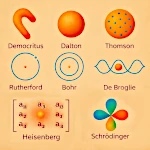 原子的各种形态:从古代直觉到量子力学