

钒(V,原子序数23):一种多面性的战略金属
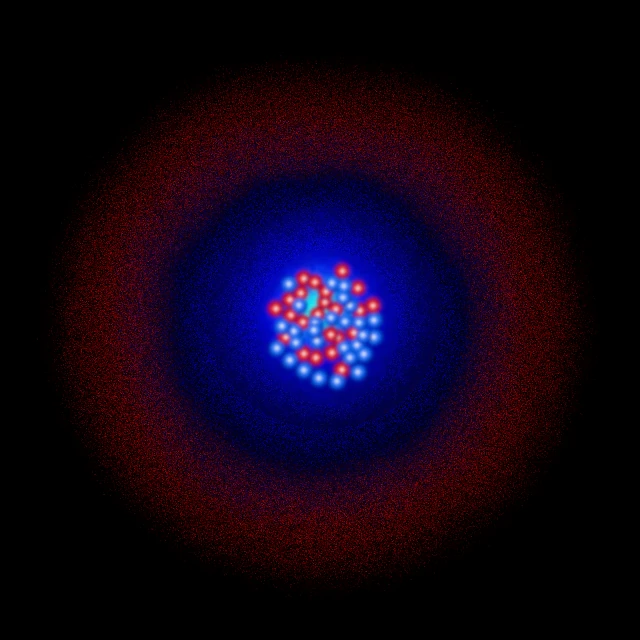
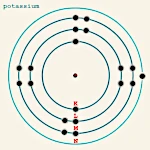
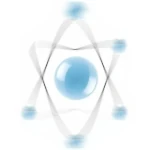
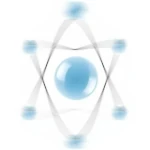
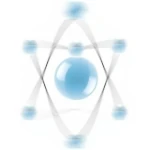
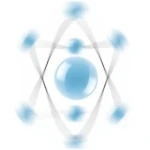
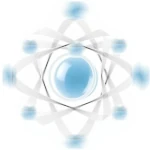
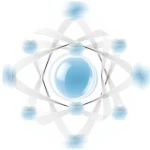
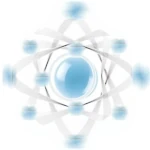
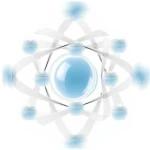
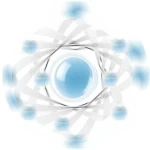
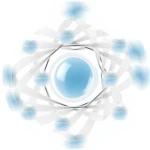
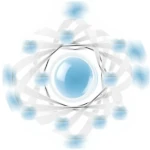
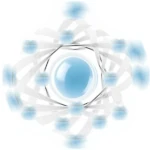
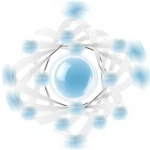
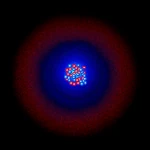
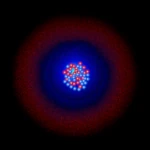
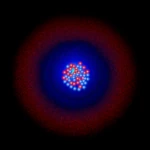
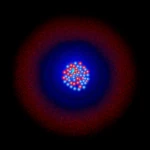
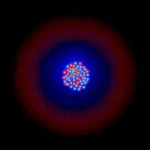
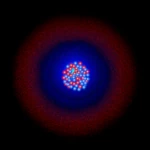
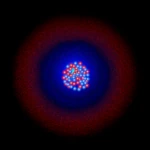
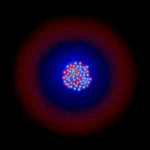
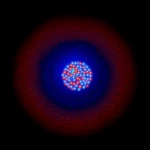
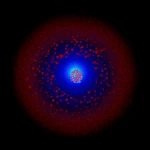
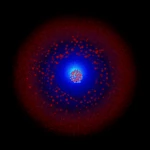
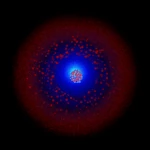
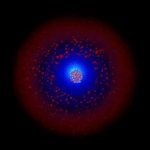
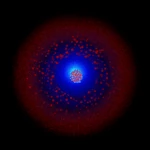
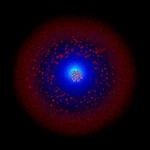
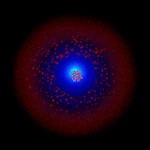
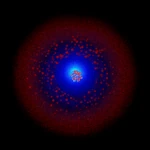
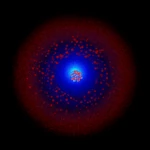
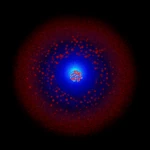
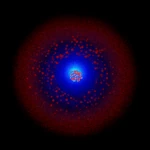
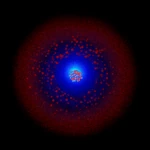
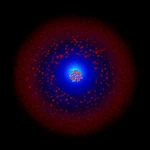
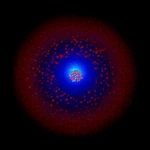
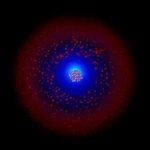
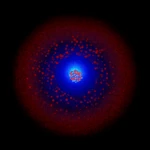
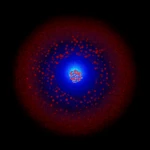
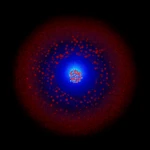
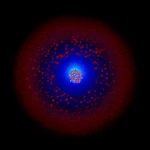
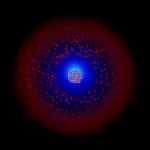
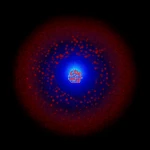
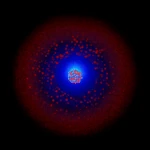
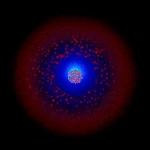
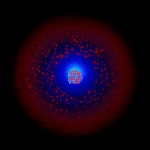
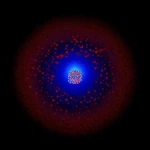
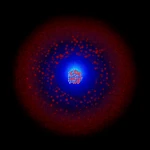
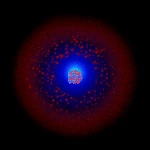
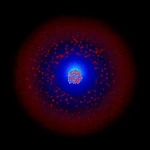
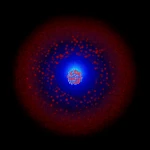
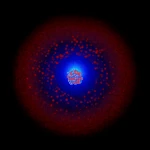
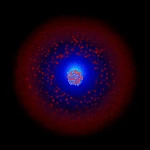
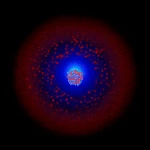
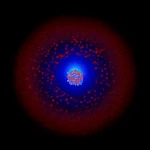
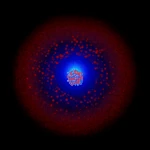
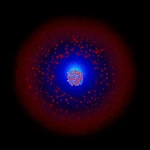
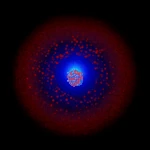
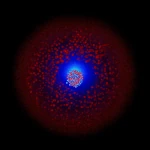
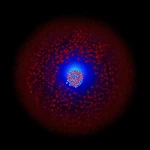
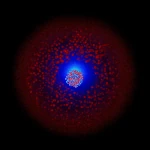
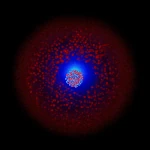
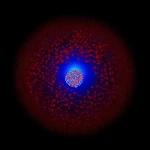
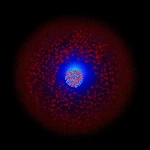
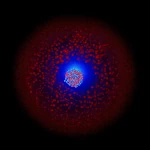
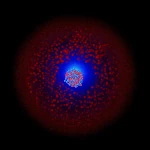
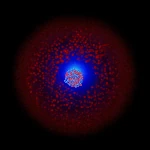
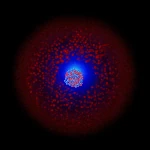
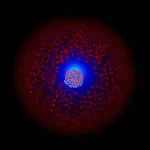
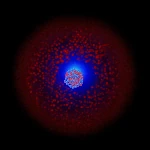
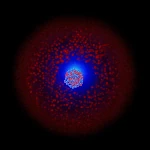
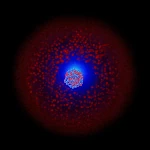
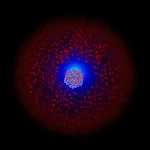
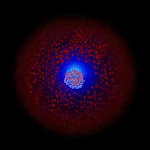
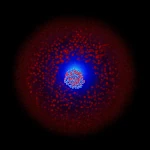
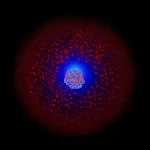
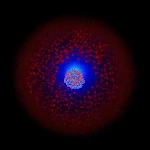
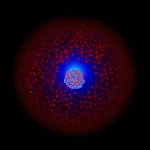
Simplified atomic model of the vanadium atom.
The most abundant isotope is \(\,^{51}\mathrm{V}\,\) with its 23 protons, 23 electrons, and 28 neutrons.
Image source: astronoo.com (新窗口)
钒的发现历史
Vanadium has a turbulent history marked by several successive discoveries. In 1801, the Mexican mineralogist 安德烈斯·曼努埃尔·德尔·里奥 (1764–1849) discovered a new element in a lead ore from Mexico and named it 赤莲, referring to the red colors of its salts. However, mistakenly convinced by other chemists that it was merely impure chromium, del Río abandoned his discovery. It was not until 1830 that the Swedish chemist 尼尔斯·加布里埃尔·塞夫斯特伦 (1787–1845) independently rediscovered this element in a Swedish iron ore and named it 钒, in honor of Vanadis, the goddess of beauty in Norse mythology, due to the variety and beauty of the colors of its compounds. In the same year, 弗里德里希·维勒 (1800–1882) confirmed that del Río's erythronium was indeed vanadium. Pure metallic vanadium was not isolated until 1867 by 亨利·恩菲尔德·罗斯科 (1833–1915) through the reduction of vanadium chloride with hydrogen.
结构与基本性质
Vanadium (symbol V, atomic number 23) is a transition metal in group 5 of the periodic table.
Its atom has 23 protons, usually 28 neutrons (for the most abundant isotope \(\,^{51}\mathrm{V}\)), and 23 electrons with the electronic configuration [Ar] 3d³ 4s².
At room temperature, vanadium is a silvery-gray solid metal with a bright luster, moderately dense (density ≈ 6.11 g/cm³).
It has excellent mechanical strength and remarkable hardness. Pure vanadium resists corrosion well due to the formation of a protective oxide layer on its surface.
Melting point of vanadium (liquid state): 2,183 K (1,910 °C).
Boiling point of vanadium (gaseous state): 3,680 K (3,407 °C).
钒同位素表
| 同位素 / 符号 | 质子 (Z) | 中子(N) | 原子质量(u) | 天然丰度 | 半衰期/稳定性 | 衰变 / 备注 |
|---|---|---|---|---|---|---|
| 钒-50 — \(\,^{50}\mathrm{V}\,\) | 23 | 27 | 49.947159 u | ≈ 0.250% | ≈ 1.4 × 10¹⁷ 年 | 具有极长半衰期的放射性,通过β⁺衰变转化为\(\,^{50}\mathrm{Ti}\),或通过β⁻衰变转化为\(\,^{50}\mathrm{Cr}\)。被视为准稳定态。 |
| 钒-51 — \(\,^{51}\mathrm{V}\,\) | 23 | 28 | 50.943960 u | ≈ 99.750% | 稳定的 | 钒的主要同位素;具有用于核磁共振的核磁矩。 |
| 钒-48 — \(\,^{48}\mathrm{V}\,\) | 23 | 25 | 47.952254 u | 合成 | ≈ 15.97 天 | 放射性,电子捕获生成\(\,^{48}\mathrm{Ti}\)。用于医学研究和成像。 |
| 钒-49 — \(\,^{49}\mathrm{V}\,\) | 23 | 26 | 48.948516 u | 合成 | 约330天 | 放射性,电子捕获生成\(\,^{49}\mathrm{Ti}\)。在材料科学中用作示踪剂。 |
钒的电子构型与电子层
注意::
Electron shells: 电子如何围绕原子核组织 (新窗口).
钒有23个电子分布在四个电子壳层中。其完整电子排布为:1s² 2s² 2p⁶ 3s² 3p⁶ 3d³ 4s², 或简写为:[Ar] 3d³ 4s²。该排布也可写作:K(2) L(8) M(11) N(2)。
壳层的详细结构
K层(n=1): contains 2 electrons in the 1s subshell. This inner shell is complete and very stable.
L壳层(n=2): contains 8 electrons distributed as 2s² 2p⁶. This shell is also complete, forming a noble gas configuration (neon).
M壳层 (n=3): contains 11 electrons distributed as 3s² 3p⁶ 3d³. The 3s and 3p orbitals are complete, while the 3d orbitals contain only 3 out of 10 possible electrons.
N壳层(n=4): contains 2 electrons in the 4s subshell. These electrons are the first to be involved in chemical bonding.
价电子与氧化态
The 5 electrons in the outer shells (3d³ 4s²) are the 价电子 of vanadium. This configuration explains its particularly rich chemistry:
By losing the 2 4s electrons, vanadium forms the V²⁺ ion (oxidation state +2), producing purple compounds.
By losing the 2 4s electrons and 1 3d electron, it forms the V³⁺ ion (oxidation state +3), producing green solutions.
By losing 4 electrons, it forms the V⁴⁺ ion (oxidation state +4), producing blue compounds.
By losing all its valence electrons (4s² 3d³), it forms the V⁵⁺ ion (oxidation state +5), the most stable state, producing yellow compounds.
钒的电子构型具有部分填充的3d轨道,使其具备过渡金属的特征性质:能形成多种颜色的化合物、具有显著的催化活性,并可以多种氧化态形式存在。这种化学多样性使钒在催化和电化学应用领域尤为引人关注。
化学反应活性
纯钒在室温下相对稳定,因其表面有一层保护性氧化膜。在高温下,它会与氧、氮、碳、硫和卤素发生反应。 钒具有极其丰富的化学性质,存在五种稳定的氧化态(从+2到+5),每种氧化态在水溶液中都呈现独特的颜色。 五氧化二钒(V₂O₅)是最重要的工业化合物,主要用作生产硫酸的催化剂。 钒耐海水、盐溶液和稀酸腐蚀,但可被氢氟酸、浓硝酸和热碱液侵蚀。
钒的工业与技术应用
- 作为高强度钢中的合金元素,用于提高硬度、韧性和抗疲劳性(占全球产量的85%);
- 在全钒氧化还原液流电池(VRB)用于大规模可再生能源储能中;
- 对于需要在高温下具有优异耐磨性的切削工具和高速钢(HSS);
- 作为接触法生产硫酸中的催化剂(V₂O₅);
- 在航空航天工业用的钛钒合金中;
- 用于抗震结构中的弹簧和钢筋;
- 在燃气轮机和喷气发动机用的高温合金中;
- 作为不锈钢中的添加剂,用于提高机械强度;
- 用于石油化工行业和聚合物合成的催化剂;
- 在陶瓷颜料中用于生产蓝色、绿色和黄色;
- 用于钒镓合金(V₃Ga)的超导磁体;
- 作为铝合金添加剂,用于改善其机械性能;
- 在工具和机械零件的保护涂层(氮化钒和碳化钒)中;
- 用于太阳能发电厂中的热能储存装置;
- 作为医学和环境研究中的生物示踪剂。
在天体物理学和宇宙学中的作用
钒主要在大质量恒星的核聚变晚期阶段产生,尤其是在超新星爆发前的硅燃烧过程中合成。 它也会通过快速中子捕获过程(r-过程)在超新星爆发期间生成。 恒星和陨石中钒的丰度为研究银河系核合成历史及宇宙化学演化提供了宝贵信息。
钒(V I, V II)的光谱线可在恒星光谱中观测到,从而帮助测定恒星的化学成分、温度及表面重力。在类太阳恒星中,钒在其演化过程中逐渐生成。研究古老恒星中钒/铁的比例,有助于天体物理学家理解银河系早期化学增丰过程,并重建历代恒星演化的历史。钒还可用于表征褐矮星及气态巨系外行星——在高温大气中,钒能以气态形式存在。
注意::
Vanadium is relatively abundant in the Earth's crust (about 0.019% by mass), ranking it as the 第20位最丰富的元素.
It never exists in its native state but is found combined in more than 65 different minerals, including vanadinite [Pb₅(VO₄)₃Cl], patronite (VS₄), and carnotite [K₂(UO₂)₂(VO₄)₂·3H₂O].
The main industrial source of vanadium comes from titaniferous magnetite slag and petroleum refining residues.
China, Russia, and South Africa are the world's leading producers.
Vanadium is considered a strategic metal due to its growing importance in energy storage technologies and high-performance steel metallurgy.
 核聚变所需的能量以及为什么铀是一个极限
 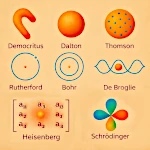 原子的各种形态:从古代直觉到量子力学