

氖(Ne,Z=10):城市夜晚的照明者
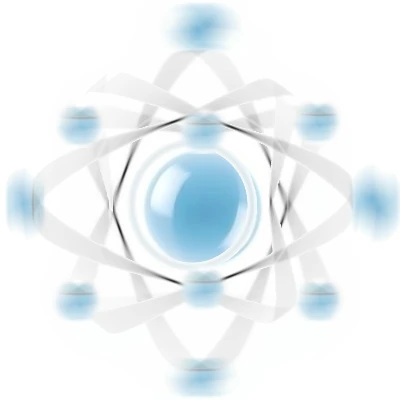
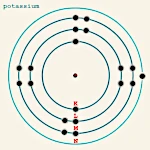
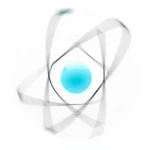
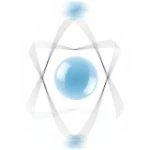
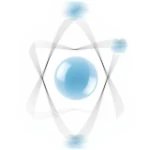
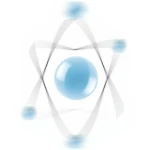
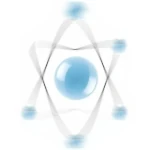
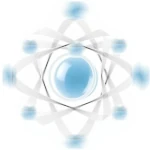
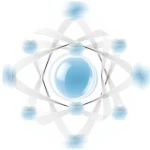
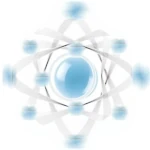
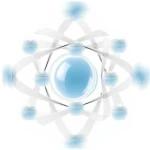
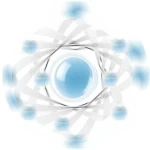
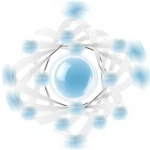
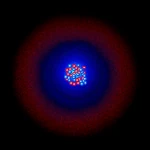
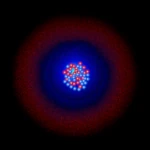
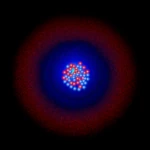
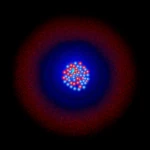
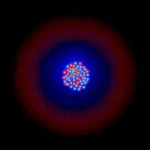
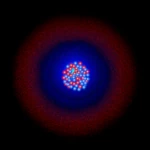
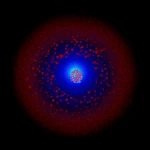
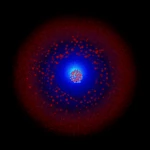
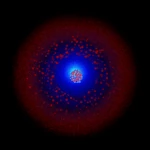
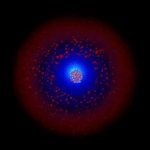
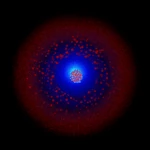
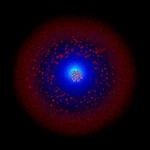
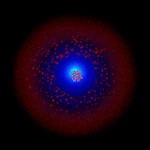
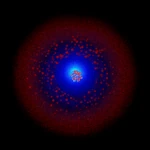
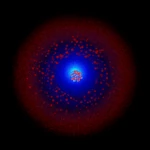
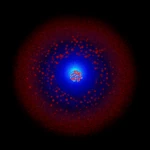
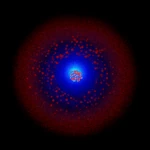
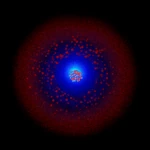
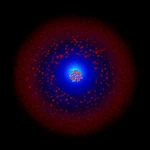
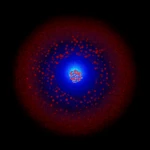
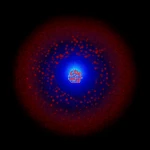
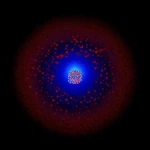
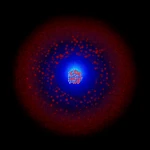
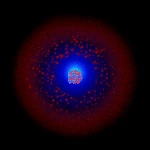
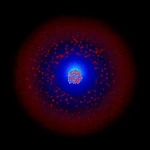
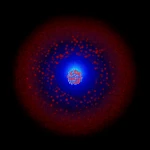
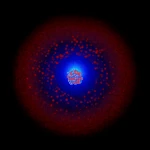
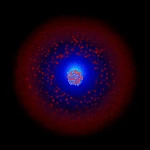
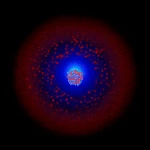
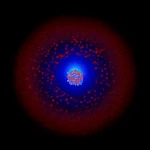
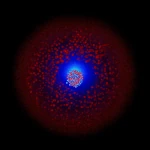
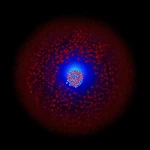
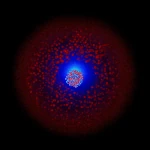
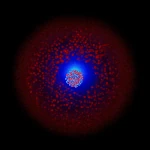
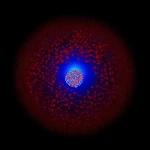
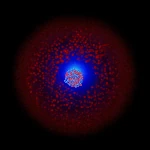
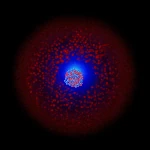
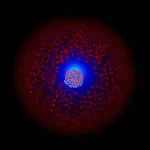
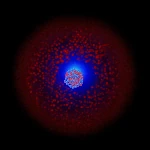
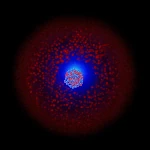
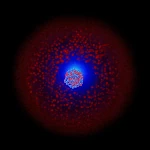
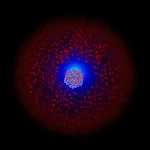
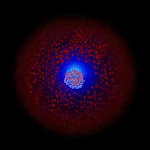
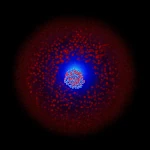
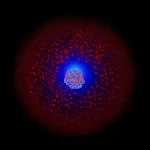
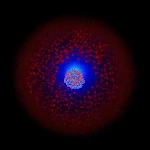
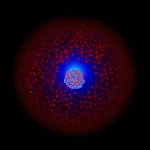
Simplified atomic model of the neon atom with its ten protons and ten electrons.
Image source: astronoo.com (新窗口)
氖气的发现历史
Neon was discovered in 1898 by British chemists 威廉·拉姆齐 (1852-1916) and 莫里斯·特拉弗斯 (1872-1961) at University College London. Just a few weeks after their discovery of krypton and xenon, the two scientists cooled a sample of liquid air and collected the gas that escaped during progressive evaporation. By placing this gas in a discharge tube, they observed a bright red-orange glow. Ramsay's 13-year-old son, who was present during the experiment, exclaimed: "It's a wonderful light!"
Ramsay named this new element 霓虹灯 (from the Greek neos = new) because of its recent discovery. Neon was the last of the stable noble gases to be discovered (after helium, argon, krypton, and xenon). In 1910, the French physicist 乔治·克劳德 (1870-1960) developed the first neon sign, thus initiating a revolution in advertising and urban lighting. This invention gave rise to the famous "neon signs" that would soon illuminate cities around the world.
结构与基本性质
Neon (symbol Ne, atomic number 10) is a noble gas of group 18 in the periodic table, consisting of ten protons, usually ten neutrons (for the most common isotope), and ten electrons.
The three stable isotopes are neon-20 \(\,^{20}\mathrm{Ne}\) (≈ 90.48%), neon-21 \(\,^{21}\mathrm{Ne}\) (≈ 0.27%), and neon-22 \(\,^{22}\mathrm{Ne}\) (≈ 9.25%).
At room temperature, neon is a monatomic gas (Ne), colorless, odorless, and completely chemically inert.
Its complete electronic configuration (outer shell saturated with eight electrons) gives it exceptional stability.
Neon is the second lightest noble gas after helium and has the smallest temperature range between its melting and boiling points of all elements (only 2.6 K).
Ne gas has a density of about 0.900 g/L at standard temperature and pressure.
The temperature at which the liquid and solid states can coexist (melting point): 24.56 K (−248.59 °C).
The temperature at which it transitions from liquid to gas (boiling point): 27.104 K (−246.046 °C).
Liquid neon is used as a cryogenic refrigerant in some specialized applications, although less common than liquid nitrogen or helium.
氖同位素表
| 同位素 / 符号 | 质子(Z) | 中子(N) | 原子质量(u) | 天然丰度 | 半衰期/稳定性 | 衰变 / 备注 |
|---|---|---|---|---|---|---|
| 氖-18 — \(\,^{18}\mathrm{Ne}\,\) | 10 | 8 | 18.005708 u | 非自然的 | 1.672秒 | 放射性β⁺衰变至\(\,^{18}\mathrm{F}\);在加速器中人工产生。 |
| 氖-19 — \(\,^{19}\mathrm{Ne}\,\) | 10 | 9 | 19.001880 u | 非自然的 | 17.22秒 | 放射性β⁺;用于核研究。 |
| 氖-20 — \(\,^{20}\mathrm{Ne}\,\) | 10 | 10 | 19.992440 u | ≈ 90.48% | 稳定的 | 超重同位素;由大质量恒星中碳和氧的聚变产生。 |
| 氖-21 — \(\,^{21}\mathrm{Ne}\,\) | 10 | 11 | 20.993847 u | ≈ 0.27% | 稳定的 | 稀有同位素;用作地球化学和宇宙化学中的示踪剂。 |
| 氖-22 — \(\,^{22}\mathrm{Ne}\,\) | 10 | 12 | 21.991385 u | ≈ 9.25% | 稳定 | 产生于大质量恒星中;其与Ne-20的比例揭示了核合成历史。 |
| 氖-23 — \(\,^{23}\mathrm{Ne}\,\) | 10 | 13 | 22.994467 u | 非自然的 | 37.24秒 | 放射性β⁻衰变为\(\,^{23}\mathrm{Na}\);对于轻放射性同位素而言,半衰期相对较长。 |
| 氖-24 — \(\,^{24}\mathrm{Ne}\,\) | 10 | 14 | 23.993610 u | 非自然的 | 3.38分钟 | 放射性β⁻;在核反应堆和加速器中产生。 |
| 其他同位素——\(\,^{16}\mathrm{Ne},\,^{17}\mathrm{Ne},\,^{25}\mathrm{Ne}-\,^{34}\mathrm{Ne}\) | 10 | 6-7, 15-24 | — (共鸣) | 非自然的 | \(10^{-21}\) — 0.602秒 | 核物理中观察到极不稳定的状态;其中一些具有中子晕结构。 |
氖的电子排布与电子层
注意::
Electron shells: 电子如何在原子核周围排列 (新窗口).
氖原子有10个电子,分布在两个电子壳层中。其完整电子排布为:1s² 2s² 2p⁶, 或简写为:[He] 2s² 2p⁶。该排布也可写作:K(2) L(8)。
壳层的详细结构
K 壳层 (n=1): contains 2 electrons in the 1s subshell. This inner shell is complete and highly stable.
L层(n=2): contains 8 electrons distributed as 2s² 2p⁶. The 2s and 2p orbitals are completely filled, providing maximum stability. This 8-electron configuration in the outer shell is called an octet and represents an optimal energy state.
价电子与氧化态
Neon has 8 electrons in its outer shell (2s² 2p⁶), forming a 饱和电子构型. This configuration explains its exceptional chemical properties:
Neon neither loses nor gains electrons under normal conditions, which explains the total absence of stable oxidation states.
The complete valence shell gives neon absolute chemical inertness, hence its classification among the noble gases (or rare gases).
No stable chemical compound of neon has ever been synthesized, even under extreme laboratory conditions. Neon is the most inert noble gas after helium.
氖的电子构型使其外层完全充满8个电子,这使其成为元素周期表第二周期的参考稀有气体。这种结构赋予其特性:绝对化学稳定性(氖完全惰性,不形成任何化合物)、极高的电离能(几乎不可能移除电子),以及在所有已知条件下完全缺乏反应性。氖代表了10个电子最稳定的能量状态,因此许多相邻元素(钠、氟、氧、镁)倾向于通过获得或失去电子来采用这种[Ne]构型。氖构型定义了化学中的八隅体规则:原子倾向于在外层获得8个电子以实现最大稳定性。 氖主要利用其物理性质而非化学性质:在电激发下会产生特征性的红橙色光,因此标志性地用于霓虹灯和荧光灯管。它还用作某些低温应用中的制冷气体,以及特殊工业过程中的惰性气氛。
化学反应活性
与所有稀有气体一样,氖具有完整的八电子外层电子壳层(八隅体构型),这赋予了它极高的化学稳定性。这种构型使氖成为化学惰性最强的元素之一:在正常甚至极端条件下,它几乎不形成任何稳定的化学键。
与较重的稀有气体(氪、氙、氡)在极特定条件下能形成某些化合物不同,自然界中从未合成或观测到任何真正稳定的氖化合物。即便使用最强大的氧化剂(如氟)或在高压条件下进行最精密的尝试,也未能迫使氖形成真正的化学键。
氖可以形成包合物(笼形化合物),其中氖原子被物理捕获在其他分子(如冰)形成的分子笼中,但并未形成真正的化学键。 质谱分析中已检测到含有氖的短暂分子离子(如NeH⁺、NeAr⁺),但这些物质极不稳定,仅在高能条件下存在。
这种完全的化学惰性使氖成为在需要避免化学反应的环境中制造保护性气氛的理想气体。氖还具有无毒、不可燃的特性,不会造成化学或环境危害,但在密闭空间中可能因取代氧气而导致窒息。
氖气的工业与技术应用
- 在照明标志和荧光灯管中(“霓虹灯”特有的红橙色光);
- 用于计量学、全息术和光学对准的氦氖(He-Ne)激光器的生产;
- 作为阴极射线管和等离子屏幕中的填充气体(与其他气体混合);
- 在高压指示器和避雷器中用于保护电气设备;
- 作为在27K至40K之间特殊应用的低温制冷剂;
- 在核物理粒子探测器(充氖气的丝室)中
- 在电子工业和半导体制造中创建惰性气氛;
- 作为气相色谱(电子捕获检测)中的载气;
- 在技术潜水(使用三混气:氧-氦-氖混合气体)中,用于避免深水区的麻醉效应;
- 用于电影、戏剧和活动中的特效灯光;
- 作为大气和海洋环流研究中的示踪剂;
- 在火灾报警系统中(通过电离进行烟雾探测);
- 产生高强度闪光和频闪灯;
- 在太阳望远镜中用于观测日冕(氖滤光片);
- 作为光谱学中仪器校准的参考气体;
- 在当代灯光艺术(霓虹雕塑与灯光装置)中;
- 用于测试真空系统的密封性(泄漏检测);
- 在某些类型的辐射探测盖革计数器中;
- 作为焊接活性金属(钛、镁)的保护气氛。
在天体物理学和宇宙学中的作用
氖是宇宙中第五丰富的元素(仅次于氢、氦、氧和碳),但在太空中探测和研究它却面临特殊挑战。氖约占宇宙重子质量的0.13%。
Neon is mainly produced by 恒星核合成 in massive stars. Neon-20, the ultra-majority isotope, is formed by two main processes: the fusion of two carbon-12 nuclei (C + C → Ne-20 + He-4) and the capture of an alpha particle by oxygen-16 (O-16 + He-4 → Ne-20). These reactions occur at temperatures of about 600 million kelvin in the cores of massive stars at the end of their lives.
In very massive stars (greater than 8 solar masses), neon can itself serve as nuclear fuel during 氖燃烧 at temperatures exceeding 1.2 billion kelvin. This phase produces oxygen and magnesium and lasts only a few years, or even a few days for the most massive stars. Neon is then dispersed into the interstellar medium during the supernova explosion, enriching the matter that will form future generations of stars and planets.
The “缺失的霓虹灯问题” has long intrigued astrophysicists. In the interstellar medium and stellar atmospheres, the observed abundance of neon is often lower than theoretical predictions. Unlike other elements, neon does not easily form detectable molecular compounds, and its atomic spectral lines are difficult to observe because they are in the far ultraviolet, absorbed by Earth's atmosphere. Additionally, a significant portion of neon may be trapped in interstellar dust grains, making it invisible to conventional spectroscopic observations.
配备紫外光谱仪的太空任务(如哈勃太空望远镜、FUSE和X射线天文台)使我们能够更好地表征各种宇宙环境中的氖丰度:HII区、行星状星云、超新星遗迹以及弥散星际介质。
同位素比值²⁰Ne/²²Ne随天体物理源的不同而变化,为核合成过程提供了宝贵信息。大质量恒星通过中子捕获氖-20和镁-25产生氖-22,从而改变同位素比值。对陨石、太阳前颗粒及太阳风中这些比值的研究,揭示了太阳系形成前不同恒星世代物质混合的复杂历史。
In the 太阳风, neon has a ²⁰Ne/²²Ne ratio of about 13.8, different from that found in Earth's atmosphere or in primitive meteorites. These variations testify to the isotopic fractionation processes that occurred during the formation of the Sun and the solar system.
Neon also plays a role in 宇宙化学. The three components of neon (Ne-A, Ne-B, Ne-C) identified in primitive meteorites have different origins: solar, cosmogenic (produced by cosmic rays), and nucleosynthetic. The analysis of these components allows tracing the history of the primitive material of the solar system and the irradiation processes it has undergone.
注意::
The 霓虹灯招牌, invented by Georges Claude in 1910, profoundly transformed the urban landscape of the 20th century.
Although commonly called "neon signs," most modern illuminated signs actually use various gases and fluorescent coatings to produce different colors: pure neon produces red-orange; argon with mercury gives blue; helium produces yellow-pink; krypton gives white-violet.
Tubes can also be coated with phosphors that convert UV light into various visible colors.
These signs have become cultural icons, symbolizing modern metropolises from Times Square to Las Vegas, from Tokyo to Hong Kong.
Neon art has also evolved into a recognized form of contemporary art, with artists creating spectacular light installations in museums and galleries around the world.
Despite competition from modern LEDs (more energy-efficient), true neon tubes retain a unique luminous quality and cultural nostalgia that ensure their longevity, at least as a form of art and creative expression.
 核聚变所需的能量以及为什么铀是一个极限
 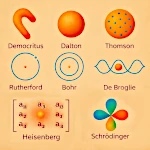 原子的各种形态:从古代直觉到量子力学