

钇(Y,Z = 39):一种具有革命性技术应用的稀土元素

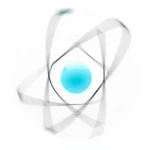
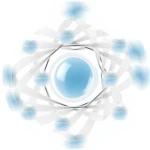
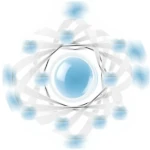
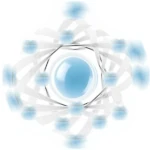
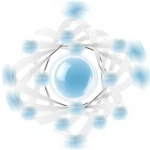
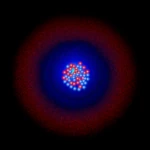
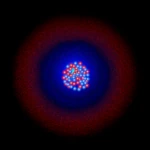
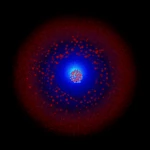
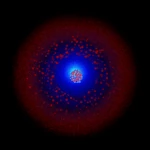
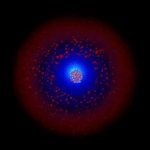
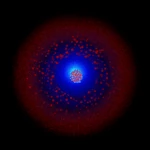
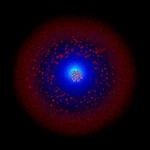
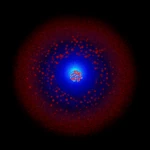
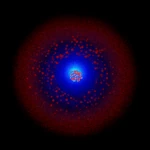
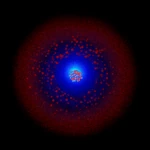
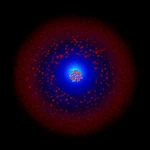
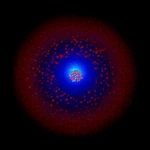
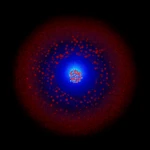
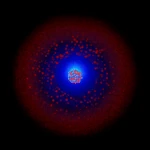
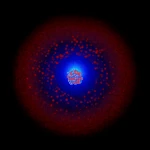
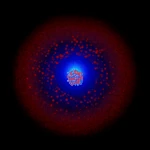
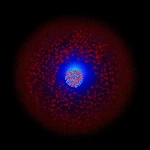
Image description:
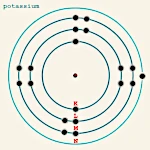
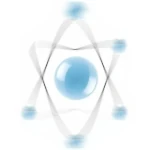
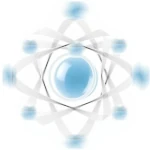
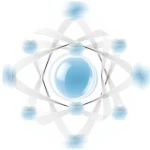
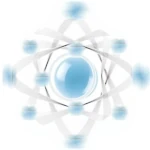
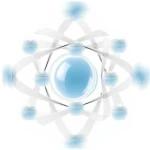
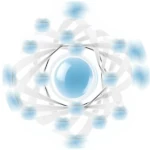
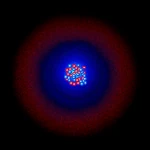
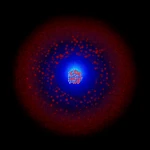
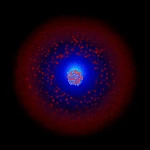
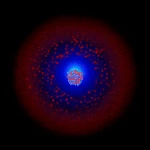
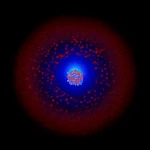
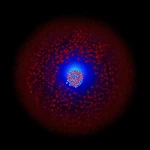
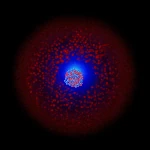
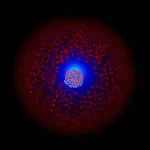
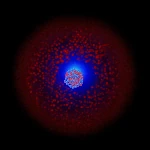
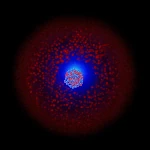
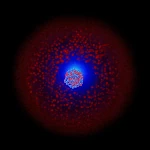
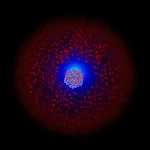
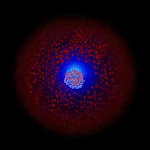
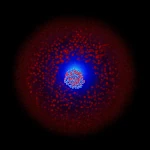
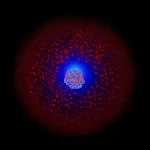
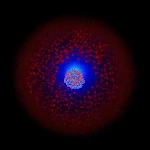
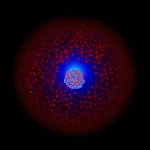
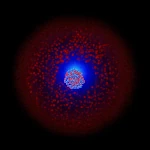
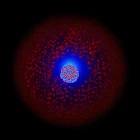
Simplified atomic model of the yttrium atom.
The most abundant (and only stable) isotope is \(\,^{89}\mathrm{Y}\,\) with its 39 protons, 39 electrons, and 50 neutrons.
Image source: astronoo.com (新窗口)
钇的发现历史
Yttrium has a fascinating history linked to a small Swedish village that gave its name to four chemical elements. In 1787, Swedish lieutenant and amateur chemist 卡尔·阿克塞尔·阿伦尼乌斯 (1757-1824) discovered near the village of 伊特比 (located on the island of Resarö in the Stockholm archipelago) an unusual black mineral that he named 镱土矿 (now called gadolinite).
In 1794, Finnish chemist 约翰·加多林 (1760-1852) analyzed this mineral and isolated what he believed to be a new earth oxide, which he named 氧化钇 (yttrium oxide, Y₂O₃). However, this oxide actually contained several mixed rare earth elements, and it took over a century to separate them all.
Pure yttrium metal was not isolated until 1828 by German chemist 弗里德里希·维勒 (1800-1882), who managed to reduce yttrium chloride (YCl₃) with potassium. However, the metal obtained still contained impurities. It was not until the early 20th century, with the development of more sophisticated separation techniques, that truly pure yttrium was obtained.
The name 钇 comes from the village of Ytterby, which also gave its name to three other elements discovered in the same ore: ytterbium (Yb), terbium (Tb), and erbium (Er). No other place in the world has given its name to as many chemical elements.
结构与基本性质
钇(符号Y,原子序数39)是元素周期表第3族的一种过渡金属。尽管化学性质与镧系元素(稀土元素)非常相似,但由于其原子在4f轨道中没有电子,严格来说并不属于镧系元素。其原子含有39个质子、50个中子(稳定同位素\(\,^{89}\mathrm{Y}\))和39个电子,电子排布为[Kr] 4d¹ 5s²。
在室温下,钇是一种明亮的银白色固体金属,对于过渡金属而言相对较轻(密度≈4.47 g/cm³)。 它在室温下具有六方密堆积晶体结构,温度超过1,478 °C时转变为体心立方结构。
钇是一种相对柔软且具有延展性的金属,易于加工、轧制和拉拔。 它具有良好的导电性和导热性,这是过渡金属的典型特征。 与大多数稀土元素一样,钇在室温下具有顺磁性。
钇的一个显著特性是其对氧的强亲和力。在室温下,它会迅速形成一层薄薄的氧化层(Y₂O₃),这层氧化膜能部分保护其免受进一步氧化。然而,在潮湿环境或高温条件下,氧化速度会加快。细粉状的钇甚至可能具有自燃性(在空气中自发燃烧)。
Melting point of yttrium (liquid state): 1,799 K (1,526 °C).
Boiling point of yttrium (gaseous state): 3,609 K (3,336 °C).
钇同位素表
| 同位素 / 符号 | 质子(Z) | 中子(N) | 原子质量(u) | 天然丰度 | 半衰期/稳定性 | 衰变 / 备注 |
|---|---|---|---|---|---|---|
| 钇-89 — \(\,^{89}\mathrm{Y}\,\) | 39 | 50 | 88.905848 u | 100% | 稳定的 | 钇的唯一稳定天然同位素。单核素元素。 |
| 钇-90 — \(\,^{90}\mathrm{Y}\,\) | 39 | 51 | 89.907152 u | 合成 | ≈ 64.0 小时 | 放射性(β⁻)。纯β发射体,用于放射治疗和核医学中治疗某些癌症(放射性微球)。 |
| 钇-88 — \(\,^{88}\mathrm{Y}\,\) | 39 | 49 | 87.909501 u | 合成 | ≈ 106.6 天 | 放射性(电子俘获,β⁺)。正电子发射体,用于PET成像(正电子发射断层扫描)。 |
| 钇-91 — \(\,^{91}\mathrm{Y}\,\) | 39 | 52 | 90.907305 u | 合成的 | ≈ 58.5 天 | 放射性(β⁻)。核反应堆中的裂变产物。放射性沉降物的来源之一。 |
| 钇-87 — \(\,^{87}\mathrm{Y}\,\) | 39 | 48 | 86.910876 u | 合成 | ≈ 79.8 小时 | 放射性(电子捕获,β⁺)。用于医学研究。 |
钇的电子排布与电子层
注意::
Electron shells: 电子如何围绕原子核组织 (新窗口).
钇有39个电子,分布在五个电子壳层上。 其完整电子排布为:1s² 2s² 2p⁶ 3s² 3p⁶ 3d¹⁰ 4s² 4p⁶ 4d¹ 5s²,或简写为:[Kr] 4d¹ 5s²。该排布也可写作:K(2) L(8) M(18) N(8) O(3)。
壳层的详细结构
K壳层(n=1): contains 2 electrons in the 1s subshell. This inner shell is complete and very stable.
L壳层 (n=2): contains 8 electrons distributed as 2s² 2p⁶. This shell is also complete, forming a noble gas configuration (neon).
M壳层 (n=3): contains 18 electrons distributed as 3s² 3p⁶ 3d¹⁰. This shell is complete with the 3d subshell fully filled.
N层(n=4): contains 8 electrons distributed as 4s² 4p⁶. This shell has a noble gas configuration (krypton), which is why the simplified electronic configuration starts with [Kr].
O壳层 (n=5): contains 3 electrons distributed as 4d¹ 5s². These three electrons are the valence electrons of yttrium.
价电子与氧化态
The 3 electrons in the outer shell (4d¹ 5s²) are the 价电子 of yttrium. This configuration explains its chemical properties:
The almost exclusive oxidation state of yttrium is +3, where it loses its three valence electrons to form the Y³⁺ ion with the stable configuration [Kr] (isoelectronic with krypton). This noble gas configuration with complete subshells is extremely stable, which is why yttrium almost exclusively forms compounds with an oxidation state of +3.
+2和+1氧化态在极罕见的有机金属化合物或极端实验条件下被观察到,但它们非常不稳定,会迅速重新氧化。+3氧化态完全主导了钇的化学性质。
化学反应活性
钇是一种相对活泼的金属,尤其易与氧气和水反应。 在室温下,它会迅速形成一层薄薄的氧化层(Y₂O₃),这层氧化膜能部分保护其免受进一步氧化。 然而,这种保护并不完美,尤其在潮湿环境中更为明显。
钇在室温下与氧气缓慢反应,但在高温(>400°C)下反应剧烈,生成氧化钇(III):4Y + 3O₂ → 2Y₂O₃。细粉状钇可在空气中自燃(发火性),并发出强光。
常温下,钇与水反应缓慢,但加热时反应迅速,生成氢氧化钇并释放氢气:2Y + 6H₂O → 2Y(OH)₃ + 3H₂。该反应随温度升高显著加速。
钇与所有酸(即使是稀酸)反应,生成钇(III)盐并释放氢气:2Y + 6HCl → 2YCl₃ + 3H₂。它也能溶解于浓强碱中,形成络合氢氧化物。
与卤素反应时,钇剧烈反应生成三卤化物:2Y + 3X₂ → 2YX₃(其中X = F、Cl、Br、I)。它还能与硫、硒、碲、氮(高温下生成氮化物Y₃N₅)、碳(生成碳化物YC₂和Y₂C₃)以及多种其他非金属反应。
Yttrium oxide (Y₂O₃), also called 氧化钇, is a particularly important compound. It is a very thermally stable (melting point: 2,425 °C) and chemically inert white powder. It has a cubic bixbyite-type crystal structure and is used in many technological applications.
钇的工业与技术应用
- 在YBCO型(YBa₂Cu₃O₇)高温超导体中,工作温度高于77 K(液氮温度)时;
- 用于手术、工业和研究的YAG激光器(掺钕钇铝石榴石,Y₃Al₅O₁₂)
- 在电视屏幕、显示器及LED(特别是用于红色的Y₂O₃:Eu³⁺和用于白色LED的YAG:Ce³⁺)的荧光粉中;
- 用于制造具有高耐热性和高机械强度的技术陶瓷(氧化钇稳定氧化锆,YSZ);
- 在高温固体氧化物燃料电池(SOFC)的固体电解质中;
- 作为铝镁合金的添加剂,用于提高其机械强度和抗氧化性;
- 在铁和不锈钢合金中,用于提高其延展性和耐腐蚀性;
- 用于耐极端温度的坩埚和耐火材料;
- 在核医学中,(⁹⁰Y)用于肝肿瘤和某些淋巴瘤的靶向放射治疗。
- 在制造耐热冲击和耐辐射的特种光学玻璃过程中;
- 作为辐射探测器闪烁晶体(YAP、YSO)中的掺杂剂;
- 对于柴油颗粒过滤器(DPF),钇可提高其热稳定性;
- 在石油裂解和汽车催化转化催化剂中;
- 作为某些永磁体(稀土-钴合金)的组成部分;
- 用于保护燃气轮机和航空反应堆的热障涂层;
- 在TIG焊电极(钨极惰性气体保护焊)中,钇可改善电弧性能。
在天体物理学和宇宙学中的作用
Yttrium is synthesized in stars through several nucleosynthesis processes. It is mainly formed during the explosive burning of silicon during type II supernova explosions, which produces nuclei in the mass region A ≈ 90. the s-过程 (slow neutron capture) in AGB stars (asymptotic giant branch) also contributes to the production of yttrium.
稳定同位素\(\,^{89}\mathrm{Y}\)是钇唯一的天然同位素(单核素元素),这简化了对其宇宙丰度的研究。 这种同位素的独特性反映了原子核(含39个质子和50个中子)的特殊稳定性,接近幻数中子数N=50。
钇在宇宙中的丰度对于稀土元素来说相对较高,其原子数量约为氢的5×10⁻¹⁰倍。这一丰度使其在镧系元素中与钕或钐相当,尽管它本身并非镧系元素。
在年老贫金属恒星中测得的钇/铁([Y/Fe])比值,为原始核合成提供了重要信息。银河系晕中的极老年恒星显示出相对恒定的[Y/Fe]比值,表明钇和铁虽由不同过程产生,但主要都来自II型超新星。
电离钇(Y II)的光谱线在恒星光谱中易于观测,是恒星化学成分的重要指标。其中波长为3982.6埃的Y II谱线尤其常用于恒星光谱学。通过研究不同星族(年轻、年老、贫金属)恒星中的这些谱线,可以追溯银河系化学增丰的历史。
在原始陨石中,对钇丰度及其他难熔元素的分析有助于理解原始太阳星云中的凝聚和化学分异过程。钇作为一种难熔元素(在高温下凝聚),优先富集于最古老陨石中的特定矿物类型中。
钇的放射性同位素,特别是⁸⁸Y和⁹⁰Y,在超新星爆发过程中产生,并短暂地(持续数月至数年)为这些事件的残余亮度做出贡献。对这些同位素的研究有助于理解恒星爆发的详细机制。
注意::
Yttrium is present in the Earth's crust at a concentration of about 0.0033% by mass (33 ppm), making it more abundant than lead, tin, or molybdenum.
Contrary to its name "rare earth," yttrium is not particularly rare; this historical name refers to the difficulty of its extraction and purification rather than its absolute rarity.
Yttrium does not form its own ores but is always associated with lanthanides in rare earth minerals. The main minerals containing yttrium are 磷钇矿 (YPO₄, yttrium phosphate rich in heavy rare earths, containing up to 60% Y₂O₃), 氟碳铈矿 ((Ce,La,Y)CO₃F, fluorocarbonate of light rare earths with 0.1 to 10% Y₂O₃), 独居石 ((Ce,La,Nd,Th)PO₄, rare earth phosphate containing 2 to 3% Y₂O₃), and the ion adsorption clays of southern China (rich in medium and heavy rare earths including yttrium).
钇的提取过程复杂且成本高昂。首先用浓酸处理矿石以溶解稀土元素,随后采用精密的分离技术:溶剂萃取(使用有机螯合剂)、特定树脂上的离子交换或分级沉淀。由于稀土元素的化学性质极为相似,这些流程需重复多次。最后通过金属热还原法(使用钙)在真空或惰性气氛下将Y₂O₃氧化物还原为金属钇,再通过蒸馏去除多余的钙。
全球含钇稀土氧化物的生产主要集中在中国(约占全球产量的60%),其次为美国、澳大利亚、缅甸和印度。主要矿床包括中国内蒙古的白云鄂博、美国加利福尼亚的芒廷帕斯、澳大利亚的韦尔德山以及中国江西的离子吸附型黏土矿。钇的年产量约为8900吨(以Y₂O₃当量计)。
The recycling of yttrium is becoming strategically important with the rapid growth in demand (≈ 8% per year), particularly for permanent magnets, phosphors from used screens, and catalysts. However, the current recycling rate remains low (<1%) due to technical complexity and the high cost of recovery processes. The European Union and the United States classify yttrium as a 关键战略材料 due to its importance for advanced technologies (renewable energies, defense, electronics) and the geographical concentration of its production.
 核聚变所需的能量以及为什么铀是一个极限
 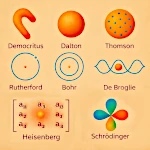 原子的各种形态:从古代直觉到量子力学