

锂(Li,Z = 3):具有卓越性质的碱金属
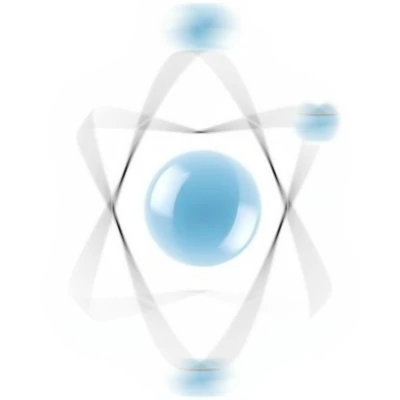
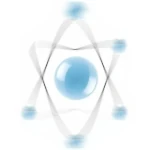
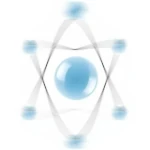
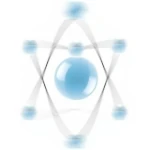
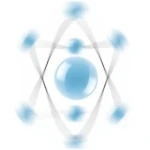
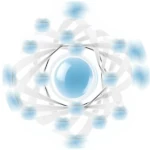
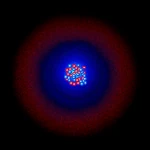
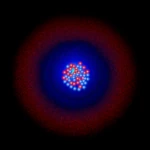
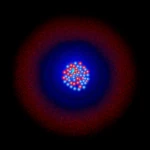
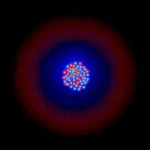
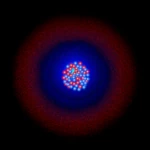
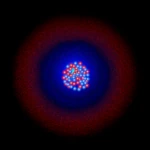
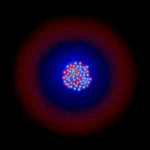
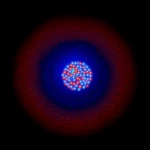
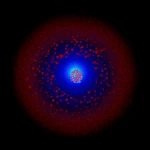
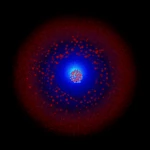
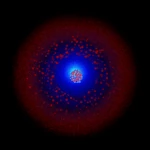
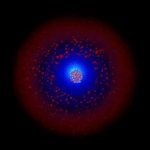
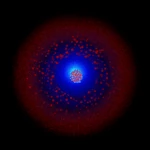
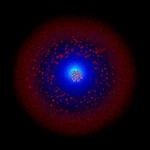
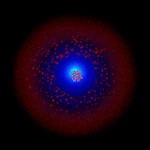
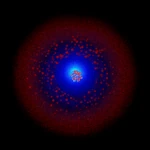
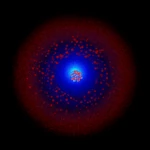
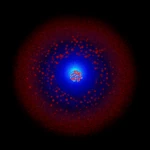
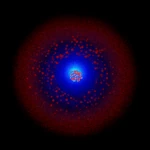
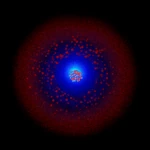
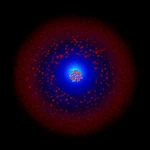
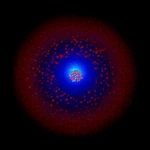
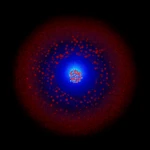
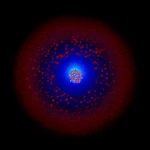
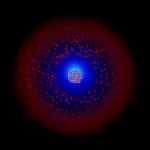
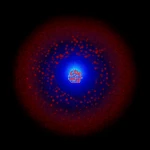
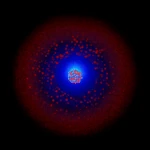
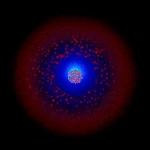
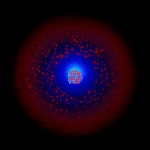
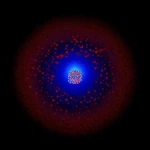
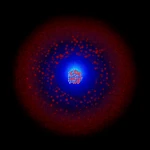
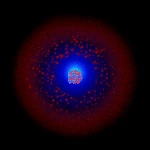
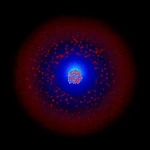
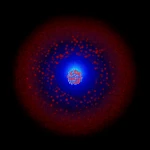
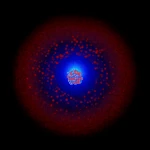
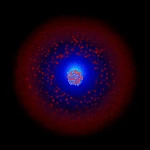
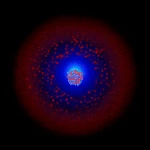
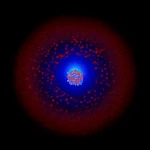
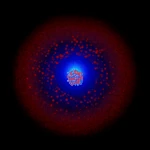
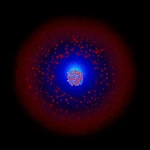
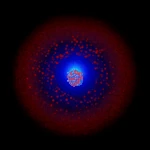
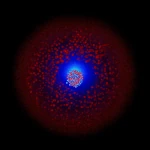
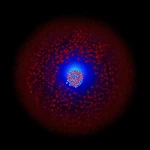
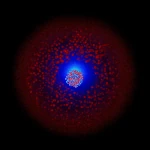
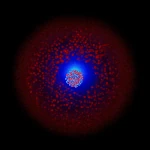
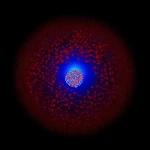
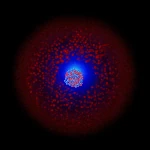
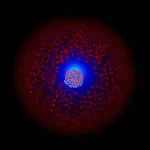
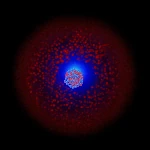
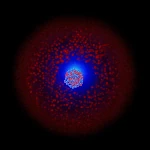
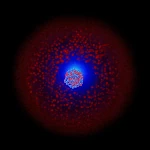
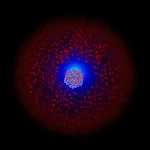
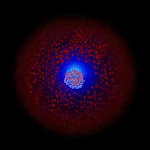
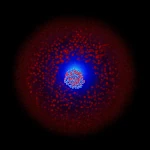
Simplified atomic model of the lithium atom with its three protons and three electrons.
Image source: astronoo.com (新窗口)
锂的发现历史
Lithium was discovered in 1817 by the Swedish chemist 约翰·奥古斯特·阿尔夫韦德松 (1792-1841) while analyzing the mineral petalite from the island of Utö in Sweden. Arfwedson identified the presence of a new alkaline element but was unable to isolate it in metallic form. His mentor, 永斯·雅各布·贝采利乌斯 (1779-1848), named this element 锂 (from the Greek lithos = stone), as it was the first alkali metal discovered in a mineral rather than in plant matter. It was not until 1821 that the British chemist 威廉·托马斯·布兰德 (1788-1866) and independently the Swedish chemist 约翰·奥古斯特·阿尔夫韦德松 succeeded in isolating metallic lithium by electrolysis of lithium oxide.
结构与基本性质
Lithium (symbol Li, atomic number 3) is the first alkali metal in the periodic table, consisting of three protons, usually four neutrons (for the most common isotope), and three electrons.
The two stable isotopes are lithium-7 \(\,^{7}\mathrm{Li}\) (≈ 92.5%) and lithium-6 \(\,^{6}\mathrm{Li}\) (≈ 7.5%).
At room temperature, lithium is a soft, silvery-white metal, extremely light (density ≈ 0.534 g/cm³), making it the least dense of all metals.
It is highly reactive, particularly with water and oxygen, and must be stored under mineral oil or in an inert atmosphere.
The temperature at which the liquid and solid states can coexist (melting point): 453.65 K (180.50 °C).
The temperature at which it transitions from liquid to gas (boiling point): 1615 K (1341.85 °C).
锂同位素表
| 同位素 / 符号 | 质子 (Z) | 中子(N) | 原子质量(u) | 天然丰度 | 半衰期/稳定性 | 衰变/备注 |
|---|---|---|---|---|---|---|
| 锂-6 — \(\,^{6}\mathrm{Li}\,\) | 3 | 3 | 6.015122 u | ≈ 7.5% | 稳定 | 用于核聚变产生氚;吸收热中子。 |
| 锂-7 — \(\,^{7}\mathrm{Li}\,\) | 3 | 4 | 7.016003 u | ≈ 92.5% | 稳定 | 主要同位素;用于锂离子电池和工业应用。 |
| 锂-8 — \(\,^{8}\mathrm{Li}\,\) | 3 | 5 | 8.022487 u | 非自然的 | 0.838秒 | 放射性β⁻衰变生成⁸Be,该核素立即衰变为两个α粒子。 |
| 锂-9 — \(\,^{9}\mathrm{Li}\,\) | 3 | 6 | 9.026790 u | 非自然的 | 0.178秒 | 放射性β⁻;在粒子加速器中人工产生。 |
| 锂-4、5 — \(\,^{4}\mathrm{Li},\,^{5}\mathrm{Li}\,\) | 3 | 1 — 2 | ——(共鸣) | 非自然的 | \(10^{-22}\) 秒 | 核物理中观察到极不稳定的状态;立即衰变。 |
| 重同位素——\(\,^{10}\mathrm{Li},\,^{11}\mathrm{Li},\,^{12}\mathrm{Li}\) | 3 | 7 — 9 | —(共鸣) | 非自然的 | \(10^{-21}\) — 0.009秒 | 中子晕;\(^{11}\mathrm{Li}\) 有两个结合非常松散的中子,在原子核周围形成一个晕。 |
电子构型与电子层
注意::
Electron shells: 电子如何在原子核周围排列 (新窗口).
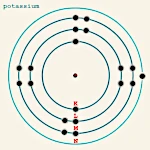
锂有3个电子分布在两个电子壳层上。其完整电子排布为:1s² 2s¹,或简写为:[He] 2s¹。该排布也可写作:K(2) L(1)。
壳层的详细结构
K壳层(n=1): Contains 2 electrons in the 1s sub-shell. This inner shell is complete and highly stable, forming a configuration identical to that of helium.
L层(n=2): Contains only 1 electron in the 2s sub-shell. This single valence electron is relatively weakly bound to the nucleus and easily lost during chemical reactions. The 2p orbitals remain completely empty.
价电子与氧化态
The single electron in the outer shell (2s¹) is the 价电子 of lithium. This configuration explains its chemical properties:
By losing its 2s electron, lithium forms the Li⁺ ion (oxidation state +1), its unique and systematic oxidation state in all its compounds.
The Li⁺ ion then adopts an electronic configuration identical to that of helium [He], a noble gas, which gives this ion maximum stability.
Lithium does not exhibit any other oxidation state; only the +1 degree is observed in chemistry.
锂的电子构型中,其价电子层仅含一个2s电子,这使其被归类为碱金属(元素周期表第1族),并成为所有金属中最轻的元素。这一结构赋予其特性:高化学反应活性(能与水、氧气及大多数非金属反应)、低电离能(价电子易失去),且仅形成氧化态为+1的离子化合物。
锂是一种柔软、银白色的金属,密度极低(0.53克/立方厘米,是最轻的金属),必须储存在矿物油或惰性气氛中以防止氧化。在室温下,它与水的反应较为缓慢,这与钠和钾的剧烈反应不同。与其他碱金属相比,这种适中的反应性归因于其较小的原子尺寸和相对较强的键能。
锂的重要性在现代世界已变得至关重要:锂离子电池已成为便携式电子设备(智能手机、电脑)和电动汽车不可或缺的组成部分,使锂成为能源转型中的战略元素;碳酸锂(Li₂CO₃)在精神科用于治疗双相情感障碍;铝锂合金因其超轻特性被用于航空航天领域;锂在焊接和钎焊工艺中用作助熔剂;氢化锂(LiH)是一种强还原剂和潜在的储氢介质;有机锂化合物(如丁基锂)是有机化学中的重要试剂。锂-6在核技术中用于生产氚。随着电池技术的发展,全球对锂的需求呈指数级增长,这使得锂的开采和回收成为重大的经济和环境挑战。
化学反应活性
锂是一种极其活泼的碱金属。它有一个容易贡献的价电子,形成Li⁺离子。 锂与水剧烈反应,生成氢氧化锂(LiOH)和氢气。 与空气接触时,锂迅速氧化形成氧化锂(Li₂O)和氮化锂(Li₃N),后者在碱金属中属于不常见的反应。 锂还能与卤素形成化合物(氟化锂、氯化锂、溴化锂),并与碳反应生成碳化锂(Li₂C₂)。 其强正电性使其成为有机和无机化学反应中的优良还原剂。
锂的工业与技术应用
- 在电动汽车、智能手机、笔记本电脑和储能系统的锂离子电池中;
- 在精神病学中作为情绪稳定剂用于治疗双相情感障碍(碳酸锂);
- 在玻璃和陶瓷生产中用于提高耐热性并降低熔点;
- 作为工业空调系统中的除湿剂(氯化锂);
- 在冶金中用作脱氧剂并净化金属;
- 生产耐极端高温的高性能润滑脂(硬脂酸锂)。
- 在核聚变反应堆中,利用锂-6生产氚;
- 作为铝锂合金中的一种组分,用于航空领域以减轻结构重量;
- 在有机合成中作为强碱(丁基锂)用于创造新分子;
- 制造用于望远镜和精密仪器的特殊光学玻璃。
- 作为潜艇和航天器呼吸系统中的二氧化碳吸收剂(氢氧化锂);
- 在聚合物和弹性体的生产中用于改善其性能;
- 作为某些工业聚合反应中的催化剂;
- 在医疗和军事应用的一次性电池(一次锂电池)中;
- 在某些实验系统中,通过与水反应来生产氢气。
在天体物理学和宇宙学中的作用
Lithium holds a unique place in cosmology as it is one of the only three elements (along with hydrogen and helium) synthesized in significant quantities during primordial nucleosynthesis, a few minutes after the Big Bang. However, the observed abundance of lithium in the current universe poses a major problem known as the 宇宙学锂问题. Big Bang models predict an abundance of lithium-7 about three times higher than that observed in the old stars of our galaxy.
在恒星中,锂元素会在相对较低的温度(约250万开尔文)下被核聚变迅速摧毁,这一温度远低于氢燃烧所需的温度。这种毁灭性特征使锂成为研究恒星内部混合过程及其演化的绝佳示踪剂。通过测量不同类型恒星中锂的丰度,天体物理学家能够约束恒星模型,并理解银河系的化学演化历史。
锂-6虽然稀有,但可通过星际介质中的宇宙射线反应生成。其与锂-7的比值,为我们提供了关于银河系过去宇宙射线强度以及星系核合成过程的宝贵信息。
对系外行星和褐矮星大气中锂的光谱研究也有助于确定它们的年龄和热历史,因为锂的存在与否表明该天体是否达到了足以摧毁锂的内部温度。
注意::
The 宇宙学锂问题 remains one of the unsolved mysteries of modern cosmology.
Several hypotheses have been proposed to explain this discrepancy: destruction of lithium in the first stars, errors in primordial nucleosynthesis models, physics beyond the standard model, or observational biases in measuring lithium abundance.
This enigma illustrates that even the simplest elements can reveal deep and mysterious aspects of the evolution of our universe, and its resolution could have major implications for our understanding of fundamental physics and cosmology.
 核聚变所需的能量以及为什么铀是一个极限
 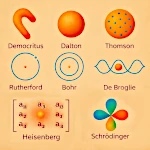 原子的各种形态:从古代直觉到量子力学