

锌(Zn,Z = 30):一种具有基本特性的保护性金属
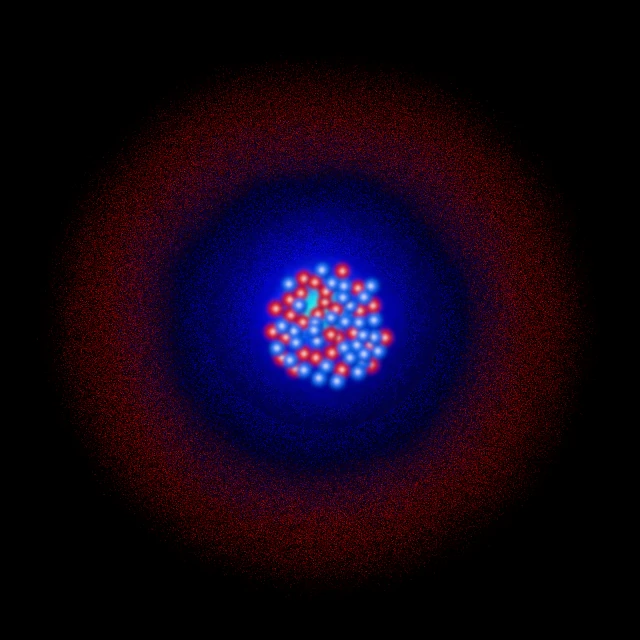
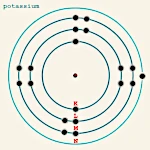
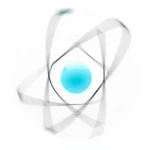
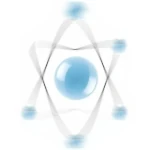
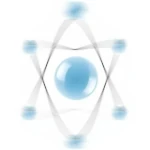
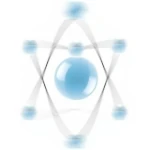
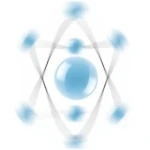
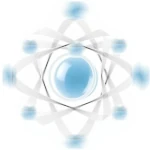
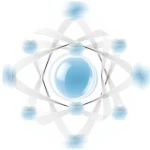
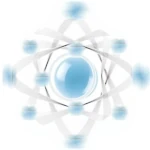
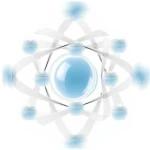
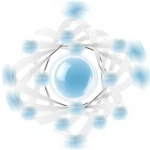
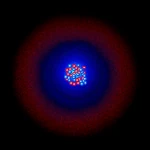
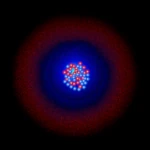
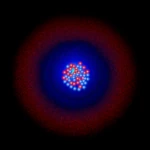
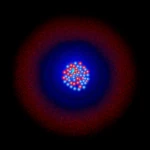
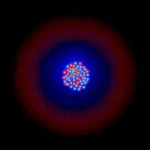
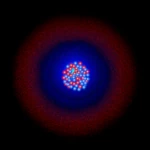
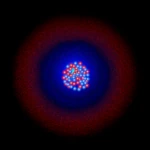
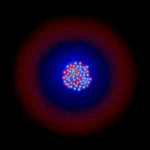
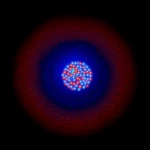
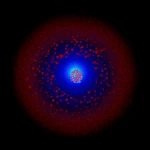
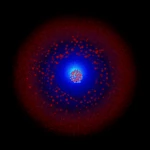
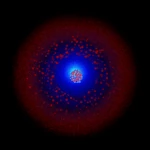
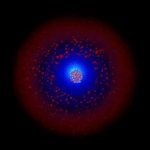
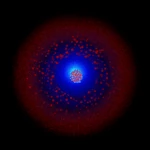
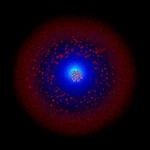
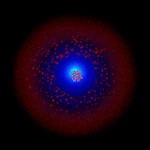
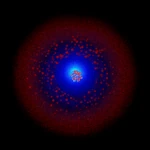
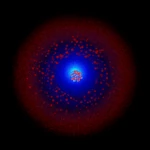
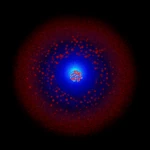
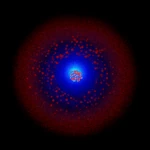
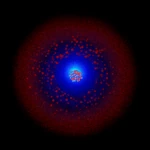
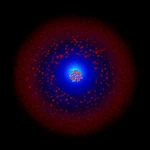
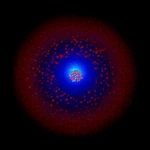
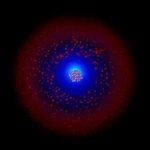
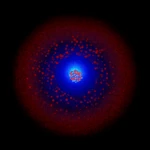
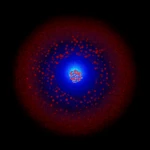
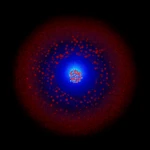
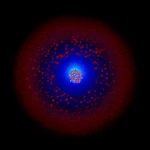
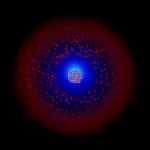
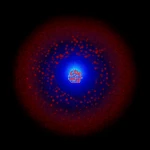
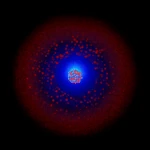
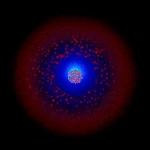
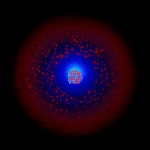
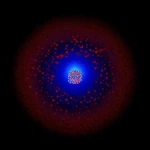
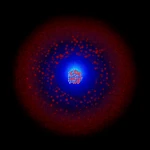
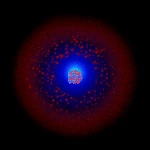
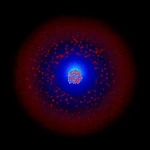
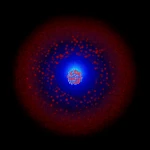
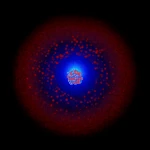
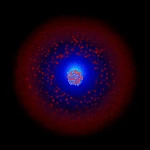
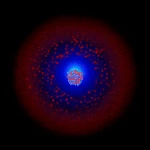
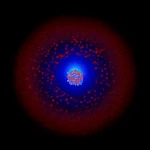
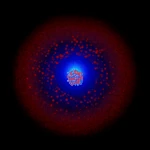
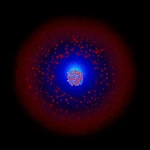
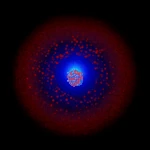
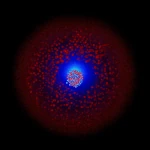
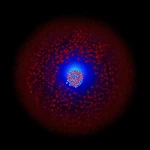
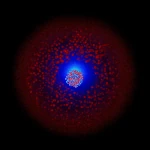
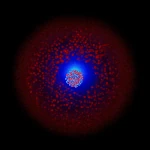
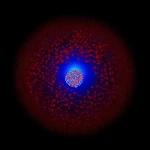
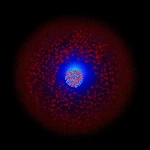
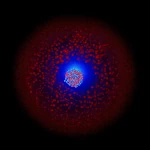
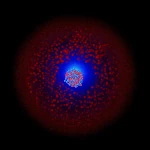
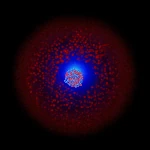
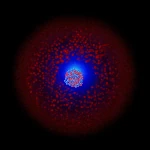
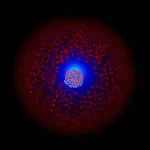
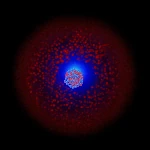
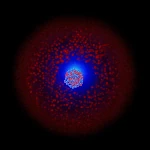
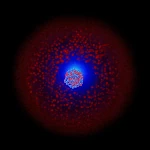
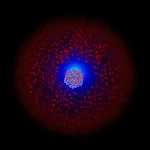
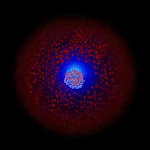
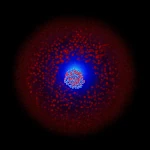
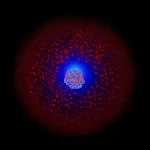
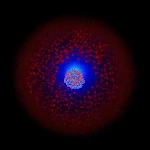
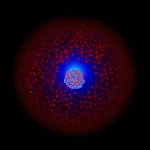
Simplified atomic model of the zinc atom.
The most abundant isotope is \(\,^{64}\mathrm{Zn}\,\) with its 30 protons, 30 electrons, and 34 neutrons.
Image source: astronoo.com (新窗口)
锌的发现历史
Metallic zinc was used long before its official recognition as a distinct element. Brass alloys (copper and zinc) were made as early as 古代, although artisans did not realize they were working with a specific metal. In India, the production of pure metallic zinc is attested from the 12世纪, particularly in the Rajasthan region, where a sophisticated distillation process was used. In Europe, the German metallurgist 安德烈亚斯·西吉斯蒙德·马格拉夫 (1709-1782) is generally credited with the scientific discovery of zinc in 1746, when he succeeded in isolating the metal by heating calamine (zinc carbonate) with charcoal. The name 锌 may come from the German 津克 (point, tooth), referring to the pointed appearance of zinc crystals, or from the Persian 唱 (stone).
结构与基本性质
Zinc (symbol Zn, atomic number 30) is a transition metal in group 12 of the periodic table.
Its atom has 30 protons, usually 34 neutrons (for the most abundant isotope \(\,^{64}\mathrm{Zn}\)) and 30 electrons with the electronic configuration [Ar] 3d¹⁰ 4s².
At room temperature, zinc is a solid, bluish-white, shiny metal, moderately dense (density ≈ 7.14 g/cm³).
It is relatively brittle at room temperature but becomes malleable and ductile between 100 and 150 °C, allowing it to be rolled and shaped.
Zinc has excellent resistance to atmospheric corrosion due to the formation of a protective layer of zinc oxide and carbonate on its surface.
Melting point of zinc (liquid state): 692.68 K (419.53 °C).
Boiling point of zinc (gaseous state): 1,180 K (907 °C).
锌同位素表
| 同位素 / 符号 | 质子(Z) | 中子(N) | 原子质量(u) | 天然丰度 | 半衰期/稳定性 | 衰变 / 备注 |
|---|---|---|---|---|---|---|
| 锌-64 — \(\,^{64}\mathrm{Zn}\,\) | 30 | 34 | 63.929142 u | ≈ 49.17% | 稳定 | 天然锌的主要同位素。 |
| 锌-66 — \(\,^{66}\mathrm{Zn}\,\) | 30 | 36 | 65.926034 u | ≈ 27.73% | 稳定 | 第二丰富的稳定同位素。 |
| 锌-68 — \(\,^{68}\mathrm{Zn}\,\) | 30 | 38 | 67.924844 u | ≈ 18.45% | 稳定 | 锌的第三种稳定同位素。 |
| 锌-67 — \(\,^{67}\mathrm{Zn}\,\) | 30 | 37 | 66.927127 u | ≈ 4.04% | 稳定 | 具有核磁矩;用于核磁共振波谱分析。 |
| 锌-70 — \(\,^{70}\mathrm{Zn}\,\) | 30 | 40 | 69.925319 u | ≈ 0.61% | 稳定的 | 天然锌中最稀有、最重的稳定同位素。 |
| 锌-65 — \(\,^{65}\mathrm{Zn}\,\) | 30 | 35 | 64.929241 u | 合成 | ≈ 244天 | 放射性,在生物学和医学中用作示踪剂,用于研究锌的代谢。 |
锌的电子排布与电子层
注意::
Electron shells: 电子如何围绕原子核组织 (新窗口).
锌有30个电子,分布在四个电子层中。其完整电子排布为:1s² 2s² 2p⁶ 3s² 3p⁶ 3d¹⁰ 4s², 或简写为:[Ar] 3d¹⁰ 4s²。 该排布也可写作:K(2) L(8) M(18) N(2)。
壳层的详细结构
K层(n=1): contains 2 electrons in the 1s subshell. This inner shell is complete and very stable.
L壳层(n=2): contains 8 electrons distributed as 2s² 2p⁶. This shell is also complete, forming a noble gas configuration (neon).
M层(n=3): contains 18 electrons distributed as 3s² 3p⁶ 3d¹⁰. All orbitals in this shell are complete, giving zinc great electronic stability.
N壳层(n=4): contains 2 electrons in the 4s subshell. These two electrons are the valence electrons of zinc.
价电子与氧化态
The 2 electrons in the outer 4s² shell are the 价电子 of zinc. This configuration explains its chemical properties:
Zinc easily loses its two 4s electrons to form the Zn²⁺ ion (oxidation state +2), the almost exclusive oxidation state of zinc in chemistry.
The resulting configuration [Ar] 3d¹⁰ is particularly stable with a completely filled 3d subshell, which explains why zinc almost always forms compounds with a +2 oxidation state.
+1 oxidation states exist in rare organometallic compounds, but the +2 state dominates zinc chemistry.
锌的电子构型具有完整的3d亚层和两个4s电子,使其处于过渡金属和后过渡金属的边界位置。部分化学家不将其视为真正的过渡金属,因为在其所有常见氧化态中,d亚层均保持完整。这种稳定构型解释了为何锌化合物通常无色(不同于典型过渡金属)且具有抗磁性。
化学反应活性
锌是一种中等活性的金属。在室温下,它会迅速形成一层薄薄的氧化锌(ZnO),从而防止进一步氧化。 这层保护膜使锌能够抵抗大气腐蚀,这一特性被用于钢材的镀锌处理。 锌与稀酸反应,释放氢气并生成锌盐:Zn + 2H⁺ → Zn²⁺ + H₂。 锌是两性金属,也能与强碱反应生成锌酸盐:Zn + 2OH⁻ + 2H₂O → [Zn(OH)₄]²⁻ + H₂。 在高温下,锌在空气中燃烧,发出明亮的蓝白色火焰,生成氧化锌。 锌与卤素、硫以及许多其他非金属反应,尤其在加热条件下更为明显。
锌的工业与技术应用
- 镀锌钢和铁的主要用途是锌(约占世界产量的50%);
- 在黄铜(铜锌合金)等合金中,用于配件、锁具和仪器;
- 在锌合金(Zn-Al-Mg-Cu)中,用于压铸汽车和电子零部件;
- 用于制造电池(锌碳电池、碱性电池);
- 作为一种必需的膳食补充剂,参与超过300种酶和生物过程;
- 在制药行业中用于皮肤乳膏和软膏(氧化锌);
- 用于屋顶、排水沟和耐候性建筑立面;
- 作为橡胶工业中的硫化剂;
- 在防腐涂料和涂层的生产中;
- 用于制造化妆品和防晒霜(氧化锌作为紫外线过滤剂);
- 作为多种有机化学合成中的催化剂;
- 在农业中作为肥料和动物饲料添加剂使用;
- 用于保护浸没金属结构的牺牲阳极;
- 在陶瓷工业和玻璃生产中;
- 用于牙科合金和临时医疗假体。
在天体物理学和宇宙学中的作用
锌在大质量恒星中通过多种核合成过程合成。它主要形成于超新星爆发时的硅燃烧爆炸过程,以及渐近巨星分支恒星(AGB)中的慢中子捕获过程(s-过程)。锌的五个稳定同位素(\(\,^{64}\mathrm{Zn}\)、\(\,^{66}\mathrm{Zn}\)、\(\,^{67}\mathrm{Zn}\)、\(\,^{68}\mathrm{Zn}\)、\(\,^{70}\mathrm{Zn}\))通过这些机制产生,并在灾变事件中散布到星际介质中。
古代贫金属恒星中锌的丰度对天文学家而言尤为引人关注。锌铁比([Zn/Fe])被用作早期宇宙核合成条件的指示剂,因为锌和铁是通过不同过程产生的。非常古老的恒星通常显示出锌相对于铁的富集,这表明第一批超新星具有与当前恒星爆炸不同的特征。遥远类星体光谱中电离锌(Zn II)的吸收谱线,使科学家能够研究星系际气体云的化学成分以及年轻宇宙的金属富集过程。
注意::
Zinc is present in the Earth's crust at a concentration of about 0.0078% by mass, making it the 24th most abundant element.
It is mainly found in ores such as sphalerite or zinc blende (ZnS), smithsonite (ZnCO₃), hemimorphite (Zn₄Si₂O₇(OH)₂·H₂O), and zincite (ZnO).
Native zinc (pure metallic form) is extremely rare in nature.
Zinc extraction is mainly done by roasting sulfide ore followed by reduction (pyrometallurgical process) or by leaching and electrolysis (hydrometallurgical process).
Zinc is fully recyclable without loss of properties, and about 30% of world production comes from recycling, mainly from galvanized steel and brass alloys.
 核聚变所需的能量以及为什么铀是一个极限
 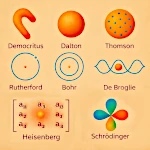 原子的各种形态:从古代直觉到量子力学