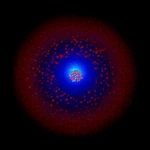


电子在原子中是如何分布的?
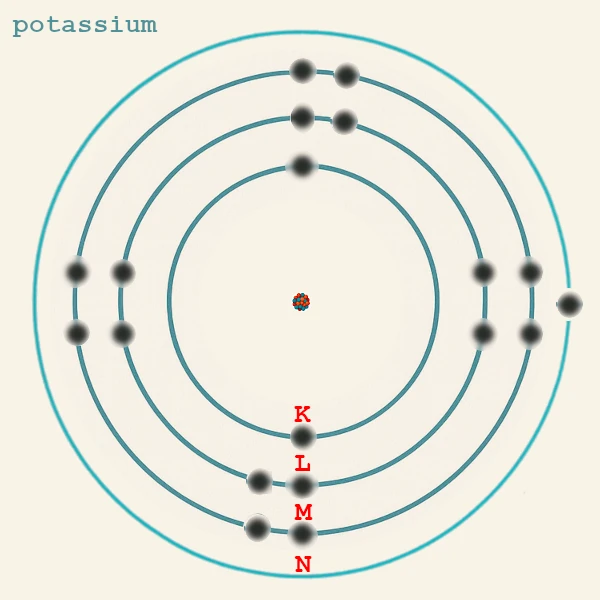
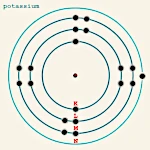
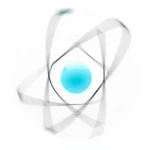
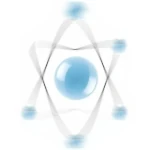
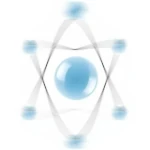
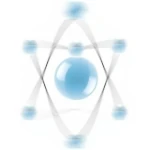
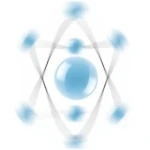
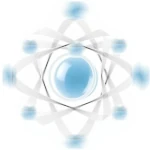
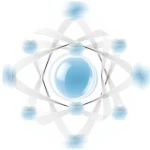
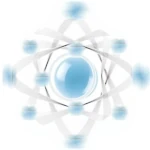
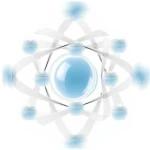
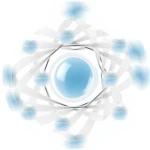
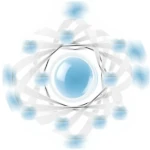
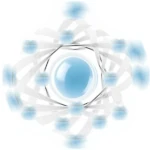
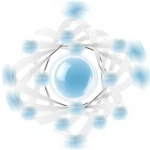
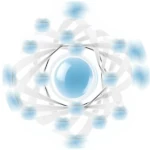
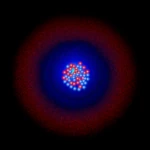
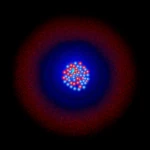
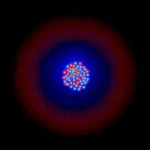
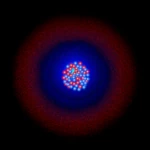
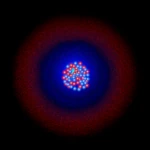
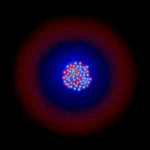
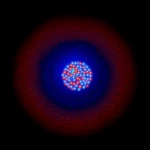
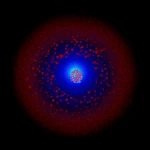
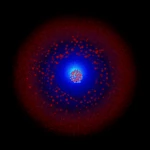
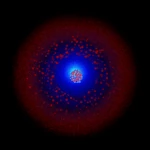
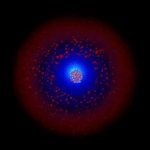
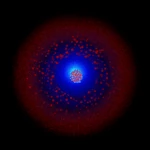
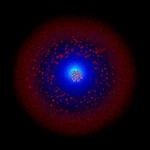
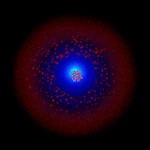
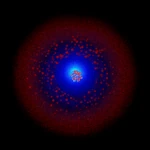
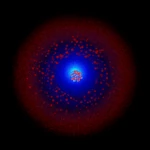
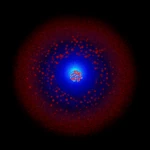
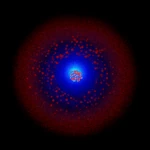
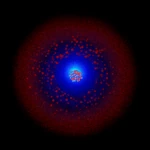
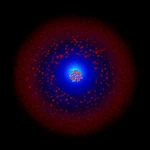
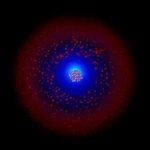
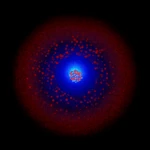
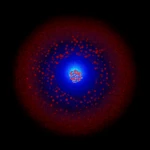
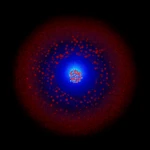
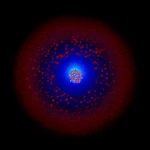
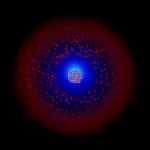
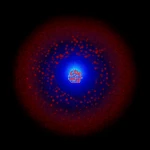
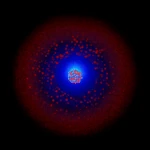
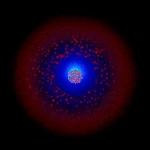
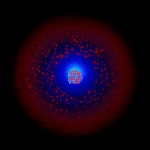
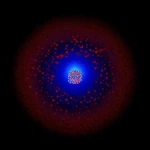
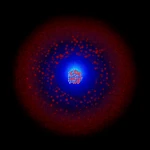
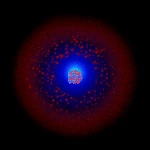
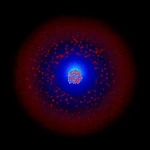
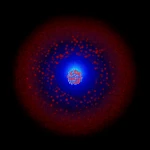
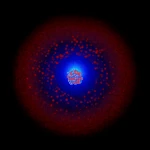
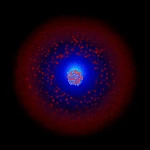
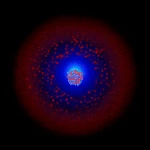
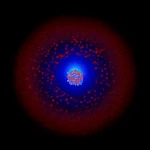
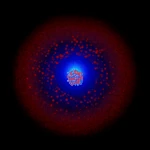
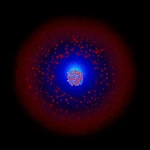
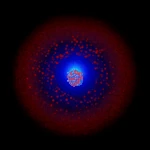
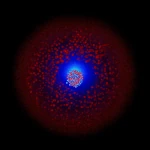
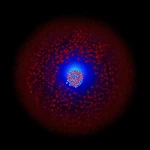
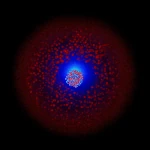
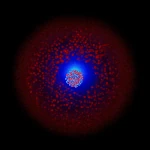
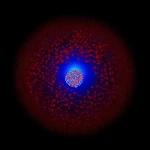
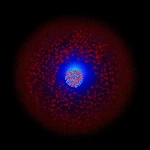
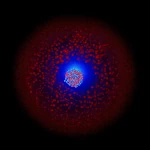
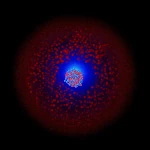
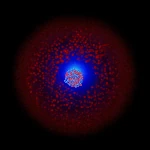
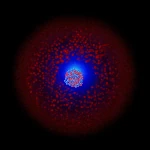
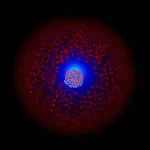
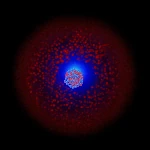
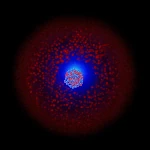
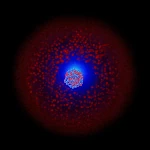
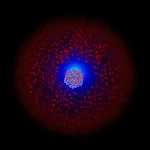
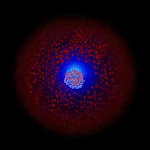
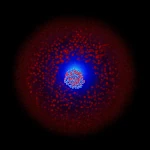
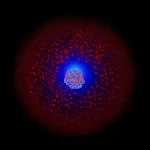
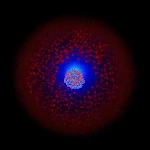
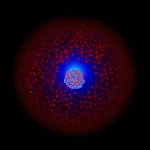
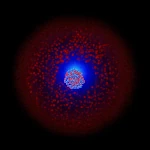
2D representation of the electronic structure of the potassium atom, inspired by the Bohr model, showing the distribution of its 19 electrons: 2 electrons in the K shell, 8 in the L shell, 8 in the M shell, and 1 isolated valence electron in the N shell.
Image source: astronoo.com (新窗口)
电子壳层:K、L、M、N、O、P、Q 符号
起源与原理
To describe the distribution of electrons around the atomic nucleus, physicists use a simple historical notation: the electron shells K, L, M, N, O, P, and Q. This notation was introduced in the early 20th century by physicist 查尔斯·巴克拉 (1877-1944) during the study of X-rays. This notation allows for a quick visualization of how electrons are distributed by increasing energy levels, from the shell closest to the nucleus (K) to the outer shells.
与现代符号的对应关系
Each letter corresponds to a principal quantum number n:
K 壳层: n = 1 (first shell, closest to the nucleus)
L Shell: n = 2 (second shell)
M Shell: n = 3 (third shell)
N Shell: n = 4 (fourth shell)
O Shell: n = 5 (fifth shell)
P Shell: n = 6 (sixth shell)
Q Shell: n = 7 (seventh shell)
最大壳容量
Each shell can contain a maximum number of electrons defined by the formula 2n²:
K壳层(n=1): maximum 2 electrons (2 × 1² = 2)
L壳层(n=2): maximum 8 electrons (2 × 2² = 8)
M壳层(n=3): maximum 18 electrons (2 × 3² = 18)
N壳层(n=4): maximum 32 electrons (2 × 4² = 32) → Uranium reaches this: K(2) L(8) M(18) N(32)
O壳层(n=5): maximum 50 electrons (2 × 5² = 50) → Never reached (uranium has only 21 electrons in O)
P壳层(n=6): maximum 72 electrons (2 × 6² = 72) → Never reached
Q壳层(n=7): maximum 98 electrons (2 × 7² = 98) → Never reached
注意::
In practice, no known element completely fills the shells 超越 N. The heaviest natural element, uranium (Z=92), has the configuration K(2) L(8) M(18) N(32) O(21) P(9) Q(2). The heaviest confirmed synthetic element, oganesson (Z=118), has the configuration K(2) L(8) M(18) N(32) O(32) P(18) Q(8).
壳的内部结构:亚壳层
Each shell is divided into subshells designated by the letters s, p, d, f:
s 亚层: can contain up to 2 electrons (1 orbital)
p 亚层: can contain up to 6 electrons (3 orbitals)
d 亚层: can contain up to 10 electrons (5 orbitals)
f 亚层: can contain up to 14 electrons (7 orbitals)
K壳层(n=1): contains only 1s (2 electrons max)
L壳层(n=2): contains 2s and 2p (2 + 6 = 8 electrons max)
M壳层(n=3): contains 3s, 3p, and 3d (2 + 6 + 10 = 18 electrons max)
N壳层 (n=4): contains 4s, 4p, 4d, and 4f (2 + 6 + 10 + 14 = 32 electrons max)
O壳层(n=5): contains 5s, 5p, 5d, and 5f (2 + 6 + 10 + 14 = 32 electrons max theoretical, although the theoretical 5g subshell does not exist in known elements)
P壳层(n=6): contains 6s, 6p, 6d, and 6f (2 + 6 + 10 + 14 = 32 electrons max for known subshells)
Q壳层 (n=7): contains 7s, 7p, and potentially 7d (only 7s and 7p electrons are observed in known elements)
简化符号 K(x) L(y) M(z) N(t)
这种符号表示每个壳层中的电子总数,而不详细说明亚壳层。它特别有助于快速可视化原子的整体电子分布。
元素的例子
氦(2个电子): 1s² → K(2)
The K shell is complete and saturated.
氖(10个电子): 1s² 2s² 2p⁶ → K(2) L(8)
The K and L shells are complete and saturated.
钠(11个电子): 1s² 2s² 2p⁶ 3s¹ → K(2) L(8) M(1)
The K and L shells are complete, the M shell contains only 1 electron out of 18 possible.
氩(18个电子): 1s² 2s² 2p⁶ 3s² 3p⁶ → K(2) L(8) M(8)
The K and L shells are complete. The M shell contains 8 electrons but is not complete (the 3s and 3p subshells are saturated, but 3d remains empty).
钙(20个电子): 1s² 2s² 2p⁶ 3s² 3p⁶ 4s² → K(2) L(8) M(8) N(2)
Note that the 4s subshell fills before the 3d, which is why the M shell remains at 8 electrons.
钛(22个电子): 1s² 2s² 2p⁶ 3s² 3p⁶ 3d² 4s² → K(2) L(8) M(10) N(2)
The M shell begins to fill with 3d electrons.
电子层填充顺序
The filling order does not strictly follow the order of K, L, M, N shells… due to the energy levels of the subshells. The general order is:
1s → 2s → 2p → 3s → 3p → 4s → 3d → 4p → 5s → 4d → 5p → 6s → 4f → 5d → 6p → 7s → 5f → 6d…
这一原理解释了为何例如钾(19个电子)的电子排布为K(2) L(8) M(8) N(1):第19个电子进入4s轨道而非3d轨道,因为4s亚层能量低于3d。
这种记法的重要性
The K, L, M, N, O, P, Q notation allows:
• Quick visualization of the overall electronic structure of an atom
• Easy identification of the valence shell (outer shell)
• Understanding of chemical properties related to valence electrons
• Explanation of the classification of elements in the periodic table
• Prediction of oxidation states and chemical reactivity of elements
示例:
- 溴: The notation K(2) L(8) M(18) N(7) immediately shows that bromine has 7 electrons in its outer shell, without having to decipher the long configuration 1s² 2s² 2p⁶ 3s² 3p⁶ 3d¹⁰ 4s² 4p⁵.
- 铁: Similarly, iron (Z = 26) with its configuration 1s² 2s² 2p⁶ 3s² 3p⁶ 3d⁶ 4s² is summarized as K(2) L(8) M(14) N(2), clearly showing that its 8 valence electrons (6 in 3d and 2 in 4s) explain its multiple oxidation states (+2 and +3).
- 锌: Zinc (Z = 30) with its configuration 1s² 2s² 2p⁶ 3s² 3p⁶ 3d¹⁰ 4s² becomes simply K(2) L(8) M(18) N(2), instantly revealing that its 3d subshell is complete and that only the 2 electrons in 4s participate in reactions, hence its unique oxidation state +2.
元素的电子结构与化学亲和性
元素的化学反应活性源于其电子结构,尤其是价电子层的构型。外层电子(即价电子层)决定了元素形成化学键的能力:原子倾向于通过获得、失去或共享电子来达到稳定构型,通常是与最近稀有气体相同的电子排布。
这一趋势解释了观察到的化学亲和性:碱金属具有单个价电子,容易失去电子形成阳离子;卤素缺少一个电子以填满其外层电子壳层,因此对电子有强烈需求并形成阴离子;而稀有气体因价电子壳层完整,保持化学惰性。在这两个极端之间,过渡元素和类金属表现出中间行为,根据条件形成不同类型的化学键。
理解这些结构-性质关系是现代化学的基础,并能够预测元素在化学反应中的行为。
| 元素 | 符号(Z) | 价电子层 | 价电子 | 价电子排布 | 与其他元素的亲和性(示例) |
|---|---|---|---|---|---|
| 氢气 | H (Z = 1) | n = 1 | 1 | 1s¹ | 与O(H₂O)、C(CH₄)、N(NH₃)的共价键。 |
| 氦 | 氦(Z = 2) | n = 1 | 2 | 1s² | 几乎无化学亲和力;惰性稀有气体。 |
| 锂 | 锂(Z = 3) | n = 2 | 1 | 2s¹ | 与F形成离子键(LiF),与O形成离子键(Li₂O)。 |
| 铍 | 铍(Z = 4) | n = 2 | 2 | 2s² | 与O(BeO)、C(Be₂C)形成的共价键。 |
| 硼 | 硼(Z = 5) | n = 2 | 3 | 2s² 2p¹ | 与F(BF₃)、H(硼烷)的键合不足。 |
| 碳 | C (Z = 6) | n = 2 | 4 | 2s² 2p² | 与H、O(CO₂)、N形成的共价键。 |
| 氮 | N (Z = 7) | n = 2 | 5 | 2s² 2p³ | 与H(NH₃)、C(CN⁻)的多重键。 |
| 氧气 | O(Z = 8) | n = 2 | 6 | 2s² 2p⁴ | 主要氧化剂;与氢、碳、金属结合。 |
| 氟 | F (Z = 9) | n = 2 | 7 | 2s² 2p⁵ | 电负性极高;离子键。 |
| 霓虹灯 | 氖(Z = 10) | n = 2 | 8 | 2s² 2p⁶ | 惰性稀有气体。 |
| 钠 | 钠(Z = 11) | n = 3 | 1 | 3s¹ | 与Cl(NaCl)、O形成离子键。 |
| 镁 | 镁(Z = 12) | n = 3 | 2 | 3s² | 与O的离子键(MgO)。 |
| 铝 | 铝(Z = 13) | n = 3 | 3 | 3s² 3p¹ | 金属键和共价键(Al₂O₃)。 |
| 硅 | 如果 (Z = 14) | n = 3 | 4 | 3s² 3p² | 共价网络(SiO₂)。 |
| 磷 | P (Z = 15) | n = 3 | 5 | 3s² 3p³ | 与O(PO₄³⁻)、H形成键。 |
| 硫磺 | 硫(Z = 16) | n = 3 | 6 | 3s² 3p⁴ | 与H(H₂S)、O(SO₂)成键。 |
| 氯 | Cl(Z = 17) | n = 3 | 7 | 3s² 3p⁵ | 与Na形成离子键,与H形成共价键。 |
| 氩 | 氩(原子序数 = 18) | n = 3 | 8 | 3s² 3p⁶ | 惰性稀有气体。 |
| 钾 | K(Z = 19) | n = 4 | 1 | 4s¹ | 与Cl(KCl)、O的离子键。 |
| 钙 | 钙(Z = 20) | n = 4 | 2 | 4s² | 与O(CaO)的离子键,碳酸盐。 |
| 钪 | 钪(Z = 21) | n = 4 | 3 | 4s² 3d¹ | 金属键;氧化物 Sc₂O₃ |
| 钛 | 钛(Z = 22) | n = 4 | 4 | 4s² 3d² | 金属键;氧化物TiO₂。 |
| 钒 | V (Z = 23) | n = 4 | 5 | 4s² 3d³ | 多种氧化态;V₂O₅。 |
| 铬 | 铬(Z = 24) | n = 4 | 6 | 4s¹ 3d⁵ | 金属键;氧化物 Cr₂O₃ |
| 锰 | 锰(Z = 25) | n = 4 | 7 | 4s² 3d⁵ | 多种氧化态;MnO₂。 |
| 铁 | Fe (Z = 26) | n = 4 | 2–3 | 4s² 3d⁶ | 金属键;氧化物 Fe₂O₃。 |
| 钴 | 钴(Z = 27) | n = 4 | 2–3 | 4s² 3d⁷ | 金属键;CoO配合物 |
| 镍 | 镍(Z = 28) | n = 4 | 2 | 4s² 3d⁸ | 金属键;催化剂NiO。 |
| 铜 | 铜(Z = 29) | n = 4 | 1–2 | 4s¹ 3d¹⁰ | 金属键;氧化物 CuO。 |
| 锌 | Zn (Z = 30) | n = 4 | 2 | 4s² 3d¹⁰ | 与O、S形成离子键。 |
| 镓 | 镓(Z = 31) | n = 4 | 3 | 4s² 4p¹ | 金属键;半导体砷化镓。 |
| 锗 | 锗(Z = 32) | n = 4 | 4 | 4s² 4p² | 半导体;共价键 GeO₂。 |
| 砷 | 砷(Z = 33) | n = 4 | 5 | 4s² 4p³ | 与S、O的共价键。 |
| 硒 | 硒(Se,原子序数34) | n = 4 | 6 | 4s² 4p⁴ | 类似于硫;H₂Se。 |
| 溴 | Br (Z = 35) | n = 4 | 7 | 4s² 4p⁵ | 卤素;与H、金属成键。 |
| 氪 | Kr(Z = 36) | n = 4 | 8 | 4s² 4p⁶ | 几乎惰性的稀有气体。 |
| 铷 | 铷(Rb,原子序数37) | n = 5 | 1 | 5s¹ | 碱金属;离子键 RbCl。 |
| 锶 | 锶(原子序数38) | n = 5 | 2 | 5s² | 与氧形成离子键(SrO)。 |
| 钇 | Y (Z = 39) | n = 5 | 3 | 5s² 4d¹ | 过渡金属;Y₂O₃。 |
| 锆 | 锆(Zr,原子序数40) | n = 5 | 4 | 5s² 4d² | 金属键;ZrO₂。 |
| 铌 | 铌(Z = 41) | n = 5 | 5 | 5s¹ 4d⁴ | 超导体;Nb₂O₅。 |
| 钼 | 钼(Z = 42) | n = 5 | 6 | 5s¹ 4d⁵ | 金属键;MoS₂。 |
| 锝 | 锝(原子序数43) | n = 5 | 7 | 5s² 4d⁵ | 放射性;与氧形成络合物。 |
| 钌 | 钌(Z = 44) | n = 5 | 8 | 5s¹ 4d⁷ | 催化剂;RuO₂。 |
| 铑 | 铑(原子序数45) | n = 5 | 9 | 5s¹ 4d⁸ | 催化剂;Rh₂O₃。 |
| 钯 | 钯 (Z = 46) | n = 5 | 10 | 4d¹⁰ | 催化剂;PdO。 |
| 银 | Ag(Z = 47) | n = 5 | 1 | 5s¹ 4d¹⁰ | 金属键;Ag₂O。 |
| 镉 | 镉(Cd,原子序数48) | n = 5 | 2 | 5s² 4d¹⁰ | 离子键;CdS。 |
| 铟 | 在(Z = 49)中 | n = 5 | 3 | 5s² 5p¹ | 半导体;In₂O₃ |
| Tin | Sn (Z = 50) | n = 5 | 4 | 5s² 5p² | 金属键;SnO₂。 |
| 锑 | 锑(原子序数 = 51) | n = 5 | 5 | 5s² 5p³ | 半金属;Sb₂O₃。 |
| 碲 | 碲(Z = 52) | n = 5 | 6 | 5s² 5p⁴ | 半金属;H₂Te。 |
| 碘 | 碘(Z = 53) | n = 5 | 7 | 5s² 5p⁵ | 卤素;与氢、金属成键。 |
| 氙 | 氙(Xe,原子序数54) | n = 5 | 8 | 5s² 5p⁶ | 稀有气体;与氟形成的化合物(XeF₄)。 |
| 铯 | Cs(Z = 55) | n = 6 | 1 | 6s¹ | 高反应性碱金属;CsCl。 |
| 钡 | 钡(Z = 56) | n = 6 | 2 | 6s² | 离子键;BaO。 |
| 镧 | 镧(Z = 57) | n = 6 | 3 | 6s² 5d¹ | 镧系元素;La₂O₃。 |
| 铈 | 铈(Z = 58) | n = 6 | 3–4 | 6s² 4f¹ 5d¹ | 镧系元素;CeO₂。 |
| 镨 | Pr (Z = 59) | n = 6 | 3 | 6s² 4f³ | 镧系元素;Pr₂O₃。 |
| 钕 | 钕(Z = 60) | n = 6 | 3 | 6s² 4f⁴ | 强力磁铁;Nd₂O₃。 |
| 钷 | 钷(原子序数61) | n = 6 | 3 | 6s² 4f⁵ | 放射性;Pm₂O₃。 |
| 钐 | 钐(Z = 62) | n = 6 | 2–3 | 6s² 4f⁶ | 磁铁;Sm₂O₃。 |
| 铕 | 铕(Z = 63) | n = 6 | 2–3 | 6s² 4f⁷ | 磷光体;Eu₂O₃ |
| 钆 | 钆(Gd,原子序数64) | n = 6 | 3 | 6s² 4f⁷ 5d¹ | 磁性;Gd₂O₃。 |
| 铽 | 铽(原子序数65) | n = 6 | 3 | 6s² 4f⁹ | 磷光体;Tb₂O₃ |
| 镝 | 镝(Dy,Z = 66) | n = 6 | 3 | 6s² 4f¹⁰ | 磁铁;Dy₂O₃ |
| 钬 | 钬(Z = 67) | n = 6 | 3 | 6s² 4f¹¹ | 磁性;Ho₂O₃。 |
| 铒 | 铒(Z = 68) | n = 6 | 3 | 6s² 4f¹² | 光学;Er₂O₃ |
| 铥 | 铥(Tm,原子序数69) | n = 6 | 3 | 6s² 4f¹³ | 激光器;Tm₂O₃。 |
| 镱 | 镱(Yb,Z = 70) | n = 6 | 2–3 | 6s² 4f¹⁴ | Yb₂O₃。 |
| 镥 | 镥(Z = 71) | n = 6 | 3 | 6s² 4f¹⁴ 5d¹ | Lu₂O₃。 |
| 铪 | 铪(Hf,原子序数72) | n = 6 | 4 | 6s² 4f¹⁴ 5d² | 金属键;HfO₂ |
| 钽 | 钽(Z = 73) | n = 6 | 5 | 6s² 4f¹⁴ 5d³ | 耐腐蚀的;Ta₂O₅。 |
| 钨 | W (Z = 74) | n = 6 | 6 | 6s² 4f¹⁴ 5d⁴ | 高熔点;WO₃。 |
| 铼 | 铼(Z = 75) | n = 6 | 7 | 6s² 4f¹⁴ 5d⁵ | 催化剂;Re₂O₇。 |
| 锇 | 锇(Os,原子序数76) | n = 6 | 8 | 6s² 4f¹⁴ 5d⁶ | 密度极高;OsO₄。 |
| 铱 | 铱(Z = 77) | n = 6 | 9 | 6s² 4f¹⁴ 5d⁷ | 耐腐蚀;IrO₂。 |
| 铂金 | 铂(原子序数78) | n = 6 | 10 | 6s¹ 4f¹⁴ 5d⁹ | 催化剂;PtO₂。 |
| 黄金 | 金(Z = 79) | n = 6 | 1 | 6s¹ 4f¹⁴ 5d¹⁰ | 贵金属;Au₂O₃ |
| 水星 | 汞(Z = 80) | n = 6 | 2 | 6s² 4f¹⁴ 5d¹⁰ | 液体;HgO。 |
| 铊 | 铊(Tl,原子序数81) | n = 6 | 3 | 6s² 6p¹ | 有毒;Tl₂O。 |
| 铅 | 铅(原子序数82) | n = 6 | 4 | 6s² 6p² | 金属键;PbO。 |
| 铋 | 铋(Z = 83) | n = 6 | 5 | 6s² 6p³ | 半金属;Bi₂O₃。 |
| 钋 | 钋(原子序数84) | n = 6 | 6 | 6s² 6p⁴ | 放射性;PoO₂。 |
| 砹 | 砹(原子序数85) | n = 6 | 7 | 6s² 6p⁵ | 放射性;稀有卤素。 |
| 氡 | Rn (Z = 86) | n = 6 | 8 | 6s² 6p⁶ | 放射性惰性气体。 |
| 钫 | Fr(Z = 87) | n = 7 | 1 | 7s¹ | 放射性;碱金属。 |
| 镭 | 镭(Z = 88) | n = 7 | 2 | 7s² | 放射性;RaO。 |
| 锕 | 锕(Z = 89) | n = 7 | 3 | 7s² 6d¹ | 锕系元素;Ac₂O₃。 |
| 钍 | 钍(Z = 90) | n = 7 | 4 | 7s² 6d² | 锕系元素;ThO₂。 |
| 镤 | 镤(Z = 91) | n = 7 | 5 | 7s² 5f² 6d¹ | 放射性;Pa₂O₅。 |
| 铀 | U(Z = 92) | n = 7 | 3–6 | 7s² 6d¹ 5f³ | 与O(UO₂²⁺)、F(UF₆)形成的复杂键。 |
 核聚变所需的能量以及为什么铀是一个极限
 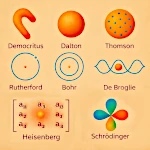 原子的各种形态:从古代直觉到量子力学