

钙(Ca,Z=20):骨骼的建筑师,山脉的雕塑家
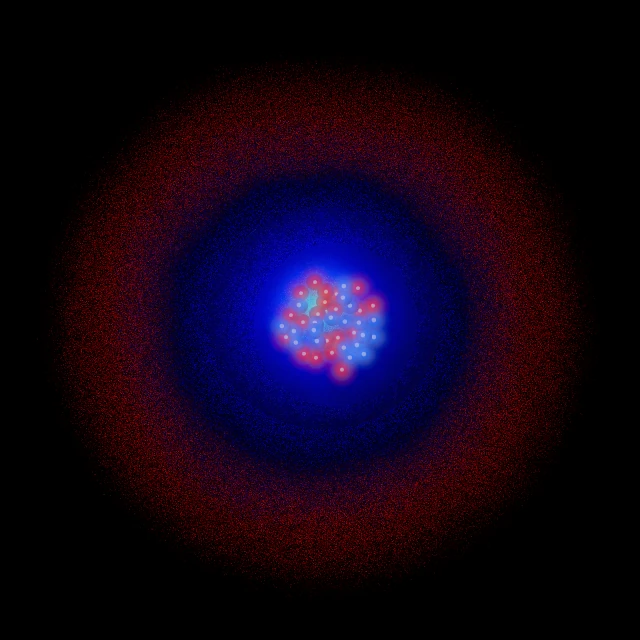
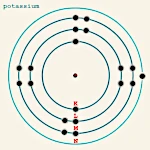
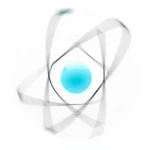
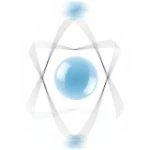
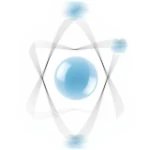
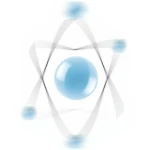
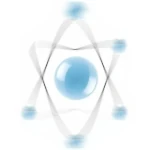
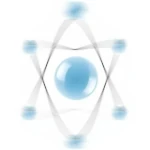
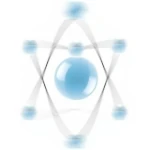
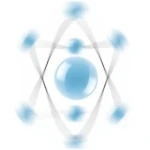
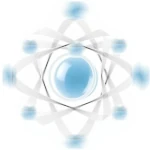
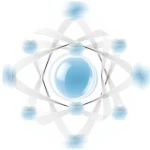
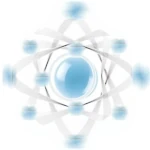
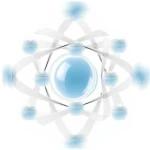
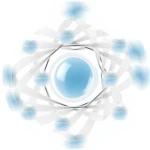
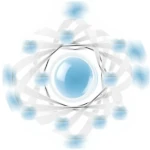
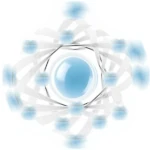
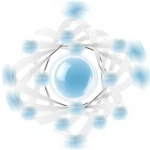
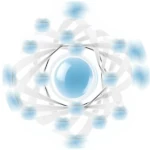
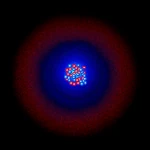
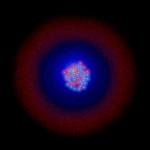
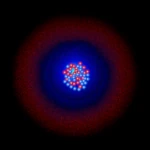
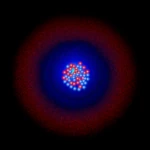
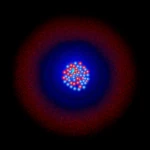
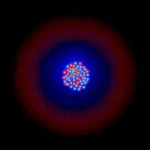
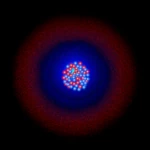
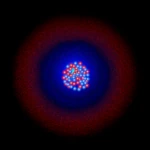
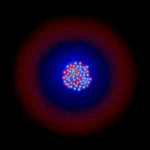
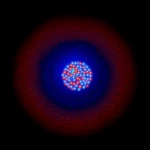
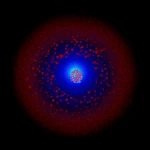
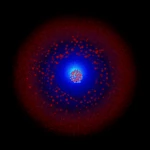
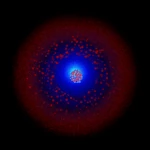
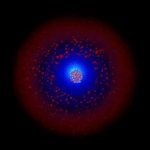
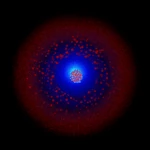
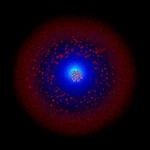
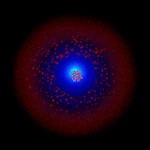
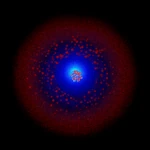
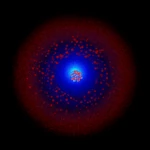
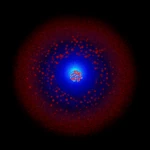
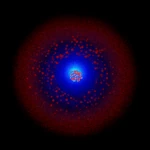
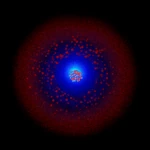
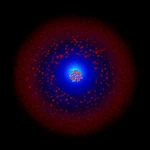
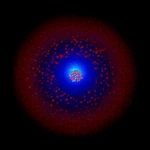
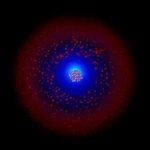
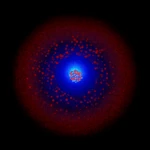
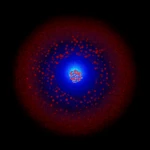
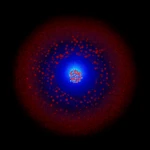
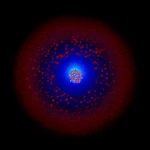
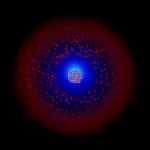
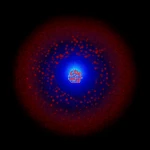
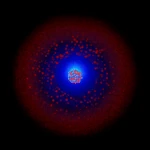
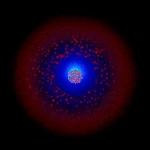
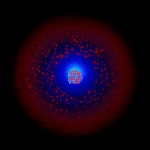
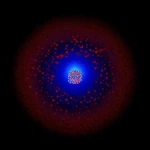
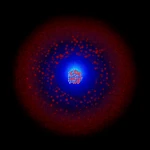
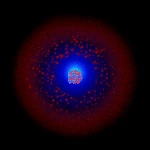
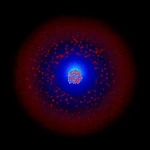
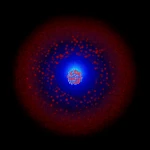
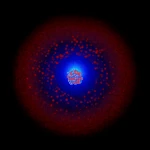
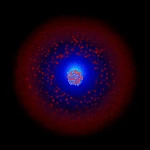
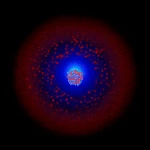
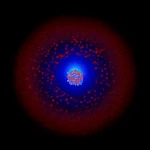
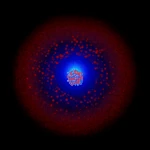
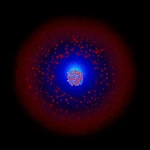
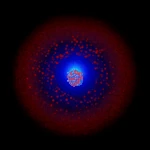
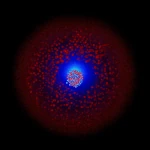
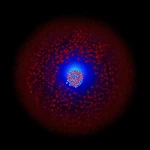
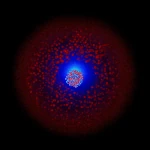
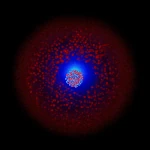
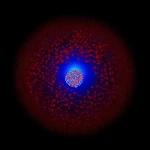
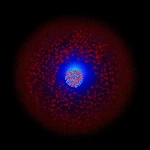
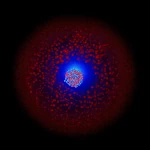
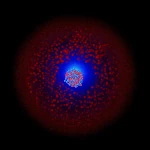
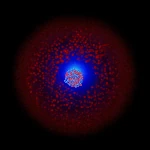
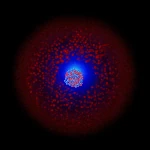
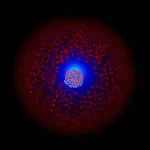
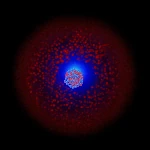
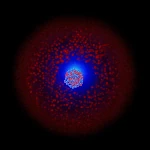
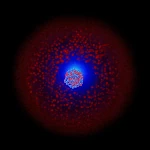
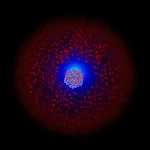
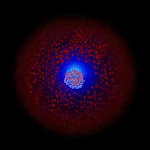
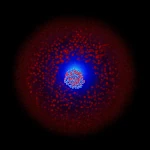
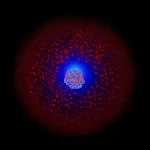
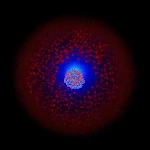
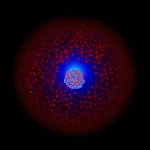
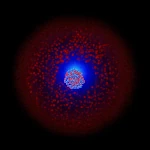
Simplified atomic model of the calcium atom.
The most abundant isotope is \(\,^{40}\mathrm{Ca}\,\) with its 20 protons and 20 neutrons.
Image source: astronoo.com (新窗口)
钙的发现历史
Calcium compounds have been used since ancient times, although the element itself was not suspected to exist. The Romans produced quicklime (calcium oxide, CaO) by heating limestone to make mortar and cement. In 1808, 汉弗里·戴维 (1778-1829), a few months after isolating sodium and potassium, succeeded in isolating metallic calcium by electrolysis of a moistened mixture of calcium oxide and mercury oxide. Davy named this new metal 钙, from the Latin 石灰 = lime, a term already used by the Romans to refer to calcined limestone. However, pure metallic calcium was difficult to obtain and preserve due to its high reactivity. It was not until 1898 that 亨利·莫瓦桑 (1852-1907) improved the isolation process by electrolysis of molten calcium chloride, making it possible to obtain relatively pure calcium.
结构与基本性质
Calcium (symbol Ca, atomic number 20) is an alkaline earth metal in group 2 of the periodic table. Its atom has 20 protons, 20 electrons, and usually 20 neutrons in its most abundant isotope (\(\,^{40}\mathrm{Ca}\)).
Six stable isotopes exist: calcium-40 (\(\,^{40}\mathrm{Ca}\)), calcium-42 (\(\,^{42}\mathrm{Ca}\)), calcium-43 (\(\,^{43}\mathrm{Ca}\)), calcium-44 (\(\,^{44}\mathrm{Ca}\)), calcium-46 (\(\,^{46}\mathrm{Ca}\)), and calcium-48 (\(\,^{48}\mathrm{Ca}\)).
At room temperature, calcium is a solid, silvery-white metal, relatively soft (can be cut with a knife). Density ≈ 1.54 g/cm³.
Melting point of calcium: 1,115 K (842 °C).
Boiling point: 1,757 K (1,484 °C).
Metallic calcium is moderately reactive. It oxidizes slowly in air, forming a layer of oxide and nitride that partially protects it. It reacts with water at room temperature (more slowly than alkali metals), producing calcium hydroxide and hydrogen gas.
Calcium burns in air with an intense reddish-orange flame, producing mainly calcium oxide (CaO) and calcium nitride (Ca₃N₂).
钙同位素表
| 同位素 / 符号 | 质子(Z) | 中子(N) | 原子质量(u) | 自然丰度 | 半衰期/稳定性 | 衰变 / 备注 |
|---|---|---|---|---|---|---|
| 钙-40 — \(\,^{40}\mathrm{Ca}\,\) | 20 | 20 | 39.962591 u | ≈ 96.94% | 稳定的 | 超优势同位素;钾-40的衰变产物。 |
| 钙-44 — \(\,^{44}\mathrm{Ca}\) | 20 | 24 | 43.955482 u | ≈ 2.09% | 稳定的 | 第二丰富的同位素;用于生物医学研究。 |
| 钙-42 — \(\,^{42}\mathrm{Ca}\) | 20 | 22 | 41.958618 u | ≈ 0.647% | 稳定 | 次要稳定同位素。 |
| 钙-48 — \(\,^{48}\mathrm{Ca}\) | 20 | 28 | 47.952534 u | ≈ 0.187% | 4.3 × 10¹⁹ 年(理论值) | 放射性(双β⁻),但半衰期极长,实际中视为稳定。用于核物理合成超重元素。 |
| 钙-43,46 — \(\,^{43}\mathrm{Ca}\),\(\,^{46}\mathrm{Ca}\) | 20 | 23, 26 | 42.958767 u,45.953693 u | ≈ 0.135%,0.004% | 稳定的 | 钙的稀有稳定同位素。 |
| 钙-41 — \(\,^{41}\mathrm{Ca}\) | 20 | 21 | 40.962278 u | 宇宙成因示踪 | 10.3万年 | 通过电子捕获产生放射性,生成钾-41。用于测定古地下水的年龄。 |
| 其他同位素——\(\,^{34}\mathrm{Ca}\) 到 \(\,^{60}\mathrm{Ca}\) | 20 | 14 — 40 | — (变量) | 非自然的 | 毫秒到天 | 人工产生的不稳定同位素;用于实验核物理。 |
钙的电子排布与电子层
注意::
Electron shells: 电子如何围绕原子核组织 (新窗口).
钙有20个电子,分布在四个电子层中。其完整电子排布式为:1s² 2s² 2p⁶ 3s² 3p⁶ 4s², 或简写为:[Ar] 4s²。该排布也可写作:K(2) L(8) M(8) N(2)。
壳层的详细结构
K 壳层 (n=1): contains 2 electrons in the 1s subshell. This inner shell is complete and highly stable.
L层(n=2): contains 8 electrons distributed as 2s² 2p⁶. This shell is also complete, forming a noble gas configuration (neon).
M壳层 (n=3): contains 8 electrons distributed as 3s² 3p⁶. The 3s and 3p orbitals are complete, forming a stable configuration. Note that the 3d orbitals remain empty.
N壳层(n=4): contains 2 electrons in the 4s subshell. These valence electrons are easily lost during chemical reactions.
价电子与氧化态
The 2 electrons in the outer shell (4s²) are the 价电子 of calcium. This configuration explains its chemical properties:
By losing its 2 electrons in the 4s subshell, calcium forms the Ca²⁺ ion (oxidation state +2), its unique and systematic oxidation state.
The Ca²⁺ ion then adopts an electronic configuration identical to that of argon [Ar], a noble gas, which gives this ion great stability.
钙的电子构型中,其价电子层仅在4s亚层含有2个电子,这使其被归类为碱土金属。这种结构赋予了它典型特性:高化学反应活性(在空气中迅速氧化)、通过易失去两个价电子形成离子键的能力,以及仅生成氧化态为+2的化合物。钙的化合物不显色,因为Ca²⁺离子在部分填充的轨道中不含d电子。其显著的失电子倾向使钙成为优良的还原剂,且是一种高活性金属,尤其易与水及氧气反应。
化学反应活性
钙是一种活泼金属,主要形成+2氧化态的离子化合物。它与氧气反应生成氧化钙(CaO),与水反应生成氢氧化钙(Ca(OH)₂,熟石灰),与酸反应释放氢气。在高温下,钙与氮气(生成Ca₃N₂)、硫(生成CaS)、碳(生成碳化钙CaC₂)及卤素发生反应。钙的主要化合物包括碳酸钙(CaCO₃,石灰石、白垩、大理石)、硫酸钙(CaSO₄,石膏、灰泥)、磷酸钙(Ca₃(PO₄)₂,磷灰石)、氯化钙(CaCl₂)和氢氧化钙(Ca(OH)₂)。碳酸钙可溶于含二氧化碳的水中,生成可溶性的碳酸氢钙Ca(HCO₃)₂,这是形成石灰岩洞穴和水硬度的基本过程。
钙的工业与技术应用
- 在波特兰水泥的生产过程中,这种水泥是世界上最广泛使用的建筑材料;
- 用于制造建筑中使用的生石灰(CaO)和熟石灰(Ca(OH)₂)。
- 作为钢铁冶金中的脱氧剂和脱硫剂;
- 在金属合金中以提高其机械性能;
- 生产碳化钙(CaC₂),用于生成乙炔;
- 作为还原剂用于提取其他金属(钍、铀、锆);
- 在农业中用于中和酸性土壤(施用石灰)。
- 用于处理饮用水(pH调节、硬度去除);
- 作为食品添加剂(固化剂、酸度调节剂,E170);
- 在膳食补充剂和药物中(预防骨质疏松症);
- 用于制造建筑和医疗中的石膏(半水合硫酸钙);
- 作为吸湿剂(无水氯化钙);
- 在造纸和纸浆加工中;
- 用于生产塑料和聚合物;
- 作为道路除冰剂(氯化钙);
- 在玻璃和陶瓷工业中;
- 用于制造肥皂和洗涤剂;
- 作为强光源(历史上剧院中使用的钙光弹)。
基本生物学作用
钙是人体中含量第五丰富的元素,具有重要的生物学功能。人体约99%的钙以羟基磷灰石(Ca₁₀(PO₄)₆(OH)₂)的形式存在于骨骼和牙齿中,这是骨骼的主要矿物成分,赋予其刚性和机械强度。骨骼同时也充当人体的钙储备库。剩余的1%虽然含量极少,却至关重要:离子钙(Ca²⁺)是一种通用的细胞内信使,参与肌肉收缩、神经冲动传导、神经递质释放、血液凝固、激素分泌、酶激活及基因表达调控。血液钙浓度(正常值为2.2-2.6 mmol/L)的微小波动都可能引发严重后果:低钙血症会导致痉挛、手足抽搐和心脏功能紊乱,而高钙血症则可能引起意识模糊、心律失常和组织钙化。在海洋生物中,钙被用于构建贝壳、外骨骼和珊瑚礁。植物则利用钙维持细胞壁结构,并作为应激反应中的次级信使。
主要地质重要性
钙是地壳中含量第五丰富的元素(约占质量的3.4%)。它是许多岩石的主要成分:石灰岩(纯或含杂质的碳酸钙)、大理石(变质石灰岩)、白垩(生物成因石灰岩)、白云岩(钙镁双碳酸盐)和石膏(水合硫酸钙)。石灰岩约占大陆表面的10%,主要由数百万年间海洋生物骨骼与外壳的堆积形成。钙循环与碳循环密切相关:大气中的二氧化碳溶解于雨水形成碳酸,碳酸溶解石灰岩,钙被输送到海洋后再次以生物或化学碳酸盐形式沉淀。这一在地质时间尺度(数百万年)上调节大气二氧化碳的过程,对稳定地球气候起着关键作用。石灰岩洞穴、钟乳石和石笋通过碳酸钙的缓慢溶解与再沉淀形成。硬水水源含有因石灰岩溶解而释放的钙离子。
在天体物理学和核合成中的作用
钙元素在超新星爆发前,大质量恒星深层硅聚变过程中产生。主要同位素钙-40主要来源于地壳中钾-40的放射性衰变。超新星爆发将钙元素注入星际介质,随后被新一代恒星和行星吸收。通过光谱分析已在众多恒星和星云中检测到钙元素。电离钙的吸收线(Ca II H线和K线,波长393.3纳米和396.8纳米)是恒星光谱中最强烈的谱线之一,用于测定恒星的成分和性质。富含中子的钙-48同位素在核物理中用于与其他重核聚变合成超重元素(第114-118号元素)。富钙铝包体(CAI)是46.7亿年前早期太阳系中最早形成的固体物质之一。
注意:
The White Cliffs of Dover, a natural emblem of England, are entirely composed of calcium. These impressive geological formations of white chalk are made of pure calcium carbonate (CaCO₃) formed by the gradual accumulation of microscopic coccolithophore shells, single-celled marine algae, at the bottom of a warm sea during the Cretaceous period about 90 million years ago.
Each centimeter of these cliffs represents thousands of years of sedimentation and contains billions of fossilized microorganisms.
These cliffs reach up to 110 meters in height and erode at a rate of about 1 cm per year due to waves and weathering.
They spectacularly testify to the role of calcium in building monumental geological landscapes from the activity of microscopic organisms over immense geological time scales.
 核聚变所需的能量以及为什么铀是一个极限
 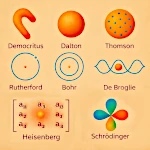 原子的各种形态:从古代直觉到量子力学