

氧(O,Z=8):生命的气息与行星化学的建筑师
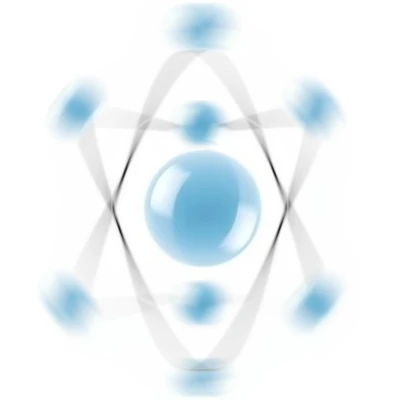
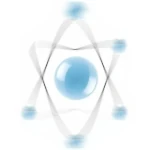
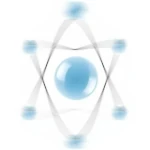
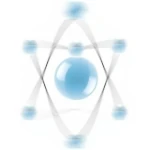
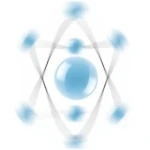
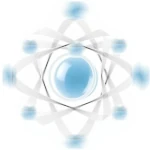
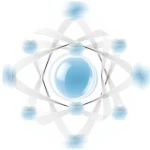
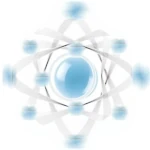
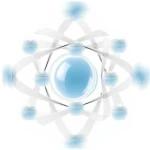
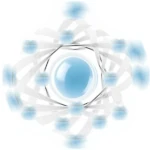
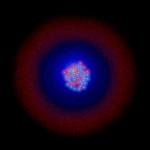
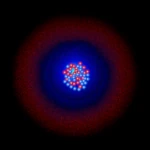
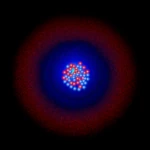
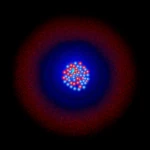
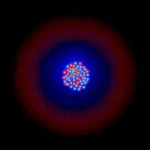
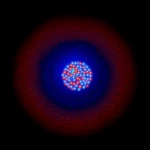
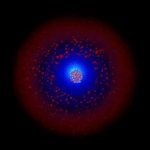
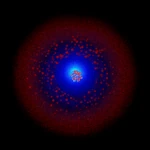
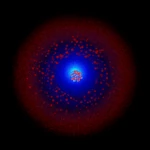
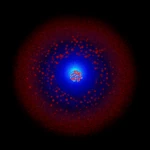
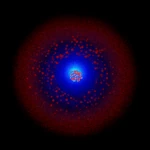
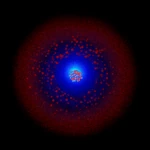
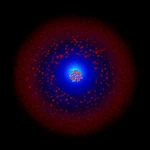
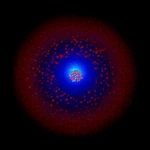
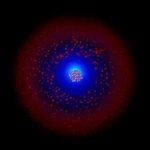
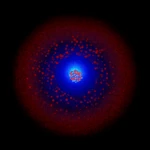
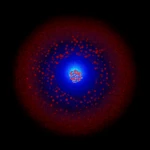
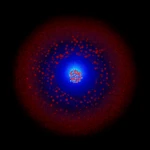
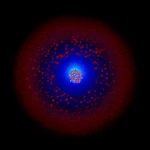
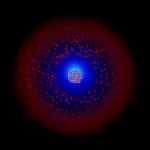
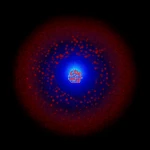
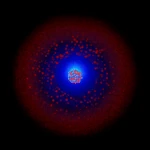
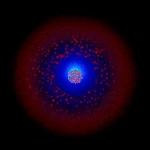
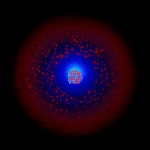
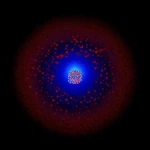
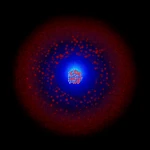
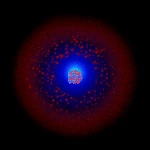
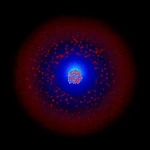
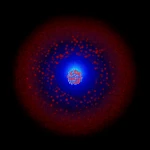
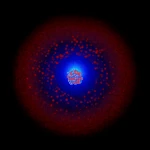
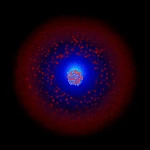
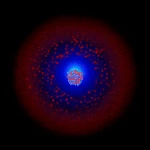
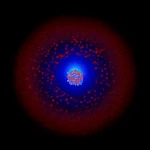
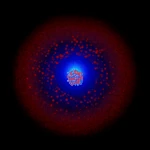
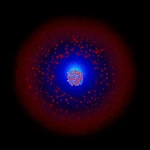
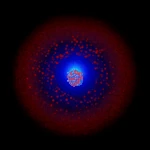
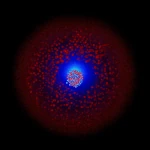
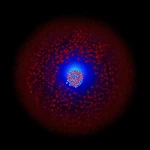
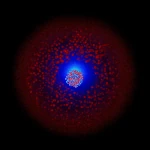
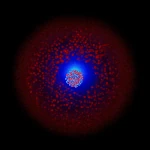
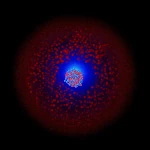
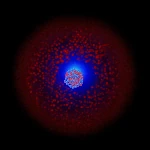
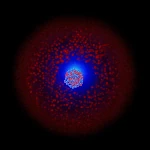
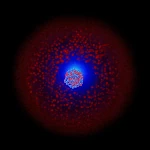
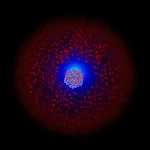
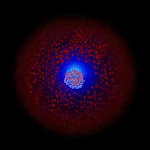
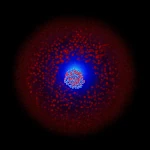
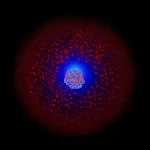
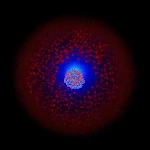
Simplified atomic model of the oxygen atom with its eight protons and eight electrons.
Image source: astronoo.com (新窗口)
氧气发现史
Oxygen was discovered independently by several chemists in the 1770s. The Swedish chemist 卡尔·威廉·舍勒 (1742-1786) isolated oxygen in 1772 by heating various oxides, but his work was not published until 1777. In 1774, the British theologian and chemist 约瑟夫·普里斯特利 (1733-1804) produced oxygen by focusing sunlight on mercury oxide using a lens. He observed that a candle burned more vigorously in this gas and that a mouse survived longer in it. It was 安托万·拉瓦锡 (1743-1794) who, between 1775 and 1780, truly understood the nature of oxygen and its role in combustion and respiration, thus overturning the phlogiston theory. Lavoisier named this element 氧气 (from the Greek 氧 = acid and 基因 = generate), mistakenly believing that all acids contained oxygen. This discovery marked the beginning of modern chemistry.
结构与基本性质
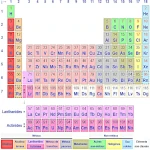
Oxygen (symbol O, atomic number 8) is a non-metal of group 16 (chalcogens) in the periodic table, consisting of eight protons, usually eight neutrons (for the most common isotope), and eight electrons.
The three stable isotopes are oxygen-16 \(\,^{16}\mathrm{O}\) (≈ 99.757%), oxygen-17 \(\,^{17}\mathrm{O}\) (≈ 0.038%), and oxygen-18 \(\,^{18}\mathrm{O}\) (≈ 0.205%).
At room temperature, oxygen exists as a diatomic gas (O₂), colorless, odorless, and highly chemically reactive.
The O₂ molecule has a unique electronic configuration with two unpaired electrons, giving it paramagnetic properties (liquid oxygen is attracted by a magnet).
Oxygen gas constitutes about 21% of Earth's atmosphere by volume and is essential for aerobic respiration.
O₂ gas has a density of about 1.429 g/L at standard temperature and pressure.
Oxygen also exists as 臭氧 (O₃), a triatomic allotropic form, pale blue in color, with a characteristic odor, which strongly absorbs ultraviolet rays.
The stratospheric ozone layer protects terrestrial life from harmful UV radiation.
The temperature at which the liquid and solid states can coexist (melting point): 54.36 K (−218.79 °C).
The temperature at which it transitions from liquid to gas (boiling point): 90.188 K (−182.962 °C).
Liquid oxygen has a characteristic pale blue color.
氧同位素表
| 同位素 / 符号 | 质子(Z) | 中子(N) | 原子质量(u) | 天然丰度 | 半衰期/稳定性 | 衰变/备注 |
|---|---|---|---|---|---|---|
| 氧-15 — \(\,^{15}\mathrm{O}\,\) | 8 | 7 | 15.003066 u | 非自然的 | 122.24秒 | 放射性β⁺衰变至¹⁵N;用于医学正电子发射断层扫描(PET)。 |
| 氧-16 — \(\,^{16}\mathrm{O}\,\) | 8 | 8 | 15.994915 u | ≈ 99.757% | 稳定 | 超丰同位素;生物化学与呼吸作用的基础;原子质量的旧基准。 |
| 氧-17 — \(\,^{17}\mathrm{O}\,\) | 8 | 9 | 16.999132 u | ≈ 0.038% | 稳定的 | 唯一具有核自旋的氧同位素;用于氧-17核磁共振波谱分析。 |
| 氧-18 — \(\,^{18}\mathrm{O}\,\) | 8 | 10 | 17.999160 u | ≈ 0.205% | 稳定的 | 主要古气候示踪剂;其与氧-16的比值揭示了过去的气温和冰量。 |
| 氧-19 — \(\,^{19}\mathrm{O}\,\) | 8 | 11 | 19.003580 u | 非自然的 | 26.464秒 | 放射性β⁻衰变至\(\,^{19}\mathrm{F}\);在加速器中人工产生。 |
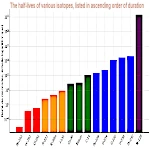
| 其他同位素——\(\,^{12}\mathrm{O}-\,^{14}\mathrm{O},\,^{20}\mathrm{O}-\,^{28}\mathrm{O}\) | 8 | 4-6, 12-20 | —(共鸣) | 非自然的 | \(10^{-21}\) — 13.51秒 | 核物理中观察到非常不稳定的状态;其中一些表现出中子晕结构。 |
氧的电子构型与电子层
注::
Electron shells: 电子如何围绕原子核排列 (新窗口).
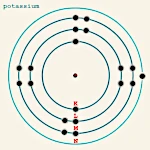
氧原子有8个电子,分布在两个电子壳层中。其完整电子排布为:1s² 2s² 2p⁴,简化形式为:[He] 2s² 2p⁴。该排布也可写作:K(2) L(6)。
壳层的详细结构
K壳层(n=1): contains 2 electrons in the 1s subshell. This inner shell is complete and highly stable.
L壳层(n=2): contains 6 electrons distributed as 2s² 2p⁴. The 2s orbitals are complete, while the 2p orbitals contain only 4 out of 6 possible electrons. Thus, 2 electrons are missing to achieve the stable neon configuration with 8 electrons (octet).
价电子与氧化态
The 6 electrons in the outer shell (2s² 2p⁴) are the 价电子 of oxygen. This configuration explains its chemical properties:
By gaining 2 electrons, oxygen forms the O²⁻ ion (oxidation state -2), its most common state in oxides, adopting the stable neon configuration [Ne].
Oxygen can also exhibit an oxidation state of -1 in peroxides (such as H₂O₂, hydrogen peroxide) and superoxides.
In certain compounds with fluorine (OF₂), oxygen exceptionally exhibits a positive oxidation state of +2, being the only element capable of causing oxygen to lose electrons.
The oxidation state 0 corresponds to dioxygen O₂, its natural molecular form, where two oxygen atoms are bonded by a double bond.
氧的电子构型具有6个价电子,这使其归为硫族元素(第16族),并成为仅次于氟的第二高电负性元素(电负性为3.5)。这种结构赋予其特性:高化学反应活性(氧几乎与所有元素反应)、强氧化性(仅次于氟),以及通过形成两个共价键完成八电子稳定结构的能力。氧在离子化合物中主要形成氧化物离子O²⁻,但也可通过共享电子形成共价键。双氧分子O₂是一种无色无味的顺磁性气体,对需氧生物的呼吸至关重要。其分子具有两个未配对电子,这解释了其顺磁性和反应活性。
氧气至关重要:它约占地球大气的21%,占地壳质量的约46%(是最丰富的元素)。它对生命(细胞呼吸、ATP能量产生)、燃烧以及无数化学过程不可或缺。氧气在工业上用于冶金(钢铁生产)、焊接、化学过程以及医疗领域(氧气疗法)。臭氧O₃是其同素异形体,在平流层中保护地球免受紫外线辐射。
化学反应活性
氧有六个价电子,是电负性第三强的元素(仅次于氟和氯),因此是一种极强的氧化剂。 它几乎能与所有其他化学元素形成化合物,但轻稀有气体(氦、氖、氩)除外。 氧通常形成两个共价键(如H₂O、CO₂),或在离子化合物中形成氧化物离子O²⁻。
氧化 reactions (combustion, respiration, rust, etc.) involve the transfer of electrons to oxygen. The combustion of organic matter with oxygen releases large amounts of energy in the form of heat and light. This high reactivity is exploited in countless natural and industrial processes, but also makes oxygen potentially dangerous: oxygen-enriched atmospheres significantly increase fire risks.
Oxygen forms 氧化物 with all elements except the light noble gases. These oxides can be basic (metallic oxides like CaO), acidic (non-metallic oxides like SO₂, CO₂), or amphoteric (like Al₂O₃). Water (H₂O), the most important oxygen compound, covers 71% of Earth's surface and is essential to all known life.
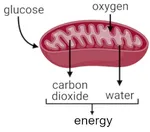
In living organisms, oxygen is used in 有氧细胞呼吸 to oxidize organic molecules (glucose) and produce energy (ATP). This respiration also generates 活性氧 (free radicals) that can damage cells, against which organisms have developed antioxidant systems. Paradoxically, oxygen, essential for aerobic life, is also an oxidative poison at high concentrations.
氧气的工业与技术应用
- 在医疗领域用于氧疗、麻醉和重症监护;
- 用于钢铁生产(碱性氧气炼钢),通过去除铁水中的杂质;
- 作为火箭发动机中的氧化剂(液氧与氢或煤油混合);
- 在氧燃料焊接与切割中;
- 用于废水处理中的富氧(曝气);
- 在化学品(乙烯、丙烯、环氧乙烷等)的生产中;
- 用于造纸工业中漂白纸浆;
- 在潜艇、空间站和宇航服的生命支持系统中;
- 作为工业燃烧过程中的氧化剂,以提高能源效率;
- 在玻璃制造中(通过富氧燃烧实现高温);
- 用于水的消毒和净化(臭氧处理)
- 在水产养殖中维持充足的溶解氧水平;
- 作为医疗和工业废物焚烧系统中的氧化剂;
- 在生产技术玻璃和陶瓷的过程中;
- 用于煤炭气化和合成气生产;
- 在化学工业中用于有机化合物的催化氧化;
- 作为纺织工业中的漂白剂;
- 在高压舱中治疗减压病和某些感染;
- 用于高海拔呼吸(航空、登山)及水下潜水。
- 在火法冶金生产有色金属(铜、锌、镍)的过程中。
在天体物理学和宇宙学中的作用
Oxygen is the third most abundant element in the observable universe (after hydrogen and helium) and the first heavy element by cosmic abundance. It represents about 1% of the total baryonic mass of the universe. Unlike primordial elements (H, He, Li), oxygen is entirely produced by 恒星核合成.
Oxygen is mainly synthesized in massive stars (greater than 8 solar masses) by the 碳和氦的燃烧过程. The triple-alpha reaction produces carbon-12, which then captures a helium-4 nucleus to form oxygen-16. At higher temperatures (about 1 billion kelvin), carbon fusion also produces oxygen. Massive stars develop a layered structure (like an onion) with zones of combustion of different elements, including an oxygen-rich layer.
Oxygen is massively dispersed into the interstellar medium during II型超新星爆发. These cataclysmic events eject the oxygen-rich outer layers of the star at speeds of thousands of kilometers per second, enriching the interstellar medium for future generations of stars and planets. Oxygen represents a significant fraction of the mass ejected by supernovae, making these events the main sources of galactic oxygen.
在星际介质中,氧以多种形式存在:原子态(O、O⁺、O⁺⁺)、分子态(O₂,罕见且难以探测),以及结合在多种分子中,例如H₂O(水冰)、CO(一氧化碳,仅次于H₂的第二丰富分子)、CO₂、OH和复杂有机分子。双电离原子氧(O⁺⁺)在行星状星云和HII区发射特征谱线,使天文学家能够绘制氧在星系中的分布图。
不同天体(陨石、彗星、星际尘埃、前太阳系颗粒)中的¹⁶O/¹⁸O同位素比值揭示了不同类型恒星核合成过程以及银河系化学演化历史的关键信息。在原始陨石某些难熔包体中发现的氧同位素异常表明,形成太阳系的物质来自不同恒星源的贡献。
In 行星大气, oxygen plays a central role. On Earth, atmospheric oxygen (21% O₂) is almost entirely of biological origin, produced by photosynthesis of plants, algae, and cyanobacteria for about 2.4 billion years (the "Great Oxygenation Event"). This accumulation of oxygen profoundly transformed Earth's chemistry and allowed the evolution of complex aerobic life. The spectroscopic detection of molecular oxygen and ozone in the atmosphere of an exoplanet could constitute a potential 生物特征, although abiotic processes could also produce oxygen under certain conditions.
注意::
The “氧气悖论” illustrates the dual nature of this essential element.
Molecular oxygen (O₂) is absolutely vital for aerobic organisms, allowing efficient cellular energy production via mitochondrial respiration.
However, oxygen is also a powerful oxidative poison: its reactive derivatives (superoxide radicals, hydrogen peroxide, hydroxyl radicals) damage proteins, lipids, and DNA.
Aerobic organisms have had to develop sophisticated antioxidant mechanisms (enzymes such as superoxide dismutase, catalase, peroxidase; antioxidant molecules such as vitamins C and E) to protect themselves from oxygen toxicity while exploiting its energetic potential.
Oxygen is also responsible for cellular aging through the accumulation of oxidative damage over time.
This remarkable duality—vital and toxic simultaneously—reflects the complex evolutionary history of life on Earth and the biological compromises necessary to exploit the enormous energetic potential of oxygen.
 核聚变所需的能量以及为什么铀是一个极限
 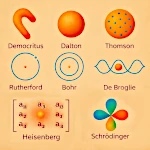 原子的各种形态:从古代直觉到量子力学