

钪(Sc,Z = 21):科学预测的胜利
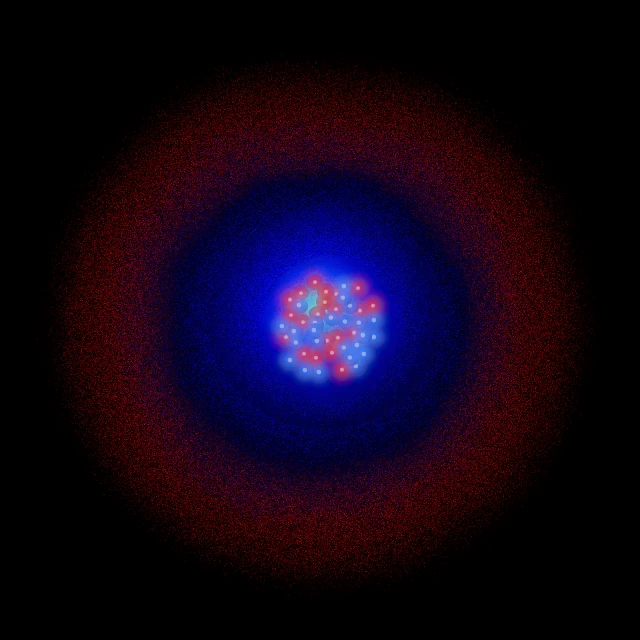
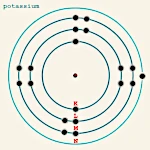
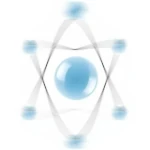
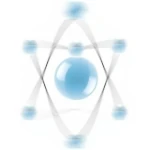
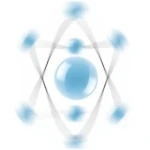
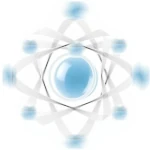
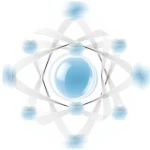
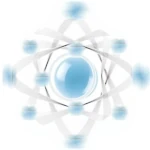
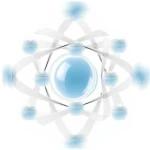
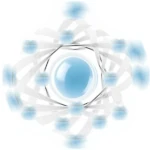
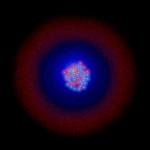
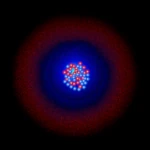
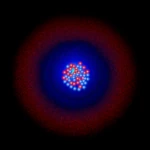
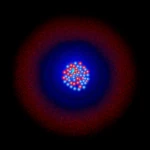
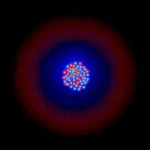
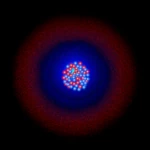
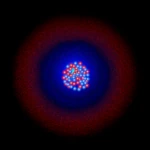
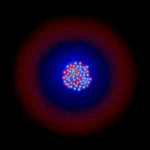
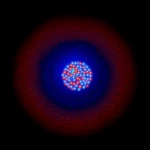
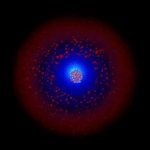
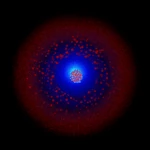
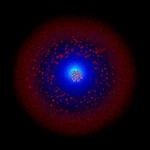
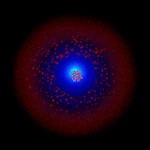
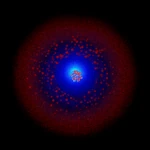
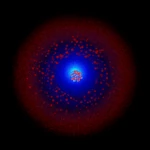
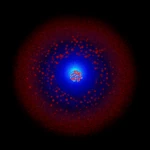
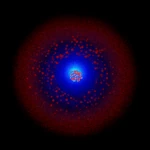
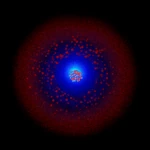
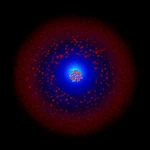
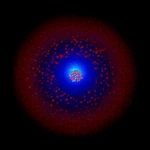
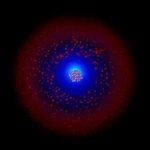
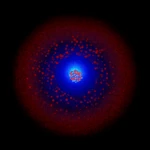
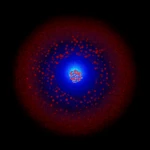
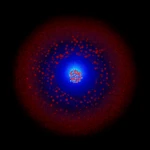
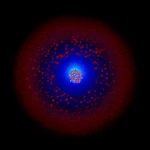
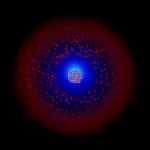
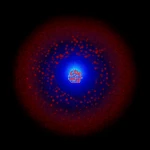
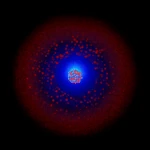
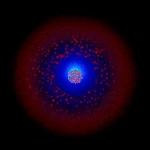
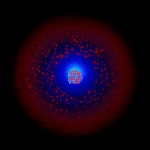
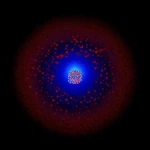
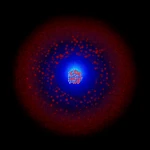
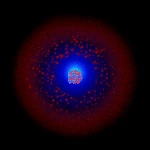
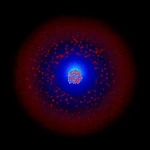
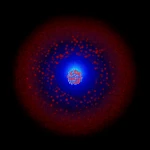
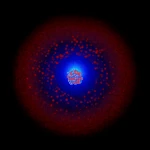
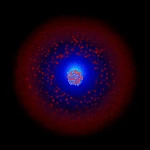
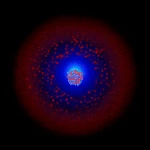
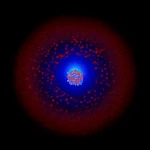
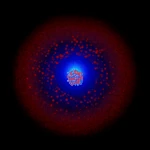
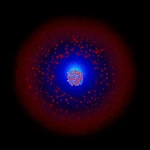
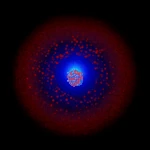
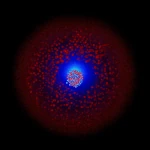
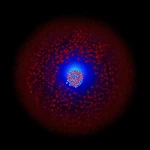
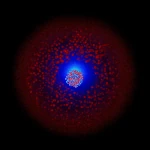
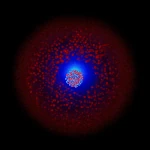
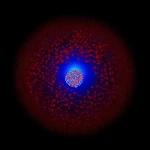
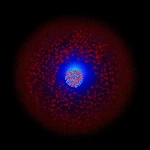
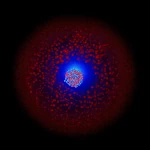
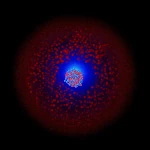
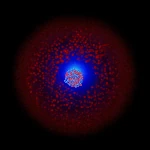
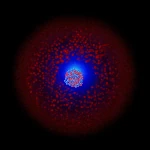
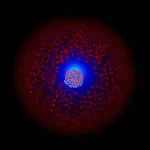
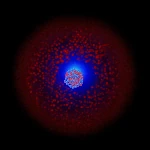
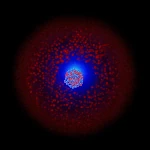
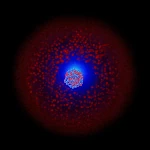
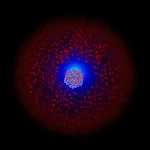
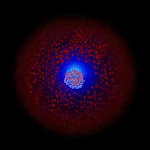
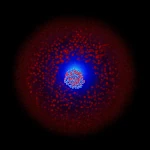
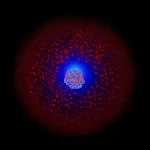
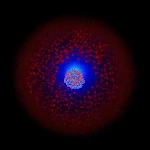
Simplified atomic model of the scandium atom.
The most abundant isotope is \(\,^{45}\mathrm{Sc}\,\) with its 21 protons and 24 neutrons.
Image source: astronoo.com (新窗口)
钪的发现历史
Scandium has a particularly remarkable history because its existence was predicted before its discovery. In 1869, 德米特里·门捷列夫 (1834-1907), while developing his periodic table of elements, predicted the existence of an unknown element he named 类硼 (literally "above boron"), accurately describing its supposed properties: atomic mass around 44, density around 3.5 g/cm³, formation of an oxide Eb₂O₃. Ten years later, in 1879, the Swedish chemist 拉尔斯·弗雷德里克·尼尔森 (1840-1899) discovered a new element in euxenite and gadolinite ores extracted from Scandinavian mines. He named this element 钪 (from Latin 斯坎迪亚 = Scandinavia) in honor of his region of origin. Shortly afterward, 佩尔·特奥多尔·克莱夫 (1840-1905) demonstrated that Nilson's scandium exactly matched Mendeleev's predicted ekaboron, spectacularly validating the predictive power of the periodic table. This confirmation, along with those of gallium (1875) and germanium (1886), definitively established the validity of Mendeleev's periodic classification.
结构与基本性质
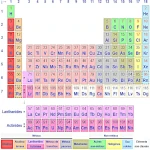
Scandium (symbol Sc, atomic number 21) is the first transition metal in the periodic table, belonging to group 3.
Its atom has 21 protons, 21 electrons, and usually 24 neutrons in its only stable isotope (\(\,^{45}\mathrm{Sc}\)).
At room temperature, scandium is a solid, silvery-white metal with a slight yellowish tint, relatively soft and light. Density ≈ 2.985 g/cm³.
Melting point of scandium: 1,814 K (1,541 °C).
Boiling point: 3,109 K (2,836 °C).
Scandium tarnishes in air, forming a yellowish oxide layer.
It reacts slowly with hot water and dissolves easily in dilute acids, releasing dihydrogen.
Scandium has unusual properties: it chemically resembles the rare earths (lanthanides) rather than aluminum, despite being in the same group.
Its electronic configuration [Ar] 3d¹ 4s² gives it transition properties between alkaline earth metals and true transition metals.
钪同位素表
| 同位素 / 符号 | 质子(Z) | 中子(N) | 原子质量(u) | 天然丰度 | 半衰期/稳定性 | 衰变 / 备注 |
|---|---|---|---|---|---|---|
| 钪-45 — \(\,^{45}\mathrm{Sc}\,\) | 21 | 24 | 44.955908 u | 100% | 稳定 | 钪的唯一天然同位素;单核素。 |
| 钪-46 — \(\,^{46}\mathrm{Sc}\) | 21 | 25 | 45.955168 u | 非自然的 | 83.79天 | 放射性β⁻衰变为钛-46。在医学和工业中用作放射性示踪剂。 |
| 钪-47 — \(\,^{47}\mathrm{Sc}\) | 21 | 26 | 46.952407 u | 非自然的 | 3.349天 | 放射性β⁻衰变为钛-47。在靶向癌症治疗中具有前景。 |
| 钪-44 — \(\,^{44}\mathrm{Sc}\) | 21 | 23 | 43.959403 u | 非自然的 | 3.97小时 | 放射性β⁺和电子俘获衰变为钙-44。用于PET成像(正电子发射断层扫描)。 |
| 其他同位素——\(\,^{36}\mathrm{Sc}\) 到 \(\,^{60}\mathrm{Sc}\) | 21 | 15 — 39 | — (变量) | 非自然的 | 毫秒到小时 | 人工生产的极不稳定同位素;核物理研究。 |
钪的电子排布与电子层
注意::
Electron shells: 电子如何围绕原子核组织排列 (新窗口).
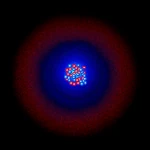
钪有21个电子分布在四个电子壳层上。其完整电子排布为:1s² 2s² 2p⁶ 3s² 3p⁶ 3d¹ 4s², 或简写为:[Ar] 3d¹ 4s²。该排布也可写作:K(2) L(8) M(9) N(2)。
壳层的详细结构
K 壳层 (n=1): contains 2 electrons in the 1s subshell. This inner shell is complete and highly stable.
L层(n=2): contains 8 electrons distributed as 2s² 2p⁶. This shell is also complete, forming a noble gas configuration (neon).
M壳层(n=3): contains 9 electrons distributed as 3s² 3p⁶ 3d¹. The 3s and 3p orbitals are complete, while the 3d orbital contains only one electron out of 10 possible.
N壳层(n=4): contains 2 electrons in the 4s subshell. These electrons are the first to be involved in chemical bonding.
价电子与氧化态
The 3 electrons in the outer shells (3d¹ 4s²) are the 价电子 of scandium. This configuration explains its chemical properties:
By losing the 2 electrons in the 4s subshell, scandium forms the Sc²⁺ ion (oxidation state +2), a relatively rare and unstable state.
By losing the 2 electrons in the 4s subshell and the electron in the 3d orbital, it forms the Sc³⁺ ion (oxidation state +3), the most stable and practically the only oxidation state observed in its compounds.
钪独特的电子构型使其成为过渡金属系列中的第一个元素,其3d轨道上仅有一个单电子。这种结构赋予了它特殊的性质:与其他常呈现多种氧化态的过渡金属不同,钪几乎只以三价形式存在(Sc³⁺)。失去3d电子的Sc³⁺离子具有与氩[Ar]相同的电子构型,这解释了该氧化态的高度稳定性。这一特性使钪成为一种非典型的过渡金属,由于Sc³⁺离子中不存在d电子,其形成的化合物通常无色。
化学反应活性
钪主要形成+III氧化态的化合物,这是稀土元素的典型行为。它在空气中缓慢氧化,形成一层保护性的黄色氧化钪(Sc₂O₃)薄膜。高温下,钪易燃烧,生成白色氧化钪。它与酸(盐酸、硫酸、硝酸)反应,释放氢气并形成钪(III)盐。钪还能与卤素反应生成卤化物(ScCl₃、ScF₃)。钪的化合物包括氧化钪(Sc₂O₃)、氯化钪(ScCl₃)、硫酸钪(Sc₂(SO₄)₃)以及多种有机金属配合物。在化学性质上,尽管钪位于第3族,但其表现更接近钇和稀土元素,而非铝。
钪的工业与技术应用
- 用于航空航天(飞机、火箭)的超轻超强铝钪合金
- 制造高端运动器材(自行车车架、高尔夫球杆、棒球棒)
- 在高强度放电灯(金属卤化物灯)中,产生接近太阳光的光线。
- 用于体育场馆照明和电视机照明;
- 作为核医学中的放射性示踪剂(钪-46);
- 用于靶向癌症治疗的研究(钪-47)
- 在固体氧化物燃料电池(SOFC)中作为电解质;
- 掺杂激光晶体(特别是掺钪的YAG)
- 在某些特定有机反应的化学催化中;
- 在高温超导体的研究中;
- 改善某些永磁体的性能;
- 在冶金学中用于细化金属晶粒结构;
- 在电子行业中用于某些先进半导体;
- 作为镁合金中的添加剂,以提升其性能。
革命性铝钪合金
钪最重要的应用在于铝钪(Al-Sc)合金,该合金于20世纪70年代在苏联被发现。 仅在铝中添加0.1%至0.5%的钪,就能产生显著效果:机械强度提升50%,耐腐蚀性大幅改善,焊接性能更优,且高温下仍能保持机械性能。 这类合金具有卓越的强度重量比,在某些应用领域甚至优于钛。 钪在铝基体中形成纳米级Al₃Sc析出物,可阻碍位错运动并细化晶体结构。 这些非凡特性使铝钪合金成为航空航天(如飞机结构、SpaceX猎鹰9号火箭部件)、专业运动器材以及需在最小重量下保持最大强度的应用场景的理想材料。 阻碍其广泛使用的主要障碍仍是钪的高昂成本。
稀有性与提取难度
矛盾的是,钪在地球化学丰度上并不特别稀有:其在地壳中的含量与铅大致相当(约百万分之22)。然而,钪的分布极为分散,几乎从未形成具有经济开采价值的富集矿床。它在超过800种不同矿物中以痕量形式存在,主要赋存于稀土、铀、钨和铝矿石中。含钪最丰富的矿物是钪钇石((Sc,Y)₂Si₂O₇)和水磷钪石(ScPO₄·2H₂O),但二者极为罕见。目前钪主要作为其他金属矿石加工过程中的副产品提取,尤其在铀精炼、铝土矿残渣(铝)处理及稀土加工中获取。中国、俄罗斯和乌克兰是主要生产国。全球钪的年产量仅为约15至20吨氧化钪,使其价格极为昂贵(约每公斤3000至5000美元)。
在天体物理学中的角色
钪是在大质量恒星核合成的高级阶段产生的,主要通过中子捕获过程生成。超新星爆发将钪散布到星际介质中。通过光谱分析已在特定恒星中检测到钪,尤其是在化学特殊星和Ap星中。与钙、钛等质量相近的元素相比,钪的宇宙丰度相对较低。对原始陨石中钪的分析,可为太阳系形成时的物理化学条件提供信息。不同天体中钪的同位素比值有助于理解恒星核合成过程及银河系的化学演化。
未来挑战与研究
开发更丰富且更经济的钪来源,是航空航天和先进技术行业面临的重大战略挑战。目前,研究人员正在探索从铝土矿残渣(赤泥)中提取钪的方法,这些残渣含有大量但难以回收的钪资源。同时,回收废弃的铝钪合金也日益成为优先事项。专门针对钪的采矿项目正在澳大利亚、斯堪的纳维亚和北美地区推进。若能将钪的成本降低十倍,其在铝合金中的大规模经济应用将成为可能,这或将通过减轻重量显著提升能效,从而彻底革新航空与汽车工业。
N.B.:
In 1871, Mendeleev had predicted an atomic mass of 44 for his "ekaboron"; scandium actually has an atomic mass of 44.96.
He had predicted a density of 3.5 g/cm³; scandium has a density of 2.985 g/cm³.
He had predicted the formation of an oxide Eb₂O₃; scandium forms Sc₂O₃.
When Per Teodor Cleve compared the properties of the newly discovered scandium to Mendeleev's predictions, the correspondence was so perfect that it astonished the scientific community.
This resounding validation transformed the periodic table from a simple classification into a true predictive tool, demonstrating that nature obeys fundamental laws that human intelligence can discover and exploit.
 核聚变所需的能量以及为什么铀是一个极限
 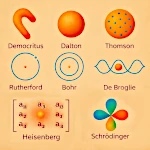 原子的各种形态:从古代直觉到量子力学