

锶(Sr,Z = 38):红色烟花中的金属
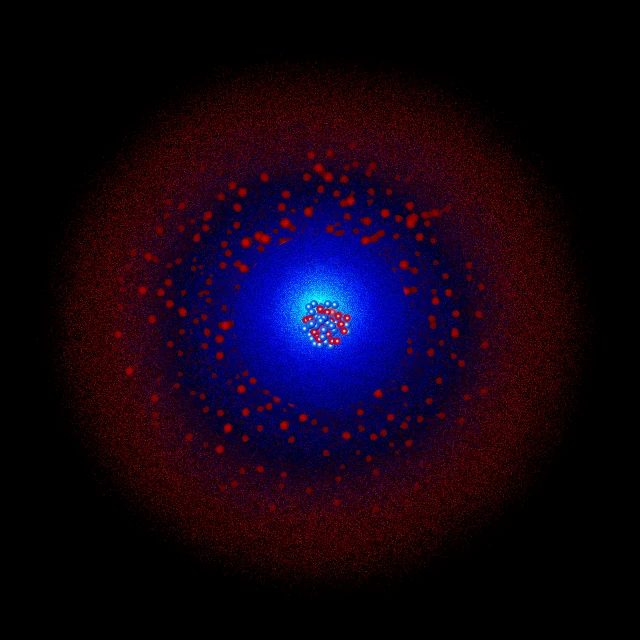
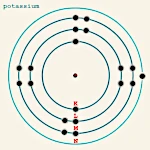
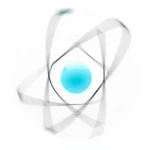
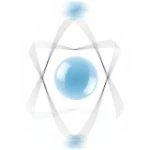
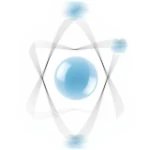
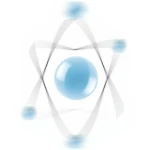
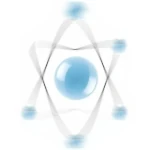
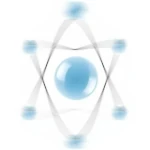
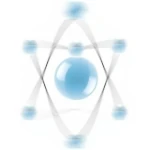
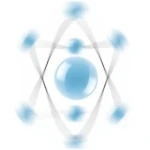
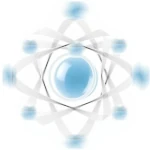
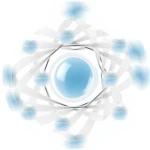
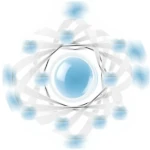
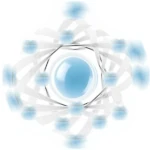
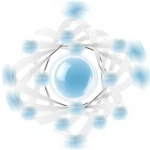
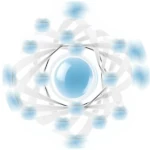
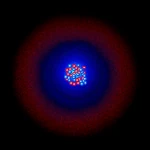
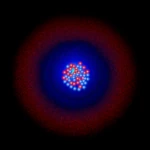
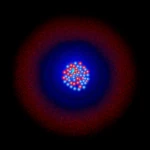
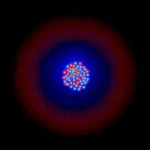
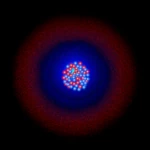
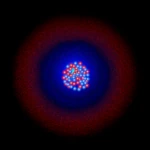
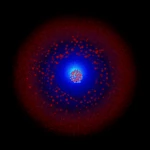
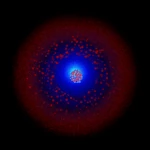
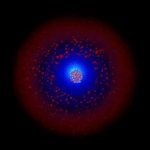
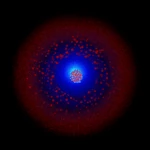
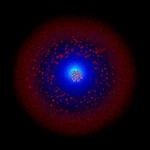
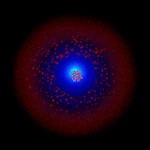
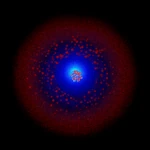
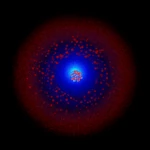
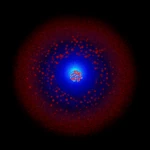
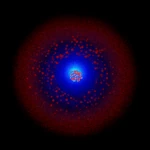
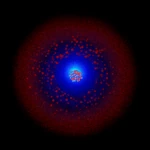
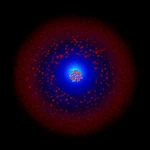
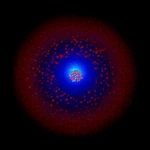
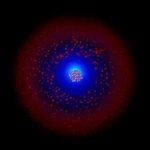
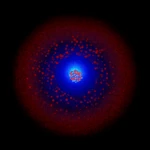
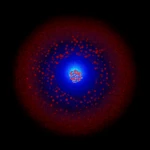
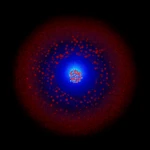
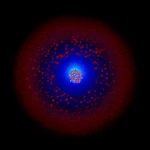
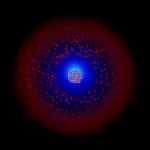
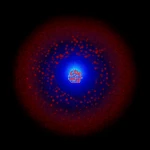
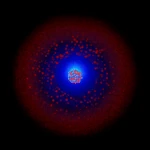
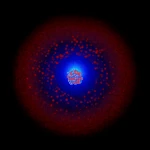
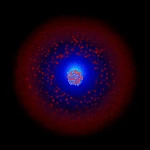
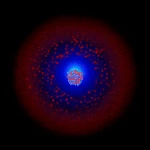
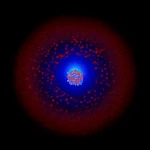
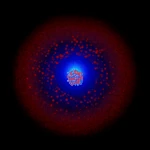
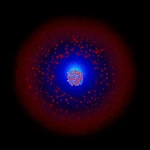
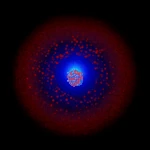
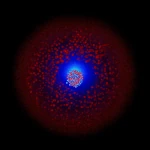
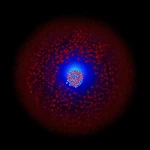
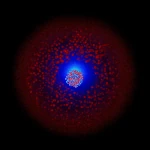
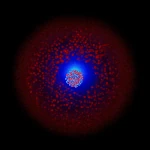
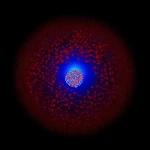
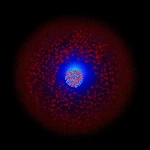
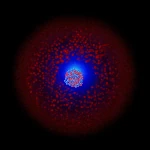
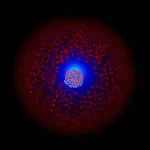
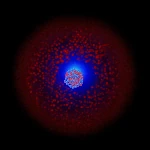
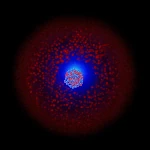
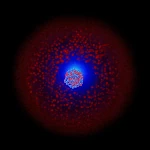
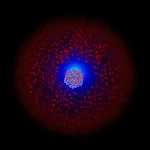
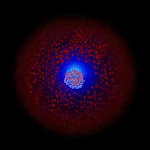
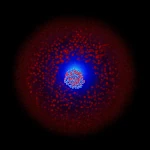
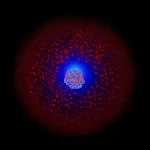
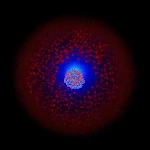
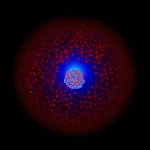
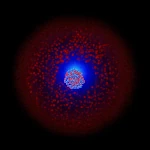
Image description: Simplified atomic model of the strontium atom. The most abundant isotope is \(\,^{88}\mathrm{Sr}\,\)
with its 38 protons, 38 electrons, and 50 neutrons.
Image source:
astronoo.com (新窗口)
锶的发现历史
The history of strontium begins in 1787 in the village of Strontian, located in the Scottish Highlands. Miners discovered an unusual mineral in the local lead mines. This mineral, which looked different from other known carbonates, caught the attention of British chemists. The Irish physician and chemist 阿代尔·克劳福德 (1748-1795) and the Scottish chemist 威廉·克鲁克香克 analyzed this mineral in 1790 and recognized that it contained a new earth (metallic oxide) distinct from baryte and lime.
The mineral was named 菱锶矿 after the village of Strontian, and the new earth was called 锶. However, the isolation of metallic strontium was only achieved much later. In 1808, the British chemist 汉弗里·戴维爵士 (1778-1829), a pioneer in electrochemistry, succeeded in isolating strontium by electrolysis of a moist mixture of strontium oxide and mercury oxide, using a technique similar to the one he had developed to isolate sodium, potassium, calcium, and barium.
The discovery of strontium occurred during a period of intense activity in chemistry, where spectral analysis and electrochemical methods allowed the identification and isolation of new elements. Davy isolated metallic strontium in the form of an amalgam with mercury, then obtained the pure metal by distilling the mercury. The name 锶 was definitively adopted in reference to the Scottish village where the ore was discovered.
In 1852, the Scottish chemist 托马斯·安德森 discovered another important mineral form of strontium, celestine (or celestite), a sky-blue strontium sulfate (SrSO₄), which later became the main industrial source of strontium. This discovery enabled the commercial exploitation of strontium for various industrial applications.
结构与基本性质
锶(符号Sr,原子序数38)是元素周期表第2族的碱土金属。其原子含有38个质子,通常有50个中子(对应最丰富的同位素\(\,^{88}\mathrm{Sr}\)),以及38个电子,电子构型为[Kr] 5s²。
锶是一种柔软、银白色且有光泽的金属,刚切开时尤为明显。其密度为2.64克/立方厘米,介于钙(1.55克/立方厘米)和钡(3.51克/立方厘米)之间,这反映了它在第二族中的位置。锶的质地足够柔软,可以用刀切割,尽管它比钙稍硬一些。
锶在室温下以面心立方(fcc)结构结晶。在大约215°C时,它会发生相变,转变为六方密排(hcp)结构。这种相变会影响其某些物理性质,例如导电性和导热性。
Strontium melts at 777 °C (1050 K) and boils at 1382 °C (1655 K). In the open air, metallic strontium quickly tarnishes, forming a yellowish layer of oxide and nitride. This protective layer slows down further oxidation but does not prevent the gradual corrosion of the metal. For this reason, metallic strontium must be stored in mineral oil or under an inert argon atmosphere.
Melting point of strontium: 1050 K (777 °C).
Boiling point of strontium: 1655 K (1382 °C).
Strontium has an electrical conductivity of about 7.9% that of copper.
锶同位素表
| 同位素 / 符号 | 质子(Z) | 中子(N) | 原子质量(u) | 天然丰度 | 半衰期/稳定性 | 衰变 / 备注 |
|---|---|---|---|---|---|---|
| 锶-84 — \(\,^{84}\mathrm{Sr}\,\) | 38 | 46 | 83.913425 u | ≈ 0.56% | 稳定的 | 天然锶中最轻且最稀有的稳定同位素。 |
| 锶-86 — \(\,^{86}\mathrm{Sr}\,\) | 38 | 48 | 85.909260 u | ≈ 9.86% | 稳定 | 第二稀有的稳定同位素,用作地球化学中的示踪剂。 |
| 锶-87 —— \(\,^{87}\mathrm{Sr}\,\) | 38 | 49 | 86.908877 u | ≈ 7.00% | 稳定的 | 由铷-87衰变产生的放射性同位素,用于铷锶定年法和地质示踪。 |
| 锶-88 — \(\,^{88}\mathrm{Sr}\,\) | 38 | 50 | 87.905612 u | ≈ 82.58% | 稳定 | 天然锶中含量最丰富的同位素,占总量的4/5以上。 |
| 锶-89 — \(\,^{89}\mathrm{Sr}\,\) | 38 | 51 | 88.907451 u | 合成 | ≈ 50.6 天 | 放射性(β⁻)。核裂变产物。用于核医学治疗骨转移疼痛。 |
| 锶-90 — \(\,^{90}\mathrm{Sr}\,\) | 38 | 52 | 89.907474 u | 合成 | ≈ 28.8 年 | 放射性(β⁻)。主要裂变产物,因在骨骼中积累而极具危险性。重要的放射性污染物。 |
| 锶-85 — \(\,^{85}\mathrm{Sr}\,\) | 38 | 47 | 84.912933 u | 合成 | ≈ 64.8 天 | 放射性(电子俘获)。伽马射线发射体,在医学和水文学中用作示踪剂。 |
锶的电子排布与电子壳层
注意::
Electron shells:
电子如何围绕原子核组织 (新窗口).
锶有38个电子,分布在五个电子壳层上。其完整电子排布为:1s² 2s² 2p⁶ 3s² 3p⁶ 3d¹⁰ 4s² 4p⁶ 5s²,简化形式为:[Kr] 5s²。该排布也可写作:K(2) L(8) M(18) N(8) O(2)。
壳层的详细结构
K层(n=1): contains 2 electrons in the 1s subshell. This inner shell is complete and very stable.
L壳层(n=2): contains 8 electrons distributed as 2s² 2p⁶. This shell is also complete, forming a noble gas configuration (neon).
M层(n=3): contains 18 electrons distributed as 3s² 3p⁶ 3d¹⁰. This complete shell contributes to the electronic shielding protecting the valence electrons.
N层(n=4): contains 8 electrons distributed as 4s² 4p⁶, forming the krypton noble gas configuration.
O壳层(n=5): contains 2 electrons in the 5s subshell. These two electrons are the valence electrons of strontium.
价电子与氧化态
The 2 electrons in the outer shell (5s²) are the 价电子 of strontium. These electrons are relatively weakly bound to the nucleus due to the significant distance separating them from the nucleus and the shielding effect of the complete inner electron shells. This low ionization energy gives strontium a high chemical reactivity, characteristic of alkaline earth metals.
The oxidation state of strontium is exclusively +2 in all its stable chemical compounds. Strontium easily loses its two valence electrons to form the Sr²⁺ ion with the stable electronic configuration of krypton [Ar] 3d¹⁰ 4s² 4p⁶. This complete octet configuration with 36 electrons makes the strontium ion particularly stable.
Sr²⁺的离子半径(118 pm)显著大于钙离子Ca²⁺(100 pm),但小于钡离子Ba²⁺(135 pm),这反映了它在第2族中的中间位置。这种中等大小的离子半径在生物化学和地球化学中具有重要意义,因为锶离子可以在许多晶体结构和生物过程中替代钙离子。
锶的电负性适中(鲍林标度为0.95),表明其化学键主要为离子键。锶能与几乎所有非金属形成离子化合物,包括卤素、氧、硫以及碳酸根、硫酸根、硝酸根等阴离子基团。锶显著的金属特性使其成为电正性最强的元素之一。
化学反应活性
锶是一种高反应活性的金属,尽管其反应性略低于钙。它在室温下与水剧烈反应,生成氢氧化锶和氢气:Sr + 2H₂O → Sr(OH)₂ + H₂。该反应是放热的,产生的热量足以点燃释放的氢气,并因锶的汽化而呈现特有的深红色火焰。
在空气中,锶会迅速氧化,首先形成一层氧化锶(SrO),随后在空气中氮气的作用下生成氮化锶(Sr₃N₂):2Sr + O₂ → 2SrO 和 3Sr + N₂ → Sr₃N₂。金属表面会在几分钟内从闪亮的银白色变为暗黄色。在高温下(超过300°C),锶在空气中燃烧,产生特征性的亮红色火焰。
与卤素反应时,锶剧烈反应生成卤化锶:Sr + Cl₂ → SrCl₂。卤化锶(SrF₂、SrCl₂、SrBr₂、SrI₂)为白色离子固体,性质稳定且具有吸湿性。氯化锶(SrCl₂)尤其常用于烟火制造中产生鲜艳的红色火焰。
锶与酸(即使是稀酸)反应生成锶盐并释放氢气:Sr + 2HCl → SrCl₂ + H₂。与稀硫酸反应时,反应速率迅速减慢,因为生成的硫酸锶(SrSO₄)溶解度较低,会在金属表面形成保护层。
锶在高温(约200-500°C)下直接与氢反应生成氢化锶(SrH₂),这是一种灰色离子化合物,用作氢源和还原剂。在高温下与碳反应形成碳化锶(SrC₂),该物质与水反应可产生乙炔。
锶与氧形成重要化合物:氧化锶(SrO)、过氧化锶(SrO₂)和超氧化锶(Sr(O₂)₂)。氢氧化锶(Sr(OH)₂)是一种强可溶性碱,能形成腐蚀性碱性溶液。碳酸锶(SrCO₃)天然存在于菱锶矿中,难溶于水,高温下分解生成氧化锶。
锶的工业与技术应用
- 烟花和信号弹中使用锶的硝酸盐和氯化物以产生鲜艳的红色火焰;
- 用于制造彩色电视阴极射线管(吸收X射线的锶玻璃);
- 在永磁锶铁氧体(SrFe₁₂O₁₉)中,用于电动机和扬声器;
- 在核医学中(锶-89)用于姑息治疗疼痛性骨转移。
- 作为铝合金添加剂,用于改善铸造性能和细化晶粒结构;
- 在发光涂料和涂层中(掺杂铝酸锶);
- 用于实验性放射性同位素热电发生器(锶-90,现已废弃);
- 在地质和海洋学同位素示踪(⁸⁷Sr/⁸⁶Sr比值)中用于研究岩石的起源;
- 在某些类型的特种玻璃和工业陶瓷中;
- 作为敏感牙齿牙膏中的添加剂(氯化锶和乙酸锶);
- 用于生产玻璃和金属抛光膏(碳酸锶);
- 在甜菜糖精炼的制糖工业中;
- 在电子学中,用于某些类型的陶瓷电容器;
- 作为水文学和环境研究中的示踪剂;
- 在特种颜料和染料的制造中;
- 用于新一代光学原子钟(超冷锶);
- 在量子物理和原子光学的基础研究中。
锶-90与放射性污染
锶-90是核反应和原子弹爆炸中最危险的裂变产物之一。其半衰期为28.8年,放射性可持续数个世纪(约10个半衰期,即近300年)。锶-90在铀-235和钚-239的裂变过程中形成,裂变产率约为5%至6%。
锶-90的特殊危险性源于其与钙的化学相似性。当被摄入或吸入后,锶-90会富集于骨骼和牙齿中,取代羟基磷灰石中的钙。一旦融入骨骼,它将在其中存留多年,持续以β射线照射骨组织及骨髓。这种长期辐射会显著增加骨癌、白血病及其他血液系统疾病的风险。
环境中锶-90污染的主要来源是1945年至1980年间进行的大气核试验,这些试验将大量锶-90扩散到全球大气中。放射性沉降物落在农业土壤上,污染了农作物并进入食物链,尤其是通过乳制品。
重大核事故,如切尔诺贝利(1986年)和福岛(2011年)事故,也向环境中释放了大量锶-90。据估计,切尔诺贝利事故中约10%的反应堆锶-90库存被释放,在厂址周围数十公里半径内形成了持续污染区域。
锶-90的环境监测仍然是一个重要的公共卫生问题。自大气核试验结束以来,环境中的锶-90水平已显著下降,但在土壤、沉积物以及某些食品中仍可检测到该物质,尤其是在曾受历史性放射性沉降或核事故影响的地区。
在天体物理学和宇宙学中的作用
Strontium is synthesized in stars through several stellar nucleosynthesis processes. The stable isotopes of strontium (\(\,^{84}\mathrm{Sr}\), \(\,^{86}\mathrm{Sr}\), \(\,^{87}\mathrm{Sr}\), \(\,^{88}\mathrm{Sr}\)) are mainly produced by the s-过程 (slow neutron capture) in asymptotic giant branch (AGB) stars, with contributions from the r-process (rapid neutron capture) during supernovae and neutron star mergers.
同位素锶-87具有特殊地位,因为它既是原始同位素(由恒星核合成形成),又是放射成因同位素(由铷-87衰变产生)。岩石和陨石中的⁸⁷Sr/⁸⁶Sr同位素比值会因放射成因锶-87的积累而随时间增加。该比值是地质年代学和地球化学研究的基础工具。
锶在宇宙中的丰度(按原子数计)约为氢的2.3×10⁻⁹倍。这一相对较低的丰度反映了其在核稳定性曲线中位于铁峰之后的位置,此处核合成过程的效率较低。
同位素比值⁸⁷Sr/⁸⁶Sr被用于追溯太阳系物质的起源与演化。球粒陨石等原始陨石显示出约0.699的均一初始⁸⁷Sr/⁸⁶Sr比值,代表了早期太阳系的组成。不同地球岩石和陨石中观测到的比值变化,为重建行星体的热演化与地球化学历史提供了依据。
中性锶(Sr I)和电离锶(Sr II)的光谱线在光谱天体物理学中尤为重要。波长为407.8纳米的Sr II谱线是一条强共振线,易于在恒星光谱中观测到。通过分析该谱线及其他锶谱线,可以测定不同类型和年龄恒星中的锶丰度,从而追溯星系的化学富集过程。
在某些化学性质特殊的恒星中,尤其是钡星和碳星,观测到了显著的锶元素过量现象。这些恒星通过从AGB伴星转移物质而富集了慢中子俘获过程元素。这些观测结果证实了我们对双星系统中核合成与恒星演化的理解。
注意::
Strontium is present in the Earth's crust at an average concentration of about 0.036% by mass (360 ppm), making it the 15th most abundant element in the crust. It is more abundant than carbon, sulfur, or chlorine. Strontium is never found in its native state but always combined in minerals.
两种主要的锶矿石是天青石(硫酸锶,SrSO₄)和菱锶矿(碳酸锶,SrCO₃)。天青石是迄今为止最丰富且主要的商业来源,呈天蓝色至无色晶体。主要的天青石矿床分布在西班牙、墨西哥、土耳其、伊朗和阿根廷。
全球锶化合物(主要为碳酸锶和硝酸锶)的年产量约为35万吨。西班牙、中国、墨西哥和阿根廷是主要生产国。纯金属锶的产量要小得多,主要通过真空条件下高温用铝还原氧化锶来生产。
锶市场在过去几十年中经历了显著演变。曾作为主要应用的电视阴极射线管需求,随着平板屏幕的出现已基本消失。如今,需求主要由铁氧体磁体、烟花以及陶瓷和冶金领域的专业应用主导。碳酸锶的价格根据纯度和市场条件,每吨在300至800欧元之间波动。
锶在精密量子技术中发挥着日益重要的作用。自21世纪初发展起来的锶光原子钟,是人类迄今制造出的最精确的计时装置之一。这类时钟利用激光冷却锶原子中的超窄电子跃迁,实现了约10⁻¹⁸的精度——每150亿年(比宇宙年龄更长)仅产生1秒的误差。这些设备将彻底革新时间计量学,并为大地测量、导航及基础物理测试等领域开辟新的应用前景。
 核聚变所需的能量以及为什么铀是一个极限
 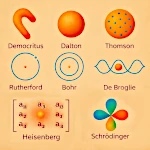 原子的各种形态:从古代直觉到量子力学