

砷(As,Z = 33):具有两面性的类金属
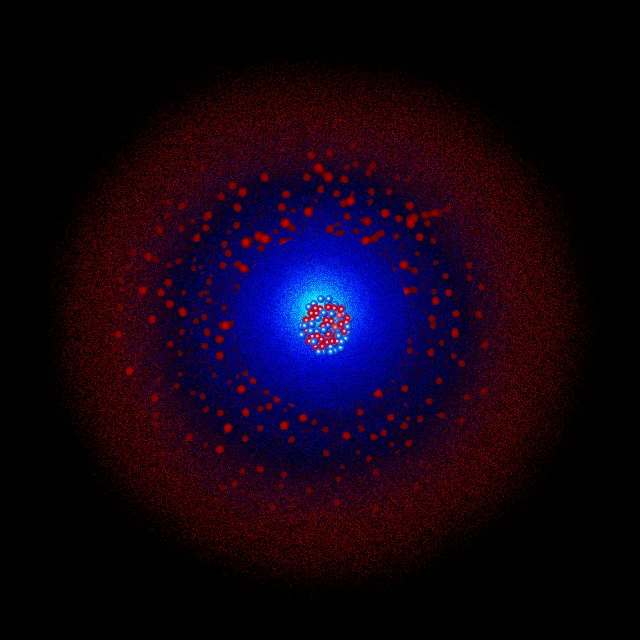
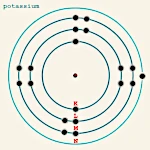
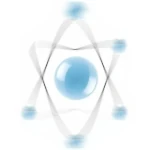
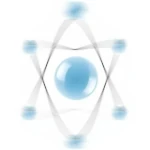
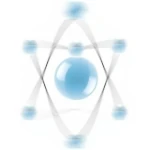
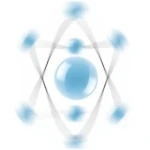
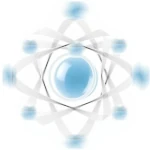
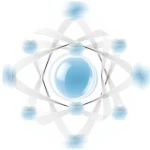
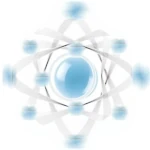
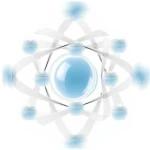
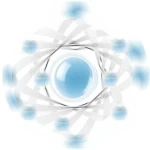
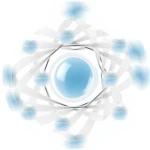
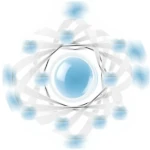
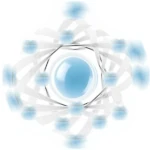
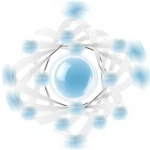
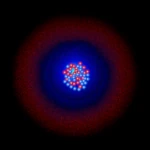
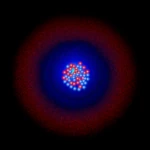
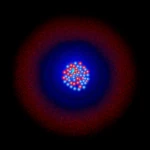
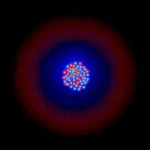
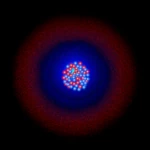
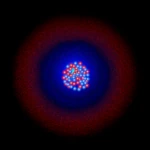
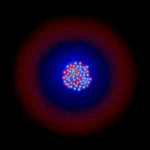
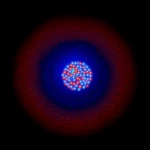
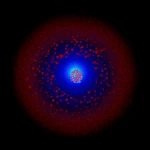
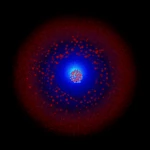
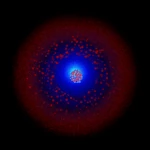
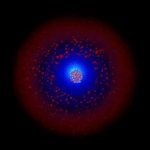
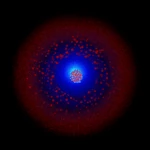
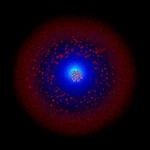
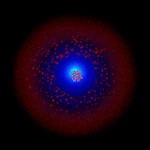
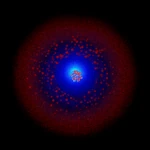
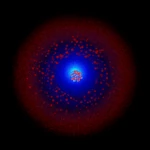
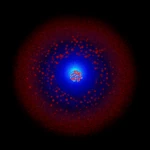
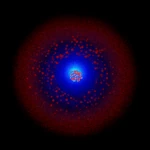
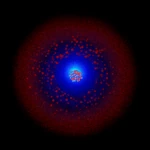
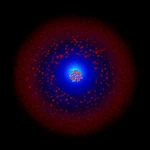
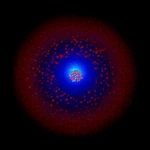
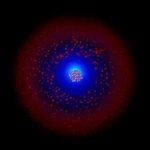
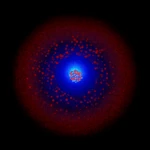
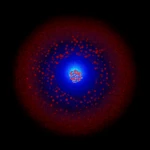
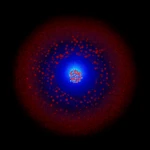
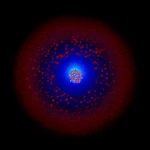
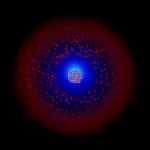
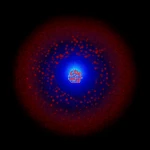
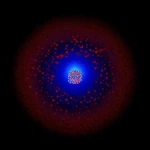
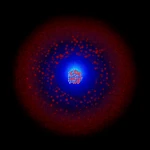
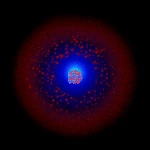
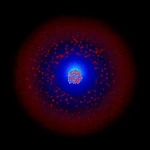
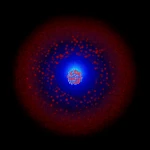
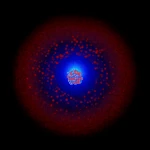
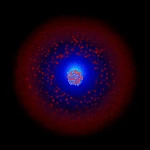
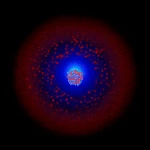
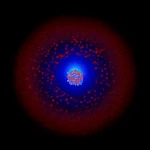
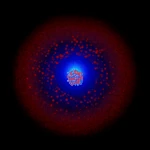
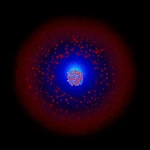
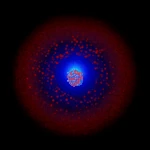
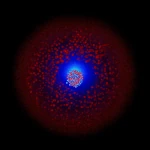
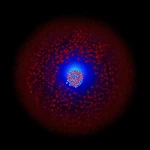
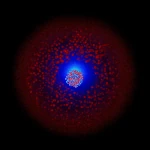
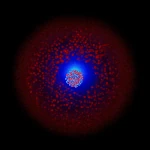
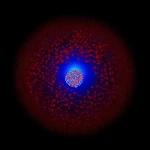
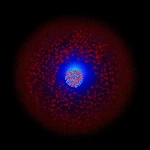
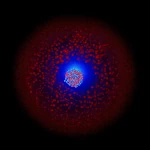
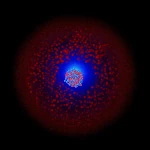
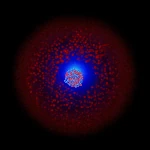
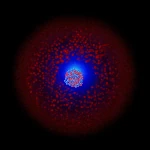
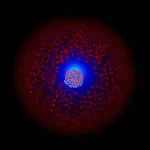
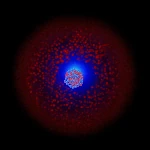
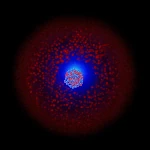
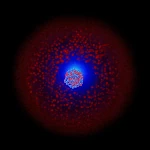
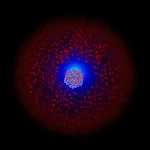
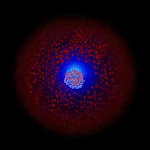
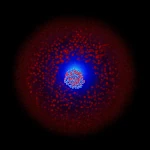
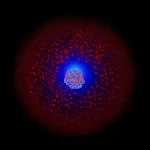
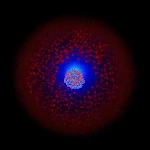
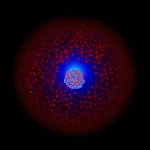
Image description: Simplified atomic model of the arsenic atom. The most abundant isotope is \(\,^{75}\mathrm{As}\,\)
with its 33 protons, 33 electrons, and 42 neutrons.
Image source:
astronoo.com (新窗口)
砷的发现历史
Arsenic has been known since antiquity, long before its recognition as a chemical element. Arsenic compounds, particularly yellow arsenic sulfide (orpiment, As₂S₃) and red arsenic sulfide (realgar, As₄S₄), were used as pigments and poisons as early as the time of the Greeks and Romans. The word 砷 comes from the Greek 砷, itself derived from the Persian zarnikh(扎尔尼克), meaning yellow pigment.
In the Middle Ages, alchemists were familiar with arsenic in the form of arsenic trioxide (As₂O₃), also known as 白砒霜. In 1250, the German scholar 阿尔伯图斯·马格努斯 (1200-1280) was the first to isolate metallic arsenic by heating arsenic trioxide with soap. This reduction method allowed the element to be obtained in its elementary form.
However, it was the Swedish chemist 卡尔·威廉·舍勒 (1742-1786) who, in 1775, demonstrated that arsenic was a true chemical element and not a compound. He established its elemental nature by studying its properties and chemical reactions. Arsenic was officially recognized as an element at the end of the 18th century.
The history of arsenic is closely linked to criminal poisoning. During the 17th and 18th centuries, odorless and tasteless arsenic trioxide was widely used as a poison, to the point of being nicknamed 继承粉 in reference to the inheritances it allowed to accelerate. The development of the Marsh test in 1836 by the British chemist James Marsh finally made it possible to detect the presence of arsenic in biological tissues, revolutionizing forensic medicine.
结构与基本性质
砷(符号As,原子序数33)是元素周期表第15族的准金属。其原子含有33个质子,通常有42个中子(对应最丰富的同位素\(\,^{75}\mathrm{As}\)),以及33个电子,电子构型为[Ar] 3d¹⁰ 4s² 4p³。
Arsenic exhibits several allotropic forms, the most stable being 灰砷 (α form), a shiny metallic solid with a steel-gray color. This form has a rhombohedral crystalline structure with a density of 5.73 g/cm³. Gray arsenic is a semiconductor that becomes superconducting at very low temperatures.
There is also 黄砷 (γ form), an unstable molecular form composed of tetrahedral As₄ molecules, similar to white phosphorus. This form, obtained by rapid condensation of arsenic vapor, is extremely reactive and spontaneously transforms into gray arsenic at room temperature.
黑砷 (β form), obtained by slow sublimation of gray arsenic, has an amorphous structure and lies between the yellow and gray forms in terms of reactivity.
Arsenic does not melt at atmospheric pressure but sublimes directly at 615 °C (888 K), passing from solid to gaseous state without becoming liquid. Under high pressure (about 28 atm), arsenic can melt at 817 °C. This sublimation property has historically been used to purify arsenic.
The sublimation point of arsenic: 888 K (615 °C) at atmospheric pressure.
The melting point of arsenic: 1,090 K (817 °C) at 28 atmospheres.
砷同位素表
| 同位素 / 符号 | 质子(Z) | 中子(N) | 原子质量(u) | 天然丰度 | 半衰期/稳定性 | 衰变 / 备注 |
|---|---|---|---|---|---|---|
| 砷-75 — \(\,^{75}\mathrm{As}\,\) | 33 | 42 | 74.921595 u | 100% | 稳定的 | 砷的唯一稳定同位素。具有用于核磁共振的核磁矩。 |
| 砷-73 — \(\,^{73}\mathrm{As}\,\) | 33 | 40 | 72.923825 u | 合成 | ≈ 80.3 天 | 放射性(电子俘获)。在生物医学研究中用作示踪剂。 |
| 砷-74 — \(\,^{74}\mathrm{As}\,\) | 33 | 41 | 73.923929 u | 合成 | ≈ 17.8 天 | 放射性(β⁺,电子捕获)。正电子发射体,用于PET医学成像。 |
| 砷-76 — \(\,^{76}\mathrm{As}\,\) | 33 | 43 | 75.922394 u | 合成 | ≈ 26.3小时 | 放射性(β⁻)。在核反应堆中产生,用于研究。 |
| 砷-77 — \(\,^{77}\mathrm{As}\,\) | 33 | 44 | 76.920648 u | 合成 | ≈ 38.8 小时 | 放射性(β⁻)。用于靶向放射治疗及农学中的示踪剂。 |
砷的电子排布与电子层
注意::
Electron shells:
电子如何围绕原子核组织 (新窗口).
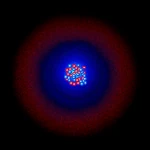
砷有33个电子,分布在四个电子层中。其完整电子排布为:1s² 2s² 2p⁶ 3s² 3p⁶ 3d¹⁰ 4s² 4p³,简化形式为:[Ar] 3d¹⁰ 4s² 4p³。该排布也可写作:K(2) L(8) M(18) N(5)。
壳层的详细结构
K壳层 (n=1): contains 2 electrons in the 1s subshell. This inner shell is complete and very stable.
L层(n=2): contains 8 electrons distributed as 2s² 2p⁶. This shell is also complete, forming a noble gas configuration (neon).
M层(n=3): contains 18 electrons distributed as 3s² 3p⁶ 3d¹⁰. The presence of the complete 3d subshell is characteristic of post-transition elements and significantly influences the properties of arsenic.
N壳层(n=4): contains 5 electrons distributed as 4s² 4p³. These five electrons are the valence electrons of arsenic.
价电子与氧化态
The 5 electrons in the outer shell (4s² 4p³) are the 价电子 of arsenic. This configuration explains its varied chemical properties:
The most common oxidation state of arsenic is +3, where it loses its three 4p³ electrons to form the As³⁺ ion. This configuration [Ar] 3d¹⁰ 4s² has the inert pair effect. Arsenic(III) compounds include arsenic trioxide (As₂O₃) and arsenic trichloride (AsCl₃).
The oxidation state +5 is also important, where arsenic loses all its valence electrons to form As⁵⁺ with the configuration [Ar] 3d¹⁰. Arsenic(V) compounds include arsenic acid (H₃AsO₄) and arsenic pentoxide (As₂O₅). This state is less stable than +3 and has oxidizing properties.
Negative oxidation states also exist: -3 in metallic arsenides such as GaAs (gallium arsenide), where arsenic gains three electrons to complete its valence shell, forming As³⁻ with the configuration [Ar] 3d¹⁰ 4s² 4p⁶.
砷也可以呈现0价(金属砷)、+1价和+2价的氧化态,尽管这些状态罕见且不稳定。砷的化学性质主要由+3价和+5价形式主导,这反映了惰性4s²电子对的稳定性以及利用所有价电子的可能性。
化学反应活性
灰砷在室温空气中相对稳定,会缓慢形成一层薄薄的氧化层,保护其免受进一步氧化。这种钝化作用使其对大气腐蚀具有一定的抵抗力。然而,黄砷极其活泼,在空气中会自发氧化,并产生光(化学发光)。
高温下,砷在氧气中燃烧呈淡蓝色火焰,生成三氧化二砷(As₂O₃),并以特征性白烟形式释放:4As + 3O₂ → 2As₂O₃。该反应因挥发性砷化合物而产生典型的大蒜气味。
砷与氧化性酸反应生成三价或五价砷化合物。与浓硝酸反应时,会形成砷酸:As + 5HNO₃ → H₃AsO₄ + 5NO₂ + H₂O。砷对稀的非氧化性酸相对稳定,但会与浓盐酸缓慢反应。
在强碱条件下,砷会根据条件溶解形成砷酸盐或亚砷酸盐:2As + 6NaOH + 3O₂ → 2Na₃AsO₄ + 3H₂O(生成砷酸盐)或 2As + 6NaOH → 2Na₃AsO₃ + 3H₂(无氧条件下生成亚砷酸盐)。
砷与大多数卤素直接反应,生成三卤化物(AsX₃)或五卤化物(AsX₅):2As + 3X₂ → 2AsX₃(其中X = F, Cl, Br, I)。其中三氟化砷(AsF₃)和五氟化砷(AsF₅)尤为稳定。
砷还能与金属(形成砷化物)和氢形成化合物。砷化氢(AsH₃)是一种剧毒气体,其危险性甚至超过单质砷。它被用于半导体工业中的掺杂以及III-V族化合物的制造。
砷的工业与技术应用
- 在用于高频电子的化合物半导体(砷化镓GaAs、砷化铟InAs)中;
- 用于制造激光二极管和高效率光伏电池;
- 用于电信和卫星的场效应晶体管;
- 作为硅和锗半导体中的掺杂剂(n型);
- 对于木材处理(CCA:铬化砷酸铜),尽管该用途现已受限;
- 在电池和弹药(硬化)用铅合金中;
- 作为玻璃制造中的脱色剂;
- 在某些杀虫剂和除草剂中(使用受到严格监管);
- 用于生产特殊青铜和形状记忆合金;
- 在兽医学和人类医学中(三氧化二砷用于治疗某些白血病);
- 在历史颜料(舍勒绿、巴黎绿)的制造中,现已废弃;
- 作为某些有机化学合成中的催化剂;
- 用于地球化学中的放射性定年法(放射性同位素);
- 在辐射探测器和闪烁体中;
- 在烟火技术中用于产生白光效果。
在天体物理学和宇宙学中的作用
砷在恒星中通过多种核合成过程合成。它主要形成于II型超新星爆发期间的硅燃烧过程,以及渐近巨星分支(AGB)恒星中的慢中子捕获过程(s-过程)和灾变事件中的快中子捕获过程(r-过程)。
砷的唯一稳定同位素(\(\,^{75}\mathrm{As}\))通过上述机制生成,并在恒星爆炸期间扩散至星际介质中。原始陨石中砷的丰度,为研究原始太阳系中的核合成条件及行星形成过程提供了重要信息。
砷在宇宙中的丰度极低,其原子数量约为氢的8×10⁻¹⁰倍。这种稀有性反映了在该原子质量区域(A≈75)合成原子核的困难,以及砷具有奇数质子和中子的事实,使其稳定性低于相邻的偶数元素。
电离砷(As II, As III)的光谱线已在某些热星和特殊恒星天体(如化学特殊星)的光谱中被探测到。对这些谱线的研究有助于理解恒星的化学增丰过程以及星系的化学演化。
砷在天体生物学中也扮演着潜在角色。某些陆地细菌能在代谢过程中利用砷,既可通过将砷酸盐(As⁵⁺)还原为亚砷酸盐(As³⁺)获取能量,也可将砷整合到生物分子中。这种能力引发了关于在富含砷的地外环境中,可能存在以砷为基础而非以磷为基础的生命形式的猜想。
注::
Arsenic is present in the Earth's crust at an average concentration of about 0.00018% by mass (1.8 ppm), making it a relatively rare element. It does not form its own ores but is found associated with other elements, mainly in metal sulfides such as arsenopyrite (FeAsS), realgar (As₄S₄), orpiment (As₂S₃), and in copper, lead, and gold ores.
砷主要通过铜矿和铅矿加工的副产品提取。全球砷年产量约为33,000吨,主要产地为中国(约占65%)、摩洛哥、俄罗斯和智利。砷通常以白色三氧化二砷的形式在市场上销售。
由于其高毒性,砷的使用在大多数国家受到严格管制。世界卫生组织标准将饮用水中的砷浓度限制在10微克/升(十亿分之十)。长期接触砷可能导致严重的健康问题,包括皮肤癌、肺癌、膀胱癌以及心血管和神经系统疾病。
砷中毒仍然是世界某些地区的一个重大公共卫生问题,尤其是在孟加拉国和印度,这些地区的地下水中天然含有高浓度的砷。数百万人暴露在这种自然污染中,这堪称现代史上最大的环境健康灾难之一。
 核聚变所需的能量以及为什么铀是一个极限
 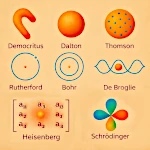 原子的各种形态:从古代直觉到量子力学