

锰(Mn,Z=25):一种多面性的过渡金属
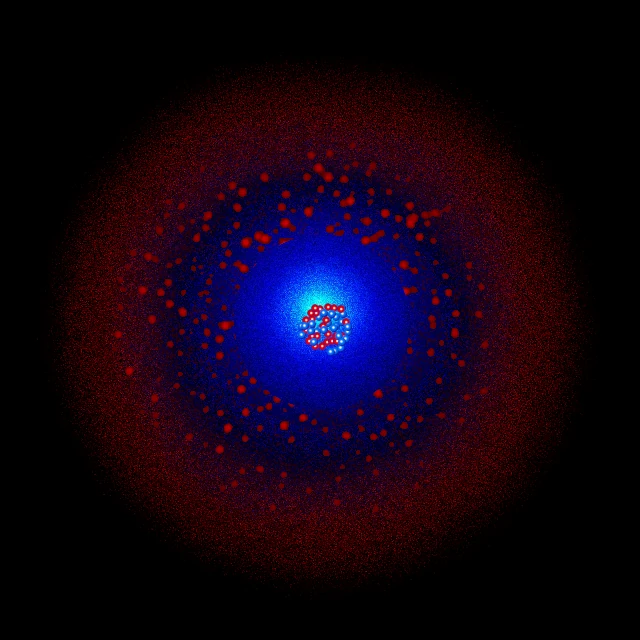
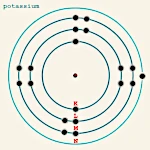
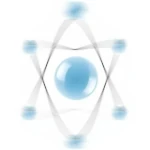
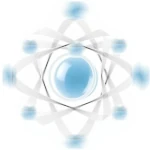
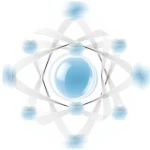
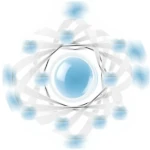
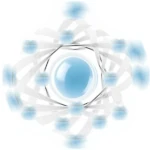
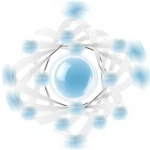
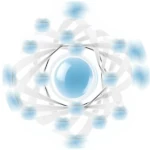
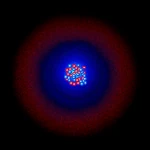
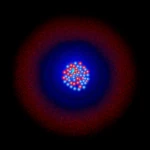
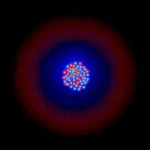
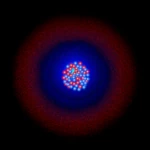
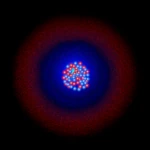
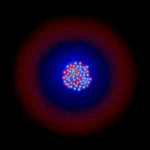
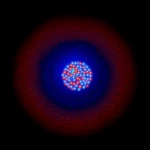
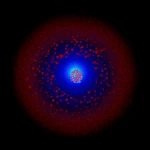
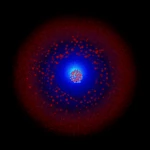
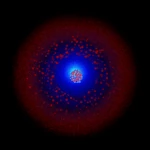
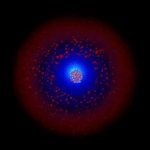
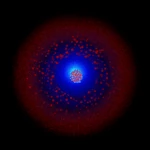
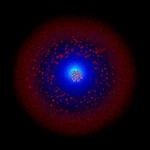
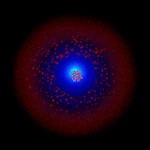
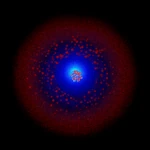
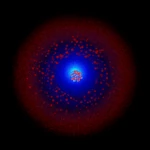
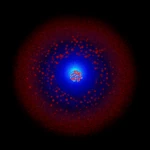
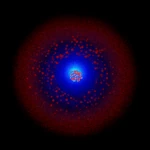
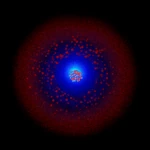
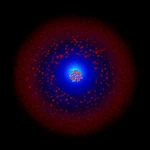
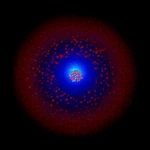
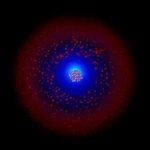
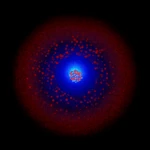
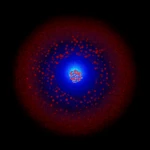
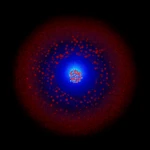
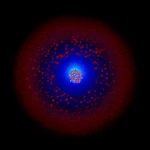
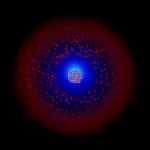
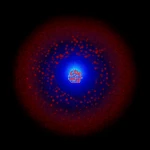
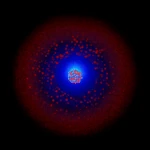
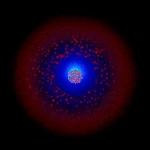
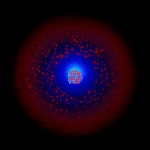
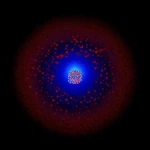
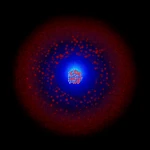
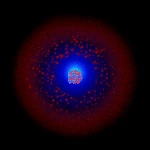
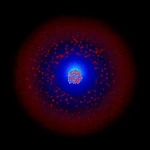
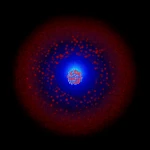
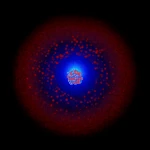
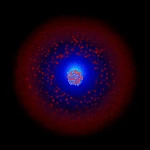
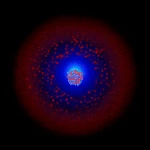
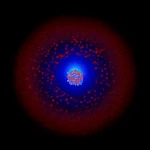
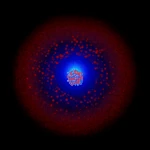
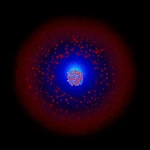
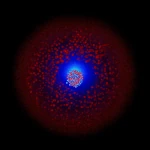
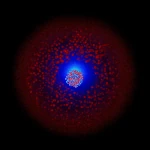
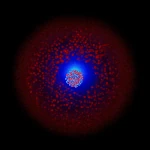
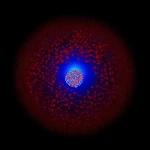
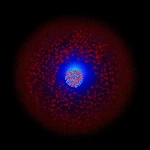
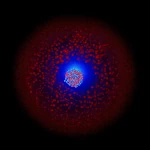
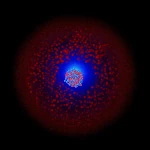
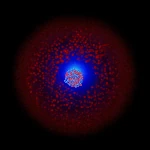
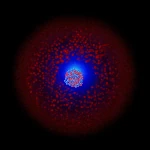
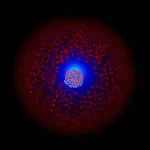
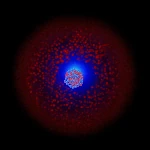
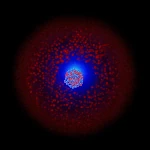
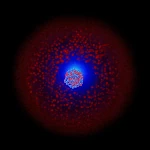
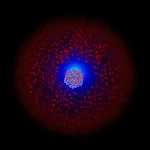
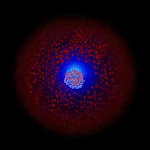
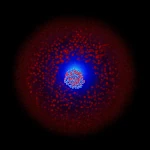
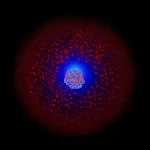
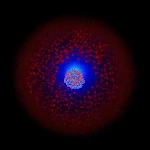
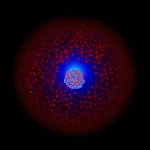
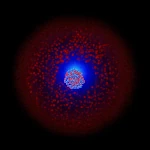
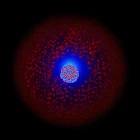
Simplified atomic model of the manganese atom.
The most abundant isotope is \(\,^{55}\mathrm{Mn}\,\) with its 25 protons, 25 electrons, and 30 neutrons.
Image source: astronoo.com (新窗口)
锰的发现历史
Manganese gets its name from black magnesia, a manganese oxide ore known since antiquity for its ability to decolorize glass or give it a purple tint. In 1774, the Swedish chemist 约翰·戈特利布·甘恩 (1745-1818) isolated metallic manganese for the first time by reducing manganese dioxide with carbon. This discovery followed the work of 卡尔·威廉·舍勒 (1742-1786), who had demonstrated a few years earlier that pyrolusite contained a new element. Scheele had identified this element in 1774, but it was Gahn who succeeded in isolating it in metallic form the same year. The name "manganese" comes from the Latin 镁, referring to the magnetic properties of some of its compounds, although the pure metal is not magnetic.
结构与基本性质
Manganese (symbol Mn, atomic number 25) is a transition metal in group 7 of the periodic table.
Its atom has 25 protons, usually 30 neutrons (for the stable isotope \(\,^{55}\mathrm{Mn}\)), and 25 electrons with the electronic configuration [Ar] 3d⁵ 4s².
At room temperature, manganese is a solid, silvery-gray metal, relatively hard and brittle (density ≈ 7.21 g/cm³).
It exists in several allotropic forms, with the alpha form being the most stable at ordinary temperatures.
Manganese oxidizes slowly in air and dissolves easily in dilute acids.
The melting point of manganese (liquid state): 1,519 K (1,246 °C).
The boiling point of manganese (gaseous state): 2,334 K (2,061 °C).
锰同位素表
| 同位素 / 符号 | 质子(Z) | 中子(N) | 原子质量(u) | 天然丰度 | 半衰期 / 稳定性 | 衰变 / 备注 |
|---|---|---|---|---|---|---|
| 锰-55 — \(\,^{55}\mathrm{Mn}\,\) | 25 | 30 | 54.938044 u | 100% | 稳定的 | 锰的唯一稳定同位素,广泛存在于自然界中。 |
| 锰-53 — \(\,^{53}\mathrm{Mn}\,\) | 25 | 28 | 52.941290 u | 宇宙成因示踪 | 约370万年 | 放射性,电子捕获至\(\,^{53}\mathrm{Cr}\)。用于测定海洋锰结核的年龄。 |
| 锰-54 — \(\,^{54}\mathrm{Mn}\,\) | 25 | 29 | 53.940359 u | 人工 | ≈ 312.2 天 | 放射性,电子俘获生成\(\,^{54}\mathrm{Cr}\)。在核反应堆中产生,用作示踪剂。 |
| 锰-52 — \(\,^{52}\mathrm{Mn}\,\) | 25 | 27 | 51.945565 u | 人工 | ≈ 5.6 天 | 放射性,正电子发射体。用于PET医学成像。 |
| 锰-56 — \(\,^{56}\mathrm{Mn}\,\) | 25 | 31 | 55.938905 u | 人工 | ≈ 2.6 小时 | 放射性,β⁻衰变为\(\,^{56}\mathrm{Fe}\)。通过中子活化产生。 |
锰的电子排布与电子壳层
注意::
Electron shells: 电子如何在原子核周围组织 (新窗口).
锰有25个电子,分布在四个电子层中。其完整电子排布为:1s² 2s² 2p⁶ 3s² 3p⁶ 3d⁵ 4s², 或简写为:[Ar] 3d⁵ 4s²。 该排布也可写作:K(2) L(8) M(13) N(2)。
壳层的详细结构
K壳层(n=1): contains 2 electrons in the 1s subshell. This inner shell is complete and very stable.
L壳层(n=2): contains 8 electrons distributed as 2s² 2p⁶. This shell is also complete, forming a noble gas configuration (neon).
M壳层 (n=3): contains 13 electrons distributed as 3s² 3p⁶ 3d⁵. The 3s and 3p orbitals are complete, while the 3d orbitals are half-filled with 5 electrons, a particularly stable configuration.
N壳层(n=4): contains 2 electrons in the 4s subshell. These electrons are the first to be involved in chemical bonding.
价电子与氧化态
The 7 electrons in the outer shells (3d⁵ 4s²) constitute the 价电子 of manganese. This configuration explains its varied chemical properties:
Manganese can adopt many oxidation states, from +2 to +7, making it one of the most versatile elements.
The +2 oxidation state (Mn²⁺) is the most common and stable in aqueous solution.
The +4 state is present in manganese dioxide (MnO₂), a very important industrial compound.
The +7 state exists in permanganate (MnO₄⁻), a powerful oxidizing agent with an intense purple color.
半充满的3d⁵构型赋予了Mn²⁺离子特殊的稳定性。这种电子结构也解释了锰为何会根据氧化态形成颜色各异的化合物:Mn²⁺呈淡粉色,MnO₂呈深棕色,Mn⁶⁺呈绿色,MnO₄⁻呈紫色。
化学反应活性
锰是一种中等活性的金属。它在潮湿空气中缓慢氧化,在高温下氧化速度加快,形成多种氧化物。 锰与热水反应会释放氢气,并易溶于稀酸中生成氢气。 在高温下,锰可与卤素、硫、氮和碳发生反应。 其化合物呈现出从+2到+7的多种氧化态,使其成为一种化学性质极为多样的元素。 二氧化锰(MnO₂)在许多反应中充当催化剂,包括过氧化氢的分解。 高锰酸钾(KMnO₄)是一种强氧化剂,广泛应用于分析化学和水处理领域。
锰的工业与技术应用
- 在炼钢中作为钢的关键合金元素(约占全球产量的90%),可提高硬度、强度和延展性。
- 生产耐腐蚀和耐磨的奥氏体不锈钢;
- 在铝合金中以提高其耐腐蚀性;
- 作为碱性电池和锌碳电池(MnO₂)的主要成分;
- 在现代电动汽车用锂离子电池中(NMC和LMO正极);
- 作为油漆、陶瓷和玻璃的颜料(氧化锰);
- 在生产用于钢脱氧的铁合金和锰铁时;
- 作为化学工业中的催化剂,特别用于有机化合物的合成;
- 用于饮用水和废水处理(去除铁和锰);
- 在农业肥料中作为植物必需的微量营养素;
- 作为分析化学中的氧化剂(高锰酸钾);
- 在磁性材料和电子材料的生产中;
- 制造焊接电极和耐火材料;
- 在膳食补充剂中用于预防营养缺乏;
- 在玻璃和陶瓷工业中用作脱色剂。
锰的生物作用
锰是所有生物体必需的微量元素。它在许多生化反应中作为酶辅因子发挥着关键作用。 在植物中,锰对光合作用至关重要,直接参与光系统II中水的光解过程。 在动物和人体中,锰是碳水化合物、氨基酸和胆固醇代谢所必需的。 锰能激活多种重要酶,包括线粒体超氧化物歧化酶(SOD2),该酶可保护细胞免受氧化损伤。 它还参与骨骼形成、血液凝固以及神经系统的功能运作。 锰缺乏可能导致生长障碍、骨骼异常和生殖问题,尽管人类中此类缺乏症较为罕见。
在天体物理学和宇宙学中的作用
锰主要产生于Ia型超新星和核坍缩超新星爆发过程中的爆炸核合成。它通过中子捕获以及涉及爆炸恒星外层中铁和铬的核反应形成。放射性同位素\(\,^{53}\mathrm{Mn}\)(半衰期370万年)尤其引人关注,因为它能用于研究早期太阳系中的化学富集过程。其在古老陨石中的存在,为太阳系中首批固态天体的形成时间提供了信息。
锰(Mn I, Mn II)的光谱线被用于恒星光谱学,以确定恒星的化学成分并追溯星系的化学演化。古老恒星中的锰铁比有助于天文学家理解不同类型超新星对宇宙化学富集的相对贡献。在地球洋底发现的锰结核中还含有宇宙成因的\(\,^{53}\mathrm{Mn}\),这使得它们能够被定年,并用于研究长时间尺度的地质过程。
注意::
Manganese is the 第十二种最丰富的元素 in the Earth's crust (about 0.1% by mass).
It is mainly found in ores such as pyrolusite (MnO₂), rhodochrosite (MnCO₃), and braunite (Mn₂O₃).
The largest deposits are located in South Africa, Australia, China, and Gabon.
Polymetallic nodules on the ocean floor also contain significant amounts of manganese and represent a potential resource for the future.
The extraction and processing of manganese are relatively simple compared to other metals, explaining its massive use in the global steel industry.
 核聚变所需的能量以及为什么铀是一个极限
 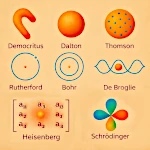 原子的各种形态:从古代直觉到量子力学