

氟(F,Z = 9):化学反应性的无可争议冠军
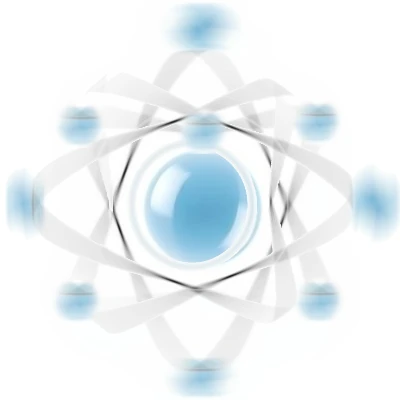
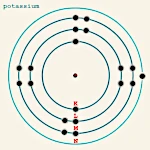
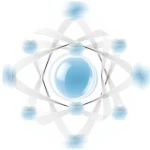
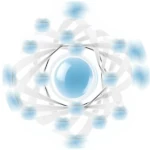
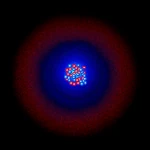
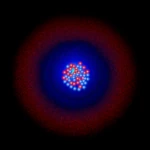
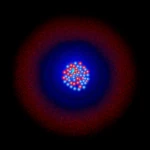
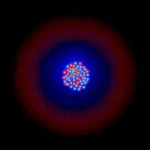
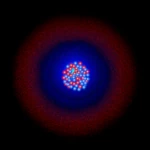
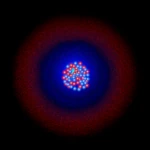
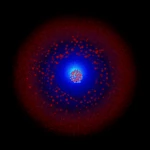
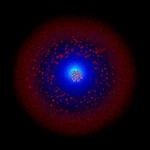
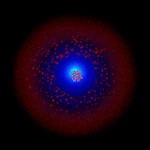
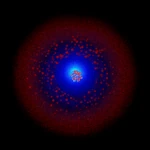
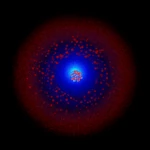
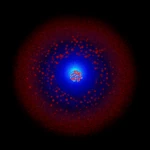
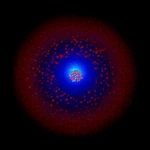
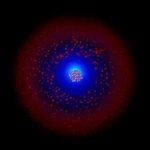
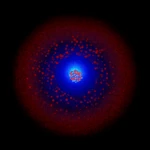
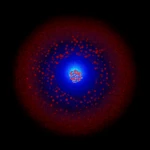
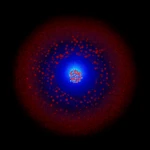
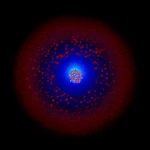
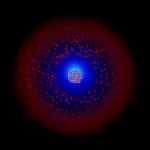
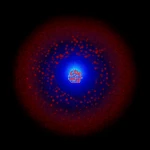
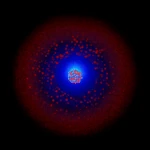
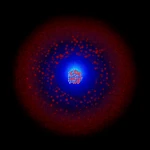
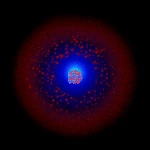
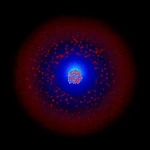
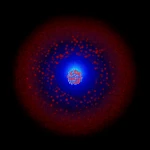
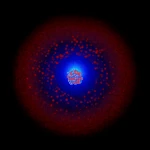
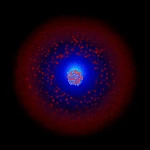
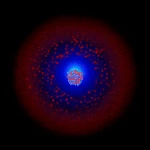
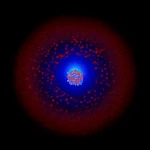
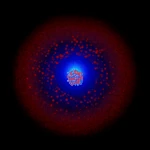
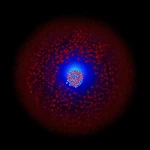
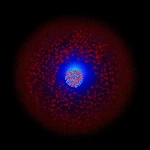
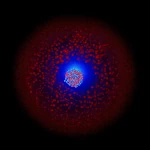
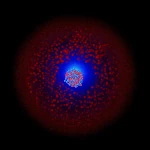
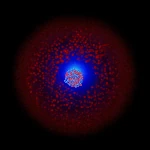
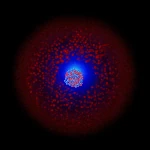
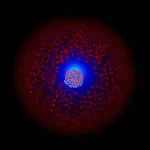
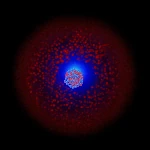
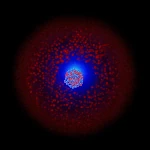
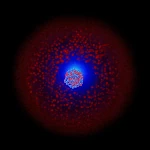
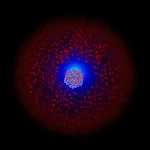
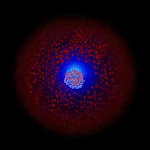
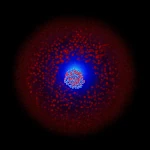
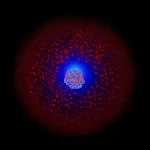
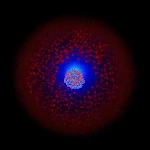
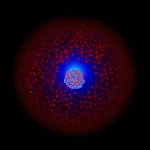
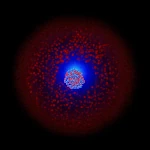
Simplified atomic model of the fluorine atom with its nine protons and nine electrons, but the most abundant isotope is \(\,^{19}\mathrm{F}\).
Image source: astronoo.com (新窗口)
氟的发现历史
The history of fluorine isolation is marked by decades of dangerous and sometimes fatal attempts. Fluorine compounds, particularly the mineral fluorite (calcium fluoride, CaF₂), have been known since the 16th century. In 1810, the French chemist 安德烈-玛丽·安培 (1775-1836) suggested the existence of a new element analogous to chlorine in hydrofluoric acid. For over 70 years, many chemists attempted to isolate fluorine, but its extreme reactivity made the task extremely perilous. Several researchers were seriously poisoned or died during these attempts, including the Knox brothers, Thomas and George, in Ireland.
It was not until 1886 that the French chemist 亨利·莫瓦桑 (1852-1907) finally succeeded in isolating fluorine gas by electrolysis of a mixture of hydrofluoric acid and potassium bifluoride in a platinum-iridium apparatus cooled. This feat earned him the Nobel Prize in Chemistry in 1906. The name 氟 derives from the Latin fluere (to flow), referring to the use of fluorite as a flux in metallurgy to lower the melting point of ores.
结构与基本性质
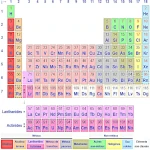
Fluorine (symbol F, atomic number 9) is a halogen of group 17 in the periodic table, consisting of nine protons, usually ten neutrons (for the stable isotope), and nine electrons.
The only natural stable isotope is fluorine-19 \(\,^{19}\mathrm{F}\) (100% natural abundance).
At room temperature, fluorine exists as a pale yellow diatomic gas (F₂), with a pungent and acrid odor, extremely toxic and corrosive.
Fluorine is the most 电负性 chemical element of all (Pauling electronegativity: 3.98), meaning it attracts electrons more strongly than any other element.
This property makes fluorine the 最强氧化剂 and the 最具攻击性的反应性 known.
F₂ gas has a density of about 1.696 g/L at standard temperature and pressure.
The temperature at which the liquid and solid states can coexist (melting point): 53.48 K (−219.67 °C).
The temperature at which it transitions from liquid to gas (boiling point): 85.03 K (−188.12 °C).
Liquid fluorine has a characteristic bright yellow color.
氟同位素表
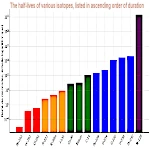
| 同位素 / 符号 | 质子(Z) | 中子(N) | 原子质量(u) | 天然丰度 | 半衰期/稳定性 | 衰变/备注 |
|---|---|---|---|---|---|---|
| 氟-18 — \(\,^{18}\mathrm{F}\,\) | 9 | 9 | 18.000938 u | 非自然的 | 109.77分钟 | 放射性β⁺衰变生成¹⁸O;广泛用于PET扫描(氟-18标记的FDG)。 |
| 氟-19——\(\,^{19}\mathrm{F}\,\) | 9 | 10 | 18.998403 u | 100% | 稳定的 | 氟的唯一稳定同位素;存在于所有天然和人工合成的含氟化合物中。 |
| 氟-20 — \(\,^{20}\mathrm{F}\,\) | 9 | 11 | 19.999981 u | 非自然的 | 11.00秒 | 放射性β⁻衰变至\(\,^{20}\mathrm{Ne}\);在加速器中人工产生。 |
| 氟-21 — \(\,^{21}\mathrm{F}\,\) | 9 | 12 | 20.999949 u | 非自然的 | 4.158秒 | 放射性β⁻;用于核研究。 |
| 氟-17——\(\,^{17}\mathrm{F}\,\) | 9 | 8 | 17.002095 u | 非自然的 | 64.49秒 | 放射性β⁺;用于医学成像的正电子发射体。 |
| 其他同位素——\(\,^{14}\mathrm{F}-\,^{16}\mathrm{F},\,^{22}\mathrm{F}-\,^{31}\mathrm{F}\) | 9 | 5-7, 13-22 | — (共鸣) | 非自然的 | \(10^{-22}\) — 5秒 | 核物理中观察到的高度不稳定状态;通过粒子发射或β放射性衰变。 |
氟的电子排布与电子层
注意::
Electron shells: 电子如何围绕原子核组织 (新窗口).
氟有9个电子,分布在两个电子层中。其完整电子排布为:1s² 2s² 2p⁵, 或简写为:[He] 2s² 2p⁵。该排布也可写作:K(2) L(7)。
壳层的详细结构
K壳层 (n=1): contains 2 electrons in the 1s subshell. This inner shell is complete and highly stable.
L壳层(n=2): contains 7 electrons distributed as 2s² 2p⁵. The 2s orbitals are complete, while the 2p orbitals contain only 5 out of 6 possible electrons. Thus, only 1 electron is missing to achieve the stable neon configuration with 8 electrons (octet).
价电子与氧化态
The 7 electrons in the outer shell (2s² 2p⁵) are the 价电子 of fluorine. This configuration explains its chemical properties:
By gaining 1 electron, fluorine forms the F⁻ ion (oxidation state -1), its unique and systematic oxidation state in all its compounds, thus adopting the stable neon configuration [Ne].
Fluorine cannot exhibit any positive oxidation state because it is the most electronegative element of all chemical elements (electronegativity of 4.0 on the Pauling scale).
The oxidation state 0 corresponds to difluorine F₂, its natural molecular form, where two fluorine atoms share a pair of electrons.
氟的电子构型在其价层有7个电子,这将其归类为卤素,并使其成为元素周期表中反应性最强的元素。这种结构赋予其独特的特性:最高的化学反应性(氟几乎能与所有元素反应,包括最重的稀有气体甚至水)、所有元素中最高的电负性(无与伦比的吸引电子能力)以及已知最强的氧化能力。氟通过捕获一个电子完成八隅体,仅形成氟离子F⁻。其原子尺寸小且有效核电荷强,解释了其对电子的异常亲和力。二氟分子F₂是一种极具腐蚀性和危险性的浅黄绿色气体,能剧烈攻击几乎所有材料。 尽管反应性极强,氟及其化合物仍有重要应用:氟化钠(NaF)添加至饮用水和牙膏中预防龋齿,氟化化合物用作制冷剂(尽管氯氟烃已被禁用),聚四氟乙烯(PTFE,特氟龙)是高度耐用的不粘聚合物,而氢氟酸HF用于玻璃蚀刻和冶金。
化学反应活性
氟有七个价电子,仅需一个电子即可填满其外层电子壳层。这一构型结合其创纪录的电负性,使氟成为极具攻击性的氧化剂,能在适当条件下与几乎所有化学元素自发反应,甚至包括某些稀有气体(氙、氪、氡)。氟甚至能氧化氧生成二氟化氧(OF₂),这是一种氧处于异常正氧化态的化合物。
氟与大多数有机和无机物质剧烈反应,常伴随自燃现象。 水与氟发生爆炸性反应,生成氢氟酸(HF)、氧气和臭氧。 金属接触氟气即会燃烧,形成金属氟化物。 甚至普通玻璃也会被氟侵蚀,因此需使用由钝化金属(镍、铜、不锈钢)制成的特殊容器,其表面覆盖一层薄薄的氟化物保护层。
氟在离子化合物中形成氟离子(F⁻),并在共价化合物中形成极强的共价键。 C-F(碳-氟)键是有机化学中最强、最稳定的化学键之一,这使得氟碳化合物(如特氟龙)具有卓越的化学和热稳定性。 氢氟酸(HF)在水溶液中是一种弱酸,但具有极强的腐蚀性,因为它能溶解玻璃并深入渗透生物组织。
尽管元素形式的氟具有毒性和反应性,但低浓度的氟离子(F⁻)通过将牙釉质转化为更耐酸蚀的氟磷灰石,从而起到强化牙釉质的积极作用。这就是为什么许多国家在牙膏和饮用水中添加氟化物以预防龋齿的原因。
氟的工业与技术应用
- 在牙膏和饮用水中(氟化处理)用于预防蛀牙(氟化钠)。
- 用于生产含氟聚合物,如特氟龙(PTFE),应用于不粘涂层和密封件;
- 在制造制冷剂气体(氢氟碳化物,HFCs)以替代消耗臭氧层的氯氟碳化物(CFCs)的过程中;
- 作为半导体和集成电路制造中的硅蚀刻剂(氢氟酸);
- 生产用于核应用铀浓缩的六氟化铀(UF₆);
- 在药物合成中(约20-25%的药物含氟);
- 用于制造作为麻醉剂的氟化化合物(七氟烷、地氟烷)。
- 在用于农业的含氟农药和除草剂的生产中;
- 作为冶金铝中的添加剂,用于促进熔化和去除杂质;
- 生产六氟化硫(SF₆),一种用于高压变压器的优良电绝缘体。
- 在触摸屏和太阳能电池板中(用氢氟酸处理过的玻璃);
- 制造防水防污纺织品(碳氟化合物处理)
- 在血液替代品(全氟碳化合物)中用于氧气运输;
- 作为正电子发射断层扫描(氟-18 PET扫描)中的示踪剂;
- 生产耐极端温度和化学品的高性能润滑剂。
- 在航天工业中用于火箭推进剂(氟氢组合);
- 作为铀浓缩中的同位素分离剂;
- 制造耐高温的绝缘电缆。
- 在特种光学玻璃和低折射率透镜的生产中。
在天体物理学和宇宙学中的作用
Fluorine is a relatively rare element in the universe, with a cosmic abundance about 400 times lower than that of oxygen. This rarity contrasts with fluorine's position in the periodic table between oxygen (very abundant) and neon (moderately abundant), creating what is sometimes called the “氟缺乏” in the cosmos.
与大多数其他轻元素不同,氟的天体物理起源长期以来一直是个谜。氟无法通过大爆炸原初核合成或恒星中的常规聚变反应有效产生。近期研究表明,氟主要通过两种过程生成:
AGB星中的核合成 (asymptotic giant branch stars, 2-8 solar masses) appears to be the main source. In these evolved stars, fluorine is produced by neutron capture on nitrogen-14 and oxygen-18, followed by nuclear reactions involving protons. These stars then disperse fluorine into the interstellar medium via their powerful stellar winds and matter ejections.
超新星爆发时产生的中微子 can also contribute to fluorine production. When a massive star explodes as a supernova, the intense neutrino flux can induce nuclear reactions (nu process) that convert neon-20 into fluorine-19 and sodium-23. This contribution remains debated but could explain part of the abundance of fluorine in the universe.
氟元素也在一些富碳的演化恒星大气层以及少数行星状星云中被探测到。不同恒星族群中氟丰度的差异,使天文学家能够约束核合成模型及星系化学演化模型。
在太阳系中,氟主要以氟化物的形式存在于地球矿物(萤石、磷灰石)及部分陨石中。 地壳中氟含量约为0.06%,主要存在于萤石(CaF₂)、磷灰石(Ca₅(PO₄)₃F)和黄玉(Al₂SiO₄(F,OH)₂)等矿物中。
在星际空间中探测氟元素较为困难,因为气态氟(F₂)和简单的氟化物十分罕见。氢氟酸(HF)已在部分分子云和星周包层中被探测到,为研究氟在太空中的化学性质提供了信息。
N.B.:
The “氟悖论” remarkably illustrates the duality of this extraordinary element.
In its elemental form (F₂), fluorine is one of the most dangerous chemicals ever handled: toxic, corrosive, reactive with almost everything, and responsible for fatal accidents throughout its history.
Yet, in the form of the fluoride ion (F⁻) at low concentrations, it becomes beneficial for human dental health.
Similarly, synthetic organofluorine compounds are among the most chemically stable and inert substances ever created (Teflon, Gore-Tex), in complete contrast to the reactivity of elemental fluorine.
This spectacular transformation of chemical properties between the free element and its compounds is more pronounced for fluorine than for any other element.
Fluorine thus embodies a fundamental lesson in chemistry: the properties of an element in its free state can be radically different from those of its compounds, and the toxicity or danger of a substance depends entirely on its chemical form and concentration.
 核聚变所需的能量以及为什么铀是一个极限
 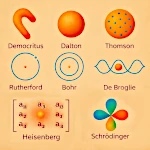 原子的各种形态:从古代直觉到量子力学