铋(Bi,Z = 83):用于医疗领域的重质多彩金属
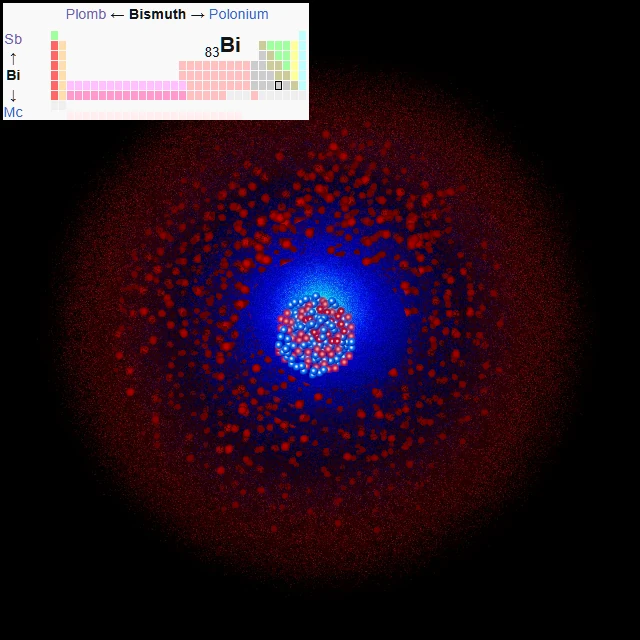
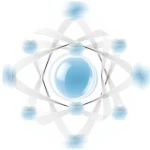
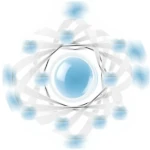
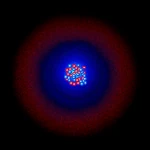
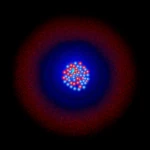
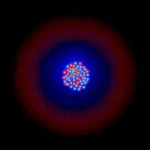
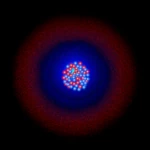
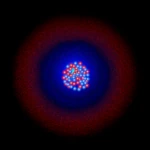
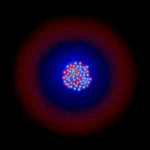
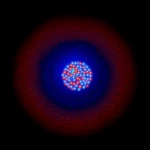
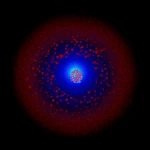
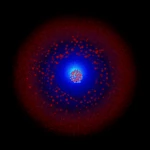
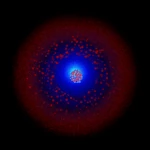
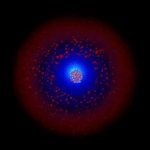
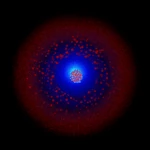
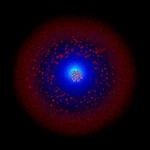
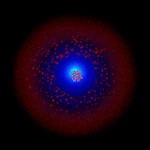
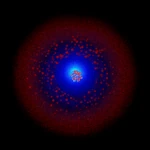
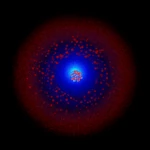
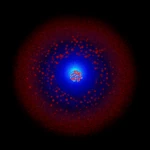
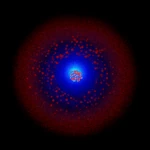
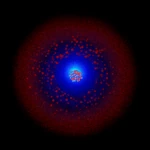
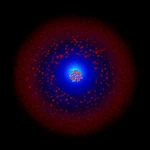
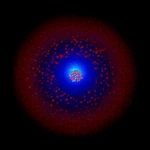
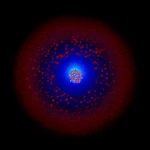
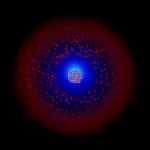
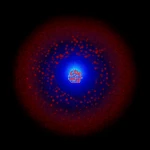
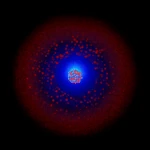
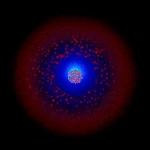
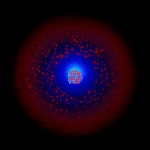
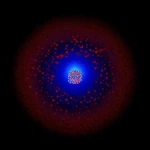
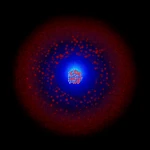
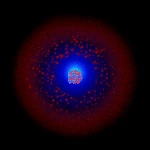
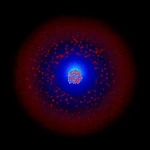
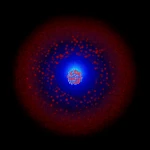
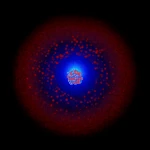
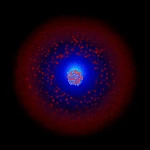
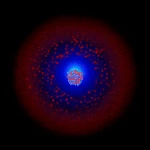
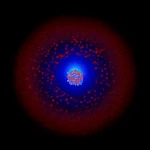
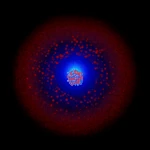
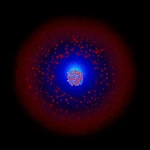
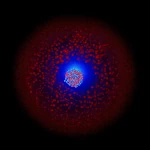
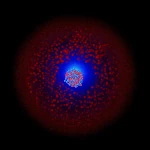
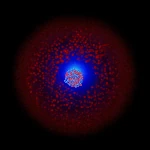
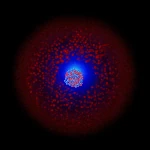
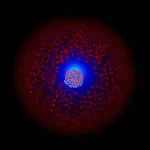
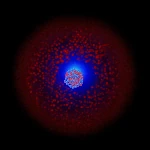
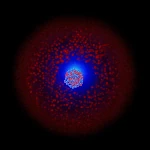
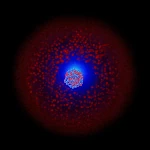
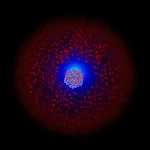
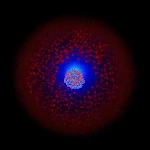
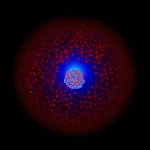
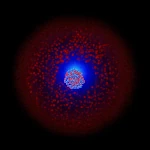
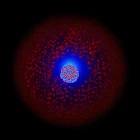
Image description:
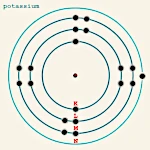
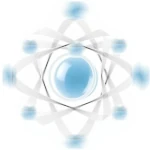
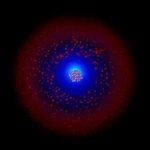
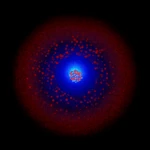
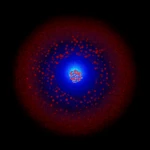
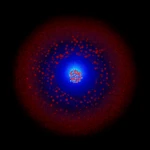
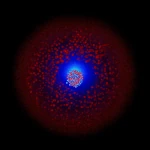
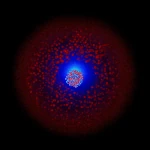
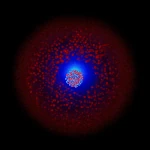
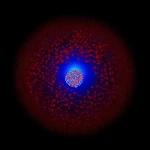
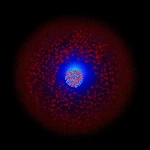
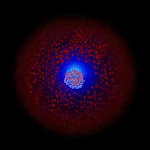
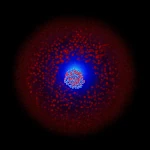
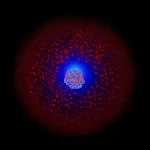
Simplified atomic model of the bismuth atom.
The main quasi-stable isotope is \(^{209}\mathrm{Bi}\) with its 83 protons, 83 electrons, and 126 neutrons.
Image source: astronoo.com (新窗口)
铋在天体物理学与放射性年代学中的作用
最后一种稳定元素?铋-209放射性的发现
For decades, bismuth was considered the 最重的稳定元素. The isotope \(^{209}\mathrm{Bi}\) was thought to have an infinite half-life. However, in 2003, a team from the Institut d'Astrophysique Spatiale in Orsay demonstrated that it is actually weakly radioactive, with an 异常长的半衰期 of about \(1.9 \times 10^{19}\) years (nearly 19 billion billion years), a billion times longer than the age of the universe! This decay occurs via alpha emission into thallium-205.
This discovery has a major consequence: 铅-208 (the final product of the thorium chain) regains its status as the heaviest known stable nucleus. Bismuth-209 is now classified as "quasi-stable" or "primordial radioactive".
恒星合成与宇宙化学
Bismuth is mainly synthesized by the s-过程 (slow neutron capture) in AGB stars (asymptotic giants). It marks an important limit: it is the 最后一个元素 whose isotopes can be produced significantly by the s-process before the following elements (polonium, astatine, radon) become too unstable to persist. Its production by the r-过程 (rapid capture) is also possible during supernovae. In stars, it can also be produced by the p过程 (proton capture).
地质与环境示踪剂
铋同位素(特别是\(^{209}\mathrm{Bi}\))与铅的比值被用作灵敏的地球化学工具,用于研究成矿过程、岩浆来源,甚至追踪工业污染。铋化合物具有独特的同位素特征,有助于追溯其来源。
在衰变链中的角色
尽管铋-209实际上是许多自然衰变链的终点(因其半衰期极长),但它并非真正的最终产物。理论上,任何含铋的物质在难以想象的漫长时标下,都会先转化为铊,再进一步转变为稳定的铅。
铋的发现与使用历史
名称的词源与起源
The origin of the name "bismuth" is uncertain. It may come from the German "Wismuth" or "Weisse Masse" ("white mass"), referring to its appearance. Another hypothesis links it to the Arabic "bi ismid" (having the properties of antimony), as it was often confused with tin, lead, and especially antimony. The symbol Bi is obvious.
发现与识别
Bismuth has been known since antiquity but was only recognized as a distinct element in the mid-18th century. The alchemist 克劳德·弗朗索瓦·若弗鲁瓦 demonstrated in 1753 that it was a metal distinct from lead and tin. Before that, it was often considered a variety of lead or antimony.
历史用途
历史上,铋曾被用于:
- In 低熔点合金, such as fine printing type.
- As a 白色颜料 (bismuth suboxide, "pearl white") in cosmetics and porcelain paints.
- In 药物: Bismuth compounds (subnitrate, subcitrate) have been used since the 18th century to treat digestive disorders (diarrhea, indigestion).
存款与生产
Bismuth is rare, with a crustal abundance of about 0.008 ppm. There are no mines dedicated to bismuth; it is almost always a 副产品 of the refining of other metals, mainly:
- 铅: The major source (≈75%).
- 铜.
- 钨 and Tin.
- 金子 and 银.
The main producers are 中国 (world leader), 秘鲁, 墨西哥, 玻利维亚, and 日本. Annual production is about 10,000 to 15,000 tons. Due to its production being linked to lead (whose demand may decrease with the energy transition), the supply of bismuth could become tighter in the future.
铋的结构与基本性质
分类与原子结构
铋(符号Bi,原子序数83)是一种后过渡元素,位于元素周期表第15族(氮族或磷族),与氮、磷、砷、锑同族。它是该族中最重且金属性最强的元素。其原子含有83个质子,通常有126个中子(对应准稳定同位素\(^{209}\mathrm{Bi}\)),以及83个电子,电子构型为[Xe] 4f¹⁴ 5d¹⁰ 6s² 6p³。它具有五个价电子(6s² 6p³)。
卓越的物理特性
铋是一种银白色结晶金属,带有淡粉色光泽。它具有若干独特性质:
- 强抗磁性: It is one of the most diamagnetic metals; it is repelled by a magnetic field. This property is used in magnetic levitation experiments.
- 低导热性: One of the lowest among metals.
- 高电阻率.
- 凝固时的膨胀: Like water, bismuth expands by about 3.3% when it changes from liquid to solid. This is a rare property for a metal, shared with gallium and germanium.
- 低熔点: 271.4 °C.
- 虹彩光泽: The surface of crystals or oxidized metal exhibits rainbow colors (blue, violet, yellow) due to light interference on a thin oxide layer.
铋以菱面体(三方)结构结晶,从而形成其美丽的"阶梯状"晶体。
变换点
Bismuth melts at 271.40 °C (544.55 K) and boils at 1564 °C (1837 K). Its low melting point makes it easy to melt and work with.
化学反应活性
铋在室温空气中是一种相当稳定的金属。它会慢慢覆盖上一层薄薄的氧化层,从而呈现出彩虹般的色彩。在高温下,它在空气中燃烧生成黄色的氧化铋(Bi₂O₃)。浓硝酸和浓硫酸会腐蚀铋,但稀盐酸对其不起作用(这与它的同族元素砷和锑不同)。
物理特性概述
Density: 9.78 g/cm³.
Melting point: 544.55 K (271.40 °C).
Boiling point: 1837 K (1564 °C).
Crystal structure: Rhombohedral (trigonal).
Electronic configuration: [Xe] 4f¹⁴ 5d¹⁰ 6s² 6p³.
Main oxidation state: +3.
铋同位素表
| 同位素 / 符号 | 质子(Z) | 中子(N) | 原子质量(u) | 天然丰度 | 半衰期 / 稳定性 | 衰变/备注 |
|---|---|---|---|---|---|---|
| 铋-209 — \(^{209}\mathrm{Bi}\) | 83 | 126 | 208.980399 u | ≈ 100% | \(1.9 \times 10^{19}\) 年 | 准稳定同位素,历史上曾被视为稳定。具有极长半衰期的α放射性同位素,构成所有天然铋。其衰变为\(^{205}\mathrm{Tl}\)的过程于2003年被观测到。 |
铋的电子排布与电子层
注意::
Electron shells:
电子如何围绕原子核组织 (新窗口).
铋有83个电子,分布在六个电子壳层上。其电子排布为[Xe] 4f¹⁴ 5d¹⁰ 6s² 6p³,在第六壳层(s² p³)中有五个价电子。这也可写作:K(2) L(8) M(18) N(32) O(18) P(5),或完整形式:1s² 2s² 2p⁶ 3s² 3p⁶ 3d¹⁰ 4s² 4p⁶ 4d¹⁰ 4f¹⁴ 5s² 5p⁶ 5d¹⁰ 6s² 6p³。
详细的壳体结构
K壳层(n=1): 2 electrons (1s²).
L层(n=2): 8 electrons (2s² 2p⁶).
M层(n=3): 18 electrons (3s² 3p⁶ 3d¹⁰).
N层(n=4): 32 electrons (4s² 4p⁶ 4d¹⁰ 4f¹⁴).
O壳层(n=5): 18 electrons (5s² 5p⁶ 5d¹⁰).
P壳层 (n=6): 5 electrons (6s² 6p³).
价电子与氧化态
Bismuth has 5 价电子 (6s² 6p³). The predominant and most stable oxidation state is +3. As with lead, the 惰性电子对效应 is very pronounced: the 6s² pair is energetically stable and reluctant to participate in bonding. Thus, the +5 state (which would require the loss of all five valence electrons) is very rare, unstable, and highly oxidizing.
- 铋(III) (Bi³⁺): The characteristic state. Bi(III) compounds often exhibit interesting coordination chemistry with a pyramidal geometry due to the presence of the non-bonding pair (stereochemical effect of the inert pair). They are generally poorly soluble in water (e.g., oxychloride BiOCl, subnitrate), which limits their systemic absorption and contributes to their low toxicity.
- 铋(V) (Bi⁵⁺): Exists in a few compounds such as pentafluoride (BiF₅) or sodium metabismuthate (NaBiO₃), which is a powerful oxidant used in analytical chemistry.
- 元素态 (Bi⁰): The metal itself.
铋的化学反应活性
与空气和氧气的反应
At room temperature, bismuth becomes covered with a thin oxide layer that protects it and gives it its iridescent colors. When heated above its melting point, it burns with a blue flame to form 氧化铋(III) (Bi₂O₃), a yellow solid: 4Bi + 3O₂ → 2Bi₂O₃.
与水及酸的反应
- 水: No reaction, even at boiling.
- 酸类:
- 硝酸(HNO₃): Dissolves it to give bismuth(III) nitrate, Bi(NO₃)₃.
- 热浓硫酸(H₂SO₄): Dissolves it to give bismuth(III) sulfate, Bi₂(SO₄)₃, and releases SO₂.
- 盐酸(HCl): Reacts slowly, especially in the presence of oxidants. In dilute solution, bismuth(III) often forms insoluble oxychlorides (BiOCl) that precipitate.
- 有机酸 (acetic, citric): React to form salts.
重要化合物
- 三氧化二铋 (Bi₂O₃): Yellow powder, used in glasses, ceramics, and as a precursor for other compounds.
- 次硝酸铋 (BiONO₃·H₂O): White powder, historical gastroprotective medicine.
- 胶体次枸橼酸铋(CBS) and 雷尼替丁枸橼酸铋(RBC): Modern medicines for ulcers and eradication of 幽门螺杆菌.
- 氯氧化铋(BiOCl): White pearlescent powder, used as a pearl pigment in cosmetics (lipsticks, nail polishes).
- 碲化铋(Bi₂Te₃): Reference thermoelectric material for converting heat into electricity (generators) or for cooling (Peltier modules).
- 五氟化铋 (BiF₅): Powerful fluorinating agent.
铋的工业与技术应用
- As an active ingredient in 胃肠药物 for the treatment of ulcers, heartburn, diarrhea, and eradication of 幽门螺杆菌;
- As a non-toxic substitute for lead in 无铅合金: electronic solders (tin-silver-copper-bismuth alloys), hunting ammunition ("bismuth shot"), plumbing plates, counterweights;
- In 颜料和珠光剂 for cosmetics (bismuth oxychloride giving a pearl effect);
- As a base material for 低温热电偶 (bismuth-antimony alloy);
- In 热电材料 (bismuth telluride) for generating electricity from waste heat or precision electronic cooling;
- 作为核反应堆中的中子吸收剂(熔融铋铅合金);
- In the manufacture of 特殊眼镜 with high refractive index and 铁电陶瓷;
- As a catalyst in the production of 腈纶纤维 and other chemical syntheses;
- For the manufacture of 电保险丝 and alloys with precise melting points (fire safety systems, foundry molds);
- In physics, for 抗磁性悬浮 experiments;
- 作为粒子探测器中的靶材以及用于生产某些放射性同位素;
- 历史上,精细印刷字体和用于制造小型金属物体的模具(利用其在凝固时膨胀的特性)。
关键应用:医药与铅替代
胃肠道药物
铋化合物(如次枸橼酸铋、次水杨酸铋)已使用数百年。其作用机制具有多面性:
- 保护作用(细胞保护): They form a gel or adherent coating on the stomach and intestinal mucosa, protecting it from acid, pepsin, and bile salts.
- 抗菌作用: They inhibit the growth of 幽门螺杆菌, a bacterium responsible for most gastroduodenal ulcers and some stomach cancers. Bismuth penetrates the bacterial biofilm and alters the structure of bacterial proteins.
- 抗炎和收敛作用.
这些药物(如Gaviscon®、Pepto-Bismol®、De-Nol®)短期使用被认为是安全的,但长期吸收可能导致蓄积(铋中毒)。
无铅合金(环保替代品)
鉴于铅的毒性,铋因其相似的密度和熔点且无毒,在许多领域成为理想的替代品。
- 电子焊料: Sn-Ag-Cu-Bi ("SAC-Bi") alloys offer good mechanical properties and suitable melting temperatures, complying with the RoHS directive.
- 狩猎弹药: Bismuth shot is almost as dense as lead shot, effective, and non-toxic to birds and the environment.
- 配重与压舱物: For balancing (wheels, bowling balls) where lead was used.
- 管道板 and other applications where malleability and density are required.
热电材料
碲化铋(Bi₂Te₃) is the most effective thermoelectric material around room temperature. It directly converts a temperature difference into electrical voltage (Seebeck effect) or uses electricity to create a temperature difference (Peltier effect). Applications:
- 热电发电机: To recover waste heat from exhaust gases, industrial processes, or to power space probes (RTG).
- 珀尔帖冷却器: For precise cooling of electronic components, small portable refrigerators, or scientific devices.
毒理学与安全性
低毒性:重金属中的例外
Bismuth is remarkably 无毒 for a heavy metal, especially compared to its neighbors in the periodic table (lead, polonium). This low toxicity is due to several factors:
- 低吸收: Most bismuth compounds are insoluble in water and biological fluids, limiting their passage into the blood.
- 快速排泄: Absorbed bismuth is mainly excreted by the kidneys.
- 不干扰必需金属: Unlike lead, it does not easily substitute for calcium or zinc in enzymes.
高剂量下的副作用与毒性
然而,大剂量或长期服用铋剂时,铋可能具有毒性。
- 脑病: The most serious toxic effect, historically observed with the abuse of soluble bismuth salts (e.g., subgallate). It manifests as gait, speech, and tremor disorders, and can progress to coma. It is generally reversible upon discontinuation of treatment.
- 大便变黑: A benign and reversible effect due to the formation of black bismuth sulfide.
- 肾衰竭: Rare, linked to very high doses.
- 铋中毒: Chronic accumulation leading to blue-gray discoloration of the skin (argyria-like) and mucous membranes.
注意事项
医疗用途必须遵守推荐剂量和疗程。严重肾功能衰竭患者禁用。细铋金属粉末存在爆炸风险(可燃粉尘),应谨慎处理。
环境与回收
环境影响
Bismuth is naturally present in trace amounts. Its production as a byproduct means that its environmental impact is mainly related to the extraction and refining of the main metals (lead, copper). Bismuth compounds are not very mobile in the environment and have low ecological toxicity. Its substitution for lead in many applications (ammunition, solders) has a 非常积极的净环境效益, reducing lead pollution.
回收利用
铋的回收不像铅或铜那样系统化,因为它分散在许多产品和合金中。然而:
- Bismuth from 使用过的催化剂 can be recovered.
- 生产废料 from alloys and solders is recycled in the industry.
- Bismuth present in 铅冶炼炉渣 is often recovered.
随着无铅合金中铋的使用增加,更具体的回收渠道可能会发展起来。当含铋废物与其他有害金属混合时,《巴塞尔公约》适用。
未来前景与挑战
铋是一种具有前景的战略元素:
- 铅替代: Demand is expected to grow with the tightening of environmental regulations.
- 能源技术: Its role in thermoelectric materials for energy recovery and cooling could expand.
- 新型催化剂: The chemistry of bismuth(III), with its inert pair, is being explored for non-toxic organic catalysts.
- 供应: Its dependence on lead production is a risk. Research into primary sources or byproducts of other metals is important.
- 基础研究: Its quasi-stable isotope and quantum properties (bismuth is a semimetal with Dirac electrons) make it a material of study for condensed matter physics.
 核聚变所需的能量以及为什么铀是一个极限
 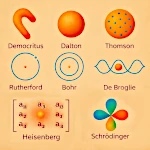 原子的各种形态:从古代直觉到量子力学