

锗(Ge,Z = 32):开创电子时代的类金属元素
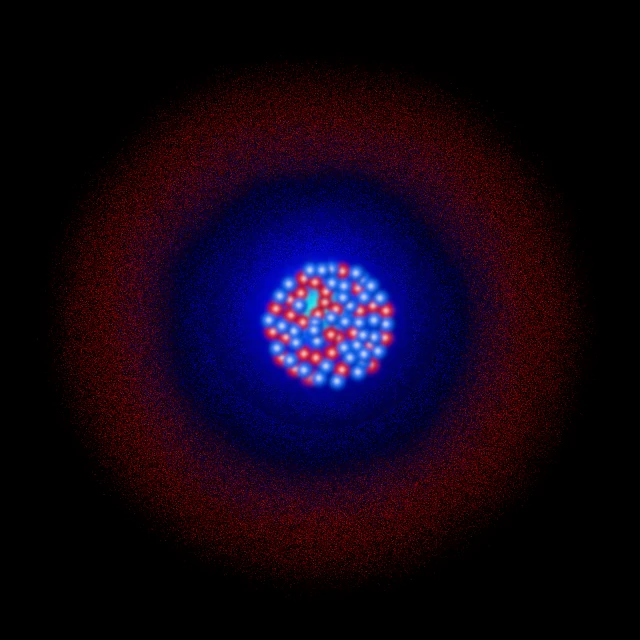
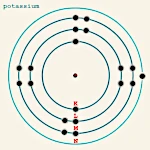
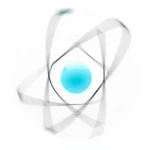
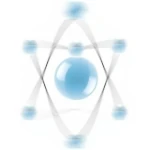
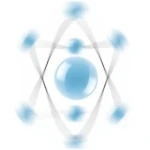
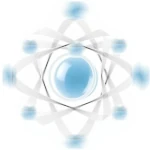
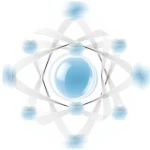
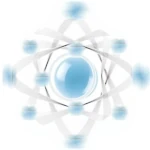
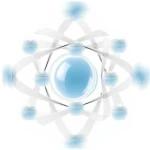
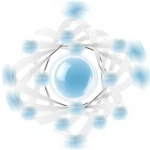
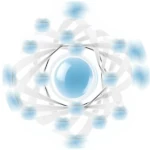
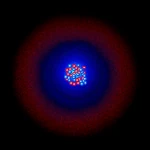
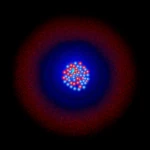
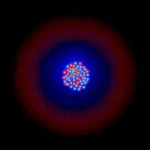
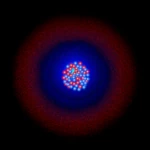
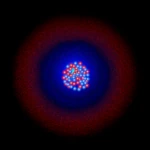
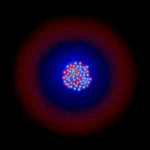
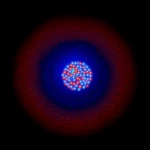
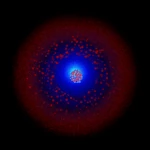
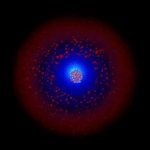
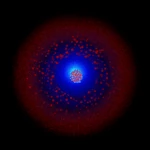
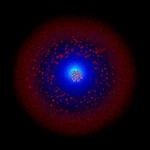
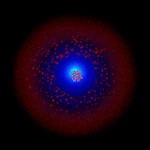
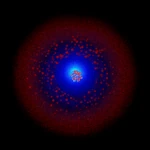
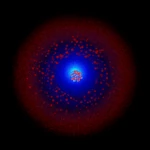
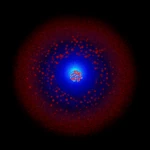
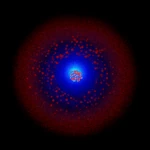
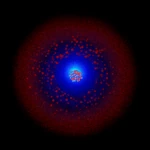
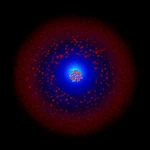
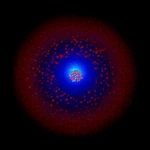
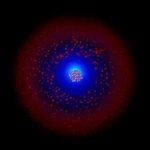
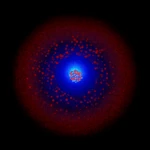
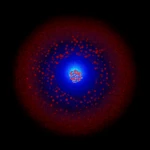
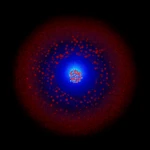
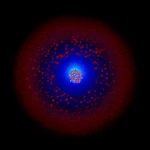
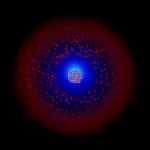
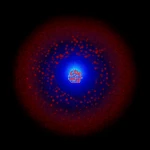
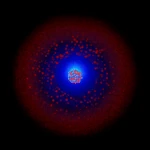
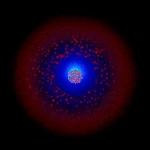
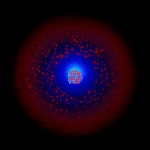
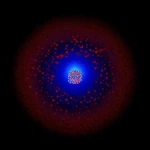
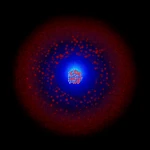
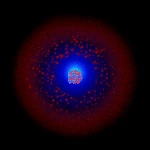
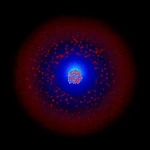
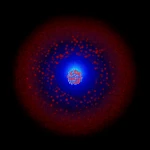
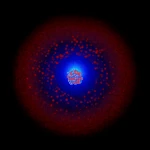
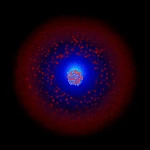
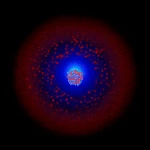
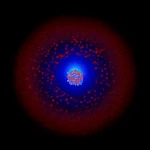
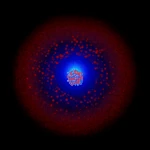
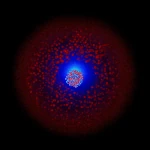
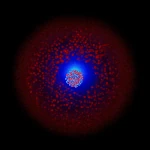
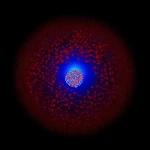
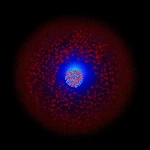
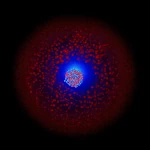
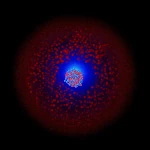
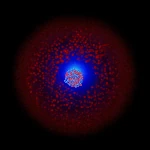
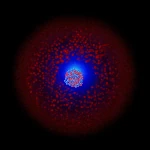
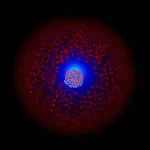
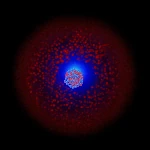
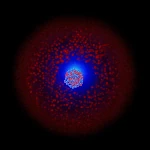
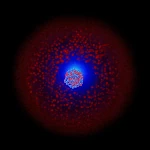
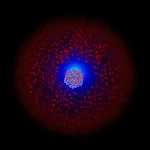
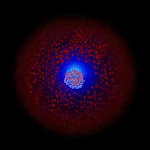
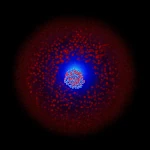
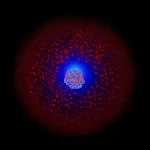
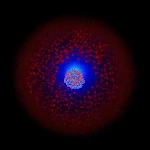
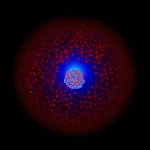
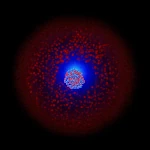
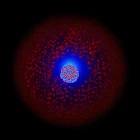
Image description: Simplified atomic model of the germanium atom. The most abundant isotope is \(\,^{74}\mathrm{Ge}\,\)
with its 32 protons, 32 electrons, and 42 neutrons.
Image source:
astronoo.com (新窗口)
锗的发现历史
Germanium holds a special place in the history of chemistry as another brilliant confirmation of 德米特里·门捷列夫's (1834-1907) periodic table. In 1871, Mendeleev predicted the existence of an element he called 类硅, positioned below silicon in his periodic classification. He described its expected properties with remarkable precision: an atomic mass around 72, a density near 5.5 g/cm³, a high melting point, and the formation of an oxide with the formula EsO₂.
In 1886, the German chemist 克莱门斯·亚历山大·温克勒 (1838-1904) discovered germanium while analyzing a silver ore called argyrodite from the Himmelsfürst mine in Saxony. After eliminating all known elements, he identified a new substance whose properties matched Mendeleev's predictions almost perfectly. The measured atomic mass was 72.6 (very close to the predicted 72), and the density was 5.47 g/cm³ (versus 5.5 predicted).
Winkler named the element 锗 in honor of his homeland, Germany (日耳曼尼亚 in Latin). This discovery, coming 15 years after Mendeleev's prediction, provided powerful validation of the periodic law and demonstrated the predictive power of the periodic table. Mendeleev himself expressed satisfaction with this confirmation, though he initially questioned some of Winkler's measurements before accepting the accuracy of the discovery.
结构与基本性质
锗(符号Ge,原子序数32)是元素周期表第14族的类金属元素。其原子含有32个质子,通常有42个中子(对应最丰富的同位素\(\,^{74}\mathrm{Ge}\)),以及32个电子,电子排布为[Ar] 3d¹⁰ 4s² 4p²。
Germanium is a grayish-white, lustrous, hard, and brittle metalloid at room temperature. Its density is 5.323 g/cm³, and it has a relatively high melting point: 938.3 °C (1,211.4 K). The boiling point reaches 2,833 °C (3,106 K), giving germanium a substantial liquid range of nearly 1,900 °C.
锗具有金刚石型立方晶体结构,与硅和碳(金刚石)类似。每个锗原子通过共价键与四个相邻原子以四面体排列方式结合。这种晶体结构解释了其许多物理和电子特性,尤其是其半导体行为。
One of germanium's most remarkable properties is its semiconductor characteristics. At room temperature, pure germanium has a small band gap of about 0.67 eV, making it an intrinsic semiconductor. Unlike metals, its electrical conductivity 增加 with temperature, a defining characteristic of semiconductors.
Germanium exhibits an unusual property for most materials: like water and silicon, it 扩展了凝固过程. The solid phase is less dense than the liquid phase, which has important implications for its crystal growth and processing.
纯锗具有典型的金属光泽,硬度较高(莫氏硬度约6),性质脆,在应力作用下会断裂而非变形。锗对红外辐射具有透射性,因此被广泛应用于热成像系统的红外光学元件和窗口材料。
The melting point (liquid state) of germanium: 1,211.4 K (938.3 °C).
The boiling point (gaseous state) of germanium
: 3,106 K (≈ 2,833 °C).
锗同位素表
| 同位素 / 符号 | 质子(Z) | 中子(N) | 原子质量(u) | 天然丰度 | 半衰期/稳定性 | 衰变 / 备注 |
|---|---|---|---|---|---|---|
| 锗-70 — \(\,^{70}\mathrm{Ge}\,\) | 32 | 38 | 69.924247 u | ≈ 20.38% | 稳定的 | 锗的最稳定轻同位素。用于核物理研究。 |
| 锗-72 — \(\,^{72}\mathrm{Ge}\,\) | 32 | 40 | 71.922076 u | ≈ 27.31% | 稳定 | 第二丰富的同位素。在半导体应用中很重要。 |
| 锗-73 — \(\,^{73}\mathrm{Ge}\,\) | 32 | 41 | 72.923459 u | ≈ 7.76% | 稳定的 | 唯一具有奇数中子数的稳定锗同位素。具有可用于核磁共振的核自旋。 |
| 锗-74 — \(\,^{74}\mathrm{Ge}\,\) | 32 | 42 | 73.921178 u | ≈ 36.72% | 稳定 | 最丰富的天然同位素。广泛应用于半导体技术。 |
| 锗-76 — \(\,^{76}\mathrm{Ge}\,\) | 32 | 44 | 75.921403 u | ≈ 7.83% | 稳定* | 理论上不稳定(双β衰变),但半衰期超过10²¹年。用于暗物质探测实验。 |
| 锗-68 — \(\,^{68}\mathrm{Ge}\,\) | 32 | 36 | 67.928094 u | 合成的 | ≈ 270.8 天 | 放射性(电子俘获)。通过衰变为⁶⁸Ga,用于PET校准源。 |
| 锗-71 — \(\,^{71}\mathrm{Ge}\,\) | 32 | 39 | 70.924951 u | 合成的 | ≈ 11.43 天 | 放射性(电子俘获)。中微子探测反应与⁷¹Ga的产物。 |
锗的电子排布与电子壳层
注意::
Electron shells:
电子如何围绕原子核组织 (新窗口).
锗有32个电子,分布在四个电子层中。其完整电子排布为:1s² 2s² 2p⁶ 3s² 3p⁶ 3d¹⁰ 4s² 4p²,简写为:[Ar] 3d¹⁰ 4s² 4p²。该排布也可写作:K(2) L(8) M(18) N(4)。
壳层的详细结构
K壳层(n=1): contains 2 electrons in the 1s subshell. This innermost shell is complete and very
stable.
L壳层(n=2): contains 8 electrons distributed as 2s² 2p⁶. This shell is complete,
forming a noble gas configuration (neon).
M层(n=3): contains 18 electrons distributed as 3s²
3p⁶ 3d¹⁰. The filled 3d subshell is characteristic of post-transition elements and significantly influences germanium's
chemical behavior.
N壳层(n=4): contains 4 electrons distributed as 4s² 4p². These four electrons
are the valence electrons of germanium.
价电子与氧化态
The 4 electrons in the outer shell (4s² 4p²) are the 价电子 of germanium. This configuration explains its chemical and semiconductor properties:
The primary oxidation state of germanium is +4, where it shares or loses all four valence electrons to form compounds like GeO₂, GeCl₄, and organogermanium compounds. In this state, germanium achieves a stable noble gas-like configuration [Ar] 3d¹⁰, analogous to silicon in its +4 state.
An oxidation state of +2 also exists, particularly in germanium(II) halides such as GeCl₂ or GeO. The +2 state involves the 4p² electrons while retaining the 4s² pair, demonstrating the 惰性电子对效应 characteristic of heavier group 14 elements. However, Ge(II) compounds are less stable than Ge(IV) compounds and tend to disproportionate or oxidize easily.
负氧化态(-4)可能出现在某些锗化物中(如与电正性金属镁形成的化合物Mg₂Ge),此时锗接受电子以填满其价电子层。金属锗在单质形态下以0氧化态存在。
The presence of the filled 3d¹⁰ subshell immediately before the valence electrons creates an important shielding effect but also contributes to the d区收缩. This results in a smaller atomic radius than might be expected, making germanium's properties intermediate between those of a metal and a non-metal, hence its classification as a metalloid.
化学反应活性
锗在室温下相对稳定。在高温下暴露于空气中时,会形成一层薄而具有保护作用的二氧化锗(GeO₂)层,可防止进一步氧化。该氧化层透明且稳定,在正常条件下具有良好的耐腐蚀性。
锗在室温下与氧气反应缓慢,但加热至600-700°C以上时更易氧化,生成二氧化锗:Ge + O₂ → GeO₂。该氧化物具有两性,同时呈现酸性和碱性,但以酸性为主,且在碱中的溶解性优于酸。
锗在室温下对稀酸相对稳定,但会缓慢溶解于热浓硫酸中,并在王水(硝酸与盐酸的混合物)中反应更快:3Ge + 4HNO₃ + 18HCl → 3GeCl₄ + 4NO + 8H₂O。与硅不同,锗不溶于氢氟酸。
与强碱反应时,锗会形成锗酸盐,尤其在熔融状态下:Ge + 2OH⁻ + 2H₂O → GeO₃²⁻ + 2H₂。该行为与硅相似,体现了锗的两性特征,但其与碱的反应活性低于硅。
锗与卤素反应生成四卤化物:Ge + 2X₂ → GeX₄(其中X = F, Cl, Br, I)。这些反应容易发生,尤其在高温条件下。四氯化锗(GeCl₄)是一种特别重要的化合物,用于光纤制造和半导体生产的前驱体。
锗能与多种元素形成各类化合物,包括硫化物(GeS、GeS₂)、氮化物以及有机锗化合物。它还能与多种金属形成合金,在用于现代微电子学的硅化物和锗化物形成中尤为重要。
锗的工业与技术应用
- 在光纤电缆中作为四氯化锗用于折射率改性;
- 用于热成像相机、夜视设备和光谱学中的红外光学元件;
- 在硅锗(SiGe)合金中,用于高速晶体管和异质结双极晶体管;
- 用于高纯锗(HPGe)探测器的伽马射线能谱探测器
- 用于PET塑料(聚对苯二甲酸乙二醇酯)生产的聚合催化剂中;
- 用于国土安全和核保障应用中的辐射探测;
- 在太阳能电池中,特别是用于多结空间光伏电池;
- 作为生长其他半导体外延层的衬底;
- 在广角相机镜头中利用其高折射率;
- 作为合金元素用于冶金,以改善铝及其他金属的性能;
- 在有机锗化合物的化疗研究中,显示出潜在的抗肿瘤活性;
- 用于荧光灯和LED技术中的荧光粉;
- 在采用超纯锗晶体的暗物质探测实验中;
- 作为硅半导体中的掺杂剂以改变电学性质;
- 在需要高频性能的射频和微波设备中。
在天体物理学和宇宙学中的角色
锗在恒星中通过多种核合成途径合成。它主要产生于大质量恒星演化末期的硅燃烧阶段,以及渐进巨星分支(AGB)恒星的慢中子俘获过程(s-过程),同时也在II型超新星爆发期间通过快中子俘获过程(r-过程)生成。
锗的五个稳定同位素(\(\,^{70}\mathrm{Ge}\)、\(\,^{72}\mathrm{Ge}\)、\(\,^{73}\mathrm{Ge}\)、\(\,^{74}\mathrm{Ge}\) 和 \(\,^{76}\mathrm{Ge}\))通过恒星核合成过程产生,并在恒星质量损失和超新星爆发事件中散布到星际介质中。陨石中测得的锗同位素比值,为早期太阳系中不同核合成过程的贡献提供了重要约束。
宇宙中锗的丰度约为每百万个硅原子对应50个锗原子,使其相较于较轻元素更为稀有。这种稀缺性反映了在恒星核合成过程中合成中等质量原子核(质量数≈70-76)的挑战,因为该质量区域接近每个核子核结合能的峰值。
锗在现代天体粒子物理学中扮演着关键角色。超纯锗探测器被广泛应用于通过原子核潜在相互作用寻找暗物质粒子的实验中。例如CDMS(低温暗物质搜寻计划)和EDELWEISS等实验采用冷却至毫开尔文温度的锗晶体,以探测与假设的WIMP(弱相互作用大质量粒子)之间罕见的相互作用。
同位素\(\,^{76}\mathrm{Ge}\)在中微子物理学中具有特殊意义。尽管在实际应用中可视为稳定,但理论上它能够发生无中微子双β衰变——这一假设性过程将证明中微子是自身的反粒子(马约拉纳粒子)。GERDA和LEGEND等实验使用富集的⁷⁶Ge来搜寻这种极其罕见的衰变,该发现将对粒子物理学和宇宙学产生深远影响。
电离锗(Ge II、Ge III、Ge IV)的光谱线已在某些恒星大气和超新星遗迹的光谱中被探测到。对这些谱线的分析有助于天文学家理解恒星成分、核合成产物以及星系在宇宙时间尺度上的化学演化。
注::
Germanium is present in the Earth's crust at a concentration of approximately
0.00015% by mass (1.5 ppm), making it a rare element, less abundant than silver. It does not occur in concentrated deposits
but is widely dispersed in small quantities. Germanium is typically associated with zinc ores (sphalerite), certain coal deposits,
and to a lesser extent with copper and lead ores.
锗主要作为锌精炼的副产品提取,在锌冶炼过程中富集于烟尘和残渣中。特定煤种产生的粉煤灰也是重要来源。全球原生锗年产量约为120-130吨,其中中国占据主导地位(约60%),其次是加拿大、俄罗斯、芬兰和美国。
锗的回收具有经济可行性和重要的环境意义。锗可从废弃光纤、红外光学系统及报废电子产品中回收。其回收率约占消费总量的30%,远高于许多其他特种金属。这一较高的回收率有助于弥补原生锗产量的不足,并减少环境影响。
The demand for germanium fluctuates with technological trends but has grown steadily, driven by fiber optic communications, infrared optics, and renewable energy applications. Germanium is classified as a 关键原材料 by the European Union and appears on similar strategic material lists in other regions due to its essential role in key technologies, limited primary sources, and concentrated global production. Supply security concerns have stimulated research into germanium substitution and more efficient recycling methods.
 核聚变所需的能量以及为什么铀是一个极限
 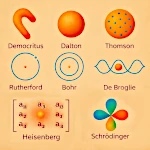 原子的各种形态:从古代直觉到量子力学