

钛(Ti,Z=22):一种具有非凡特性的轻金属

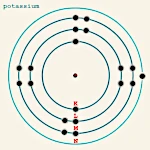
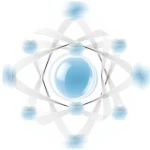
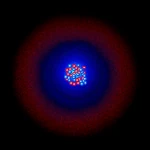
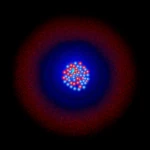
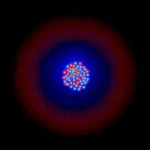
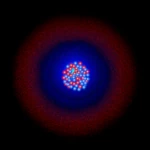
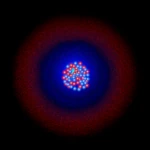
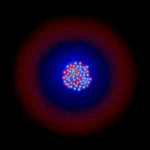
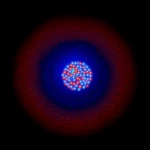
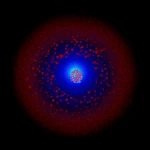
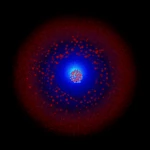
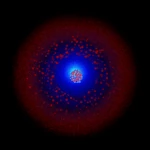
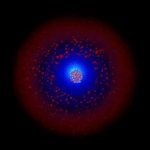
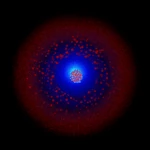
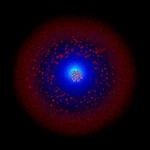
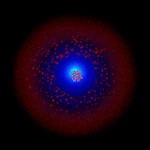
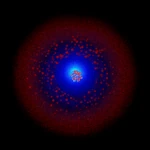
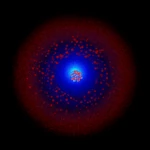
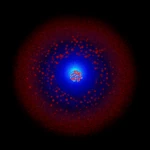
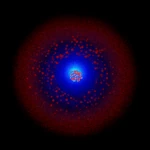
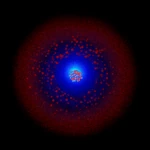
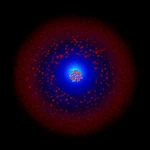
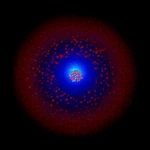
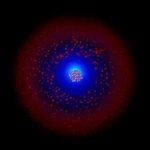
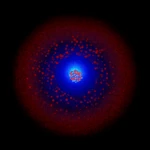
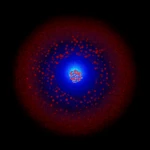
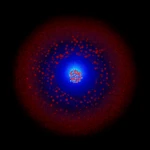
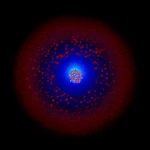
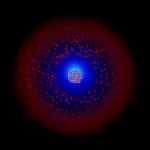
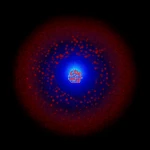
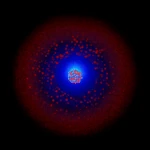
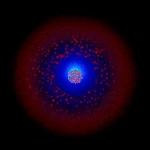
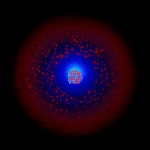
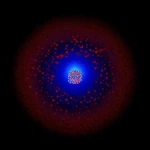
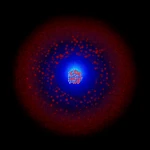
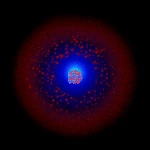
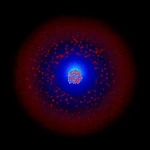
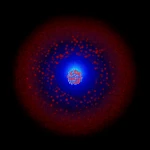
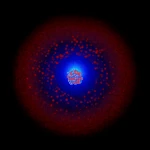
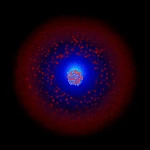
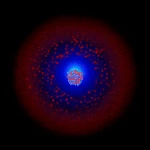
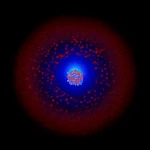
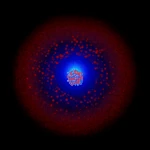
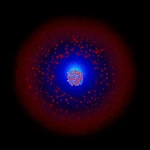
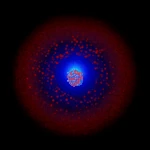
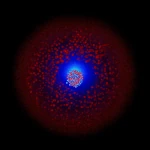
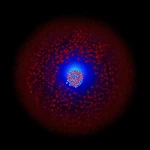
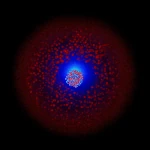
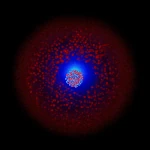
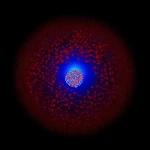
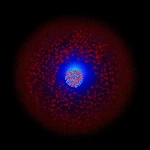
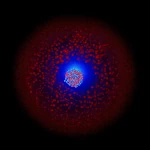
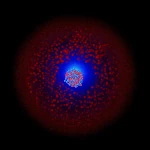
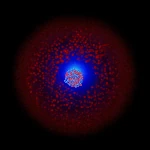
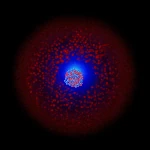
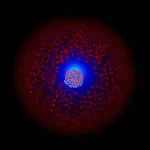
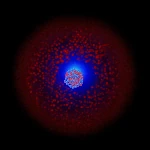
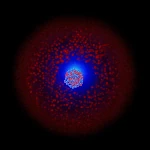
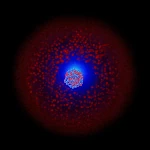
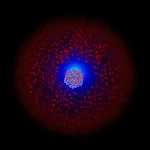
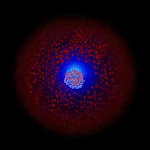
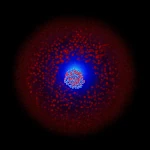
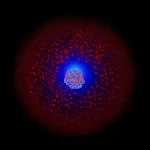
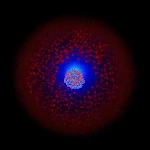
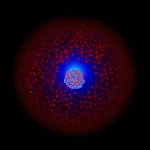
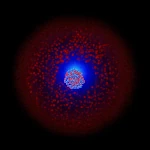
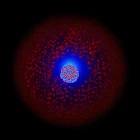
Simplified atomic model of the titanium atom.
The most abundant isotope is \(\,^{48}\mathrm{Ti}\,\) with its 22 protons, 22 electrons, and 26 neutrons.
Image source: astronoo.com (新窗口)
钛的发现历史
Titanium was discovered independently on two occasions. In 1791, British reverend 威廉·格雷戈尔 (1761-1817) analyzed black magnetic sand from Cornwall and identified a new element, which he named menaccanite(钛铁矿). A few years later, in 1795, German chemist 马丁·海因里希·克拉普罗特 (1743-1817) independently rediscovered this element in the mineral rutile and named it 钛, in reference to the Titans of Greek mythology, symbols of power and strength. Klaproth later recognized that his titanium was identical to Gregor's menaccanite. It was not until 1910 that 马修·阿尔伯特·亨特 (1878-1961) first isolated pure metallic titanium by heating titanium tetrachloride with sodium.
结构与基本性质
Titanium (symbol Ti, atomic number 22) is a transition metal in group 4 of the periodic table.
Its atom has 22 protons, usually 26 neutrons (for the most abundant isotope \(\,^{48}\mathrm{Ti}\)) and 22 electrons with the electronic configuration [Ar] 3d² 4s².
At room temperature, titanium is a silvery-gray solid metal, remarkably light (density ≈ 4.506 g/cm³), about 60% lighter than steel while being just as strong.
It has excellent corrosion resistance due to the spontaneous formation of a protective oxide layer (TiO₂) on its surface.
The melting point of titanium: 1,941 K (1,668 °C).
The boiling point of titanium: 3,560 K (3,287 °C).
钛同位素表
| 同位素 / 符号 | 质子(Z) | 中子(N) | 原子质量(u) | 天然丰度 | 半衰期/稳定性 | 衰变 / 备注 |
|---|---|---|---|---|---|---|
| 钛-46 — \(\,^{46}\mathrm{Ti}\,\) | 22 | 24 | 45.952632 u | ≈ 8.25% | 稳定的 | 天然钛中最稳定的轻同位素。 |
| 钛-47 — \(\,^{47}\mathrm{Ti}\,\) | 22 | 25 | 46.951763 u | ≈ 7.44% | 稳定的 | 具有核磁矩;用于核磁共振波谱分析。 |
| 钛-48 — \(\,^{48}\mathrm{Ti}\,\) | 22 | 26 | 47.947946 u | ≈ 73.72% | 稳定的 | 钛的主要同位素;双幻数,非常稳定的原子核。 |
| 钛-49 — \(\,^{49}\mathrm{Ti}\,\) | 22 | 27 | 48.947870 u | ≈ 5.41% | 稳定的 | 核物理研究中使用的稳定同位素。 |
| 钛-50 — \(\,^{50}\mathrm{Ti}\,\) | 22 | 28 | 49.944791 u | ≈ 5.18% | 稳定的 | 天然钛中最重的稳定同位素。 |
| 钛-44 — \(\,^{44}\mathrm{Ti}\,\) | 22 | 22 | 43.959690 u | 宇宙痕迹 | 约60年 | 放射性,电子捕获生成\(\,^{44}\mathrm{Sc}\)。在超新星中产生,用作宇宙示踪剂。 |
钛的电子排布与电子壳层
注意::
Electron shells: 电子如何围绕原子核组织排列 (新窗口).
钛有22个电子,分布在四个电子层中。其完整电子排布为:1s² 2s² 2p⁶ 3s² 3p⁶ 3d² 4s², 或简写为:[Ar] 3d² 4s²。该排布也可写作:K(2) L(8) M(10) N(2)。
壳层的详细结构
K 壳层 (n=1): contains 2 electrons in the 1s subshell. This inner shell is complete and highly stable.
L层(n=2): contains 8 electrons distributed as 2s² 2p⁶. This shell is also complete, forming a noble gas configuration (neon).
M壳层(n=3): contains 10 electrons distributed as 3s² 3p⁶ 3d². The 3s and 3p orbitals are complete, while the 3d orbitals contain only 2 out of 10 possible electrons.
N壳层(n=4): contains 2 electrons in the 4s subshell. These electrons are the first to be involved in chemical bonding.
价电子与氧化态
The 4 electrons in the outer shells (3d² 4s²) are the 价电子 of titanium. This configuration explains its chemical properties:
By losing the 2 electrons in the 4s subshell, titanium forms the Ti²⁺ ion (oxidation state +2).
By losing the 2 electrons in the 4s subshell and 1 electron in the 3d orbital, it forms the Ti³⁺ ion (oxidation state +3).
By losing all its valence electrons (4s² 3d²), it forms the Ti⁴⁺ ion (oxidation state +4), the most stable and common state.
钛独特的电子构型,其3d轨道部分填充,使其归类为过渡金属。这种结构赋予其特性:能形成有色化合物、具有催化活性,并因d轨道重叠而可能形成强金属键。
电子排布与电子壳层
钛有22个电子,分布在四个电子层中。其完整电子排布为:1s² 2s² 2p⁶ 3s² 3p⁶ 3d² 4s², 或简写为:[Ar] 3d² 4s²。该排布也可写作:K(2) L(8) M(10) N(2)。
壳层的详细结构
K层(n=1): contains 2 electrons in the 1s subshell. This inner shell is complete and very stable.
L壳层(n=2): contains 8 electrons distributed as 2s² 2p⁶. This shell is also complete, forming a noble gas configuration (neon).
M壳层 (n=3): contains 10 electrons distributed as 3s² 3p⁶ 3d². The 3s and 3p orbitals are complete, while the 3d orbitals contain only 2 out of 10 possible electrons.
N壳层(n=4): contains 2 electrons in the 4s subshell. These electrons are the first to be involved in chemical bonding.
价电子与氧化态
The 4 electrons in the outer shells (3d² 4s²) are the 价电子 of titanium. This configuration explains its chemical properties:
By losing the 2 4s electrons, titanium forms the Ti²⁺ ion (oxidation state +2).
By losing the 2 4s electrons and 1 3d electron, it forms the Ti³⁺ ion (oxidation state +3).
By losing all its valence electrons (4s² 3d²), it forms the Ti⁴⁺ ion (oxidation state +4), the most stable and common state.
钛的特殊电子构型(具有部分填充的3d轨道)使其归类为过渡金属。这种结构赋予其特性:形成有色化合物的能力、催化活性,以及通过d轨道重叠形成强金属键的能力。
化学反应活性
钛是一种在纯态下相对活泼的金属。在高温下,它会与氧气、氮气、氢气、碳和卤素发生反应。 它主要形成氧化态为+4的化合物(如TiO₂、TiCl₄),但也存在+3和+2价态。 二氧化钛(TiO₂)特别稳定,通过形成钝化保护层赋予金属优异的耐腐蚀性。 钛能抵抗多种酸和碱,但会受到氢氟酸、热浓碱溶液以及某些含氟离子酸的侵蚀。
钛的工业与技术应用
- 在航空航天工业中用于制造发动机部件、机身和起落架;
- 用于医疗植入物(髋关节假体、螺钉、接骨板),因其卓越的生物相容性;
- 在海洋工业中,用于制造耐海水腐蚀的螺旋桨、潜艇壳体及海上设备;
- 作为白色颜料(TiO₂)用于油漆、塑料、纸张和化妆品中;
- 用于制造高端运动装备(高尔夫球杆、自行车车架、网球拍)
- 在化学工业中用于反应器、热交换器和耐腐蚀管道;
- 兼具轻便、坚固与低致敏性的眼镜架和珠宝;
- 在现代建筑中用于外墙和屋顶(毕尔巴鄂古根海姆博物馆);
- 适用于需要反复灭菌的外科和牙科器械。
- 在焊接和电解用电极的生产中;
- 作为电容器和电子元件的材料;
- 用于需要最佳强度重量比的军用装甲和结构;
- 在海水淡化和废水处理中;
- 作为各种化学反应中的催化剂或催化剂载体;
- 用于利用TiO₂特性的防晒霜和紫外线防护产品。
在天体物理学和宇宙学中的作用
钛元素主要在大质量恒星爆发成为超新星的过程中,通过快速中子捕获过程(r-过程)和硅燃烧合成。放射性同位素\(\,^{44}\mathrm{Ti}\)(半衰期约60年)因其能用于测定和研究近期超新星遗迹的年龄而备受关注。通过伽马能谱探测该同位素,可为恒星爆发机制及爆炸核合成提供关键信息。
在演化恒星中,钛形成于硅燃烧层,恰好在核心坍缩引发超新星爆发之前。陨石与古老恒星中钛的丰度,帮助天文学家理解银河系化学元素的逐步富集过程。中性钛与电离钛(Ti I、Ti II)的光谱线被用于测定恒星的温度、表面重力及化学成分。
注::
Titanium is the 第九丰富的元素 in the Earth's crust (about 0.6% by mass), but it is rarely found in pure form.
It is mainly found in ores such as ilmenite (FeTiO₃) and rutile (TiO₂).
Despite its relative abundance, the extraction and purification of metallic titanium are costly and energy-intensive processes (Kroll process), which explains its high price compared to other structural metals such as steel or aluminum.
This production complexity contrasts with its exceptional mechanical properties and corrosion resistance.
 核聚变所需的能量以及为什么铀是一个极限
 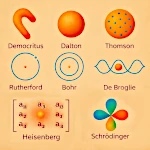 原子的各种形态:从古代直觉到量子力学