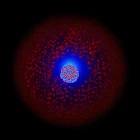


铍(Be,Z = 4):一种性能卓越的战略金属

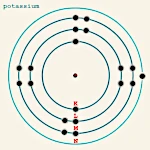
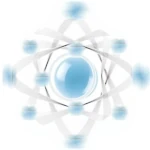
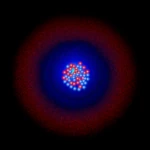
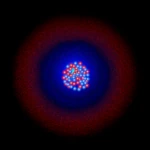
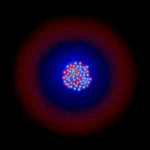
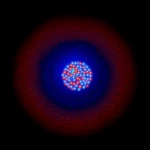
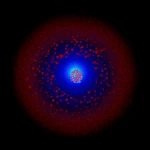
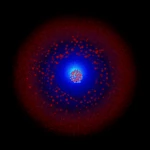
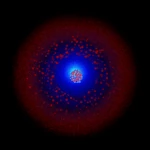
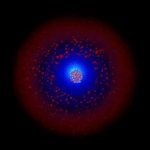
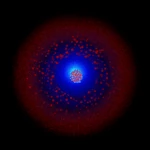
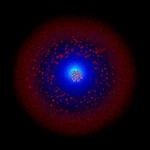
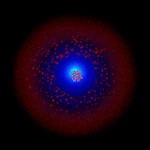
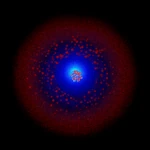
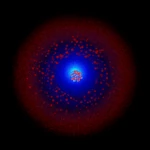
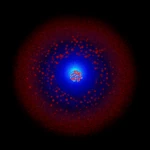
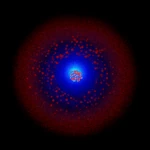
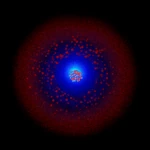
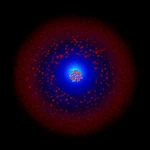
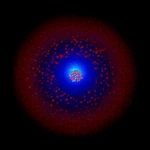
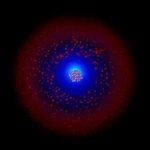
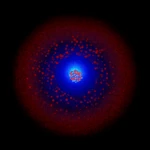
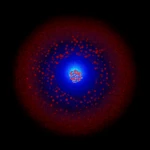
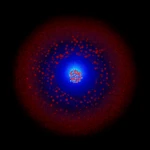
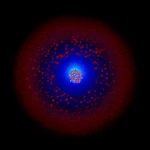
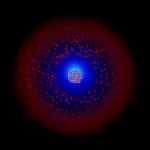
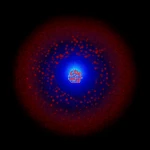
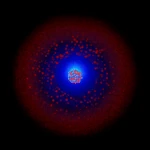
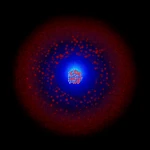
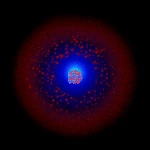
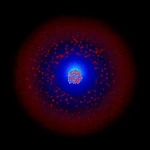
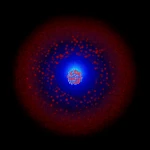
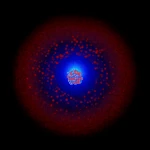
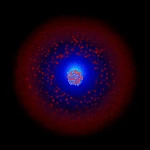
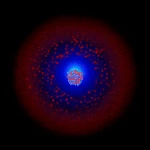
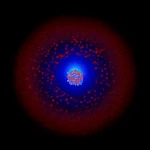
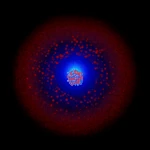
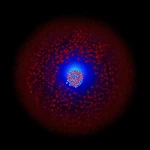
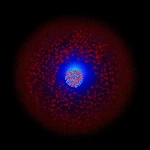
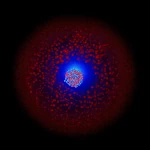
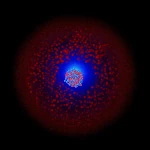
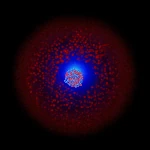
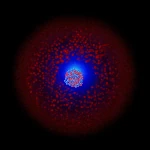
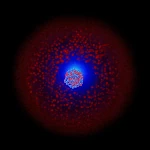
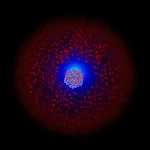
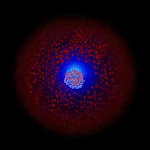
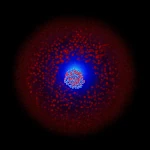
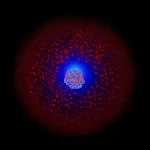
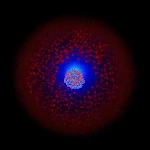
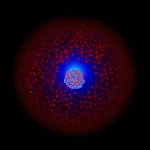
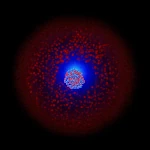
Simplified atomic model of the beryllium atom with its four protons and four electrons, but the most abundant isotope is \(\,^{9}\mathrm{Be}\).
Image source: astronoo.com (新窗口)
铍的发现历史
Beryllium was first identified as an oxide in the gemstones emerald and beryl. In 1798, the French chemist 路易-尼古拉·沃克兰 (1763-1829) discovered a new element by analyzing emerald and beryl. He initially named this element 铍 (from the Greek glykys = sweet) because of the sweet taste of its salts. It was not until 1828 that the chemists 弗里德里希·维勒 (1800-1882) in Germany and 安托万·布西 (1794-1882) in France independently succeeded in isolating the pure metal by reducing beryllium chloride with potassium. The name 铍 (from the mineral beryl) eventually became internationally accepted, although the term glucinium remained in use in some countries until the mid-20th century.
结构与基本性质
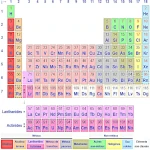
Beryllium (symbol Be, atomic number 4) is the first alkaline earth metal in the periodic table, consisting of four protons, five neutrons (for the stable isotope), and four electrons.
The only natural stable isotope is beryllium-9 \(\,^{9}\mathrm{Be}\) (100% natural abundance).
At room temperature, beryllium is a hard, steel-gray metal, remarkably light (density ≈ 1.85 g/cm³), making it one of the least dense structural metals.
It has exceptional rigidity (high elastic modulus) and excellent thermal conductivity.
Beryllium is relatively stable in air due to the formation of a protective layer of beryllium oxide (BeO).
The temperature at which the liquid and solid states can coexist (melting point): 1560 K (1287 °C).
The temperature at which it transitions from liquid to gas (boiling point): 2742 K (2469 °C).
铍同位素表
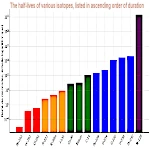
| 同位素 / 符号 | 质子(Z) | 中子(N) | 原子质量(u) | 天然丰度 | 半衰期 / 稳定性 | 衰变 / 备注 |
|---|---|---|---|---|---|---|
| 铍-7 — \(\,^{7}\mathrm{Be}\,\) | 4 | 3 | 7.016930 u | 宇宙成因 | 53.22天 | 通过电子俘获衰变为\(\,^{7}\mathrm{Li}\)的放射性物质;由大气中的宇宙射线产生。 |
| 铍-8 — \(\,^{8}\mathrm{Be}\,\) | 4 | 4 | 8.005305 u | 非自然的 | ≈ 8.19 × 10⁻¹⁷ 秒 | 极不稳定;立即衰变为两个α粒子(氦-4原子核)。 |
| 铍-9 — \(\,^{9}\mathrm{Be}\,\) | 4 | 5 | 9.012183 u | 100% | 稳定 | 铍的唯一稳定同位素;用于所有工业和科学应用。 |
| 铍-10 — \(\,^{10}\mathrm{Be}\,\) | 4 | 6 | 10.013534 u | 宇宙成因 | 138.7万年 | 放射性β⁻衰变生成¹⁰B;用于地质测年和气候学中追踪侵蚀过程。 |
| 铍-11 — \(\,^{11}\mathrm{Be}\,\) | 4 | 7 | 11.021658 u | 非自然的 | 13.76秒 | 放射性β⁻;具有中子晕;在核物理中研究。 |
| 其他同位素——\(\,^{6}\mathrm{Be},\,^{12}\mathrm{Be},\,^{14}\mathrm{Be}\) | 4 | 2, 8, 10 | — (共鸣) | 非自然的 | \(10^{-21}\) — 0.02秒 | 核物理中观察到极不稳定的状态;通过中子或粒子发射衰变。 |
电子构型与电子层
注意::
Electron shells: 电子如何围绕原子核组织 (新窗口).
铍有4个电子分布在两个电子壳层上。其完整电子排布为:1s² 2s²,简写为:[He] 2s²。该排布也可写作:K(2) L(2)。
壳层的详细结构
K壳层 (n=1): Contains 2 electrons in the 1s sub-shell. This inner shell is complete and highly stable.
L层(n=2): Contains 2 electrons in the 2s sub-shell. The 2s orbitals are complete, while the 2p orbitals remain totally empty. Thus, 6 electrons are missing to reach the stable neon configuration with 8 electrons (octet).
价电子与氧化态
The 2 electrons in the outer shell (2s²) are the 价电子 of beryllium. This configuration explains its chemical properties:
By losing its 2 electrons in the 2s sub-shell, beryllium forms the Be²⁺ ion (oxidation state +2), its unique and systematic oxidation state in all its compounds.
The Be²⁺ ion then adopts an electronic configuration identical to that of helium [He], which gives this ion great stability.
Beryllium does not exhibit any other stable oxidation state; only the +2 degree is observed in chemistry.
铍的电子构型在其价层有2个电子,因此被归类为碱土金属(元素周期表第2族),但其化学行为在该族中表现出非典型性。这种结构赋予它特殊的性质:由于离子半径极小且电荷高(+2),Be²⁺离子具有极强的极化能力,这意味着铍主要形成共价键而非离子键,这一点与其他碱土金属不同。铍倾向于形成不遵循八隅体规则的化合物,例如在BeCl₂分子中,中心原子周围仅有4个电子。
元素铍是一种轻金属(密度为1.85克/立方厘米),呈钢灰色,质地较硬且脆。它在空气中会形成一层BeO保护性氧化膜,防止进一步氧化。铍在高温下具有优异的机械性能和出色的导热性。
铍的重要性在于其特殊的技术应用:铜铍合金兼具高强度、导电性和无磁性,用于航空航天、电子设备及无火花工具;纯铍用作核反应堆中的中子反射层和慢化剂;其对X射线的透明性使其成为X射线管窗口的首选材料;氧化铍(BeO)是优异的电绝缘体且具有高热导率,用于电力电子领域。然而,吸入铍及其化合物具有极高毒性,可引发铍肺病(一种慢性肺部疾病),因此在操作过程中需采取严格防护措施。
化学反应活性
铍有两个价电子,主要形成+2氧化态的化合物。与其他碱土金属不同,铍因其原子尺寸小且(对金属而言)电负性相对较高,表现出非典型的化学行为。它在许多化合物中形成共价键而非离子键,这对碱土金属而言并不常见。
Metallic beryllium is protected from oxidation by a thin layer of beryllium oxide (BeO) that forms spontaneously in air. This protective layer is extremely stable and resists dilute acids. However, beryllium reacts with concentrated acids and strong bases. It forms halides (beryllium fluoride, chloride), hydrides, and organometallic compounds. Beryllium and its compounds are 剧毒, causing a serious lung disease called berylliosis when inhaled as dust or vapor.
铍的工业与技术应用
- 在航空航天工业中用于轻质且坚固的结构(卫星、导弹、航天飞机);
- 作为詹姆斯·韦伯太空望远镜的一个组件,因其在极低温度下的尺寸稳定性而备受青睐。
- 在X射线管窗口中,因其对低能X射线的透明性而使用。
- 在铜铍合金中用于制造无火花工具、高性能弹簧和电子连接器;
- 作为核反应堆中的中子反射体和慢化剂;
- 用于惯性导航系统的高精度陀螺仪;
- 用于制造石油勘探中使用的便携式中子源(与α发射体混合)。
- 在客机制动系统中,因其散热能力而受到重视。
- 作为大气再入飞行器的热屏蔽材料;
- 在精密光学元件(如望远镜镜片)中,因其刚性强且重量轻而被采用;
- 用于电子工业中的高性能电接触材料;
- 在高保真音响系统(扬声器振膜)中,因其刚性强且重量轻而被采用。
- 作为粒子加速器中的靶材料;
- 在国防工业中用于导弹部件和武器系统;
- 用于制造电力电子技术陶瓷(氧化铍)。
在天体物理学和宇宙学中的作用
Beryllium occupies a special position in nucleosynthesis because it was not produced in significant quantities during the Big Bang. The extreme instability of beryllium-8, which decays into two helium-4 nuclei in a fraction of a second, creates a "bottleneck" in primordial nucleosynthesis. This instability prevented the formation of elements heavier than helium during the first minutes of the universe, creating what is known as the “铍-8间隙”.
The beryllium present in the current universe is mainly produced by two processes: 宇宙散裂 (fragmentation of heavier atoms such as carbon and oxygen by cosmic rays) and nuclear reactions in the atmospheres of massive stars during supernova explosions. Beryllium-9 and cosmogenic beryllium-10 serve as tracers to study the history of galactic cosmic rays and mixing processes in stars.
在恒星中,铍在相对较低的温度(约350万开尔文)下会迅速被摧毁,这使其成为恒星内部温度和对流过程的绝佳指示剂。天文学家利用老年恒星中铍的丰度来约束恒星结构模型,并理解银河系的化学演化。
铍在现代恒星核合成中也扮演着关键角色。在演化中的大质量恒星内部,三重α反应(由三个氦-4原子核形成碳-12)必须跨越铍-8的"能量缺口"。该反应之所以能够发生,是因为碳-12的一个激发态(由弗雷德·霍伊尔于1953年预言)允许转瞬即逝的铍-8在衰变前捕获第三个氦原子核。这种非凡的巧合——有时被称为"弱人择原理"——正是碳元素(以及我们所知的生命)能够在宇宙中存在的关键原因之一。
注意::
铍的毒性: Beryllium and its compounds are classified as carcinogenic and highly toxic substances.
Inhalation of dust or vapors containing beryllium can cause berylliosis, a serious and sometimes fatal chronic lung disease.
This disease can develop even after brief exposure to low concentrations.
For this reason, handling beryllium and its compounds requires rigorous protective measures and strict control in industrial environments.
Despite its exceptional properties, the use of beryllium is limited to applications where no acceptable substitute exists, due to the health risks it poses.
 核聚变所需的能量以及为什么铀是一个极限
 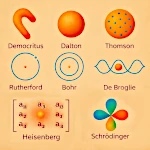 原子的各种形态:从古代直觉到量子力学