

铌(Nb,Z=41):欧洲核子研究中心(CERN)的超导体与现代钢材的关键元素
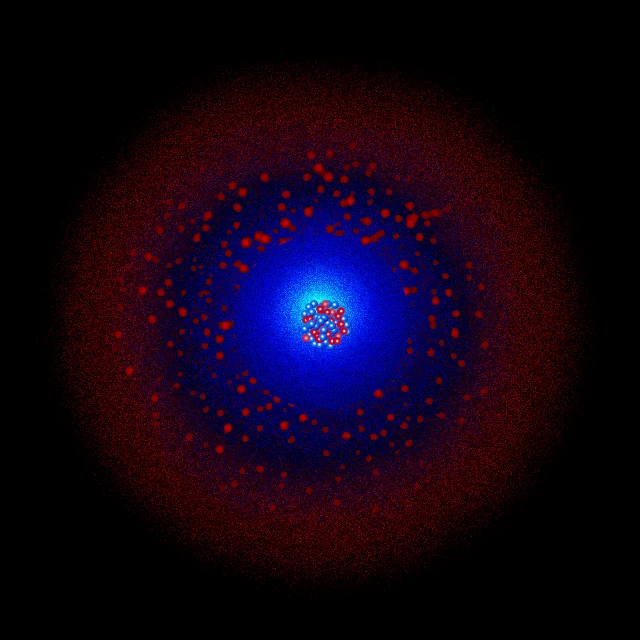
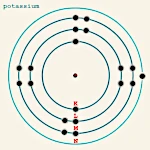
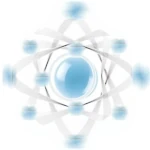
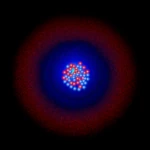
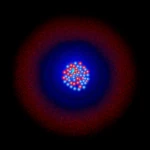
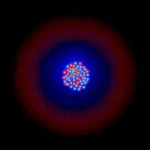
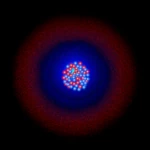
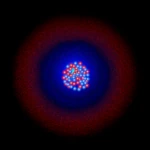
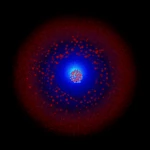
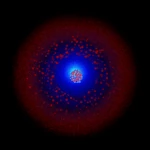
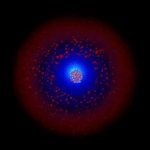
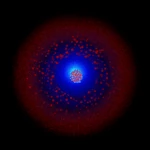
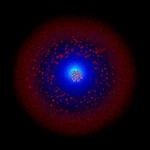
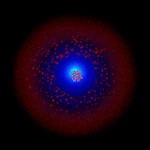
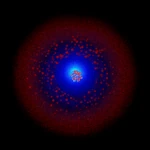
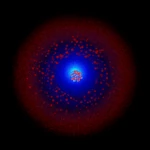
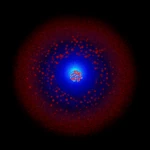
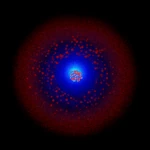
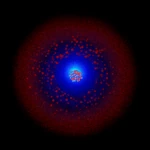
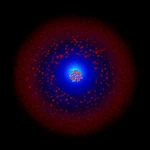
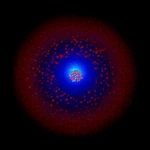
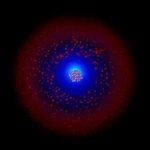
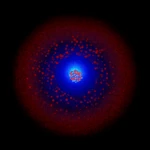
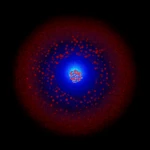
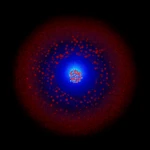
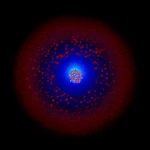
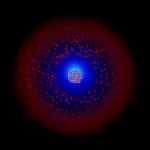
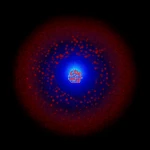
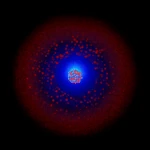
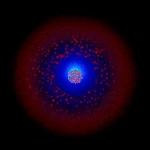
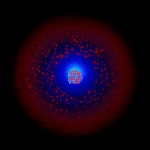
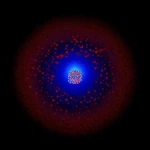
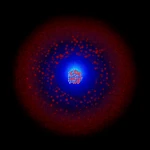
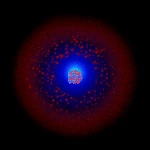
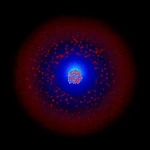
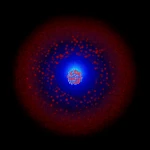
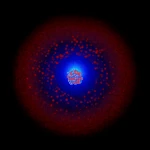
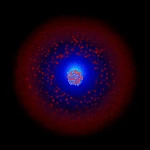
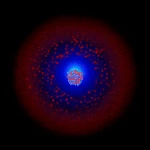
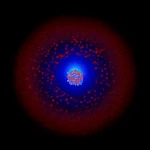
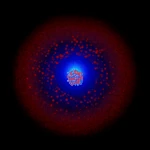
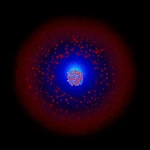
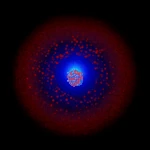
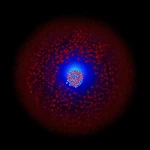
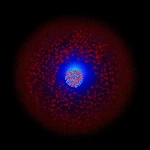
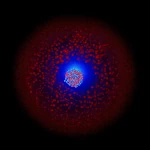
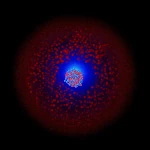
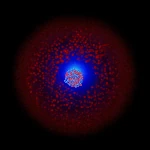
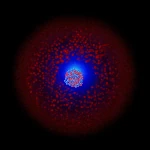
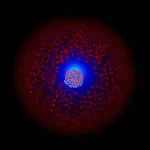
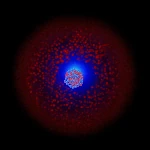
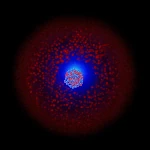
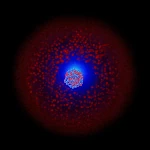
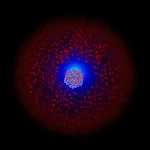
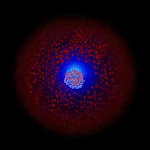
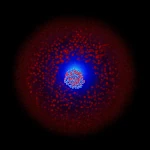
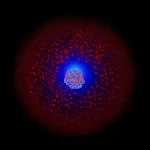
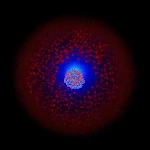
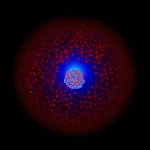
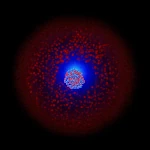
Image description: Simplified atomic model of the niobium atom. The stable isotope is \(\,^{93}\mathrm{Nb}\,\)
with its 41 protons, 41 electrons, and 52 neutrons.
Image source:
astronoo.com (新窗口)
铌的发现历史
Niobium was discovered in 1801 by the British chemist 查尔斯·哈切特 (1765-1847), who named it 铌 in honor of America. In 1844, the German chemist 海因里希·罗泽 (1795-1864) demonstrated that minerals containing tantalum contained a second distinct element, which he named 铌 in reference to Niobe, daughter of Tantalus in Greek mythology.
A nomenclature controversy opposed European chemists (favoring the name niobium) and American chemists (preferring columbium) for over a century. It was not until 1950 that the IUPAC officially adopted the name 铌. The isolation of pure metallic niobium was achieved in 1864 by Christian Wilhelm Blomstrand.
结构与基本性质
铌(符号Nb,原子序数41)是元素周期表第5族的一种过渡金属。其原子含有41个质子,通常有52个中子(对应唯一稳定同位素\(\,^{93}\mathrm{Nb}\)),以及41个电子,电子构型为[Kr] 4d⁴ 5s¹。
Niobium is a shiny, gray-white metal with a slight bluish tint. It has a density of 8.57 g/cm³ and is relatively soft and ductile. It crystallizes in a body-centered cubic (bcc) structure at all temperatures. Niobium melts at 2477°C (2750 K) and boils at 4744 °C (5017 K).
The most remarkable property of niobium is its superconductivity. It becomes superconducting below 9.2千 (-263.95 °C), the highest critical temperature of all pure metallic elements. This property makes niobium the basic material for most industrial superconducting applications.
Melting point of niobium: 2750 K (2477 °C).
Boiling point of niobium: 5017 K (4744 °C).
Superconducting critical temperature: 9.2 K (-263.95 °C).
铌同位素表
| 同位素 / 符号 | 质子(Z) | 中子(N) | 原子质量(u) | 天然丰度 | 半衰期/稳定性 | 衰变 / 备注 |
|---|---|---|---|---|---|---|
| 铌-93 — \(\,^{93}\mathrm{Nb}\,\) | 41 | 52 | 92.906378 u | 100% | 稳定 | 铌的唯一稳定同位素。铌是一种单核素元素。 |
| 铌-92 — \(\,^{92}\mathrm{Nb}\,\) | 41 | 51 | 91.907194 u | 合成 | ≈ 3.47 × 10⁷ 年 | 放射性(电子捕获)。宇宙化学中用于测定早期太阳系年龄的灭绝同位素。 |
| 铌-94 — \(\,^{94}\mathrm{Nb}\,\) | 41 | 53 | 93.907283 u | 合成 | ≈ 2.03 × 10⁴ 年 | 放射性(β⁻)。由宇宙射线产生,用于测定陨石暴露年龄。 |
| 铌-95 — \(\,^{95}\mathrm{Nb}\,\) | 41 | 54 | 94.906835 u | 合成 | ≈ 35.0 天 | 放射性(β⁻)。重要的裂变产物。用作研究中的示踪剂。 |
铌的电子排布与电子壳层
注意::
Electron shells:
电子如何围绕原子核组织 (新窗口).
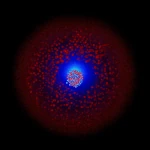
铌有41个电子,分布在五个电子壳层上。其完整电子排布为:1s² 2s² 2p⁶ 3s² 3p⁶ 3d¹⁰ 4s² 4p⁶ 4d⁴ 5s¹,或简写为:[Kr] 4d⁴ 5s¹。该排布也可写作:K(2) L(8) M(18) N(12) O(1)。
壳层的详细结构
K壳层(n=1): contains 2 electrons in the 1s subshell. This inner shell is complete and very stable.
L壳层 (n=2): contains 8 electrons distributed as 2s² 2p⁶. This shell is also complete, forming a noble gas configuration (neon).
M 壳层 (n=3): contains 18 electrons distributed as 3s² 3p⁶ 3d¹⁰. This complete shell contributes to the electronic screen.
N壳层(n=4): contains 12 electrons distributed as 4s² 4p⁶ 4d⁴. The four 4d electrons are valence electrons.
O壳层(n=5): contains 1 electron in the 5s subshell. This electron is also a valence electron.
价电子与氧化态
Niobium has 5 价电子: four 4d⁴ electrons and one 5s¹ electron. The most common and stable oxidation state is +5, where niobium forms the Nb⁵⁺ ion. Niobium pentoxide (Nb₂O₅) is the most important compound. Oxidation states +4, +3, +2, and +1 exist in less stable compounds. The electronegativity of niobium (1.6 on the Pauling scale) is moderate.
化学反应活性
在室温下,铌因表面形成一层薄薄的保护性氧化层(Nb₂O₅)而具有显著的抗腐蚀性。温度超过200°C时氧化加剧,在纯氧中高于400°C时可燃烧:4Nb + 5O₂ → 2Nb₂O₅。
铌在高温下与卤素反应生成五卤化物:2Nb + 5X₂ → 2NbX₅。由于其氧化层,铌能抵抗大多数酸,但氢氟酸会溶解这层保护膜,从而侵蚀铌。铌可逆地吸收氢气,并与多种金属形成合金,尤其是具有超导性的铌钛合金。
铌的工业与技术应用
- 在用于磁共振成像、粒子加速器和核聚变的超导磁体(Nb-Ti合金和Nb₃Sn化合物)中;
- 作为微合金元素用于管道、汽车和建筑用HSLA钢中;
- 在用于飞机涡轮机和发电厂的镍基高温合金中;
- 用于欧洲核子研究中心(CERN)大型强子对撞机(LHC)的超导射频谐振腔
- 在珠宝和身体穿刺中(低致敏性且可阳极氧化成各种颜色);
- 用于电子产品的高性能电解电容器中;
- 作为坩埚和高温炉组件的耐火材料;
- 用于核能和航空航天应用的焊接合金中;
- 用于医疗植入物和骨科假体(优异的生物相容性);
- 在化学合成和石油精炼的催化剂中;
- 在量子计算的基础研究中(超导量子比特)。
超导与高能物理
铌是超导体技术的核心。铌钛合金(Nb-Ti,含钛47%)是全球使用最广泛的超导材料,在10K以下进入超导态,可承载高达15特斯拉的磁场。每年有超过1000吨的铌钛合金被生产出来,用于医疗MRI、核磁共振波谱仪和粒子加速器。
欧洲核子研究中心(CERN)的大型强子对撞机(LHC)在其超导磁体中使用了约1200吨铌。1232块偶极磁体通过超流氦冷却至1.9开尔文,产生8.3特斯拉的磁场以引导质子束。LHC的射频谐振腔由超高纯度铌制成,冷却至2开尔文,以卓越的能量效率加速粒子。
对于更强的磁场(高达25-30特斯拉),尽管Nb₃Sn化合物脆性大且制造工艺复杂,仍被采用。其18.3 K的临界温度是传统金属超导体中最高的。
钢冶金中的铌
全球约85%的铌产量用于钢铁生产。在钢中添加少量(0.01%至0.1%)铌可显著改善其机械性能。铌能形成精细分散的碳氮化物,细化晶粒尺寸,在保持延展性和可焊性的同时大幅提升强度。
含铌微合金化HSLA钢广泛用于油气输送管道、汽车结构(减轻重量并提高安全性)以及建筑领域。这些应用每年生产数百万吨含铌钢。铌稳定化不锈钢(347型和348型)在化工和核工业中具有抗晶间腐蚀性能。
在天体物理学和宇宙学中的作用
铌主要在恒星中通过r-过程(快速中子俘获)合成,发生于II型超新星爆发和中子星合并事件。铌在宇宙中的丰度极低,约为氢的7×10⁻¹¹倍,是宇宙中最稀有的元素之一。
铌-92是一种半衰期极长(3470万年)的放射性同位素,在太阳系形成时存在,但现已完全衰变。它已在一些原始陨石中被间接探测到。初始⁹²Nb/⁹³Nb比值对核合成与太阳系首批固体形成之间的时间间隔提供了约束条件。
注意::
Niobium is present in the Earth's crust at an average concentration of about 0.0020% by mass (20 ppm), comparable to lithium. The main ore is pyrochlore (NaCaNb₂O₆F) containing 55-65% Nb₂O₅. Brazil dominates world production with 85-90% of the supply, mainly from the Araxá mine, which produces more than 150,000 tons of ferroniobium per year.
金属铌通过铝热法生产用于制备铌铁,或通过镁热还原五氯化铌(NbCl₅)生产高纯度铌,用于超导应用。全球每年铌的总产量约为10万吨(以铌含量计)。铌铁的价格在每千克40至50美元之间,而高纯度铌的价格可达每千克200至400美元。
欧盟和美国将铌视为关键材料,因其对钢铁、航空航天及能源行业具有战略重要性,且其生产高度集中于巴西。全球需求正以每年3%-5%的速度稳步增长。
 核聚变所需的能量以及为什么铀是一个极限
 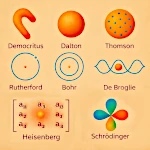 原子的各种形态:从古代直觉到量子力学