

铬(Cr,Z = 24):一种具有卓越性能的闪亮金属
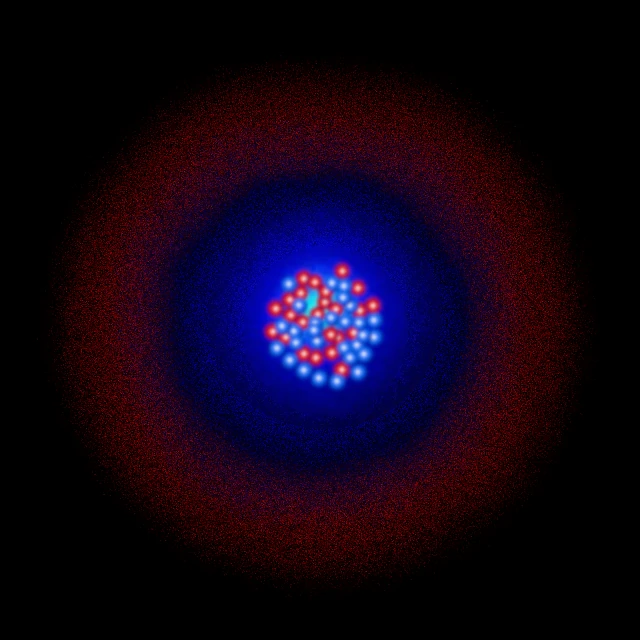
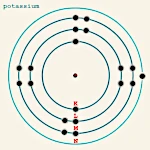
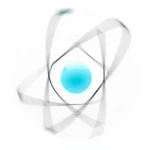
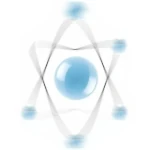
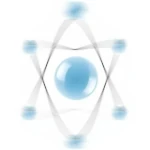
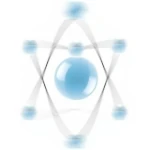
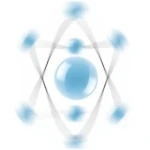
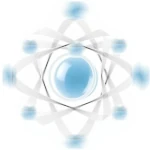
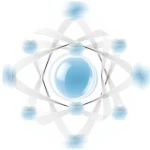
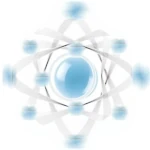
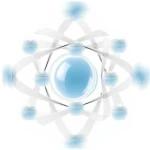
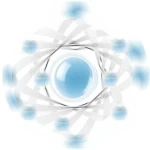
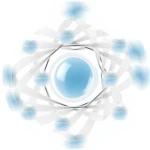
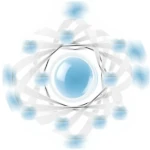
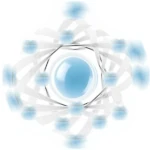
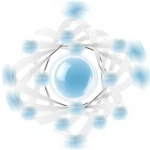
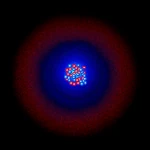
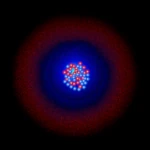
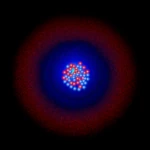
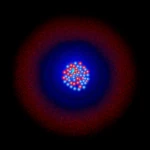
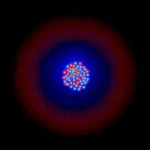
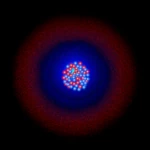
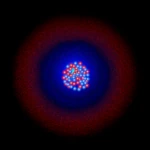
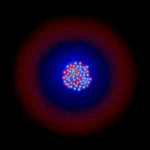
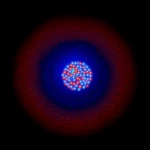
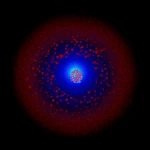
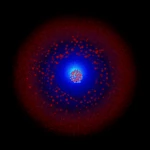
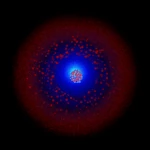
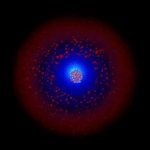
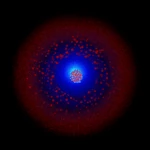
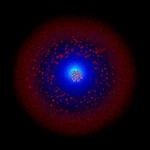
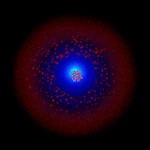
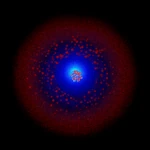
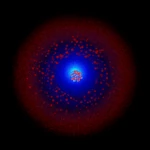
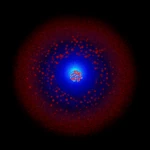
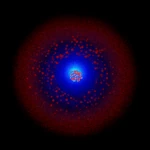
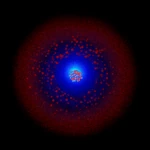
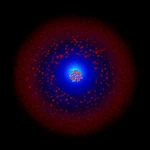
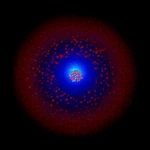
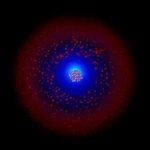
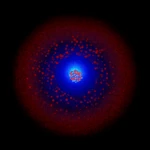
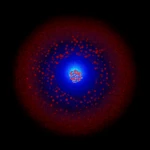
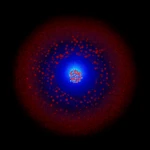
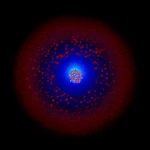
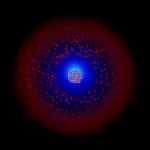
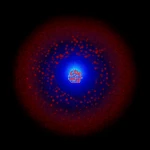
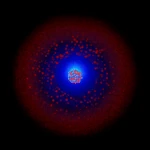
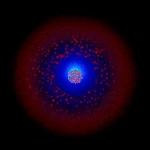
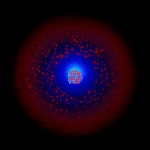
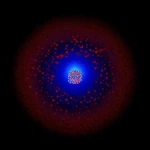
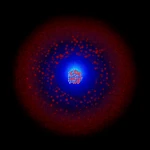
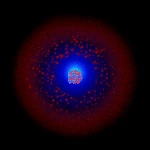
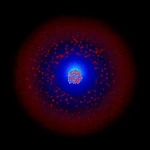
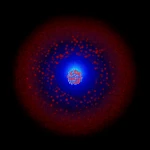
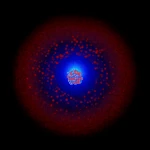
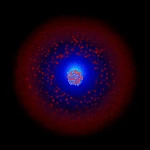
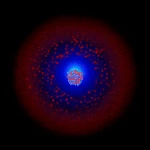
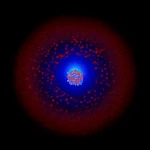
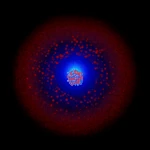
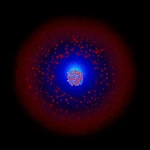
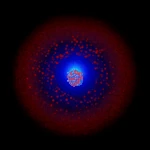
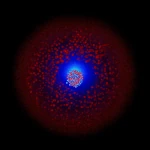
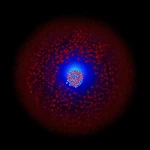
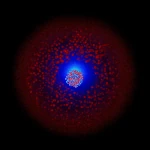
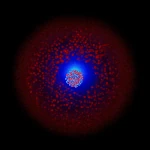
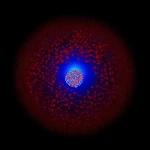
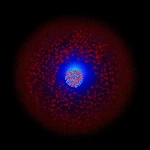
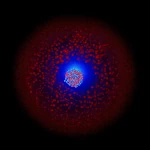
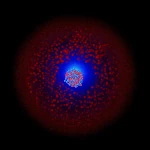
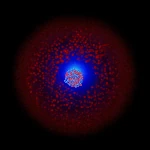
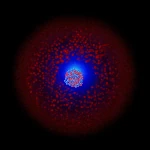
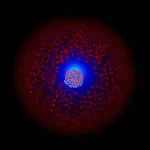
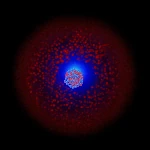
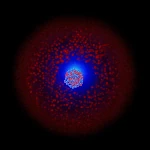
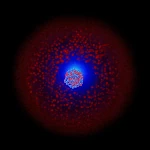
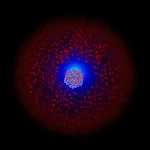
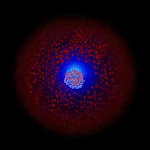
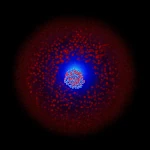
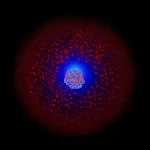
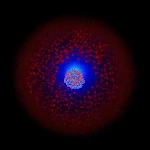
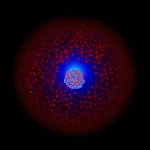
Simplified atomic model of the chromium atom.
The most abundant isotope is \(\,^{52}\mathrm{Cr}\,\) with 24 protons, 24 electrons, and 28 neutrons.
Image source: astronoo.com (新窗口)
铬的发现历史
Chromium was discovered in 1797 by the French chemist 路易-尼古拉·沃克兰 (1763–1829) while analyzing a vivid red mineral from Siberia, crocoite (lead chromate, PbCrO₄). Intrigued by the varied colors of the compounds he obtained, Vauquelin isolated a new metallic element, which he named 铬, from the Greek 色度, meaning "color," in reference to the brilliant hues of its compounds (green, yellow, orange, red). In the same year, Vauquelin also discovered beryllium, making 1797 a remarkable year in the history of chemistry. Pure metallic chromium was only isolated later, as its production requires complex reduction techniques due to its strong affinity for oxygen.
结构与基本性质
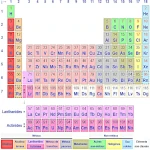
Chromium (symbol Cr, atomic number 24) is a transition metal in group 6 of the periodic table.
Its atom has 24 protons, usually 28 neutrons (for the most abundant isotope \(\,^{52}\mathrm{Cr}\)) and 24 electrons with the electronic configuration [Ar] 3d⁵ 4s¹ (Ar = shorthand for the first 18 electrons of chromium).
At room temperature, chromium is a solid, silvery-white metal with a characteristic metallic luster. It is relatively dense (density ≈ 7.19 g/cm³) and extremely hard, ranking among the hardest metals.
It has excellent corrosion resistance due to the spontaneous formation of a thin chromium oxide layer (Cr₂O₃), which makes it inert in air and water.
Melting point of chromium (liquid state): 2,180 K (1,907 °C).
Boiling point of chromium (gaseous state): 2,944 K (2,671 °C).
铬同位素表
| 同位素 / 符号 | 质子(Z) | 中子(N) | 原子质量(u) | 自然丰度 | 半衰期/稳定性 | 衰变 / 备注 |
|---|---|---|---|---|---|---|
| 铬-50 — \(\,^{50}\mathrm{Cr}\,\) | 24 | 26 | 49.946044 u | ≈ 4.345% | 稳定的 | 天然铬中最稳定的轻同位素。 |
| 铬-52 — \(\,^{52}\mathrm{Cr}\,\) | 24 | 28 | 51.940507 u | ≈ 83.789% | 稳定 | 铬的主要同位素;自然界中最丰富。 |
| 铬-53 — \(\,^{53}\mathrm{Cr}\,\) | 24 | 29 | 52.940649 u | ≈ 9.501% | 稳定 | 具有核磁矩;用于核磁共振及作为同位素示踪剂。 |
| 铬-54 — \(\,^{54}\mathrm{Cr}\,\) | 24 | 30 | 53.938880 u | ≈ 2.365% | 稳定 | 天然铬中最稳定的同位素。 |
| 铬-51 — \(\,^{51}\mathrm{Cr}\,\) | 24 | 27 | 50.944767 u | 合成 | ≈ 27.7 天 | 放射性,电子俘获生成\(\,^{51}\mathrm{V}\)。用于核医学标记红细胞。 |
| 铬-48 — \(\,^{48}\mathrm{Cr}\,\) | 24 | 24 | 47.954032 u | 合成 | ≈ 21.6小时 | 放射性,β⁺衰变。产生于高能粒子碰撞中。 |
铬的电子构型与电子层
注意::
Electron shells: 电子如何围绕原子核组织 (新窗口).
铬有24个电子,分布在四个电子层中。其电子排布十分独特:1s² 2s² 2p⁶ 3s² 3p⁶ 3d⁵ 4s¹,或简写为:[Ar] 3d⁵ 4s¹。该排布也可表示为:K(2) L(8) M(13) N(1)。这种特殊的3d⁵ 4s¹构型(而非3d⁴ 4s²)源于半满d亚层的特殊稳定性。
壳层的详细结构
K壳层(n=1): contains 2 electrons in the 1s subshell. This inner shell is complete and very stable.
L层(n=2): contains 8 electrons distributed as 2s² 2p⁶. This shell is also complete, forming a noble gas configuration (neon).
M壳层(n=3): contains 13 electrons distributed as 3s² 3p⁶ 3d⁵. The 3s and 3p orbitals are complete, while the five 3d orbitals each contain one unpaired electron, creating a particularly stable half-filled configuration.
N层(n=4): contains only 1 electron in the 4s subshell. This unusual arrangement (only one 4s electron instead of two) results from an energetically favorable transfer to the 3d subshell.
价电子与氧化态
The 6 electrons in the outer shells (3d⁵ 4s¹) are the 价电子 of chromium. This configuration explains its varied chemical properties:
By losing 1 4s electron, chromium can form the Cr⁺ ion (rare).
By losing the 4s electron and 1 3d electron, it forms the Cr²⁺ ion (oxidation state +2).
The +3 oxidation state (Cr³⁺) is very common and stable, forming many colored compounds.
The +6 oxidation state (Cr⁶⁺) exists in chromates (CrO₄²⁻) and dichromates (Cr₂O₇²⁻), which are powerful oxidizing agents.
铬独特的电子构型,其3d亚层呈半满状态,赋予它卓越的磁稳定性。五个未成对电子使铬成为顺磁性金属。这种结构也解释了其化合物色彩丰富的原因:Cr³⁺的翠绿色、重铬酸盐的亮橙色以及铬酸盐的黄色。
化学反应活性
铬表现出矛盾的化学反应性。在室温下,由于表面自发形成的Cr₂O₃氧化层,铬具有显著的惰性,能保护自身免受腐蚀。这种钝化作用解释了其用于保护其他金属的原因。然而,在高温下,铬会与氧气、卤素、硫和氮发生剧烈反应。铬可以以多种氧化态存在,主要为+2、+3和+6价。三价铬化合物通常呈绿色且稳定,而六价铬化合物呈黄色至红橙色,且具有强氧化性。由于钝化层的存在,铬能抵抗大多数稀酸,但可被热浓盐酸侵蚀。六价铬化合物具有毒性,需谨慎处理。
铬的工业与技术应用
- 用于电镀铬,提供光亮、耐腐蚀的表面处理(水龙头、汽车保险杠)。
- 作为不锈钢中的主要合金元素(铬含量最低10.5%),用于提高耐腐蚀性;
- 用于飞机涡轮机和发电厂的高温合金中,具有耐极端温度的特性;
- 作为油漆和陶瓷中的颜料(铬绿、铬黄、铬红);
- 用于皮革鞣制,尤其是在铬鞣革的生产中,该工艺占全球皮革产量的80%。
- 用于各种化工和石化反应的工业催化剂中;
- 作为工具和机械零件上承受磨损的保护涂层;
- 用于氧化铬的磁带和记录介质
- 在制造高温炉和坩埚用耐火材料时;
- 作为玻璃和珐琅中的着色剂(铬的翠绿色);
- 用于木材防腐化合物(尽管出于环境原因已逐步淘汰);
- 由于牙科合金和假体具有良好的生物相容性和强度,因此被广泛使用。
- 用于镍铬合金(镍铬丝)电热元件的
- 作为航空领域某些铝合金的硬化剂;
- 在玻璃工业中用于生产绿色玻璃。
在天体物理学和宇宙学中的作用
铬主要在大质量恒星中合成,发生在II型超新星爆发前的硅燃烧爆炸阶段。 它也在低质量至中等质量恒星(约0.6至10倍太阳质量)演化晚期通过慢中子捕获过程形成。 原始陨石中铬同位素的相对丰度,为揭示原行星盘的物理条件及太阳系形成早期阶段提供了重要线索。
铬在恒星光谱学中扮演着重要角色。中性铬(Cr I)和电离铬(Cr II)的吸收谱线被用于确定恒星的化学成分、有效温度和金属丰度。 研究银河系中古老恒星的铬铁比,有助于理解银河系的化学演化以及不同类型超新星对星际介质富集的相对贡献。 某些化学特殊星因其大气层中的辐射扩散过程而显示出铬的过度丰度。
注::
Chromium is relatively abundant in the Earth's crust, ranking 21世纪 with about 0.014% by mass.
It is mainly found as chromite (FeCr₂O₄), the only economically viable chromium ore.
The main deposits are in South Africa, Kazakhstan, and India. Extracting metallic chromium requires ore reduction, usually through aluminothermy or electrolysis.
Although less complex than titanium extraction, producing high-purity chromium for specialized applications remains technically demanding.
Global demand for chromium continues to grow, driven mainly by the stainless steel industry, which consumes about 85% of global production.
 核聚变所需的能量以及为什么铀是一个极限
 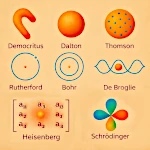 原子的各种形态:从古代直觉到量子力学