

铜(Z=29):一种具有卓越性能的导电金属
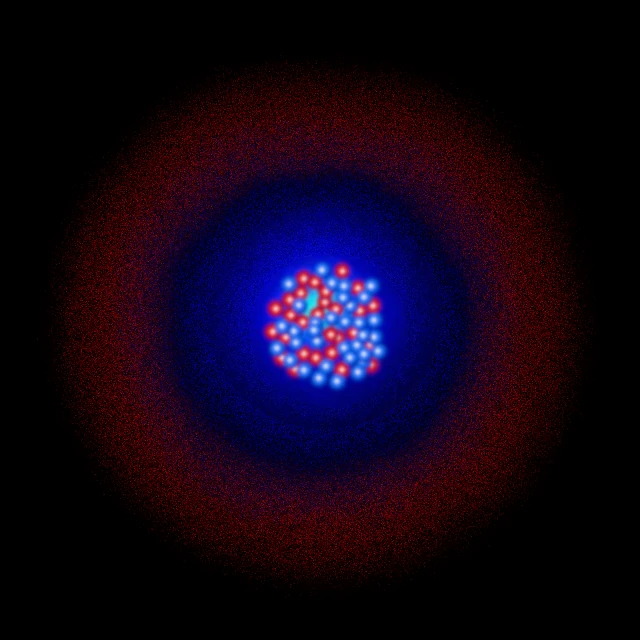
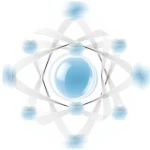
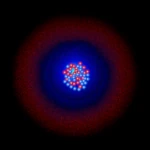
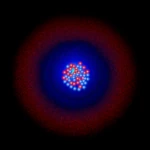
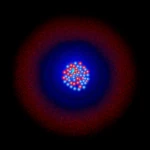
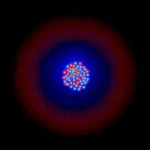
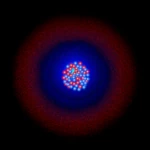
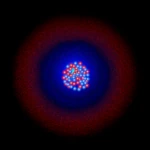
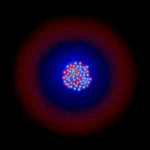
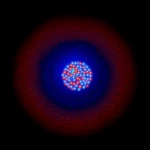
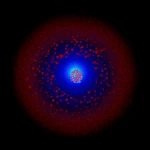
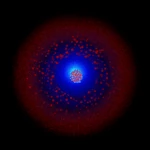
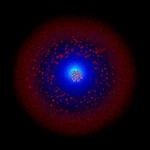
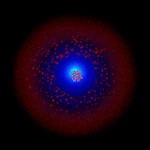
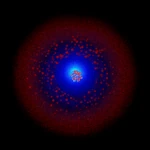
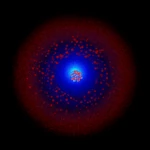
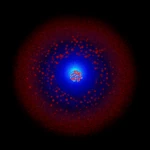
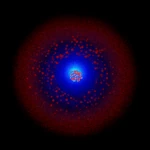
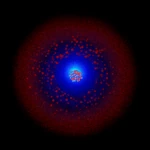
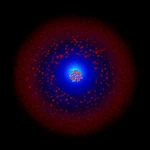
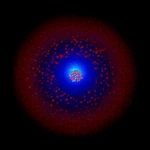
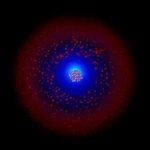
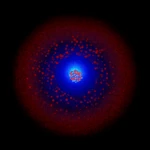
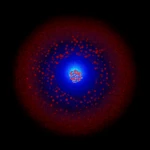
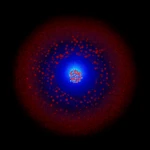
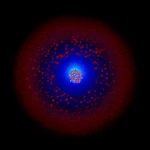
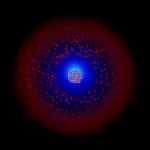
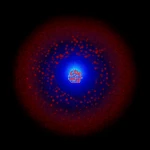
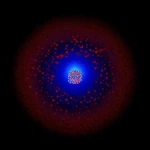
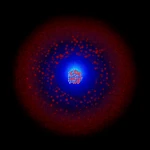
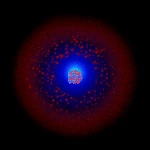
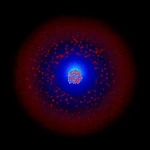
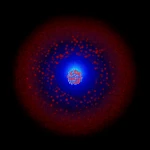
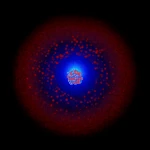
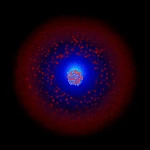
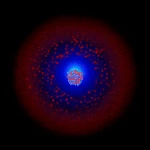
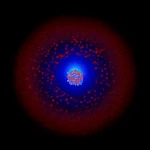
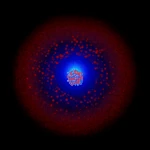
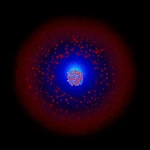
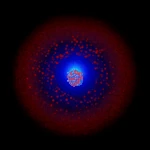
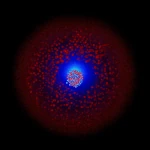
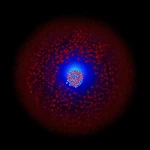
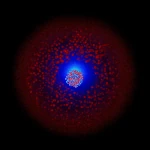
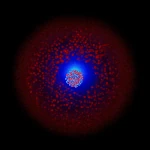
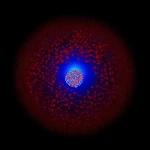
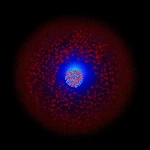
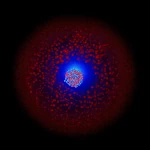
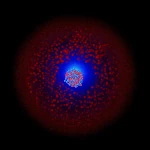
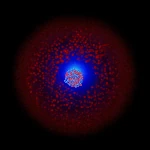
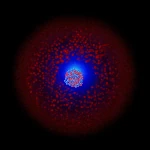
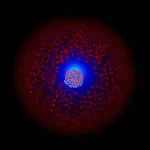
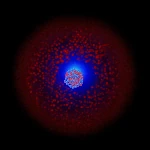
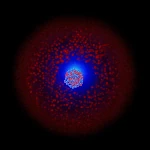
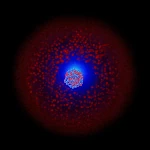
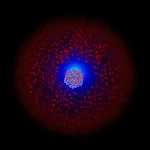
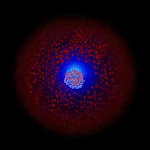
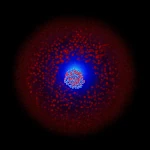
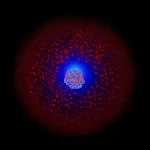
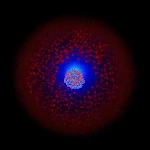
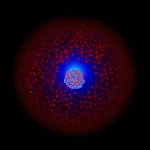
Simplified atomic model of the copper atom.
The most abundant isotope is \(\,^{63}\mathrm{Cu}\,\) with its 29 protons, 29 electrons, and 34 neutrons.
Image source: astronoo.com (新窗口)
铜的发现历史
Copper is one of the first metals used by humanity, known since prehistoric times. Its use dates back more than 一万年, with the earliest traces of native copper objects found in the Middle East around 公元前8700年. Around 公元前5000年, Mesopotamian civilizations began extracting copper by smelting ores, marking the beginning of metallurgy. The 青铜时代 (around 3,300 BC) began when artisans discovered that alloying copper with tin produced a harder and more resistant metal: bronze. The name 铜 comes from the Latin 铜, itself derived from 铜, meaning "metal of Cyprus," as the island of Cyprus was a major source of copper in antiquity. Its chemical symbol Cu also comes from this Latin name.
结构与基本性质
Copper (symbol Cu, atomic number 29) is a transition metal in group 11 of the periodic table.
Its atom has 29 protons, usually 34 neutrons (for the most abundant isotope \(\,^{63}\mathrm{Cu}\)) and 29 electrons with the electronic configuration [Ar] 3d¹⁰ 4s¹.
At room temperature, copper is a solid metal with a characteristic reddish-orange color, relatively dense (density ≈ 8.96 g/cm³).
It has the second-best electrical conductivity of all metals (after silver) and excellent thermal conductivity.
Copper is also very malleable and ductile, allowing it to be easily shaped into wires and sheets.
The melting point of copper (liquid state): 1,357.77 K (1,084.62 °C).
The boiling point of copper (gaseous state): 2,835 K (2,562 °C).
铜同位素表
| 同位素 / 符号 | 质子(Z) | 中子(N) | 原子质量(u) | 自然丰度 | 半衰期/稳定性 | 衰变/备注 |
|---|---|---|---|---|---|---|
| 铜-63 — \(\,^{63}\mathrm{Cu}\,\) | 29 | 34 | 62.929597 u | ≈ 69.15% | 稳定的 | 天然铜的主要同位素。 |
| 铜-65 — \(\,^{65}\mathrm{Cu}\,\) | 29 | 36 | 64.927789 u | ≈ 30.85% | 稳定 | 铜的第二种稳定同位素。 |
| 铜-64 — \(\,^{64}\mathrm{Cu}\,\) | 29 | 35 | 63.929764 u | 合成 | ≈ 12.7 小时 | 放射性,用于核医学中的PET成像和放射治疗。 |
| 铜-67 — \(\,^{67}\mathrm{Cu}\,\) | 29 | 38 | 66.927730 u | 合成 | ≈ 61.83小时 | 放射性,用于针对某些癌症的靶向放射治疗。 |
铜的电子排布与电子层
注意::
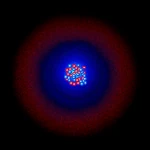
Electron shells:
电子是如何围绕原子核组织的 (新窗口).
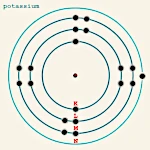
铜有29个电子,分布在四个电子壳层中。其完整电子排布为:1s² 2s² 2p⁶ 3s² 3p⁶ 3d¹⁰ 4s¹, 或简写为:[Ar] 3d¹⁰ 4s¹。该排布也可写作:K(2) L(8) M(18) N(1)。
壳层的详细结构
K壳层 (n=1): contains 2 electrons in the 1s subshell. This inner shell is complete and very stable.
L层(n=2): contains 8 electrons distributed as 2s² 2p⁶. This shell is also complete, forming a noble gas configuration (neon).
M壳层(n=3): contains 18 electrons distributed as 3s² 3p⁶ 3d¹⁰. All orbitals in this shell are complete, which is unusual and gives copper its particular stability.
N壳层(n=4): contains only 1 electron in the 4s subshell. This single electron is easily involved in chemical bonding.
价电子与氧化态
The electron in the outer 4s¹ shell is the main 价电子 of copper, although the 3d electrons can also participate in bonding. This configuration explains its chemical properties:
By losing the 4s electron, copper forms the Cu⁺ ion (oxidation state +1), called the cuprous ion, with a very stable 3d¹⁰ configuration.
By losing the 4s electron and one 3d electron, it forms the Cu²⁺ ion (oxidation state +2), called the cupric ion, the most common in aqueous solution.
Oxidation states +3 and +4 exist but are rare and unstable.
化学反应活性
铜在室温下是一种相对不活泼的金属。它不与纯水反应,但在潮湿空气中会缓慢氧化,形成一层绿色的碳酸铜,称为铜绿或铜锈(由Cu₂(OH)₂CO₃及其他化合物组成的混合物)。这层铜绿能保护内部金属免受进一步腐蚀。铜会与氧化性酸(如硝酸和热浓硫酸)反应,但能抵抗非氧化性酸(如稀盐酸)。在高温下,铜与氧气反应生成黑色的氧化铜(CuO)或红色的氧化亚铜(Cu₂O)。铜能形成特征性的有色化合物:Cu²⁺盐在水溶液中通常呈蓝色或绿色。
铜的工业与技术应用
- 在电气行业中,因其优异的导电性,被用于电缆、导线和电机绕组。
- 因其耐腐蚀性和易用性,常用于管道和供暖系统;
- 在电子领域,用于印刷电路、芯片和连接器;
- 作为青铜(铜锡合金)中的合金成分,用于雕塑、钟铃和机械部件;
- 作为黄铜(铜锌合金)中的合金成分,用于管件、乐器和弹药;
- 用于热交换器、散热器和空调,利用其导热性;
- 在屋顶和建筑外立面中,它会形成一层保护性的绿色铜锈;
- 用于医院和公共场所(门把手、扶手)的抗菌表面;
- 在农业中作为杀菌剂(基于硫酸铜的波尔多液);
- 自古以来用于制造硬币和奖章;
- 在需要高效率的电动机和发电机中;
- 作为各种工业化学反应中的催化剂;
- 用于电信中的天线和波导;
- 在光伏太阳能板中作为导体;
- 作为人类和动物健康必需的膳食补充剂,参与多种酶促过程。
在天体物理学和宇宙学中的作用
铜主要在大质量恒星的不同核聚变阶段,尤其是超新星爆发过程中合成。它通过大质量恒星生命末期的硅燃烧过程,以及中子俘获(慢过程和快过程)形成。稳定同位素\(\,^{63}\mathrm{Cu}\)和\(\,^{65}\mathrm{Cu}\)在这些剧烈事件中产生,随后被散布到星际介质中。
古代恒星和陨石中铜的丰度揭示了银河系随时间推移的化学富集过程。⁶³Cu/⁶⁵Cu同位素比值因宇宙来源不同而略有差异,可作为示踪剂用于理解核合成历史。中性铜和电离铜(Cu I、Cu II)的光谱线被用于恒星光谱学,以确定恒星的化学成分和年龄。尽管铜在宇宙中的丰度低于铁或镍,但它在理解恒星及银河系演化中发挥着重要作用。
注意::
Copper is present in the Earth's crust at a concentration of about 0.0068% by mass, making it a relatively common element.
It is mainly found in ores such as chalcopyrite (CuFeS₂), chalcocite (Cu₂S), malachite (Cu₂CO₃(OH)₂), and azurite (Cu₃(CO₃)₂(OH)₂).
Native copper (pure) also exists in nature but is rare.
The extraction and refining of copper are well-established and relatively economical processes compared to other metals, explaining its widespread use in modern industry.
Copper recycling is highly developed because the metal can be recycled indefinitely without loss of properties.
 核聚变所需的能量以及为什么铀是一个极限
  原子的各种形态:从古代直觉到量子力学