

铂(Pt,原子序数78):不可改变的贵金属之王
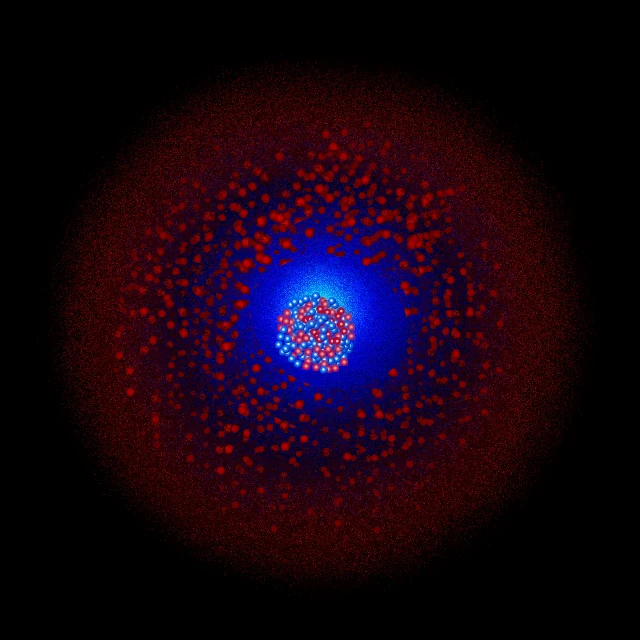
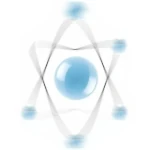
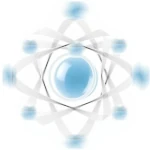
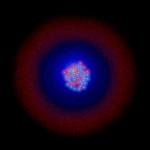
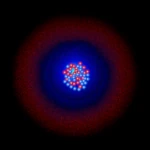
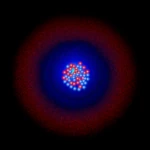
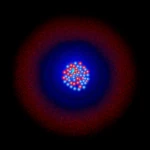
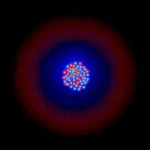
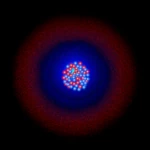
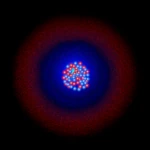
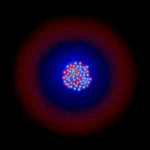
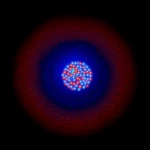
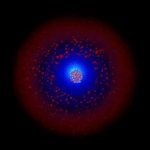
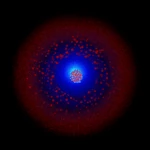
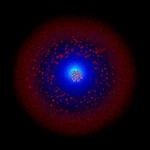
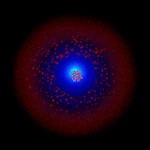
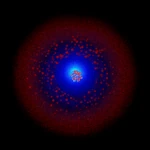
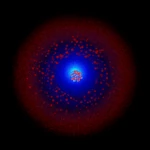
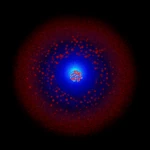
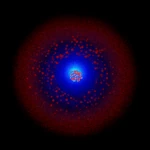
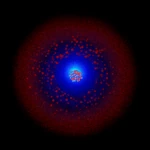
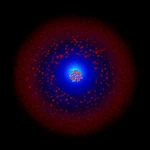
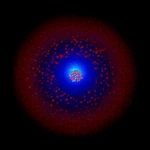
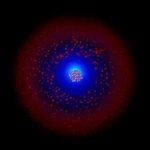
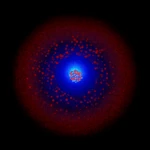
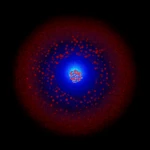
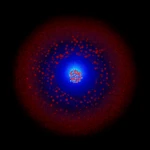
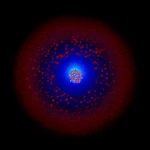
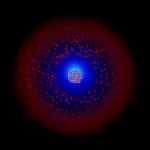
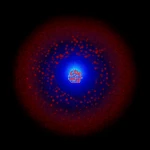
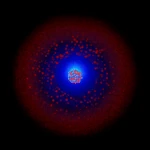
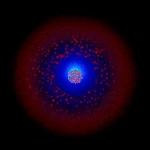
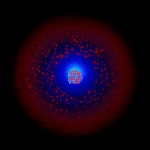
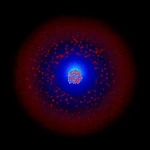
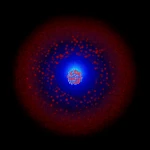
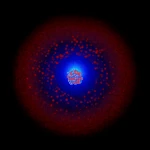
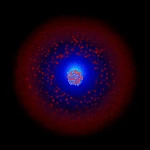
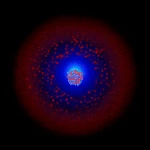
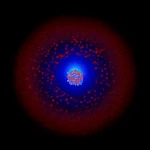
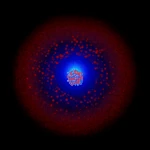
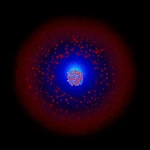
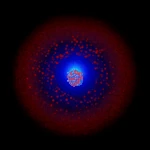
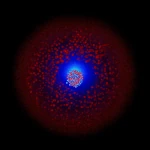
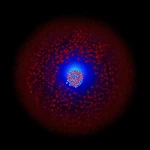
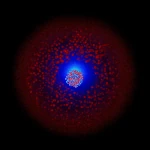
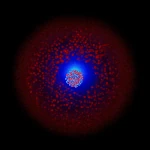
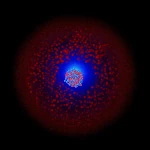
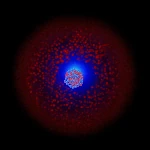
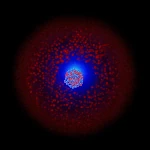
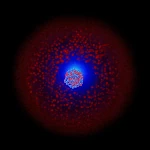
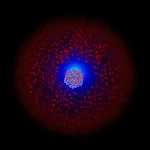
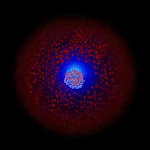
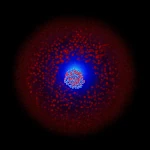
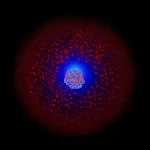
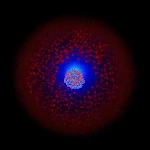
Image description:
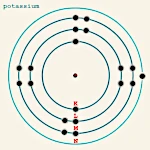
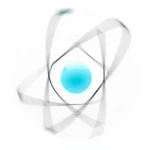
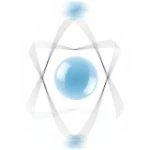
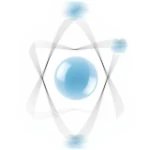
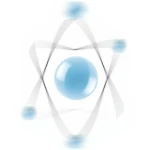
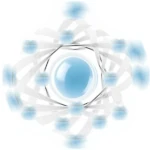
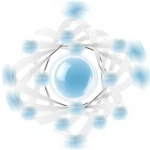
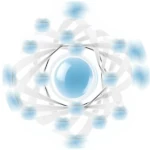
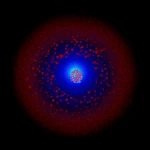
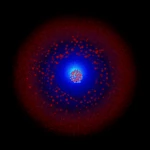
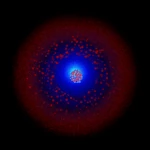
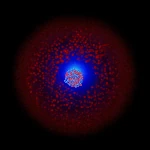
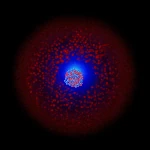
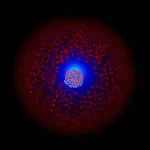
Simplified atomic model of the platinum atom. The main stable isotope is \(^{195}\mathrm{Pt}\)
with its 78 protons, 78 electrons, and 117 neutrons.
Image source: astronoo.com (新窗口)
铂在天体物理学和宇宙化学中的作用
恒星合成与宇宙起源
Platinum is a heavy element mainly synthesized by the r过程 (rapid neutron capture) during violent events such as supernovae and neutron star mergers. It is a siderophile element, with a strong affinity for metallic iron. This geochemical trait explains why, during Earth's formation, most of the platinum in primordial matter migrated to the 金属内核. The extremely low concentration of platinum in the mantle and Earth's crust (parts per billion) contrasts with its relative abundance in chondritic meteorites, which better reflect the composition of the nascent solar system.
宇宙丰度及其重要性
铂在宇宙中的丰度(按原子数计)约为氢的1.5×10⁻¹²倍,使其略高于金,但远低于银或钯。在陨石中,铂与其他亲铁元素(如铱、锇、钌)的丰度比被用作"指纹"来分类陨石类型并理解行星吸积过程。
撞击事件与行星分异示踪剂
Like iridium, platinum is a key tracer of extraterrestrial material in geological layers. 铂异常 are sought in sedimentary strata to identify past asteroid impacts. The platinum-osmium isotopic system (\(^{190}\mathrm{Pt}\) decays to \(^{186}\mathrm{Os}\)) is a complementary dating tool to the Re-Os system, used to date very ancient planetary differentiation events or to study the source of platinum in terrestrial deposits.
恒星与星际尘埃中的铂
在一些富含金属的恒星大气中检测到了铂的光谱线,这为核合成过程提供了信息。在星际介质中,铂可能以难熔尘埃颗粒的形式存在,类似于行星形成过程中可能被纳入其内部的那些颗粒。
铂的发现历史
名称的词源与起源
The name "platinum" comes from the Spanish "platina", a diminutive of "plata" meaning silver. This term was used somewhat pejoratively by Spanish conquistadors in the 16th century, who found this white metal mixed with gold in Colombian rivers and considered it "little silver" or "impure gold," sometimes discarding it. Its true value was only recognized later.
前哥伦布时期的使用与欧洲发现
Artifacts made of gold-platinum alloy dating from the pre-Columbian era have been found in Ecuador, attesting to the ancient mastery of the metal by indigenous peoples. For European science, platinum was formally identified as a new element in the 1740s-1750s, notably through the work of the Spanish scholar 安东尼奥·德·乌略亚 (who brought it from America) and the British scientist 威廉·布朗里格. The Swedish chemist 亨里克·谢弗 published a detailed description in 1752, calling it "white gold."
18世纪和19世纪的提纯与生产
Purifying platinum was a major challenge due to its extremely high melting point. The first method, developed in the 1780s by the Frenchman 皮埃尔-弗朗索瓦·沙巴诺 under the patronage of the King of Spain, involved purifying platinum sponge by hammering and hot forging. The "fire assay" technique made it possible to produce the first malleable ingot. In the 19th century, the discovery of other platinum group metals (palladium, rhodium, etc.) in raw platinum and the development of hydrogen-oxygen furnaces by 亨利·圣克莱尔·德维尔 and 朱尔·亨利·德布雷 (1857) paved the way for industrial production.
存款与现代生产
主要的铂矿床有两种类型:
- 层状岩浆矿床: The 布什维尔德 complex in South Africa contains about 70-80% of the world's known reserves. Platinum is associated with chromium and other platinum group metals in ultramafic rock layers.
- 镍硫化物矿床: Such as in 诺里尔斯克, Russia (the world's second largest producer) and 萨德伯里, Canada. Platinum is a byproduct of nickel and copper extraction.
- 冲积矿床: Historically important (Colombia, Ural Mountains), they are now marginal.
Global annual production is about 180-200吨. South Africa dominates production (≈70%), followed by Russia (≈20%). Platinum is one of the most expensive metals, generally more valuable than gold except during periods of high gold demand. Its value is driven by critical industrial applications, far beyond jewelry.
铂的结构与基本性质
分类与原子结构
铂(符号Pt,原子序数78)是第六周期的过渡金属,位于元素周期表第10族(原第VIII族),与镍、钯和����同族。它是六种铂族金属(PGM)之首。其原子含有78个质子,通常有117个中子(对应稳定同位素\(^{195}\mathrm{Pt}\)),以及78个电子,电子排布为[Xe] 4f¹⁴ 5d⁹ 6s¹。这种特殊构型(5d⁹ 6s¹而非预期的5d⁸ 6s²)源于半满亚层稳定性的增强。
特征物理性质
铂是一种贵金属,呈银白色,具有光泽,密度极高,可锻、可延,纯态下相对柔软。
- 高密度: 21.45 g/cm³ at 20°C (almost twice as heavy as lead).
- 熔点非常高: 1768.3°C.
- 优异的延展性和可塑性: Can be drawn into very fine wires (less than 1 micron) and rolled into extremely thin sheets.
- 耐腐蚀性: Exceptional, unalterable in air and atmospheric agents.
- 热稳定性: Can be heated to white heat without oxidizing.
铂以面心立方(FCC)结构结晶。
变换点
Platinum melts at 1768.3°C (2041.4 K) and boils at 3825°C (4098 K). Its wide solid temperature range and excellent chemical stability at high temperatures make it a material of choice for high-temperature equipment.
化学反应活性(极低)
Platinum is the archetype of the 贵金属. It is resistant to most chemical agents:
- 空气和氧气: Unalterable at any temperature. Does not form stable oxide (PtO₂ decomposes around 450°C).
- 水和简单的酸: Resistant to hydrochloric, sulfuric, nitric, and hydrofluoric acids, even when concentrated and hot.
- 王水: Dissolves to form chloroplatinic acid (H₂PtCl₆). This is the characteristic reagent for platinum.
- 熔融碱: Generally resistant, can be attacked by molten alkaline cyanides in the presence of oxidants.
- 卤素: Reacts with chlorine when hot to form PtCl₂ or PtCl₄. Attacked by fluorine.
物理特性总结
Density: 21.45 g/cm³.
Melting point: 2041.4 K (1768.3°C).
Boiling point: 4098 K (3825°C).
Crystal structure: Face-centered cubic (FCC).
Electronic configuration: [Xe] 4f¹⁴ 5d⁹ 6s¹.
Main oxidation states: +2 and +4.
铂同位素表
| 同位素 / 符号 | 质子(Z) | 中子(N) | 原子质量(u) | 天然丰度 | 半衰期/稳定性 | 衰变 / 备注 |
|---|---|---|---|---|---|---|
| 铂-190 — \(^{190}\mathrm{Pt}\) | 78 | 112 | 189.959932 u | ≈ 0.012% | 6.5×10¹¹年 | α放射性,半衰期极长。衰变为\(^{186}\mathrm{Os}\)。在常规应用中被视为稳定。 |
| 铂-192 — \(^{192}\mathrm{Pt}\) | 78 | 114 | 191.961038 u | ≈ 0.782% | 稳定的 | 稳定同位素。 |
| 铂-194 — \(^{194}\mathrm{Pt}\) | 78 | 116 | 193.962680 u | ≈ 32.967% | 稳定 | 稳定同位素,最丰富的同位素之一。 |
| 铂-195 — \(^{195}\mathrm{Pt}\) | 78 | 117 | 194.964791 u | ≈ 33.832% | 稳定的 | 稳定且主要的同位素。唯一具有非零核自旋(I=1/2)的天然同位素,使其在\(^{195}\mathrm{Pt}\)核磁共振(NMR)中具有活性。 |
| 铂-196 — \(^{196}\mathrm{Pt}\) | 78 | 118 | 195.964952 u | ≈ 25.242% | 稳定 | 稳定同位素,非常丰富。 |
| 铂-198 — \(^{198}\mathrm{Pt}\) | 78 | 120 | 197.967893 u | ≈ 7.163% | 稳定的 | 稳定同位素。 |
铂的电子排布与电子层
注意::
Electron shells:
电子如何围绕原子核组织 (新窗口).
铂拥有78个电子,分布在六个电子壳层中。其电子排布 [Xe] 4f¹⁴ 5d⁹ 6s¹ 是简单填充规则的一个例外。也可写作:K(2) L(8) M(18) N(32) O(17) P(1),或完整形式:1s² 2s² 2p⁶ 3s² 3p⁶ 3d¹⁰ 4s² 4p⁶ 4d¹⁰ 4f¹⁴ 5s² 5p⁶ 5d⁹ 6s¹。其中5d亚层缺少一个电子即可达到满层。
壳层的详细结构
K壳层 (n=1): 2 electrons (1s²).
L壳层(n=2): 8 electrons (2s² 2p⁶).
M层(n=3): 18 electrons (3s² 3p⁶ 3d¹⁰).
N壳层(n=4): 32 electrons (4s² 4p⁶ 4d¹⁰ 4f¹⁴).
O壳层(n=5): 17 electrons (5s² 5p⁶ 5d⁹).
P壳层 (n=6): 1 electron (6s¹).
价电子与氧化态
Platinum has 10 价电子 if we count the electrons in the 5d and 6s shells (9+1). It exhibits rich chemistry with several stable oxidation states, the most important being +2 and +4. The +2 state (d⁸ configuration) is very common in square planar complexes, such as the famous cisplatin (cis-[PtCl₂(NH₃)₂]), an anticancer drug. The +4 state (d⁶ configuration) is also stable (e.g., PtO₂, PtF₆). Other states such as 0, +1, +3, +5, and +6 exist but are less common.
铂的配位化学领域广阔且至关重要,在催化和医学中均具有重大意义。其倾向于与"软"配体(如膦、硫醚)形成平面正方形配合物,并能催化氢化、氧化及偶联反应,使其成为有机金属化学和工业化学中的核心金属。
铂的化学反应活性
与空气和氧气的反应
铂在所有温度下在空气中都完全稳定。在正常条件下,它不会形成稳定的氧化物。在高温高压氧气条件下可形成PtO₂氧化物,但该氧化物在约450°C时会分解。其表面可形成一层薄薄的氧化层,这有助于其某些催化特性。
与水及酸的反应
铂金不受水和简单无机酸的影响,即使在浓缩和沸腾状态下也是如此。这种惰性是其用于实验室器皿(坩埚、器皿)和化学设备的基础。
Its only notable weakness is 王水, a mixture of concentrated nitric and hydrochloric acids, which dissolves it to form hexachloroplatinic acid (IV), H₂[PtCl₆]: Pt + 4 HNO₃ + 6 HCl → H₂[PtCl₆] + 4 NO₂ + 4 H₂O. This compound is the starting point for the preparation of most other platinum compounds.
注::
与卤素及其他元素的反应
- 氯: Reacts when hot (≈300°C) to give PtCl₂ (brown) or PtCl₄ (red-brown).
- 氟: Attacked to form PtF₄, PtF₅, or PtF₆ (one of the most powerful oxidants known).
- 硫: Reacts when hot to form PtS.
- 磷、砷、硅: Form compounds at high temperature.
- 氰化物: Dissolves in alkaline cyanides in the presence of air (used in extraction).
重要化合物
- 六氯铂酸(H₂[PtCl₆]): Orange salt, key precursor.
- 氯亚铂酸钾 (K₂[PtCl₄]): Red salt, precursor of Pt(II) complexes.
- 四氯化铂(PtCl₄): Brown-red hygroscopic solid.
- 顺铂(cis-[PtCl₂(NH₃)₂]): Square planar complex, major anticancer drug.
- 亚当斯催化剂(PtO₂·H₂O): Hydrogenation catalyst.
铂金在工业和技术领域的应用
- Main component of 汽车催化剂 (catalytic converters) to reduce emissions of pollutants (CO, NOx, unburned hydrocarbons);
- In 高级珠宝, for the manufacture of rings, watches, chains, and settings (platinum-950 alloys);
- As a material for 高精度实验室设备 (crucibles, dishes, electrodes, resistance wires);
- Key catalyst in the 奥斯特瓦尔德法 for the industrial production of nitric acid (from ammonia);
- In 硬盘驱动器 as a magnetic layer (cobalt-platinum-chromium alloys) for high-density data storage;
- As an unattackable electrode in 电化学装置 (electrolyzers, fuel cells, cathodic protection systems);
- In 牙科学 for crown, bridge, and implant alloys;
- As a catalyst in the 催化重整 of petroleum to produce high-octane gasoline;
- In 铂电阻温度计 (PRT) and type S thermocouples (Pt-Rh) for precise temperature measurement;
- As a catalyst for the production of 氢气 by water electrolysis and for proton exchange membrane fuel cells (PEMFC);
- In 药房 as the active ingredient in anticancer drugs (cisplatin, carboplatin, oxaliplatin);
- In 玻璃纤维 as a material for spinneret nozzles (platinum-rhodium alloy nozzles);
- As a 参考标准 in electrochemistry (the standard hydrogen electrode often uses platinum-plated platinum);
- For 可靠的电气接触 in telecommunications equipment and medical devices.
关键应用:汽车、珠宝与化学
催化转化器(汽车催化剂)
这是铂金最大的工业应用(约占年需求量的30-40%)。催化转换器将有害废气转化为危害较小的化合物。
- 一氧化碳(CO)的氧化 and 未燃烧碳氢化合物(HC) into CO₂ and H₂O.
- 氮氧化物(NOx)的减排 into N₂ and O₂.
铂(常与钯和铑结合)以纳米颗粒形式分散在陶瓷蜂窝载体上。其在高温下的效率和耐久性无可匹敌。全球防污染标准(欧标、美国环保署)使这种材料不可或缺。
珠宝与金匠工艺
铂金是一种备受推崇的珠宝金属,因其以下特点而受到珍视:
- 其天然的白色和光泽 that never tarnishes (unlike silver).
- 其密度与“存在感” to the touch.
- 其耐用性: It is harder than gold and more scratch-resistant.
- 它的纯度: Jewelry alloys are 950‰ (95% platinum), compared to 750‰ for 18-karat gold.
主要用于婚戒、单钻戒指、高端腕表及钻石镶嵌(其中性白色完美衬托宝石)。
工业化学催化
在催化转换器之外,铂还催化着许多基础反应:
- 奥斯特瓦尔德法: Oxidation of ammonia (NH₃) into nitrogen oxides, the first step towards nitric acid (fertilizers, explosives).
- 选择性加氢 in fine and pharmaceutical chemistry (Adams' catalyst).
- 催化重整: Conversion of petroleum naphthas into high-octane gasolines and aromatics (benzene, toluene).
- 硅胶生产: Catalysis of hydrosilylation.
医学与科学应用
铂类抗癌药物
平面正方形铂(II)配合物是一类主要的化疗药物。
- 顺铂 (discovered in the 1960s): Treats testicular, ovarian, bladder, lung, and other cancers. It binds to the DNA of cancer cells, blocking their replication.
- 卡铂: Less toxic to the kidneys than cisplatin.
- 奥沙利铂: Used against colorectal cancer.
这些药物每年拯救数十万人的生命。
实验室与测量设备
- 坩埚与蒸发皿: For high-temperature fusions (soda, borax) without risk of contamination.
- 电极: Inert electrodes for electrogravimetry, electrolysis, sensors.
- 铂电阻温度计(PRT): The electrical resistance of platinum varies in a very linear and reproducible manner with temperature. PRTs are international standards for precise measurement between -200°C and 1000°C.
- 电阻丝: For high-precision laboratory furnaces.
清洁能源技术
铂金是能源转型的关键材料:
- 质子交换膜燃料电池(PEMFC): Platinum (and its alloys) is the essential catalyst on the electrodes for hydrogen oxidation and oxygen reduction. It equips fuel cell vehicles and some stationary generators.
- PEM电解槽: For the production of "green" hydrogen from water and renewable electricity. Platinum catalyzes the hydrogen evolution reaction.
毒理学、环境与回收利用
毒性
Metallic platinum is 惰性且无毒. This is why it is used in jewelry and dentistry without risk. However:
- 灰尘: Inhalation of platinum dust or fumes (during metalworking) can cause allergic reactions (platinosis): irritation of the respiratory tract, asthma, dermatitis.
- 可溶性铂盐: Some salts (such as chloroplatinates) can be irritating and sensitizing.
- 抗癌复合物: Cisplatin and its derivatives are cytotoxic (this is their therapeutic effect) but have significant systemic side effects (nephrotoxicity, neurotoxicity, myelosuppression). They must be handled with strict pharmaceutical precautions.
环境影响
铂矿开采会产生大量废石和尾矿,并可能对当地的水质和土壤质量造成影响。来自废旧催化转化器的铂会以细颗粒形式存在于道路扬尘和路边土壤中,但根据测量浓度,其直接生态影响被认为较低。相关研究仍在持续评估这些颗粒的长期归宿和效应。
回收利用
Platinum recycling is 极具经济吸引力 and crucial for supply security. The main sources are:
- 废旧汽车催化转换器: The most important recycling source. Catalysts are collected, crushed, and platinum is recovered through complex pyrometallurgical and hydrometallurgical processes.
- 电子废弃物: Hard drives, printed circuits, contacts.
- 使用的化学催化剂 from industry.
- 珠宝与牙科: Filings, broken pieces, old jewelry.
- 实验室设备报废.
整体回收率估计约为需求的25-30%,但通过改进收集系统,这一比例有望大幅提升。南非已建立基础设施,以回收其大部分催化废料。
关键问题与视角
Platinum is a 关键材料 for the modern economy, with a geographically concentrated supply chain (South Africa). The challenges are:
- 供应安全: Diversification of sources (recycling, mining exploration outside South Africa).
- 内容缩减: Developing automotive catalysts and fuel cells that use less platinum, or partially replacing it with palladium or other metals.
- 闭环回收: Improving efficiency and collection rates.
- 新应用: Platinum will remain central to hydrogen technologies, which are promising for renewable energy storage.
 核聚变所需的能量以及为什么铀是一个极限
 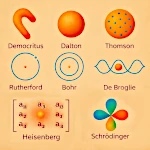 原子的各种形态:从古代直觉到量子力学