

钌(Ru,Z = 44):先进技术中的贵金属
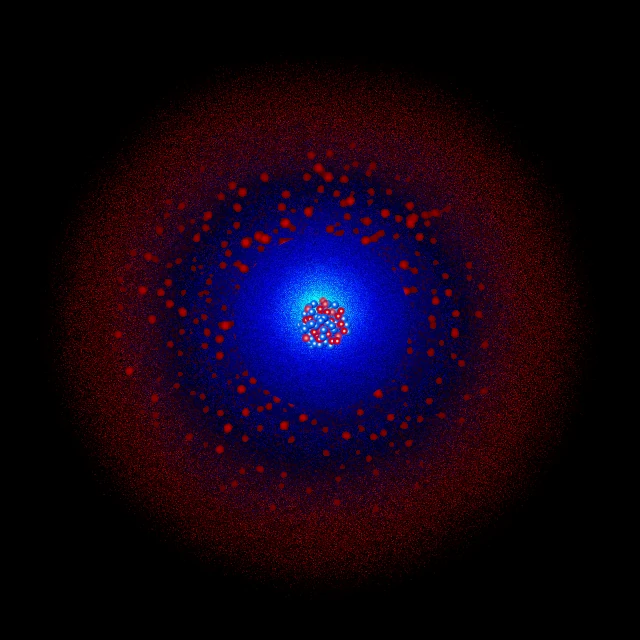
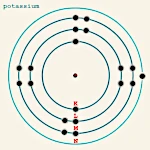
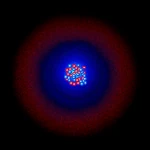
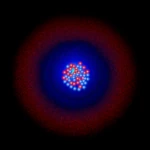
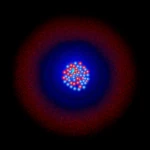
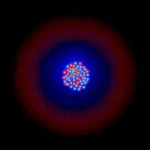
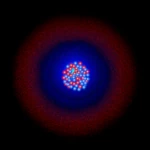
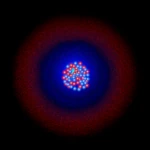
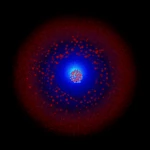
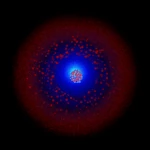
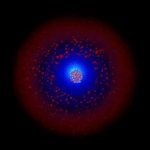
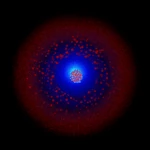
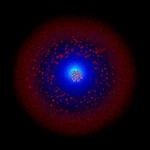
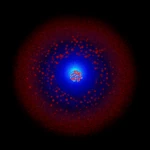
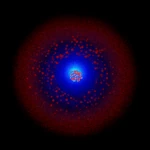
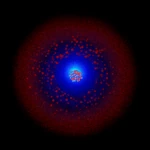
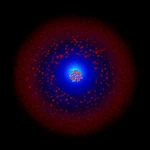
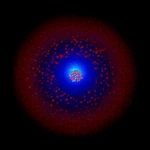
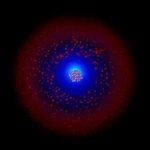
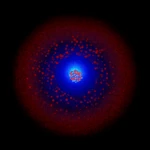
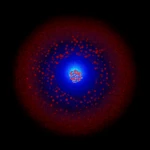
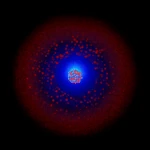
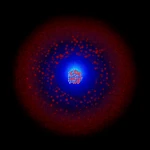
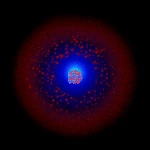
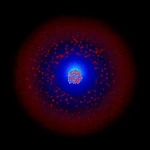
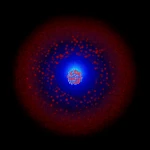
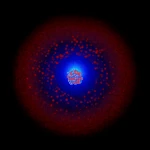
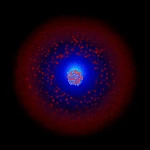
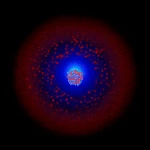
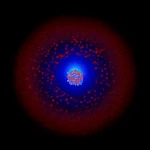
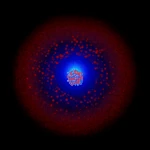
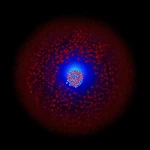
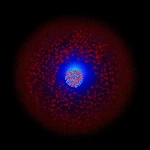
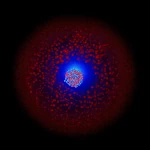
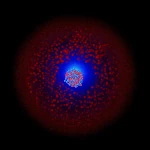
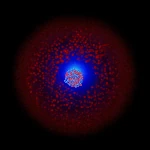
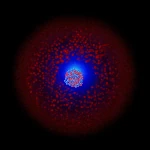
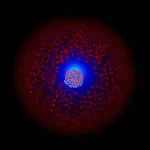
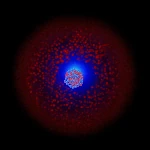
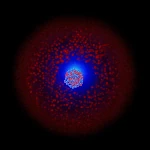
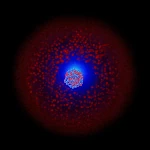
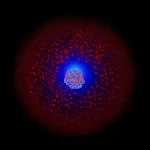
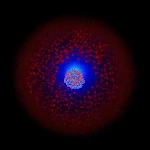
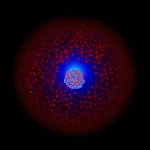
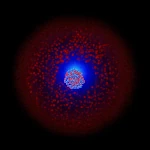
Image description: Simplified atomic model of the ruthenium atom. The most abundant isotope is \(\,^{102}\mathrm{Ru}\,\)
with its 44 protons, 44 electrons, and 58 neutrons.
Image source:
astronoo.com (新窗口)
钌的发现历史
Ruthenium was discovered in 1844 by the Russian chemist 卡尔·恩斯特·克劳斯 (1796-1864), a professor at the University of Kazan. The history of its discovery is linked to the earlier work of several chemists on platinum ores from the Ural Mountains. In 1828, the Russian chemist Gottfried Wilhelm Osann (1796-1866) had already suggested the existence of several new elements in these ores, which he named pluranium, 钌, and polinium, but his work lacked conclusive evidence.
Claus undertook a systematic analysis of the insoluble residues left after dissolving crude platinum in aqua regia. He succeeded in isolating a new metal, which he definitively named 钌 from the Latin 鲁塞尼亚, the medieval name for Russia, paying homage to his homeland. Claus published his detailed results in 1844, unambiguously establishing the properties of ruthenium and its position as the fourth member of the platinum group.
钌是六种铂族金属中最后被发现的,继铂(自前哥伦布时期的南美洲已知)、钯(1803年)、铑(1803年)、锇(1803年)和铱(1803年)之后。这六种金属(Ru、Rh、Pd、Os、Ir、Pt)具有相似的化学性质,并且总是共同存在于天然矿石中。
结构与基本性质
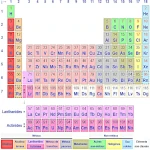
钌(符号Ru,原子序数44)是元素周期表第8族的过渡金属,属于铂族金属。其原子含有44个质子,通常有58个中子(对应最丰富的同位素\(\,^{102}\mathrm{Ru}\)),以及44个电子,电子构型为[Kr] 4d⁷ 5s¹。
钌是一种亮银白色、坚硬且脆的金属。其密度为12.37克/立方厘米,相对较重,但仍是铂族金属中最轻的。钌在室温下以六方密排(hcp)结构结晶。它是硬度最高的过渡金属,莫氏硬度为6.5,与石英相当。
Ruthenium melts at 2334 °C (2607 K) and boils at 4150 °C (4423 K). These high temperatures classify it among the refractory metals. Ruthenium has a higher melting point than platinum, palladium, and silver, but lower than those of osmium, rhenium, and tungsten.
钌在室温下具有显著的化学惰性,几乎能抵抗所有酸类,包括能溶解大多数其他金属的王水。这种卓越的惰性使其在需要极端耐腐蚀性的应用中极具价值。
Melting point of ruthenium: 2607 K (2334 °C).
Boiling point of ruthenium: 4423 K (4150 °C).
Ruthenium
is the hardest transition metal with a Mohs hardness of 6.5.
钌同位素表
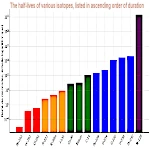
| 同位素 / 符号 | 质子(Z) | 中子(N) | 原子质量(u) | 天然丰度 | 半衰期/稳定性 | 衰变 / 备注 |
|---|---|---|---|---|---|---|
| 钌-96 — \(\,^{96}\mathrm{Ru}\,\) | 44 | 52 | 95.907598 u | ≈ 5.54% | 稳定的 | 天然钌中最轻且最稀有的稳定同位素。 |
| 钌-98 — \(\,^{98}\mathrm{Ru}\,\) | 44 | 54 | 97.905287 u | ≈ 1.87% | 稳定 | 天然钌中第二稀有的稳定同位素。 |
| 钌-99 — \(\,^{99}\mathrm{Ru}\,\) | 44 | 55 | 98.905939 u | ≈ 12.76% | 稳定的 | 第三丰富的稳定同位素。锝-99的嬗变产物。 |
| 钌-100 — \(\,^{100}\mathrm{Ru}\,\) | 44 | 56 | 99.904219 u | ≈ 12.60% | 稳定 | 天然钌中丰度第四高的稳定同位素。 |
| 钌-101 — \(\,^{101}\mathrm{Ru}\,\) | 44 | 57 | 100.905582 u | ≈ 17.06% | 稳定 | 天然钌中第二丰富的同位素。 |
| 钌-102 — \(\,^{102}\mathrm{Ru}\,\) | 44 | 58 | 101.904349 u | ≈ 31.55% | 稳定 | 钌的最丰富同位素,占总量的近三分之一。 |
| 钌-104 — \(\,^{104}\mathrm{Ru}\,\) | 44 | 60 | 103.905433 u | ≈ 18.62% | 稳定 | 天然钌中第三丰富的同位素。 |
| 钌-106 — \(\,^{106}\mathrm{Ru}\,\) | 44 | 62 | 105.907329 u | 合成 | ≈ 373.6 天 | 放射性(β⁻)。重要的裂变产物。在眼科中用作β辐射源。 |
钌的电子排布与电子壳层
注意::
Electron shells:
电子如何围绕原子核组织 (新窗口).
钌有44个电子,分布在五个电子壳层上。其完整电子排布为:1s² 2s² 2p⁶ 3s² 3p⁶ 3d¹⁰ 4s² 4p⁶ 4d⁷ 5s¹,或简写为:[Kr] 4d⁷ 5s¹。该排布也可写作:K(2) L(8) M(18) N(15) O(1)。
壳层的详细结构
K 壳层 (n=1): contains 2 electrons in the 1s subshell. This inner shell is complete and very
stable.
L壳层(n=2): contains 8 electrons distributed as 2s² 2p⁶. This shell is also complete,
forming a noble gas configuration (neon).
M壳层(n=3): contains 18 electrons distributed as 3s²
3p⁶ 3d¹⁰. This complete shell contributes to the electronic screen.
N层(n=4): contains 15 electrons distributed as 4s²
4p⁶ 4d⁷. The seven 4d electrons are valence electrons.
O壳层(n=5): contains 1 electron in the 5s subshell. This electron is also a valence electron.
价电子与氧化态
Ruthenium has 8 价电子: seven 4d⁷ electrons and one 5s¹ electron. Ruthenium exhibits a wide range of oxidation states from -2 to +8, although states +2, +3, and +4 are the most common. The +8 state in ruthenium tetroxide (RuO₄) is the highest of all elements after osmium.
+3氧化态在水溶液中特别稳定,可形成多种钌(III)配合物。+4氧化态存在于二氧化钌(RuO₂)中,这是一种用于电子领域的黑色导电氧化物。+8氧化态的四氧化钌(RuO₄)是一种易挥发的黄金色化合物,具有强氧化性和毒性,与四氧化锇类似。
化学反应活性
钌是化学性质最惰性的金属之一。在室温下,几乎所有酸类(包括王水、浓硫酸和硝酸)都几乎无法侵蚀它。这种卓越的抗腐蚀性源于金属表面自发形成的一层极其稳定的保护性氧化膜。
钌在空气中超过800°C时开始显著氧化,生成二氧化钌(RuO₂)。在更高温度下,若存在氧气或强氧化剂,可形成挥发性四氧化钌(RuO₄):Ru + 2O₂ → RuO₄。四氧化钌易升华,并散发出特有的刺激性气味。
钌可在氧化剂存在下与碱性氢氧化物熔融溶解,形成钌酸盐。高温气态氯也能侵蚀钌,生成三氯化钌(RuCl₃),这是一种棕黑色吸湿性化合物,广泛用作合成钌配合物的前驱体。
钌与几乎所有类型的配体都能形成极其丰富的配位化学。钌配合物展现出多种多样的结构和电子性质,在催化、光化学和医学领域得到广泛应用。钌还能与环戊二烯基、芳烃和羰基配体形成有机金属化合物。
钌的工业与技术应用
- 在继电器和开关的耐磨耐腐蚀电触点中。
- 作为磁性硬盘的涂层以提高存储密度;
- 在用于电化学制氯的电极中(DSA - 尺寸稳定阳极);
- 作为精细化学中不对称合成和烯烃复分解反应的催化剂(格拉布催化剂);
- 在铂钌合金中用于珠宝和精密仪器;
- 用于微电子中的薄膜电阻(RuO₂)
- 在电化学电容器(超级电容器)中作为电极材料;
- 作为氨生产的催化剂(改进的哈伯法);
- 在染料敏化太阳能电池(钌多吡啶配合物)的光化学领域;
- 采用铱钌合金制成的豪华钢笔笔尖;
- 作为质谱分析和中子活化分析中的标记物;
- 钌基抗癌化合物的实验医学研究;
- 用于铂钌合金高温热电偶
- 在化学工业的防腐蚀涂料中。
钌在催化中的应用:2005年诺贝尔奖
Ruthenium plays a major role in modern homogeneous catalysis. In 2005, the Nobel Prize in Chemistry was awarded to Yves Chauvin, Robert H. Grubbs, and Richard R. Schrock for the development of olefin metathesis, a revolutionary chemical reaction that reorganizes carbon-carbon double bonds in organic molecules.
基于钌配合物与卡宾配体的格拉布斯催化剂,彻底改变了有机合成领域。这些钌催化剂具有卓越的稳定性,能够耐受多种官能团,在室温下即可反应,且对空气和水分兼容。第一代和第二代格拉布斯催化剂如今已成为全球有机化学实验室的标准工具。
钌催化的复分解反应广泛应用于制药工业中合成复杂分子,在聚合物工业中生产先进材料,并在绿色化学中开发更高效、污染更少的工艺。这一发现展示了稀有金属如何对现代化学和工业产生重大影响。
钌配合物在医学中的应用
钌配合物在医学领域日益受到关注,特别是作为顺铂的替代抗癌药物。与铂不同,钌具有较低的全身毒性及不同的作用机制,可能克服对铂类药物产生的耐药性。
几种钌化合物已进入人体临床试验阶段。NAMI-A(咪唑鎓反式咪唑-二甲基亚砜-四氯钌酸盐)和KP1019(吲唑鎓反式四氯双(1H-吲唑)钌(III)酸盐)在对抗转移瘤和某些耐药性癌症方面显示出良好前景。这些配合物利用了钌的多重氧化态及其与DNA和蛋白质形成键合的能力。
钌多吡啶配合物也在被研究用于癌症光动力疗法。这些化合物吸收可见光并产生活性氧,选择性地杀死肿瘤细胞。这种方法结合了配位化学、光化学和肿瘤学,展示了钌在生物医学中的多学科应用。
在天体物理学和宇宙学中的作用
Ruthenium is synthesized in stars mainly through the s-过程 (slow neutron capture) in asymptotic giant branch (AGB) stars, with contributions from the r-process (rapid neutron capture) during supernovae and neutron star mergers. The seven stable isotopes of ruthenium reflect the contributions of these different nucleosynthesis processes.
钌在宇宙中的丰度约为氢原子数的1.8×10⁻⁹倍。这种铂族金属相对较高的丰度可归因于其在核稳定性曲线中的有利位置,以及在慢中子捕获过程(s过程)和快中子捕获过程(r过程)中有利的中子捕获截面。
原始陨石中钌的同位素变化为早期太阳系的非均匀性以及s过程和r过程的相对贡献提供了宝贵信息。一些陨石显示出中子富集钌同位素(Ru-100, Ru-104)的过剩现象,表明太阳星云不同区域中s过程和r过程物质的贡献存在差异。
中性钌(Ru I)和电离钌(Ru II)的光谱线可在许多冷星和巨星的光谱中观测到。通过分析这些谱线,可以测定钌的丰度并追溯星系的化学富集过程。在某些富含慢中子俘获过程元素的碳星中,已检测到钌的过量存在。
注意::
Ruthenium is extremely rare in the Earth's crust with an
average concentration of about 0.001 ppm (1 part per billion), about 1000 times rarer than gold. It does
not form its own minerals but is always associated with other platinum group metals in native platinum ores and alluvial deposits
derived from ultramafic rocks.
主要的钌矿床分布在南非(布什维尔德杂岩体,约占世界储量的80%)、俄罗斯(乌拉尔山脉和西伯利亚)、加拿大(萨德伯里)、美国(蒙大拿州)和津巴布韦。全球钌年产量约为30至40吨,主要作为镍和铂精炼的副产品。
钌是通过复杂的湿法冶金工艺从铂族金属精矿中提取的,这些工艺包括在王水中溶解、通过选择性沉淀或液液萃取进行分离,以及通过四氧化钌(RuO₄)蒸馏进行最终纯化。钌的价格因工业需求波动较大,通常每金衡盎司(31.1克)在200至500美元之间,即每公斤约6000至15000美元,远低于铂、钯或铑的价格。
 核聚变所需的能量以及为什么铀是一个极限
 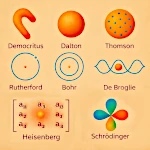 原子的各种形态:从古代直觉到量子力学