

硼(B,Z = 5):具有复杂分子结构的准金属
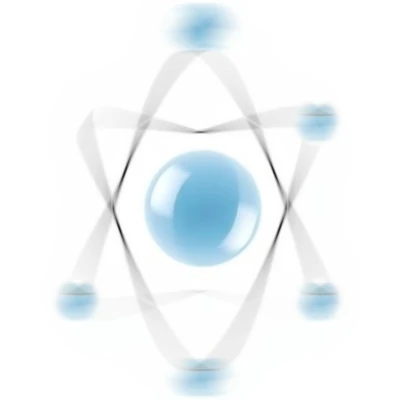
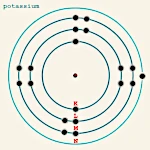
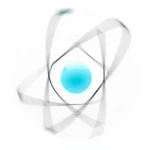
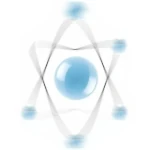
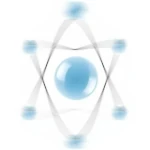
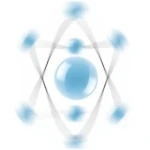
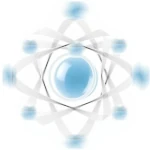
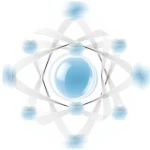
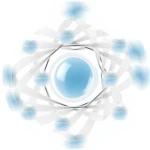
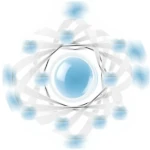
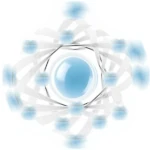
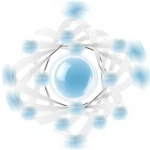
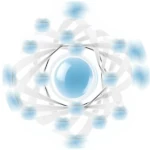
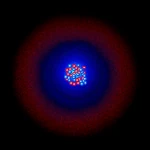
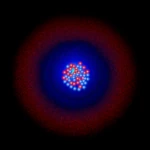
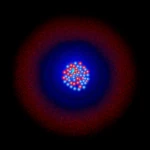
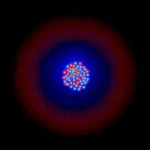
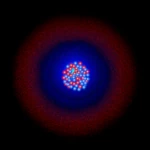
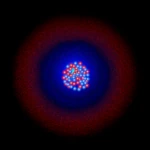
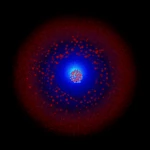
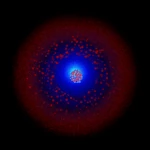
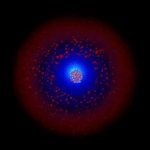
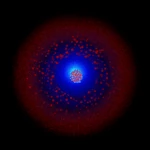
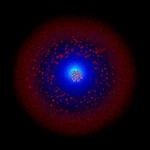
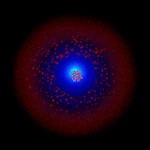
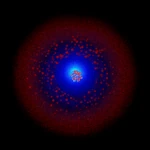
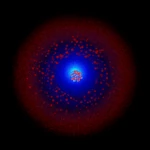
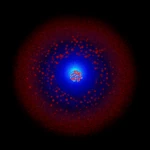
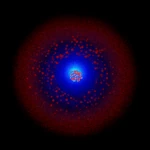
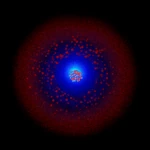
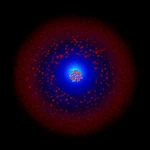
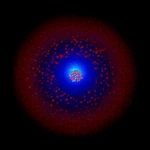
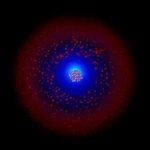
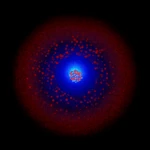
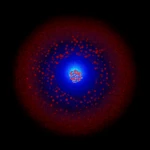
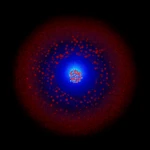
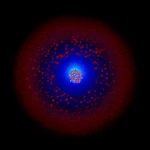
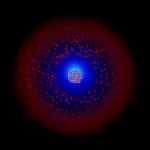
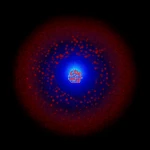
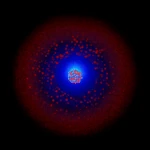
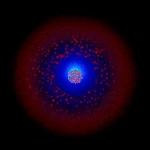
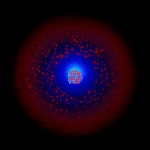
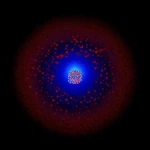
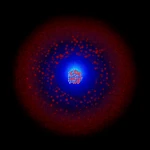
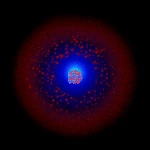
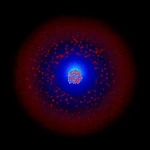
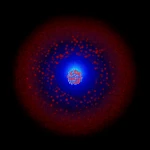
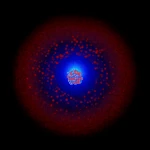
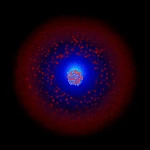
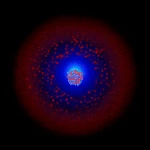
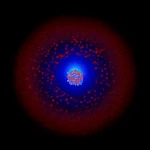
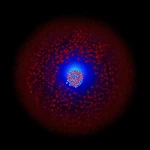
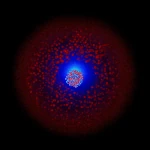
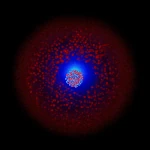
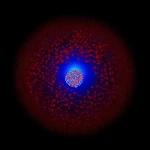
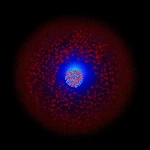
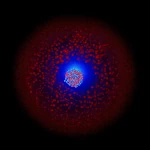
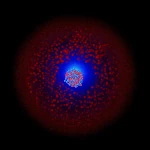
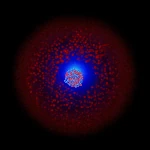
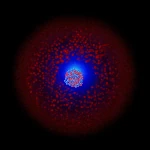
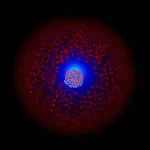
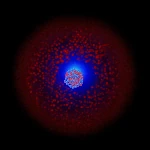
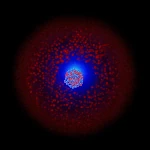
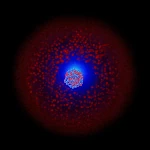
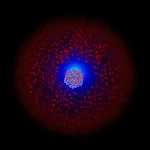
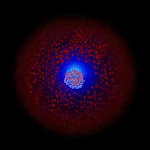
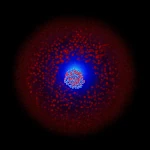
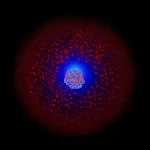
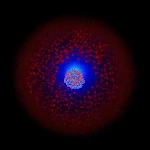
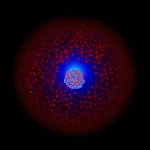
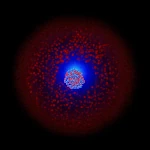
Simplified atomic model of the boron atom with its five protons and five electrons, but the most abundant isotope is \(\,^{11}\mathrm{B}\).
Image source: astronoo.com (新窗口)
硼的发现历史
Boron compounds, particularly borax, have been known since antiquity and were used in glassmaking and as cleaning agents. In 1808, elemental boron was isolated almost simultaneously by two teams of chemists: 约瑟夫·路易·盖-吕萨克 (1778-1850) and 路易-雅克·泰纳尔 (1777-1857) in France, and 汉弗里·戴维 (1778-1829) in England. The French chemists heated boric acid with metallic potassium, while Davy used electrolysis. The name 硼 derives from the Persian bûrah via the Arabic 布拉克, which referred to borax. It was not until 1909 that 以西结·温特劳布 (1880-1965) produced boron with over 99% purity by reducing boron halides with hydrogen on a heated tantalum filament.
结构与基本性质
Boron (symbol B, atomic number 5) is a metalloid located between metals and non-metals in the periodic table, consisting of five protons, usually six neutrons (for the most common isotope), and five electrons.
The two stable isotopes are boron-11 \(\,^{11}\mathrm{B}\) (≈ 80.1%) and boron-10 \(\,^{10}\mathrm{B}\) (≈ 19.9%).
At room temperature, elemental boron exists in several allotropic forms. The most stable crystalline form is β-rhombohedral boron, an extremely hard (close to diamond on the Mohs scale), brittle, black solid, and semiconductor.
Boron has a moderate density (≈ 2.34 g/cm³) and exceptional resistance to high temperatures.
The temperature at which the liquid and solid states can coexist (melting point): 2349 K (2076 °C).
The temperature at which it transitions from liquid to gas (boiling point): 4200 K (3927 °C).
硼同位素表
| 同位素 / 符号 | 质子(Z) | 中子(N) | 原子质量(u) | 天然丰度 | 半衰期/稳定性 | 衰变 / 备注 |
|---|---|---|---|---|---|---|
| 硼-8 — \(\,^{8}\mathrm{B}\,\) | 5 | 3 | 8.024607 u | 非自然的 | 0.770 秒 | 放射性β⁺和α粒子发射;通过pp链在太阳中产生。 |
| 硼-10 — \(\,^{10}\mathrm{B}\,\) | 5 | 5 | 10.012937 u | ≈ 19.9% | 稳定 | 高中子俘获截面;用作中子吸收剂及中子俘获治疗。 |
| 硼-11 — \(\,^{11}\mathrm{B}\,\) | 5 | 6 | 11.009305 u | ≈ 80.1% | 稳定的 | 主要同位素;用于核磁共振波谱和化学工业。 |
| 硼-12 — \(\,^{12}\mathrm{B}\,\) | 5 | 7 | 12.014352 u | 非自然的 | 0.0202 秒 | 放射性β⁻衰变至\(\,^{12}\mathrm{C}\);在加速器中人工产生。 |
| 硼-13 — \(\,^{13}\mathrm{B}\,\) | 5 | 8 | 13.017780 u | 非自然的 | 0.0174秒 | 放射性β⁻;通过发射电子快速衰变。 |
| 其他同位素——\(\,^{7}\mathrm{B},\,^{9}\mathrm{B},\,^{14}\mathrm{B}-\,^{19}\mathrm{B}\) | 5 | 2, 4, 9-14 | — (共鸣) | 非自然的 | \(10^{-21}\) — 0.013 秒 | 核物理中观察到极不稳定的状态;通过中子发射或β放射性衰变。 |
电子排布与电子壳层
注意::
Electron shells: 电子如何围绕原子核组织排列 (新窗口).
硼有5个电子分布在两个电子壳层上。其完整电子排布为:1s² 2s² 2p¹,或简写为:[He] 2s² 2p¹。该排布也可写作:K(2) L(3)。
壳层的详细结构
K壳层(n=1): Contains 2 electrons in the 1s sub-shell. This inner shell is complete and highly stable.
L层(n=2): Contains 3 electrons distributed as 2s² 2p¹. The 2s orbitals are complete, while the 2p orbitals contain only one electron out of 6 possible. Thus, 5 electrons are missing to reach the stable neon configuration with 8 electrons (octet).
价电子与氧化态
The 3 electrons in the outer shell (2s² 2p¹) are the 价电子 of boron. This configuration explains its chemical properties:
By losing its 3 valence electrons, boron forms the B³⁺ ion (oxidation state +3), its most common and virtually exclusive oxidation state in its ionic compounds.
Boron can also exhibit oxidation states of 0 (elemental boron) and sometimes +1 or +2 in specific compounds, but these states are rare.
Due to its high charge and small size, the B³⁺ ion is highly polarizing, and boron mainly forms covalent bonds rather than ionic ones.
硼的电子构型在其价层有3个电子,使其位于元素周期表第13族,并标志着金属与非金属之间的过渡。这种结构赋予其特性:硼是一种准金属(半金属),具有介于金属与非金属之间的中间性质;它通常通过共享三个价电子形成三个共价键;在其化合物中常表现出缺电子性(硼周围电子数少于8个)。硼有一个显著特性:其化合物通常不遵循八隅体规则。例如在BF₃中,硼仅有6个价电子,使其成为路易斯酸(电子受体)。这种缺电子性使硼对含有自由电子对的化合物具有高反应活性。单质硼存在多种同素异形体,均以复杂的三维结构为特征。
硼的重要性虽然不如碳或氮那样普遍,但在多个领域具有重要意义:在冶金中,它被用作钢的硬化剂并用于生产特殊合金;硼-10因其高中子俘获截面而被用作核反应堆中的中子吸收剂;硼化合物如硼酸H₃BO₃被用作防腐剂和杀虫剂;硼砂(四硼酸钠)是一种重要的工业化合物,用于洗涤剂、玻璃制造和陶瓷;硼纤维和碳化硼(B₄C)是极硬的材料,用于装甲和高性能应用;硼也是植物必需的微量元素。
化学反应活性
Boron has three valence electrons and exhibits unique and complex chemistry. Due to its small atomic size and high electronegativity (for a group 13 element), boron primarily forms covalent bonds rather than ionic bonds. A remarkable feature of boron is its tendency to form molecular structures with 多中心键, where an insufficient number of valence electrons are shared among several atoms (three-center, two-electron bonds).
单质硼在室温下因具有保护性氧化层而相对惰性。在高温下,它与氧气反应生成氧化硼(B₂O₃),与氮气反应生成氮化硼(BN),与卤素反应生成三卤化物(BF₃、BCl₃)。硼烷(硼氢化物)构成了一类具有多样且独特几何结构的迷人化合物。硼还能与许多金属形成硼化物,其中一些具有极高的硬度。
在硼的化合物中,硼主要以+3氧化态存在,尽管在某些复杂结构中存在较低的氧化态。 硼对植物至关重要,并在植物生物化学中发挥重要作用,但其在动物体内的确切作用仍存在争议。
硼的工业与技术应用
- 在制造耐热冲击的硼硅酸盐玻璃(Pyrex)用于实验室玻璃器皿和烹饪用具时;
- 作为核反应堆控制棒中的中子吸收剂(硼-10);
- 用于制造超强航空航天复合材料中的硼纤维;
- 在氮化硼的生产中,这是一种硬度堪比钻石且热稳定性良好的陶瓷材料;
- 作为电子工业中半导体材料的p型掺杂剂;
- 在洗涤剂和清洁产品中(过硼酸钠和硼砂);
- 生产钕铁硼(NdFeB),这是商业上可获得的最强永磁材料;
- 在农业中作为植物必需的微量元素(硼基肥料);
- 在中子与辐射屏蔽方面,用于核环境防护;
- 用于硼中子俘获疗法(BNCT),这是一种针对某些癌症的实验性治疗方法;
- 作为纺织品、木材和建筑材料中的阻燃剂;
- 在冶金学中用于硬化钢并生产高性能合金;
- 制造碳化硼(B₄C),一种已知最硬的材料之一,用于防弹装甲;
- 在烟火技术中用于产生特征性的绿色火焰;
- 作为多种有机合成反应中的催化剂(硼基路易斯酸);
- 在实验火箭燃料(乙硼烷及其他硼烷)的生产中;
- 用于制造光纤和高纯度电子元件。
在天体物理学和宇宙学中的作用
Like beryllium and lithium, boron was not produced in significant quantities during the primordial nucleosynthesis of the Big Bang. The primordial universe jumped directly from helium to heavier elements without creating much boron. The boron present in the current universe mainly comes from 宇宙散裂: the fragmentation of heavier atoms (carbon, nitrogen, oxygen) by collision with high-energy cosmic rays in the interstellar medium.
古代恒星和宇宙射线中硼的丰度,为我们理解银河系演化过程中宇宙射线的历史与强度提供了关键信息。通过观测银河系不同区域的硼碳比,可以约束宇宙射线传播模型,并更深入地认识加速这些射线的能量过程。
在恒星中,当温度超过约500万开尔文时,硼会因质子捕获而迅速被摧毁,这使其成为恒星内部对流混合过程的敏感指示剂。天文学家利用恒星大气中的硼观测结果,来检验年轻恒星的旋转模型及物质输运机制。
硼在超新星爆发过程中的爆炸核合成中也扮演着角色。在爆炸期间,涉及硼的核反应可能发生在被抛出的外层中,从而为星际介质的化学富集做出贡献。硼-8是一种不稳定的放射性同位素,通过质子-质子链在太阳中产生,并贡献了地球上探测到的太阳中微子通量,使物理学家能够测试太阳内部模型。
对原始陨石中硼-10/硼-11同位素比值的研究揭示了早期原行星盘的条件以及太阳系形成过程的信息。这些古老天体中硼的同位素变化,见证了46亿年前塑造我们行星系统的化学与物理过程。
注意::
硼烷 constitute a fascinating family of hydrogen and boron compounds with unusual molecular structures.
The simplest, diborane (B₂H₆), has a structure where hydrogen atoms form "bridges" between two boron atoms via three-center, two-electron bonds.
This unique chemistry of boron has revolutionized our understanding of chemical bonding and earned William Lipscomb the Nobel Prize in Chemistry in 1976 for his work on boranes.
Complex boranes can form spectacular polyhedral cages like dodecaborate (B₁₂H₁₂²⁻), an icosahedral structure of great stability.
These compounds have played an important historical role in the development of modern theoretical chemistry and continue to inspire research in materials chemistry and nanotechnology.
 核聚变所需的能量以及为什么铀是一个极限
 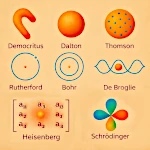 原子的各种形态:从古代直觉到量子力学