

溴(Br,Z = 35):具有毒性蒸气的液态卤素
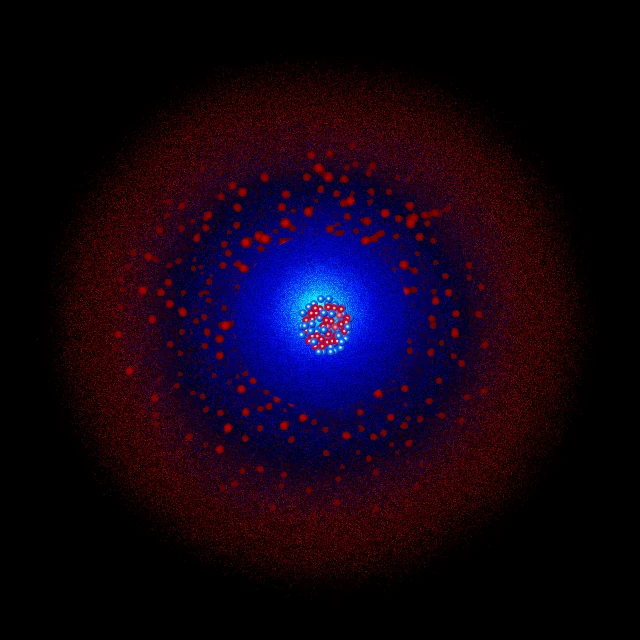
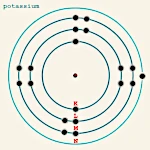
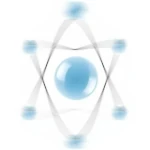
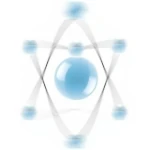
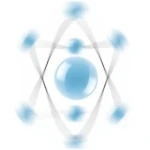
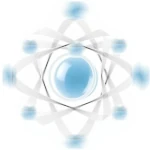
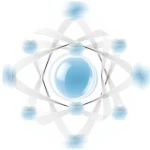
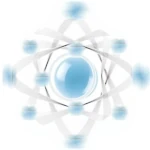
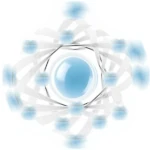
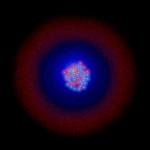
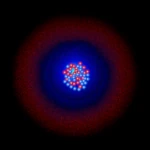
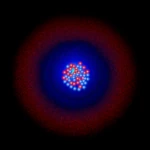
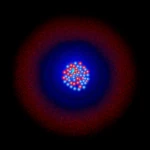
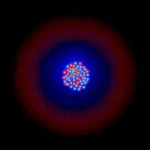
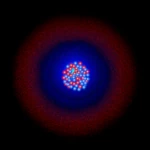
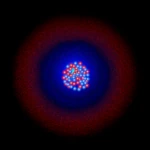
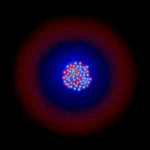
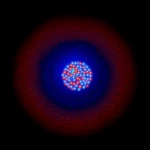
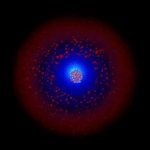
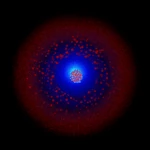
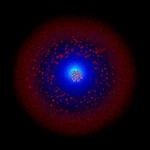
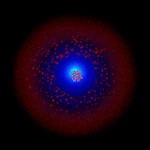
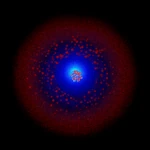
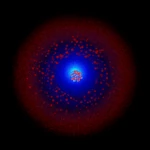
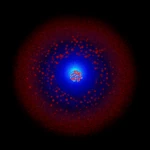
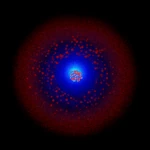
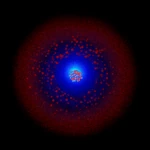
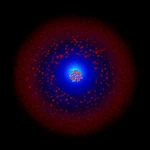
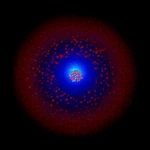
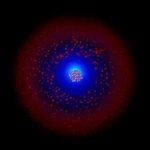
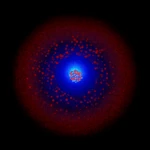
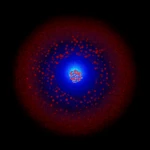
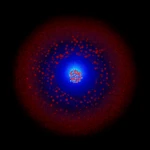
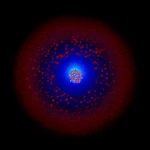
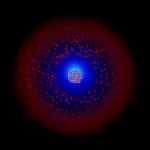
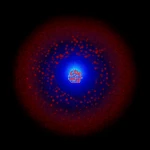
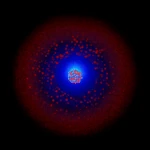
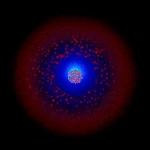
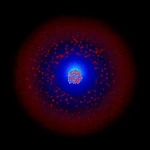
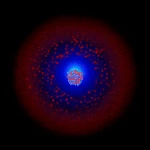
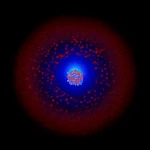
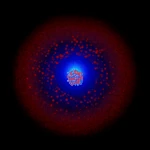
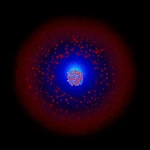
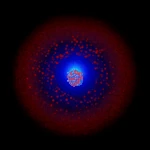
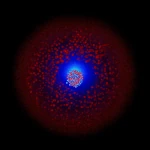
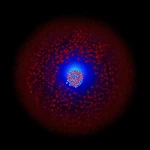
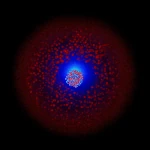
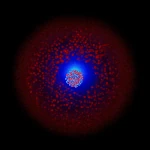
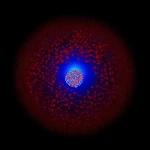
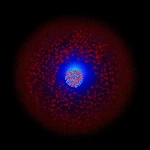
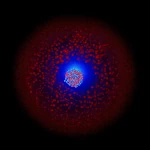
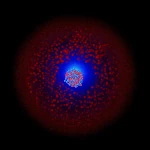
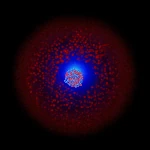
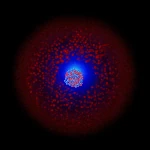
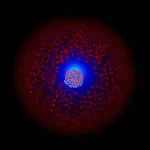
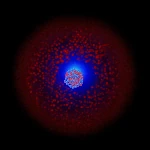
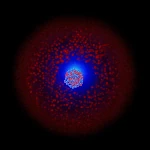
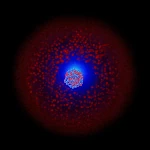
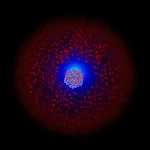
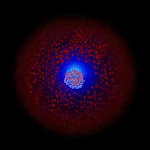
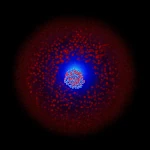
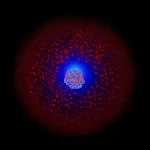
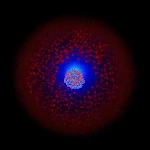
Image description: Simplified atomic model of the bromine atom. The most abundant isotope is \(\,^{79}\mathrm{Br}\,\)
with its 35 protons, 35 electrons, and 44 neutrons.
Image source:
astronoo.com (新窗口)
溴的发现历史
Bromine was independently discovered by two chemists in 1825-1826. The French chemist 安托万-热罗姆·巴拉尔 (1802-1876), then only 23 years old and working as an assistant at the Faculty of Sciences in Montpellier, was the first to isolate and formally identify bromine in 1826. Balard was studying the mother liquors from the salt marshes of Montpellier, highly concentrated salt residues after seawater evaporation for salt production.
By treating these mother liquors with chlorine, Balard observed the appearance of a reddish-brown substance, which he managed to isolate by distillation. He quickly recognized it as a new chemical element, distinct from chlorine and iodine. He initially proposed the name 穆里德 (from the Latin muria, brine), but the French chemist Louis-Jacques Thénard suggested 溴, from the Greek 溴, meaning stench, in reference to the pungent and suffocating odor characteristic of bromine.
Simultaneously, the German chemist 卡尔·雅各布·勒维希 (1803-1890), then a student in Heidelberg, had isolated bromine in 1825 from a mineral water source in Bad Kreuznach. However, Löwig delayed publishing his results because he wanted to produce a larger quantity of the element for further study. When he finally presented his work in 1826, Balard had already published his discovery, thus receiving official recognition for the discovery of bromine.
溴的发现完善了当时已知的卤素家族(氯、碘、溴),进一步强化了对元素间周期关系的理解。溴以其独特的性质立即脱颖而出——它是唯一在室温下呈液态的非金属元素,在所有元素中仅与汞共享这一特性。
结构与基本性质
溴(符号Br,原子序数35)是元素周期表第17族的卤素。其原子含有35个质子,通常有44个中子(对应最丰富的同位素\(\,^{79}\mathrm{Br}\)),以及35个电子,电子排布为[Ar] 3d¹⁰ 4s² 4p⁵。
在室温下,溴单质是一种密度大、易流动的红棕色液体,由双原子Br₂分子构成。它是标准条件下唯一的非金属液体,这一显著特性使其区别于所有其他卤素(氟和氯为气态,碘为固态,砹极为稀有且具有放射性)。
液态溴的密度高达3.12克/立方厘米,约为水的三倍。在室温下具有中等挥发性,会产生有毒且具腐蚀性的红棕色蒸气,易在空气中扩散。这些蒸气带有独特的刺激性气味,即使在极低浓度下也能被察觉。
Bromine melts at -7.2 °C (265.9 K), forming an orange-reddish crystalline solid with an orthorhombic structure. It boils at 58.8 °C (332.0 K), producing dense reddish-brown vapors. This relatively narrow temperature range for the liquid state (about 66 °C) explains why bromine is liquid under normal laboratory conditions but can easily be solidified or vaporized.
Melting point of bromine: 265.9 K (-7.2 °C).
Boiling point of bromine: 332.0 K (58.8 °C).
Critical point of bromine: 588 K (315 °C) at 103 bar.
溴同位素表
| 同位素 / 符号 | 质子(Z) | 中子(N) | 原子质量(u) | 天然丰度 | 半衰期/稳定性 | 衰变 / 备注 |
|---|---|---|---|---|---|---|
| 溴-79 — \(\,^{79}\mathrm{Br}\,\) | 35 | 44 | 78.918337 u | ≈ 50.69% | 稳定 | 溴的最丰富稳定同位素,在天然溴中含量略高。 |
| 溴-81 — \(\,^{81}\mathrm{Br}\,\) | 35 | 46 | 80.916290 u | ≈ 49.31% | 稳定 | 第二种稳定同位素,丰度几乎与溴-79相当。用于核磁共振波谱分析。 |
| 溴-77 — \(\,^{77}\mathrm{Br}\,\) | 35 | 42 | 76.921379 u | 合成 | ≈ 57.0 小时 | 放射性(电子俘获)。正电子发射体,用于医学研究的PET成像。 |
| 溴-80 — \(\,^{80}\mathrm{Br}\,\) | 35 | 45 | 79.918529 u | 合成 | 约17.7分钟 | 放射性(β⁻,92%;β⁺,8%)。在核反应堆中产生,用于研究。 |
| 溴-82 — \(\,^{82}\mathrm{Br}\,\) | 35 | 47 | 81.916804 u | 合成 | ≈ 35.3 小时 | 放射性(β⁻)。伽马射线发射体,用于水文学和核医学中的示踪剂。 |
| 溴-83 — \(\,^{83}\mathrm{Br}\,\) | 35 | 48 | 82.915175 u | 合成 | ≈ 2.40 小时 | 放射性(β⁻)。由核裂变产生,用于基础研究。 |
溴的电子排布与电子层
注::
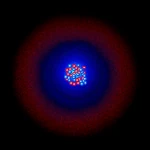
Electron shells:
电子如何围绕原子核组织 (新窗口).
溴元素有35个电子,分布在四个电子层中。其完整电子排布为:1s² 2s² 2p⁶ 3s² 3p⁶ 3d¹⁰ 4s² 4p⁵,简化形式为:[Ar] 3d¹⁰ 4s² 4p⁵。该排布也可写作:K(2) L(8) M(18) N(7)。
壳层的详细结构
K壳层 (n=1): contains 2 electrons in the 1s subshell. This inner shell is complete and very stable.
L壳层(n=2): contains 8 electrons distributed as 2s² 2p⁶. This shell is also complete, forming a noble gas configuration (neon).
M层 (n=3): contains 18 electrons distributed as 3s² 3p⁶ 3d¹⁰. The presence of the complete 3d subshell influences the chemical properties of bromine.
N壳层(n=4): contains 7 electrons distributed as 4s² 4p⁵. These seven electrons are the valence electrons of bromine, with one electron missing to complete the octet.
价电子与氧化态
The 7 electrons in the outer shell (4s² 4p⁵) are the 价电子 of bromine. With one electron missing to reach the stable noble gas configuration of krypton, bromine is extremely reactive and strongly tends to gain an electron to form the bromide ion Br⁻.
The most common oxidation state of bromine is -1, where it gains an electron to form the bromide ion Br⁻ with the configuration [Ar] 3d¹⁰ 4s² 4p⁶, isoelectronic with krypton. Bromides are extremely stable and represent the most common form of bromine in nature, especially in the oceans where bromide is present at a concentration of about 65 mg/L.
Bromine also exhibits positive oxidation states when combined with more electronegative elements, notably oxygen and fluorine. The +1 state appears in hypobromous acid (HBrO) and hypobromites, which are powerful but unstable oxidants. The +3 state exists in bromous acid (HBrO₂) and bromites, which are also unstable.
The +5 oxidation state is found in bromic acid (HBrO₃) and bromates, which are energetic oxidants used in various industrial applications. These compounds are more stable than their lower oxidation state counterparts. The +7 state appears in perbromic acid (HBrO₄) and perbromates, the most powerful oxidants in bromine chemistry, first synthesized in 1968.
Intermediate oxidation states such as +4 in bromine dioxide (BrO₂) are rare and unstable. Elemental bromine (state 0) forms diatomic Br₂ molecules stabilized by a single covalent bond.
溴的电负性(鲍林标度2.96)低于氯(3.16)但高于碘(2.66),反映了其在卤族元素中的中间位置。这种适中的电负性解释了溴为何既能形成离子化合物(与金属)又能形成共价化合物(与非金属)。
化学反应活性
溴是一种强氧化剂,尽管其反应活性低于氯和氟。它能与大多数金属剧烈反应生成金属溴化物。与钠的反应尤为壮观:2Na + Br₂ → 2NaBr,产生剧烈火焰和溴化钠白色烟雾。
溴在高温或紫外光照射下与氢反应生成溴化氢(HBr),其水溶液为强酸:H₂ + Br₂ → 2HBr。该反应比氯与氢的反应慢得多,通常需要催化剂或活化能。
溴与水缓慢反应,生成氢溴酸和次溴酸的混合物:Br₂ + H₂O ⇌ HBr + HBrO。该反应可逆,平衡偏向反应物。溴水(溴饱和水溶液)呈黄橙色,具有氧化性。
溴与碱反应生成溴化物和次溴酸盐(冷条件下)或溴酸盐(热条件下):3Br₂ + 6OH⁻ → 5Br⁻ + BrO₃⁻ + 3H₂O(热条件下)。这种歧化反应是卤素在碱性介质中的特征反应。
溴会剧烈攻击大多数有机化合物,尤其是不饱和烃(烯烃和炔烃)。溴与双键的加成反应瞬间发生,导致溴溶液特征性褪色,从红棕色变为无色:C₂H₄ + Br₂ → C₂H₄Br₂。该反应被用作检测双键的定性试验。
溴在光照或催化剂存在下,也能取代有机化合物中的氢原子。由此形成的有机溴化合物作为反应中间体广泛应用于有机合成中。溴还能与某些芳香族分子形成电荷转移络合物。
红磷与溴剧烈反应生成三溴化磷:2P + 3Br₂ → 2PBr₃。与硫反应时,会生成多种硫溴化物,如S₂Br₂。溴还能将许多过渡金属氧化至其更高氧化态。
溴的工业与技术应用
- 在溴化阻燃剂(PBDE、TBBPA)中,用于塑料、纺织品和电子设备;
- 用于水处理(泳池和水疗中心消毒),以活性溴或BCDMH形式存在;
- 在油井完井和钻井液中(溴化钙、溴化锌)用于控制压力;
- 作为药物合成中间体,用于生产药品和活性成分;
- 在农业中用作熏蒸剂(甲基溴,现已被《蒙特利尔议定书》基本禁止);
- 在传统银盐摄影中(感光性溴化银);
- 用于生产染料,包括泰尔紫(6,6'-二溴靛蓝);
- 用于可再生能源存储的锌溴电池;
- 作为某些有机合成和聚合反应中的催化剂;
- 在核医学中作为放射性示踪剂(溴-82)用于代谢研究;
- 在燃料抗爆添加剂中(二溴化乙烯,现已弃用);
- 用于提纯和提取黄金及其他贵金属;
- 在某些用于检测和定量有机化合物的分析试剂中;
- 作为食品工业中用于处理工艺用水的消毒剂;
- 在复杂有机化合物的合成中作为活性卤化中间体。
- 在制造某些专业农药和杀菌剂的过程中;
- 用于精细化学和研究中的溴化衍生物的生产。
溴的毒性与危害
元素溴具有极强的毒性和腐蚀性。即使在极低浓度下,溴蒸气也会严重刺激眼睛、呼吸道和黏膜。吸入溴蒸气可能导致严重的肺部损伤、迟发性肺水肿,严重时甚至死亡。职业暴露限值为8小时内0.1 ppm,这反映了该化合物的高毒性。
液溴接触皮肤会导致疼痛且愈合缓慢的化学灼伤。溴会迅速渗透皮肤,造成深层坏死性损伤。溅入眼睛可能导致永久性损伤,包括失明。处理溴时必须使用适当的个人防护装备(耐腐蚀手套、护目镜、通风橱)。
溴必须使用玻璃或特定耐腐蚀塑料容器(PTFE、PVDF)处理,因其会腐蚀大多数金属和有机材料。储存时需使用密封的琥珀色玻璃瓶,置于通风且低温的环境中,以减少蒸发。
某些有机溴化合物,尤其是多溴联苯醚(PBDE)类阻燃剂,引发了环境和健康方面的担忧。这些持久性物质会在食物链中累积,并可能干扰内分泌和神经系统。许多国家已逐步禁止或限制使用多种溴化阻燃剂。
甲基溴曾广泛用作农业熏蒸剂,但已被确认为臭氧层消耗物质,目前受到《蒙特利尔议定书》的严格管控。发达国家已基本停止使用该物质,仅少数关键用途在豁免条款下仍被允许。
在天体物理学和宇宙学中的作用
Bromine is synthesized in stars through several stellar nucleosynthesis processes. The two stable isotopes of bromine (\(\,^{79}\mathrm{Br}\) and \(\,^{81}\mathrm{Br}\)) are mainly produced during the explosive burning of silicon in type II supernovae, as well as by the s-过程 (slow neutron capture) in asymptotic giant branch (AGB) stars.
溴在宇宙中的丰度极低,其原子数量约为氢的7×10⁻¹⁰倍,是宇宙中最稀有的元素之一。这种稀有性可由多个因素解释:溴的质子数为奇数(Br,Z = 35),使其稳定性低于偶数元素;同时它位于核稳定曲线中核合成过程效率较低的区域。
太阳系中⁷⁹Br/⁸¹Br的同位素比值约为1.03,反映了不同核合成过程的相对贡献。对原始陨石和难熔包体中该比值的分析,为太阳系形成条件及不同恒星族群对其化学组成的贡献提供了信息。
中性及电离溴的光谱谱线在恒星光谱中难以观测,因为该元素的宇宙丰度极低。然而,在少数化学特殊恒星及某些奇异天体物理对象中已探测到溴谱线。这些观测有助于理解恒星的化学增丰过程及星系的化学演化。
注意::
Bromine is present in the Earth's crust at an average concentration of about 0.0003% by mass (3 ppm), making it a relatively rare element. It generally does not form its own ores but is mainly extracted from seawater and natural brines where it is present as the bromide ion (Br⁻).
海洋是溴的主要来源,其平均浓度为65毫克/升(约65 ppm),全球海洋中溶解的溴超过1000亿吨。海洋中的溴主要来自大陆岩石的风化和海底火山活动。陆地来源包括盐矿床的卤水、盐湖以及某些温泉。
全球溴年产量约为55万吨,主要产自美国(阿肯色州、密歇根州)、中国、以色列(死海)和约旦。提取过程通过化学氧化将溴离子转化为单质溴,通常使用氯气作为氧化剂:2Br⁻ + Cl₂ → Br₂ + 2Cl⁻。随后通过蒸馏提纯溴。
全球主要生产商因溴对多个行业的战略重要性而严格控制其市场。美国和以色列历来主导该市场,但近几十年来中国已成为主要生产国。溴的价格随工业需求波动,尤其在阻燃剂和石油钻井液领域。
溴的使用正随着环境和健康问题的关注而演变。许多溴化阻燃剂正逐渐被问题较少的替代品所取代。然而,新的应用正在涌现,特别是在储能(锌溴电池)和精细化学领域,这使得对这种元素的需求保持稳定。
 核聚变所需的能量以及为什么铀是一个极限
 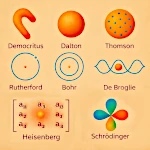 原子的各种形态:从古代直觉到量子力学